 Accessibility

 Language
Event
Beyond Silicon 2026: The Future of Computing
The event is fully booked!
28. April 2026
09:00 - 18:00
 iStock©MF3d_2155769551,
The future of computing starts here: Discover quantum, photonic, neuromorphic and bio-inspired technologies all in one place. The future of computing is being redefined - driven by breakthrough innovations that go far beyond traditional silicon-based technologies. From completely new architectures to fundamentally different forms of information processing, a new era of computing is currently emerging.
Beyond Silicon 2026 brings these developments together in one place and offers a unique opportunity to discover the technologies that will shape digital innovation in the coming decades - compactly bundled in one focused event.
The event is organized by three Bayern Innovativ networks - the Bavarian Chips Alliance, Thinknet Quantum and Thinknet 6G - and thus brings together different perspectives along the computing and semiconductor ecosystem.
The focus is on four transformative fields of technology:
- Quantum Computing
- Neuromorphic Computing
- Photonic Computing
- Biological Computing
Expert presentations, start-up pitches and an accompanying exhibition with stands and research posters will provide you with direct insights into current developments, specific fields of application and future business potential.
You will gain insights from leading industry companies, including Q.ANT, IQM Quantum Computers, Akhetonics, Quandela, Nokia and Reply Machine Learning - complemented by a selection of highly innovative start-ups driving new computing approaches.
You can also take a look at the technologies of tomorrow through contributions from renowned research institutions, including
Fraunhofer IIS, Fraunhofer FOKUS, fortiss, TU Munich, Friedrich Schiller University Jena and Nuremberg University of Applied Sciences Georg Simon Ohm - leading scientists at the forefront of current computing research.
Beyond Silicon 2026 is aimed at decision-makers, innovators and technology experts who want to recognize early on what is coming next - and strategically align themselves and their organizations accordingly.
The event will be held in English.
Registration deadline: April 20, 2026
Fraunhofer IIS
 Fraunhofer IIS,
Video message from the Bavarian State Ministry of Economic Affairs, Regional Development and Energy
 Bayerisches Staatsministerium für Wirtschaft, Landesentwicklung und Energie,
Moderation

Quantum Computing for Industrial Needs

Quantum Computing in Practice: How Eclipse Qrisp Makes Real-World Use Cases Accessible
 Bildrechte: Marc Frommer (Fraunhofer FOKUS),
Accelerating Innovation and Shaping Industrial Advantage with Photonic Quantum Computers
 Quandela SAS,
This talk introduces Quandela's photonic quantum computing platform and covers both the quantum processors (QPUs) currently in use and the roadmap towards fault-tolerant quantum computing (FTQC). The basics of photonic architectures, current experimental and technological advances and access to these systems via cloud infrastructures are explained.
In the further course, application classes are considered that can be addressed with photonic quantum systems available in the short term, with a special focus on hybrid approaches that combine quantum computing and artificial intelligence. It will be shown how quantum machine learning methods can use photonic processors in conjunction with classical methods to enable new computing paradigms, and concrete application examples and current developments in the field of hybrid quantum AI will be presented.

Moderation

Quantum and Beyond - Dual Use of Photonic Competences
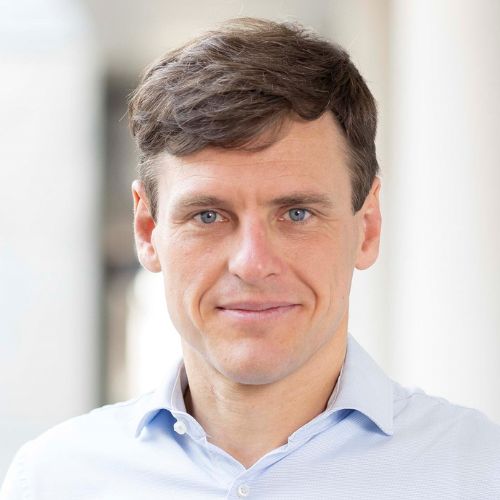 Andreas Stute TH Nürnberg,
At Nuremberg Institute of Technology, we develop processes for the design, simulation and manufacture of micro-optical elements using multiphoton polymerization and femtosecond laser material processing.
The know-how for manufacturing optical interfaces between PICs, single-mode fibers and quantum computers can be transferred from quantum optical applications to a wider range of applications, such as photonic chip architectures.
The Optical Art of Calculating - Beyond AI
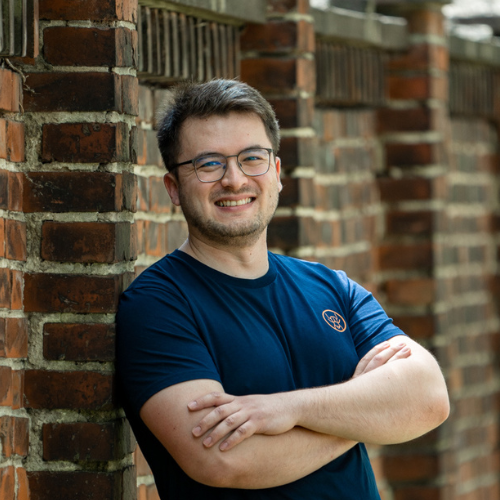 Akhetonics GmbH,
Modern computers are still shackled by the Von Neumann bottleneck, the incessant congestion of data between processor and memory that limits the speed and efficiency of machine thinking. Optical computing breaks through this barrier by replacing electronic transistors and memory with their photonic counterparts, allowing data to be stored and processed in the form of light. This combination of optical memory and digital optical logic system unlocks the true potential of symbolic reasoning, the structured, rule-based intelligence that goes beyond today's AI.
Optical Networks - Security for Businesses and Critical Infrastructures
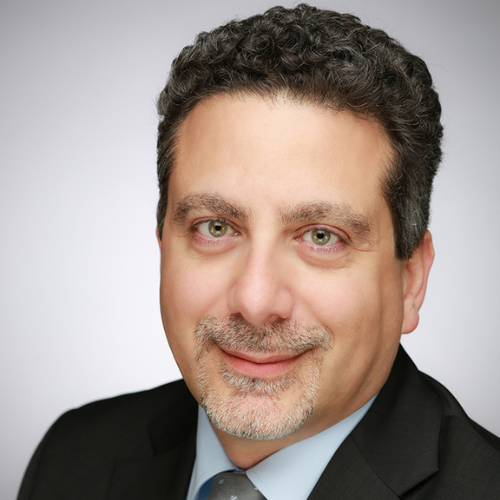 Vittorio Iozzolino,
As digital transformation accelerates across industries, fiber optic networks have become the backbone of modern business communications and critical infrastructure - including power grids, financial systems, transportation networks, healthcare and telecommunications. Their enormous bandwidth, low latency and physical properties make them the preferred medium for high-speed data transmission over long distances. But as dependence on these networks grows, so does the urgency to protect them from an expanding threat landscape, including the most drastic challenge on the horizon: the rise of quantum computing.
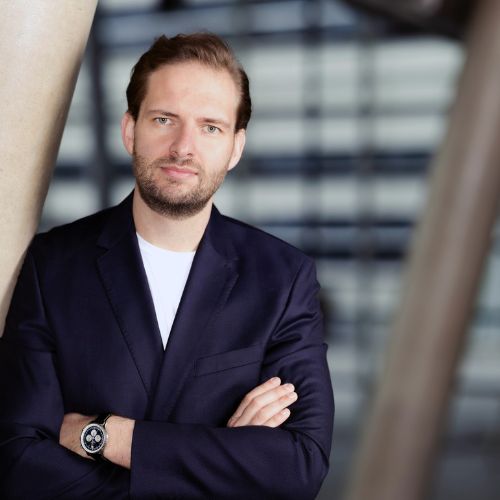


Moderation

Neuromorphic Technology for Industrial Streamlined Solutions
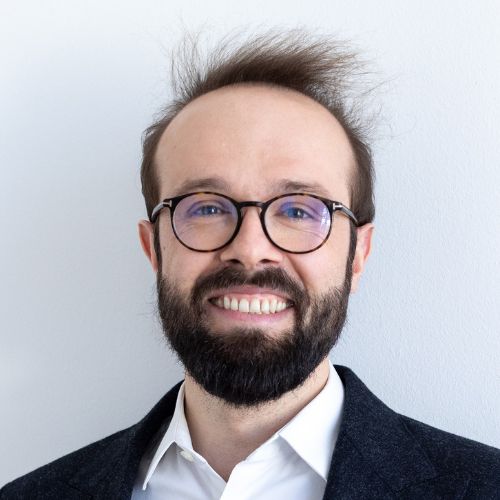 Cristian Axenie,
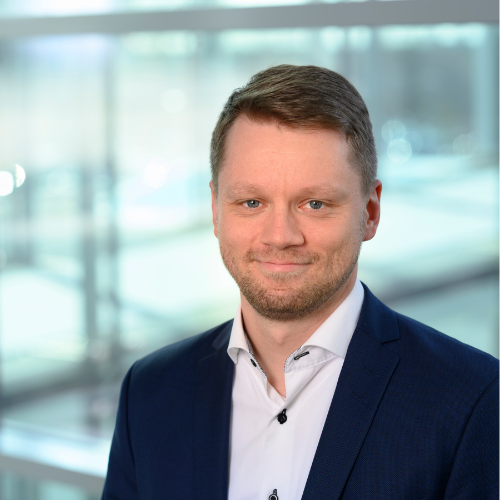 Fraunhofer IIS - Paul Pulkert,
For more than a decade, neuromorphic chip developers and application engineers have been striving to find and bring to market the "killer app" for neuromorphic technologies. With the advent of commercial neuromorphic neural accelerators and neuromorphic sensors, awareness and adoption have increased, but not adoption. Identifying vulnerabilities in current systems, improving SW and HW interfaces for improved interoperability of neuromorphic technology, and robust benchmarks are finally paving the way for industrial adoption of neuromorphic technology. Based on several success stories, we present a possible "recipe" for the development of reference designs, the next step towards a pragmatic and optimized integration of neuromorphic sensing and data processing in industrial applications.
AI Accelerators with Analog BFO Memristor Xbars for Edge Sensonrics and Edge Computing
The AI accelerators available on the market in the classic von Neumann architecture, for example for edge sensorics and edge computing, process digital data, consume more than 90% of the energy for data exchange between the processor and memory unit and are not real-time capable. Compared to classic AI accelerators, AI accelerators with the memory unit very close to the processor have a 30% reduction in energy consumption and reduced latency.
However, solving the problem of the exponential global increase in data volumes and the associated computing power as well as the increasing complexity of AI training algorithms requires further fundamental breakthroughs in the hardware for AI accelerators. For example, ReRAM memristor Xbars are used in new AI accelerators. Memristors are reconfigurable, non-volatile memory cells that can be used, for example, to simulate the function of weights in neural networks.
The analog BFO memristor presented here [1-5] is one of the few memristors with continuous memory and temporally separated read and write operations for data storage and processing in the same memristor cell [6]. It is discussed why BFO memristors are promising for low-power, low-latency AI accelerators, such as autonomous driving, surveillance, and robotics.
1) Y. Shuai, S. Zhou, D. Bürger, M. Helm, H. Schmidt, J. Appl. Phys. 109, 124117 (2011).
2) T. You, Y. Shuai, W. Luo, N. Du, D. Bürger, I. Skorupa, R. Hübner, S. Henker, C. G. Mayr, R. Schüffny, T. Mikolajick, O.G. Schmidt, H. Schmidt, Adv. Funct. Mat. 24, 3357-3365 (2014).
3) N. Du, M. Kiani, C.G. Mayr, T. You, D. Bürger, I. Skorupa, O.G. Schmidt, H. Schmidt, Front. Neurosci. 9, 227 (2015).
4) N. Du, X. Zhao, Z. Chen, B. Choubey, M. Di Ventra, I. Skorupa, D. Bürger, H. Schmidt, Front. Neurosci. 15, 660894 (2021).
5) S. V. Vegesna, V. R. Rayapati, H. Schmidt, Phys. Rev. Applied 22, 034028 (2024).
6) H. Schmidt, J. Appl. Phys. 135, 200902 (2024).
Industrial Applications of Neuromorphic Computing
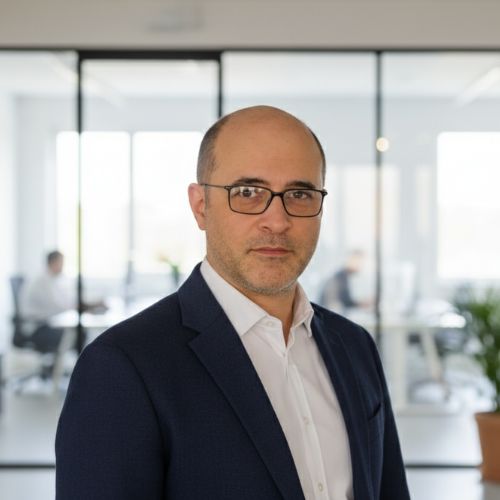 fortiss GmbH,
Neuromorphic computing and spiking neural networks have long been an academic topic, as no hardware was available for industrial applications. The recent availability of commercial hardware has sparked interest in this particularly energy- and latency-efficient technology. A collection of project results with high industrial relevance and strong neuromorphic suitability is presented, spanning the fields of automotive, robotics, sports, space, telecommunications and art.
Moderation

Computing in Biological Systems: Molecular and Cellular Approaches
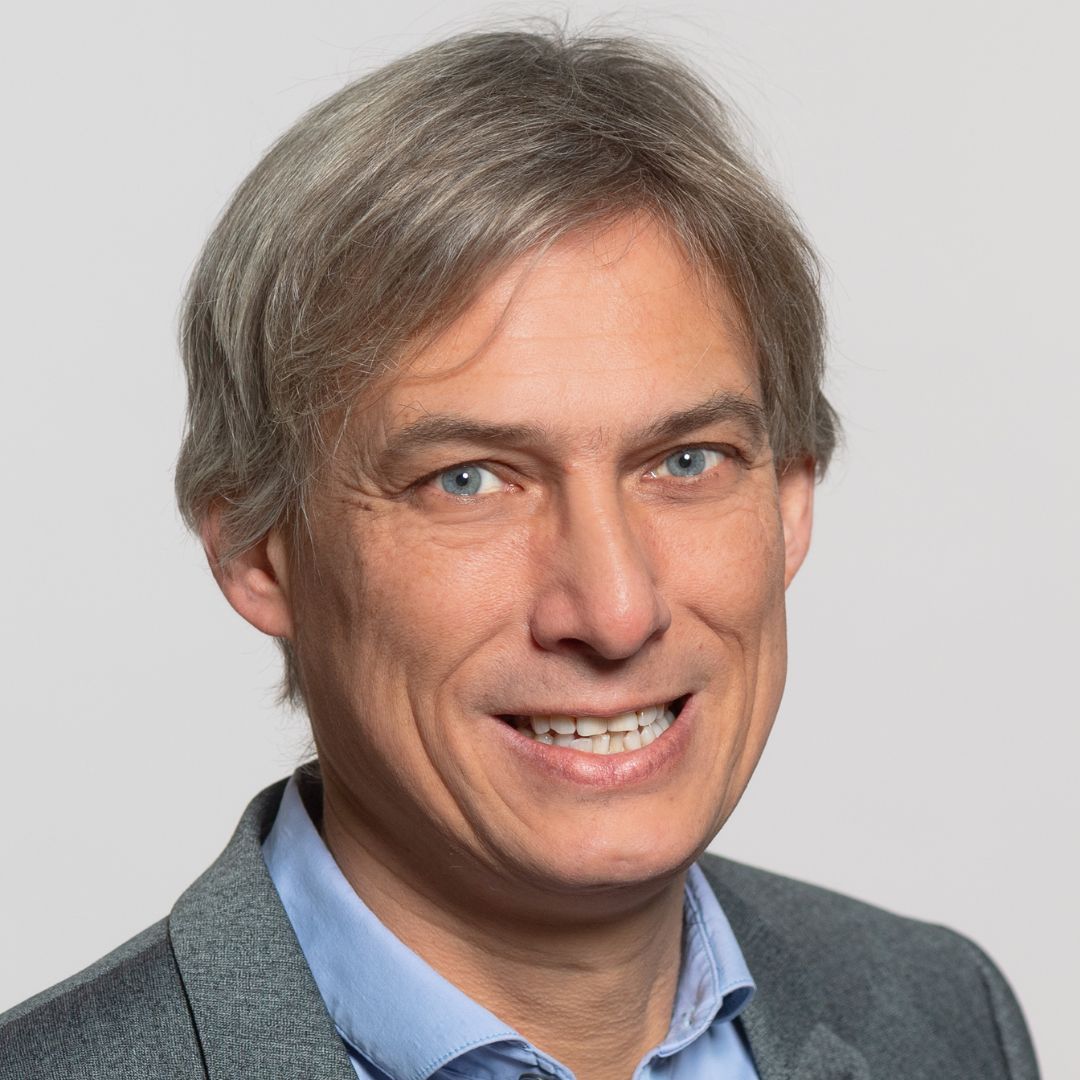 TU München,
Biological systems process information in a natural way. Cells express the genetic information stored in their genome, perceive their environment via specific receptors and process signals using complex signaling cascades. In addition, cells communicate with each other in a variety of ways, enabling collective behavior, coordination and division of labor. One of the central goals of synthetic biology is to understand, control and ultimately design de novo biological information processing. In this talk, I will give an overview of current approaches and key challenges in the implementation of synthetic computation and communication processes based on biochemical components.
Towards Cyborgs: Opening the Gate to Biological Data Processing
A smartphone in standby mode consumes more energy than the brain, which de facto easily performs calculations that put a lot of strain on a conventional computer chip. In view of the enormous amount of energy that current generative AI models now consume, the question arises as to whether biological systems can solve such tasks efficiently. Reply is working with Cortical Labs and the University of Milan to gain practical experience with this computational method. Based on these findings, we will present the technical structure of the device and explain how to access the neuronal activity of the chip. We will also present the training paradigm and report on our experiences with learning the game "Pong". The results have raised doubts in our mind whether learning is the most promising and obvious application. Therefore, we propose an approach to use the system as an interface for processing biological data.


Our exhibitors

The PI Group develops and produces high-precision positioning systems and complete motion control solutions - from piezo actuators and nanopositioning systems to electromagnetic drives, fine adjustment systems, hexapods and controllers - for research and industrial applications. As an internationally active company with a dense network of subsidiaries and sales partners, PI supplies standard products as well as customized system solutions, service and consulting for industries such as semiconductors, photonics, life sciences, metrology and mechanical engineering. Technological innovation, a high level of vertical integration and a strong commitment to quality and precision enable customized solutions for demanding positioning tasks worldwide.

Invest in Bavaria is the business promotion agency of the Free State of Bavaria. The task and goal of Invest in Bavaria is to attract direct investment from innovative companies to Bavaria and thus strengthen the competitiveness and innovative power of the location. Companies from Germany and abroad receive comprehensive support when setting up and expanding in Bavaria. Support for the investment project includes providing information on the business environment and general conditions in Bavaria, searching for premises and networking with local networks. Invest in Bavaria's services are neutral, free of charge and confidential.
The exhibition at Beyond Silicon offers you a platform to present your technology, get to know potential partners and enter into an in-depth professional exchange. Position your company in the context of new computing paradigms and play an active role in shaping developments in the post-silicon age.
An exhibition stand includes:
- Two event tickets
- One table and two chairs
- Power connection
- Your company logo on the event website
Are you facing a specific technological or strategic challenge?
At Beyond Silicon 2026, we invite companies, organizations and research institutions to present real-world problems in our "From Problem to Partnership: Industry Challenge Sessions".
In short pitches of 1-2 minutes (maximum two per topic block), you can present a specific challenge for which you are looking for ideas, expertise or cooperation partners and enter into a direct exchange with an expert audience from research and industry. The aim is to generate new ideas, solutions and potential partnerships.
Submit your challenge via our online form by April 13, 2026. All submissions will be reviewed; participation will be confirmed based on relevance and available capacity.
Fraunhofer IIS
Nordostpark 84
90411 Nuremberg
Germany
There is only limited parking available in the vicinity of the location. We recommend traveling by public transport.
The nearest bus stop is "Nordostpark-Ost". From Nuremberg Central Station, take the subway line U2 in the direction of the airport to the Herrnhütte stop. From there, take bus number 30 or 31 in the direction of Nordostpark and get off at Nordostpark-Ost.
You can find timetables and tickets for Nuremberg public transport here: Start | VGN
Information on traveling by car, train or plane can be found on the Fraunhofer IIS website: Directions Nuremberg - Nordostpark
Professional contact
Organizational contact
 Bayern Innovativ GmbH,
Our partners

Fraunhofer IIS is one of the world's leading application-oriented research institutes for microelectronic and information technology system solutions and services. As part of our key topic "cognitive sensor technology", our activities on cybersecurity are being driven forward in the Distributed Systems and Security department of the Localization and Networking division in Nuremberg.
We deal with the holistic security of networked and distributed systems in the IoT. Our focus is on methods and procedures for the practical use of IT security technologies in applications in the context of Industry 4.0, energy management and 5G mobile communications. An important aspect of this is the exchange of certificates and keys.
The results of our research are incorporated into joint projects with industry and consulting services. As part of the Fraunhofer Cyber Security Learning Lab, training courses are also offered in cooperation with other Fraunhofer Institutes. For your selected use cases, we identify IT security-relevant risks, evaluate them and derive appropriate recommendations for the implementation of a security concept.
The Fraunhofer EMFT is an institute for applied research specializing in sensors and actuators for humans and the environment. Our expertise is based on in-depth knowledge and many years of experience in microelectronics and microsystems technology. Our cutting-edge research and industry-oriented development services are based on a state-of-the-art technological infrastructure in the field of micro- and nanotechnologies. We develop innovative technologies and customized solutions for companies and accompany them from initial feasibility studies to functional prototypes. Our aim is to work with our customers to create new applications that pave the way for market-ready products. Through our research and development expertise, we create real added value for industry and establish a strong presence in the scientific community.

As the state research institute of the Free State of Bavaria for software-intensive systems, fortiss stands for application-oriented cutting-edge research and sets standards in the research and transfer of highly innovative technologies. In close cooperation with academic and practice-oriented partners, we act as a bridge between science and industry and develop excellent solutions for the most pressing challenges of the digital world. Our research focuses on software & systems engineering, AI engineering and IoT engineering and our expertise extends across industries in the automotive, energy, aerospace, manufacturing, finance, insurance, administration and healthcare sectors. fortiss plays a central role in transferring and strengthening digital skills, especially among SMEs and start-ups.

The Quantum Business Network (QBN) is the leading industry-driven network for quantum technologies in Germany. QBN brings together key players from business, science, the capital market and the public sector and acts as a strategic interface between technological development, industrial application and political framework setting.
QBN, founded in 2020, represents over 100 members along the entire quantum technology value chain, including leading international start-ups and SMEs, large companies, research institutions and investors in the fields of quantum computing, quantum sensor technology, quantum communication and quantum cyber security.
QBN acts as a central national platform for the transfer of quantum technologies into industrial, security and economic applications. The aim is to sustainably strengthen Germany and Europe as a location for innovation and business and to establish a powerful quantum economy as the basis for technological sovereignty, national security and competitiveness.
bayern photonics e.V. is a cluster network of companies and research institutions in Bavaria that works together to develop the potential of photonics and quantum technologies and bring them into application.
The association was founded on August 17, 2000 on the initiative of the Federal Ministry of Education and Research (BMBF) as a regional competence network for optical technologies - initially supported by seven companies and research partners.
Since then, the network has grown considerably and now comprises around 80 members from industry, small and medium-sized enterprises, start-ups, research institutions and consulting organizations from Bavaria and beyond.