It is not the individual technology that matters, but how they work together
Brainlab CEO Rainer Birkenbach on Artificial Intelligence and the Future of Connected Medicine.
November 2, 2026
Artificial intelligence is opening up new possibilities in medical diagnostics and treatment. Even today, AI-powered applications can analyze medical imaging data in a matter of seconds, automatically detect tumor tissue, and assist physicians in treatment planning. The technology is also becoming increasingly important for more personalized treatment. However, the extent to which its potential can be fully realized does not depend solely on the performance of individual applications. A key prerequisite is the integration of medical data, digital technologies, and clinical processes. This is precisely where many hospitals face major challenges: disparate IT systems, a lack of interfaces, and siloed data sets hinder the flow of information throughout the entire treatment process. In an interview with Bayern Innovativ, Rainer Birkenbach, CEO of Brainlab, explains the possibilities artificial intelligence already offers today, why the integration of existing systems is crucial for its successful implementation, and how medical care could change in the coming years.

Mr. Birkenbach, could you please briefly introduce yourself and explain to our readers exactly what you do at Brainlab?
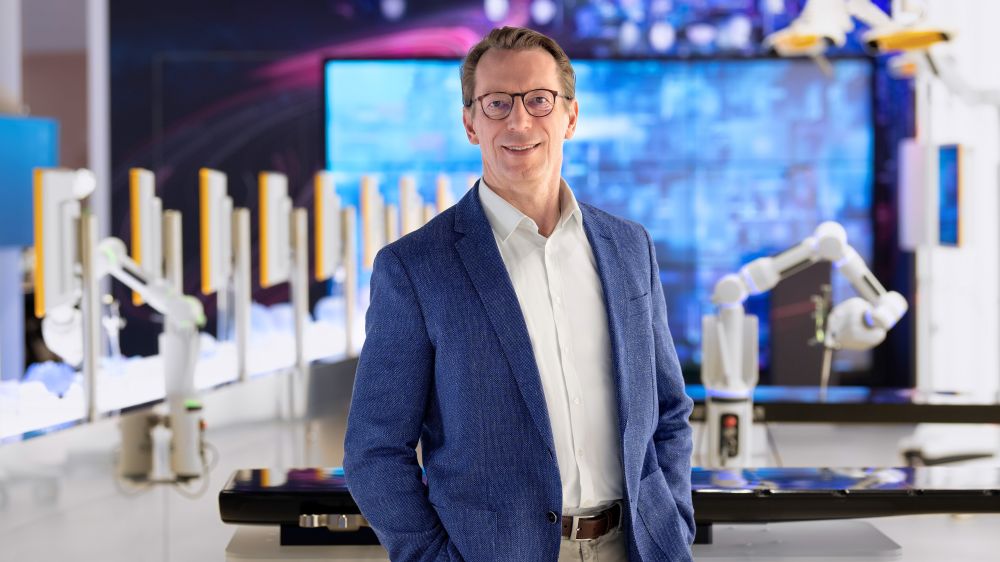
Rainer Birkenbach: As CEO of Brainlab, I have been leading the company since early 2025. Brainlab is a leading provider of digital medical technology. Our goal is to advance the future of healthcare through technological innovation. In doing so, we always focus on the needs of physicians and patients.
I joined Brainlab in 1994 as a software developer. Later, I was responsible for research and development, among other things, before becoming CTO. In that role, I was responsible for the development and refinement of our technologies and products, as well as for quality assurance in the approval of medical devices on the international market. So I am very familiar with the technical aspects of our solutions.
For readers who aren’t yet familiar with Brainlab: What are Brainlab’s core competencies, and how do they support both doctors and patients?
Rainer Birkenbach: We develop digital solutions that support doctors and patients worldwide in the fight against cancer and other diseases. For example, our technologies can help shorten treatment times, increase precision, make treatments safer, or even make them possible in the first place.
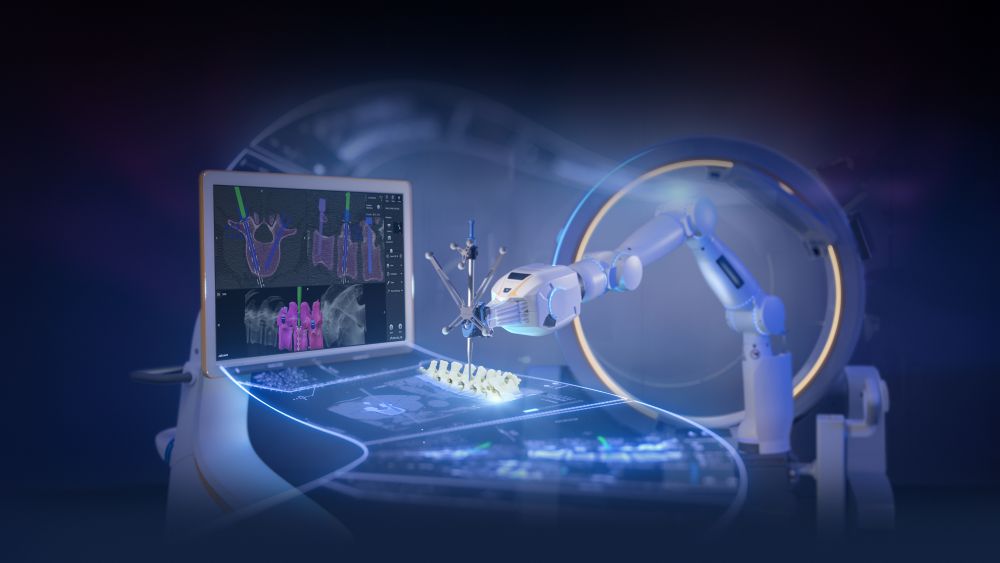
Our portfolio includes software applications for surgical and treatment planning, intraoperative imaging and navigation, as well as surgical robotics and positioning and monitoring systems for radiosurgery and radiation therapy. Our integrated surgical solutions include products in the field of augmented and mixed reality.
The main areas of application for our technology are neurosurgery, spinal surgery, and radiation therapy. We develop our products based on a unified software architecture and as part of an open, vendor-neutral ecosystem. Our goal is to digitize clinical workflows from diagnosis through treatment, standardize them, and make them more efficient—with the aim of improving treatment options and patients’ quality of life.
How is Brainlab currently using artificial intelligence in its products and medical solutions?
Rainer Birkenbach: We use AI where it meaningfully complements clinical workflows—for example, by making medical data easier to analyze, streamlining workflows, and helping physicians make decisions based on solid data. This approach is embedded in our Brainlab ecosystem. We want to use AI to intelligently link information across the entire treatment pathway, from diagnosis to therapy. In this way, AI can contribute to greater precision, efficiency, and interoperability in everyday clinical practice. At the same time, medical responsibility remains with the treating team. We also aim to use our scalable platform to lay the foundation for integrating new AI applications safely and effectively into patient care.
Can you give us a specific example of how an AI-based application from Brainlab helps physicians work more safely, quickly, and/or accurately?
Rainer Birkenbach: A good example is AI-based tumor segmentation. Here, our software automatically identifies tumor tissue that takes up contrast agent based on MRI images. This is powered by an AI model based on neural networks that was trained using 4,000 images and 11,000 annotations from experts. With this contextual knowledge, the AI can automatically detect tumorous tissue. In addition, metastases and various tumors in the brain, on the meninges, on the cranial nerves, and on the paraspinal nerves can be segmented semi-automatically. The software processes a complete MRI dataset in a very short time. This enables it to assist physicians with analysis and give them more time for clinical assessment and treatment planning.
Brainlab describes itself as a thought leader and pioneer in digital medical technology. Among other things, the company works with medical image data and offers software and platform solutions that support physicians before, during, and after surgical procedures. In which of these areas is AI making the biggest difference today?
Rainer Birkenbach: To significantly improve treatment outcomes, we must consider every step of a medical workflow. If we look at them in isolation, valuable potential remains untapped. Every step counts, and that is precisely the essence of the platform concept that we consistently follow: Only by addressing every single aspect of a treatment process can we achieve the level of precision needed to sustainably improve overall performance. That’s why imaging is just as important as consistent data collection and precise execution.
AI has the potential to provide support at each of these points. For example, in automated image analysis, where it detects tumors, tissue changes, or bleeding faster and more reliably than humans. Or in creating a solid foundation for decision-making by analyzing, consolidating, and visualizing information from a wide variety of clinical systems. Furthermore, AI can support personalized treatment approaches in the long term by helping treating physicians incorporate comprehensive data—such as pre-existing conditions, lifestyle, or genetic profiles—into their decision-making.
In my view, AI makes the biggest difference when it is used holistically and across the entire medical care continuum—not as an isolated, standalone application.
What are the biggest challenges in implementing AI solutions in hospitals and in everyday medical practice?
Rainer Birkenbach: In my view, the biggest obstacle to digitalization in the operating room is clearly the lack of integration among existing systems. The IT landscapes of many hospitals are characterized by fragmentation, data silos, and isolated applications. Often, there are no interfaces. As a result, AI applications lack a comprehensive data foundation as well as an end-to-end view of the underlying processes. Both, however, are crucial for effectively training AI models and making information available throughout the entire treatment process. Open platforms and interoperable system architectures are therefore becoming a strategic prerequisite for the efficient use of AI in healthcare.
How does Brainlab ensure that its AI solutions are secure, reliable, and easy for healthcare professionals to use?
Rainer Birkenbach: In medical technology in particular, AI-based applications are subject to strict regulatory requirements, as patient safety is the top priority. Equally important is the responsible handling of sensitive health data. That is why, at Brainlab, we treat data protection and data security as essential requirements in the development and application of our solutions.
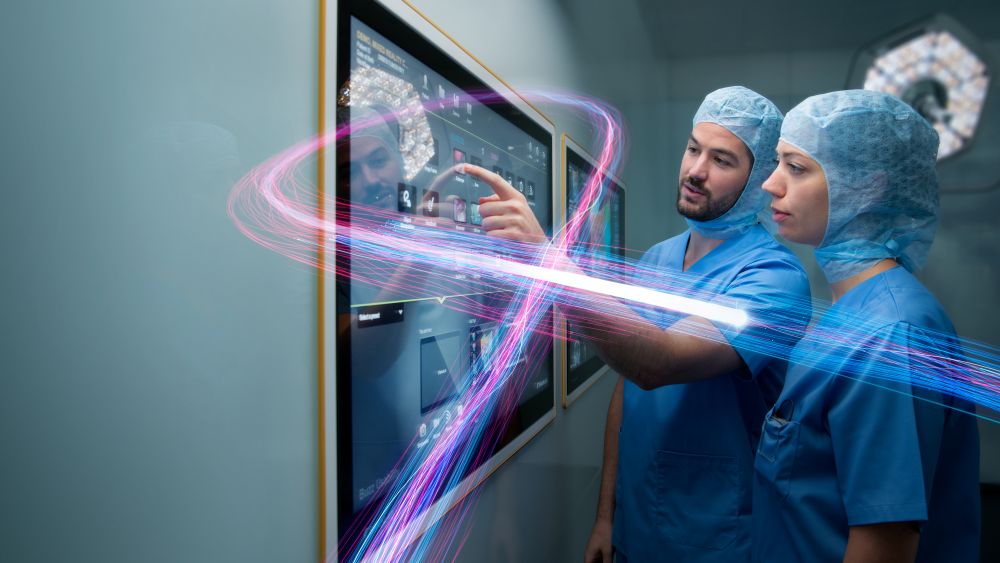
We work closely with clinical users in the development of our solutions. Their needs and experiences are incorporated into the design of our products. User-friendliness is crucial to us, because every minute counts in everyday clinical practice. Our goal is to develop solutions that can be integrated into existing processes without unnecessary complexity.
How do you think AI will change Brainlab and the healthcare sector over the next five years?
Rainer Birkenbach: The shortage of skilled workers in the healthcare sector will increase dramatically in the coming years. Against this backdrop in particular, AI offers the potential to ease the burden on medical staff, for example by automating administrative processes or documentation tasks. Technology can also make treatments more precise, safer, and faster. AI can help physicians assess individual disease progression more accurately, identify risks early on, and create personalized treatment plans. In the future, patients will therefore benefit from more informed treatment decisions and higher-quality care. I am convinced that the range of applications for this technology will expand significantly. The technological progress we are currently witnessing in this field is rapid.
It will be crucial to integrate AI responsibly, safely, and effectively into existing clinical workflows. Technology should never be an end in itself, but should always serve to support healthcare professionals and improve patient care.
Thank you very much for the interview, Mr. Birkenbach!
Contact us