Recycling in Building Construction—Circular Economy in Construction Practice
Real-world examples from Bavaria show that circular construction is no longer just a vision for the future
How can the circular economy work in the construction industry in concrete terms? Which materials, construction methods, and planning approaches are already practical? And what is needed for circular construction to succeed on a broad scale? Answers to these questions were provided at the event “Recycling in Building Construction” on July 15, 2026, in Munich.
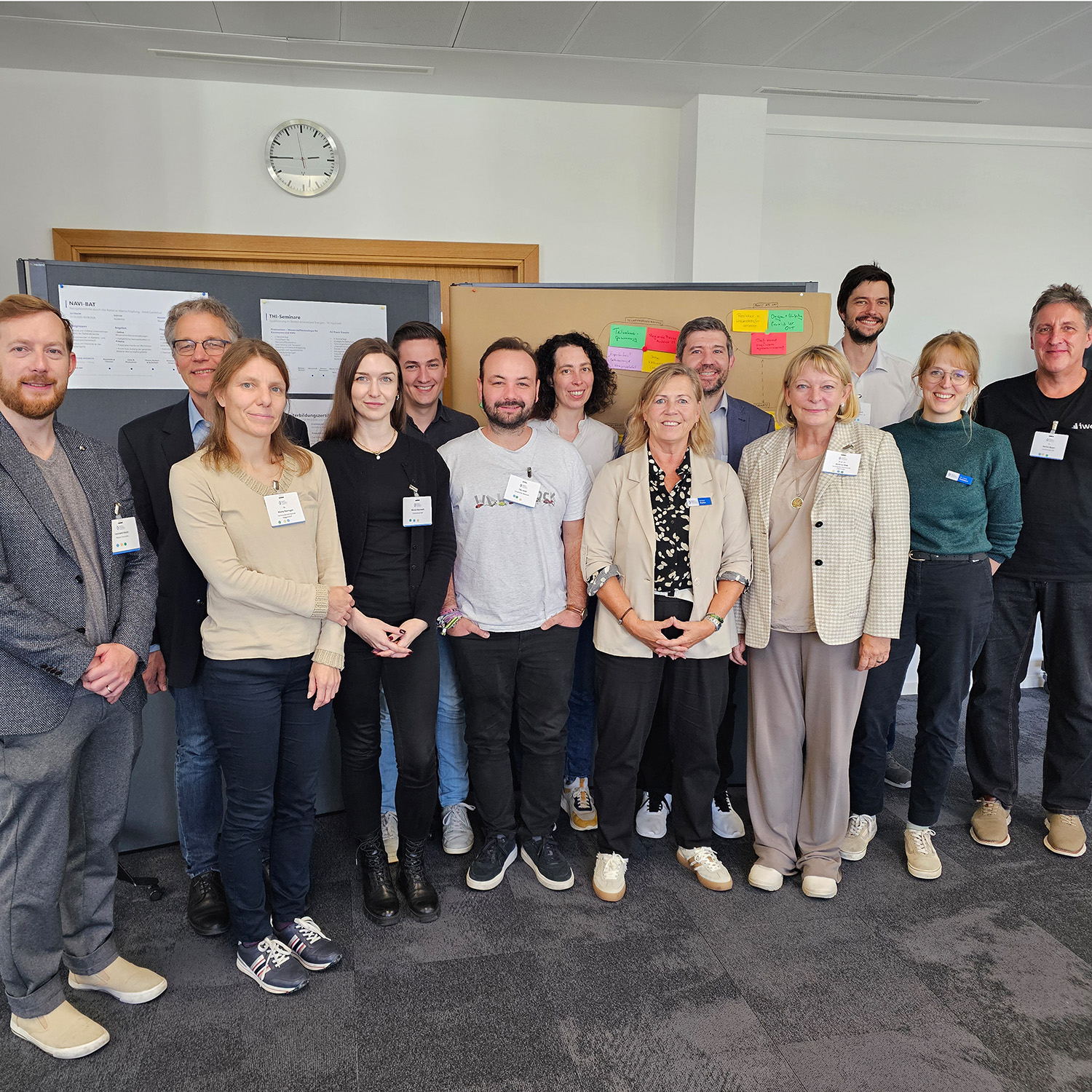
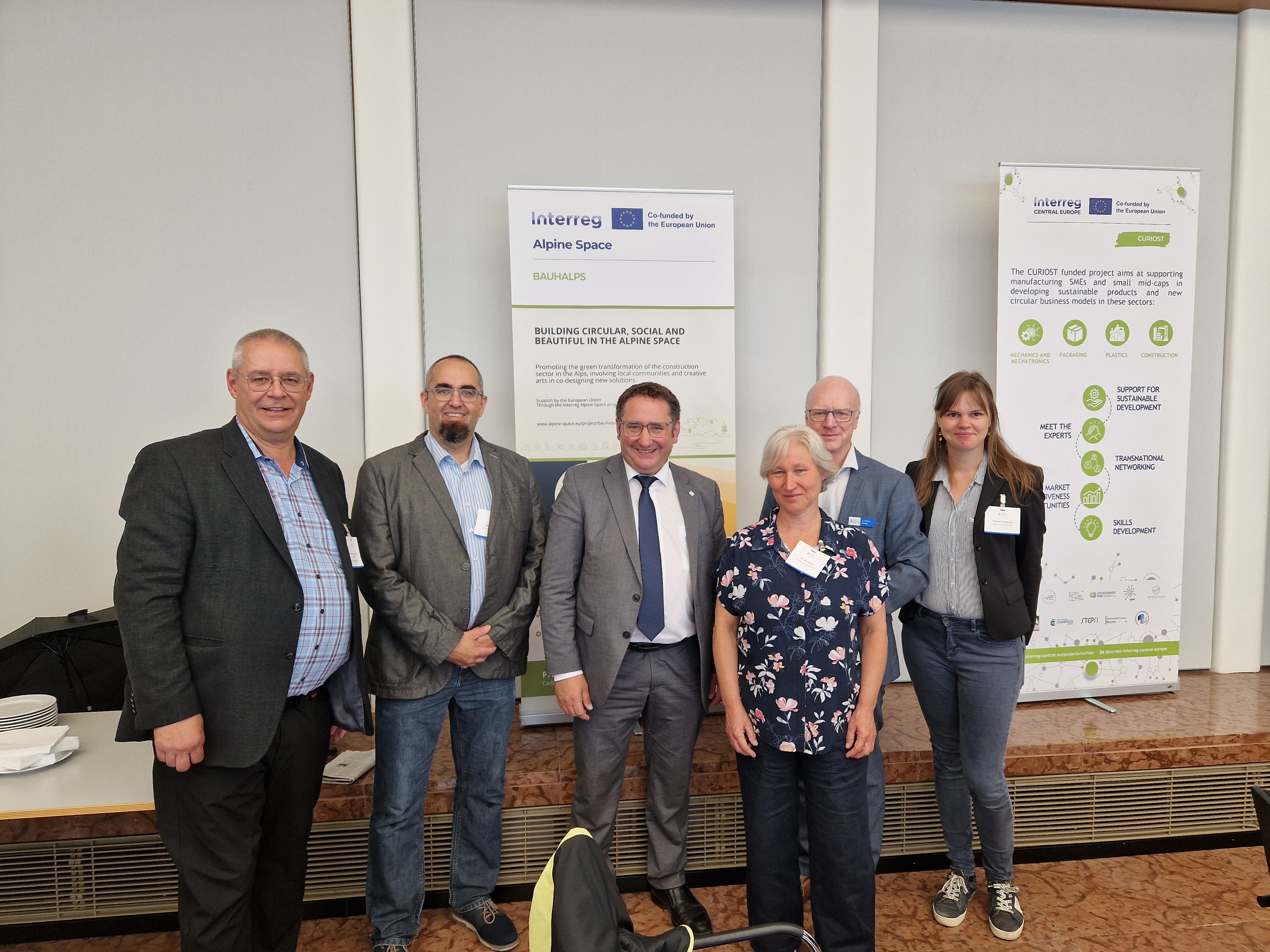
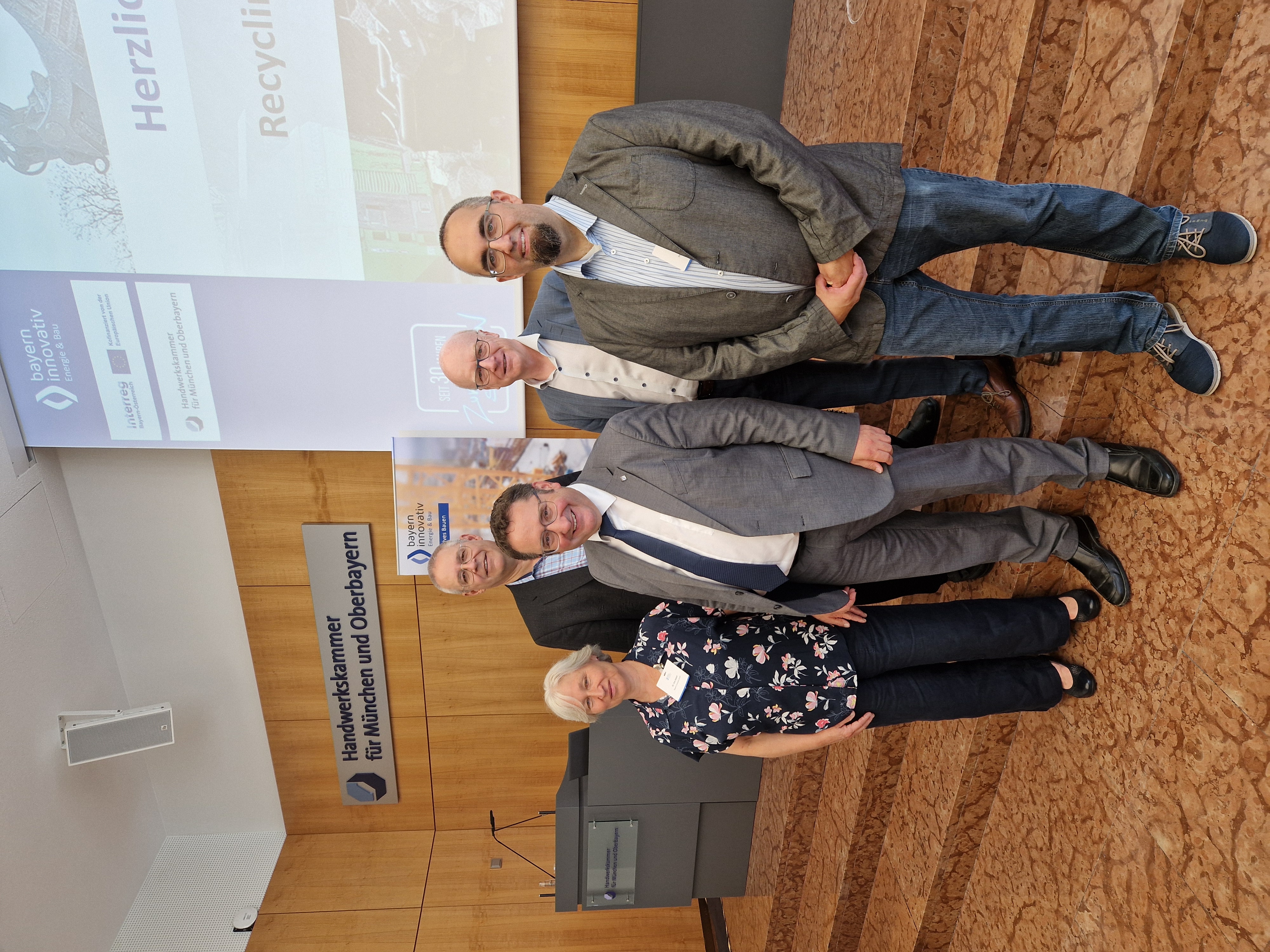
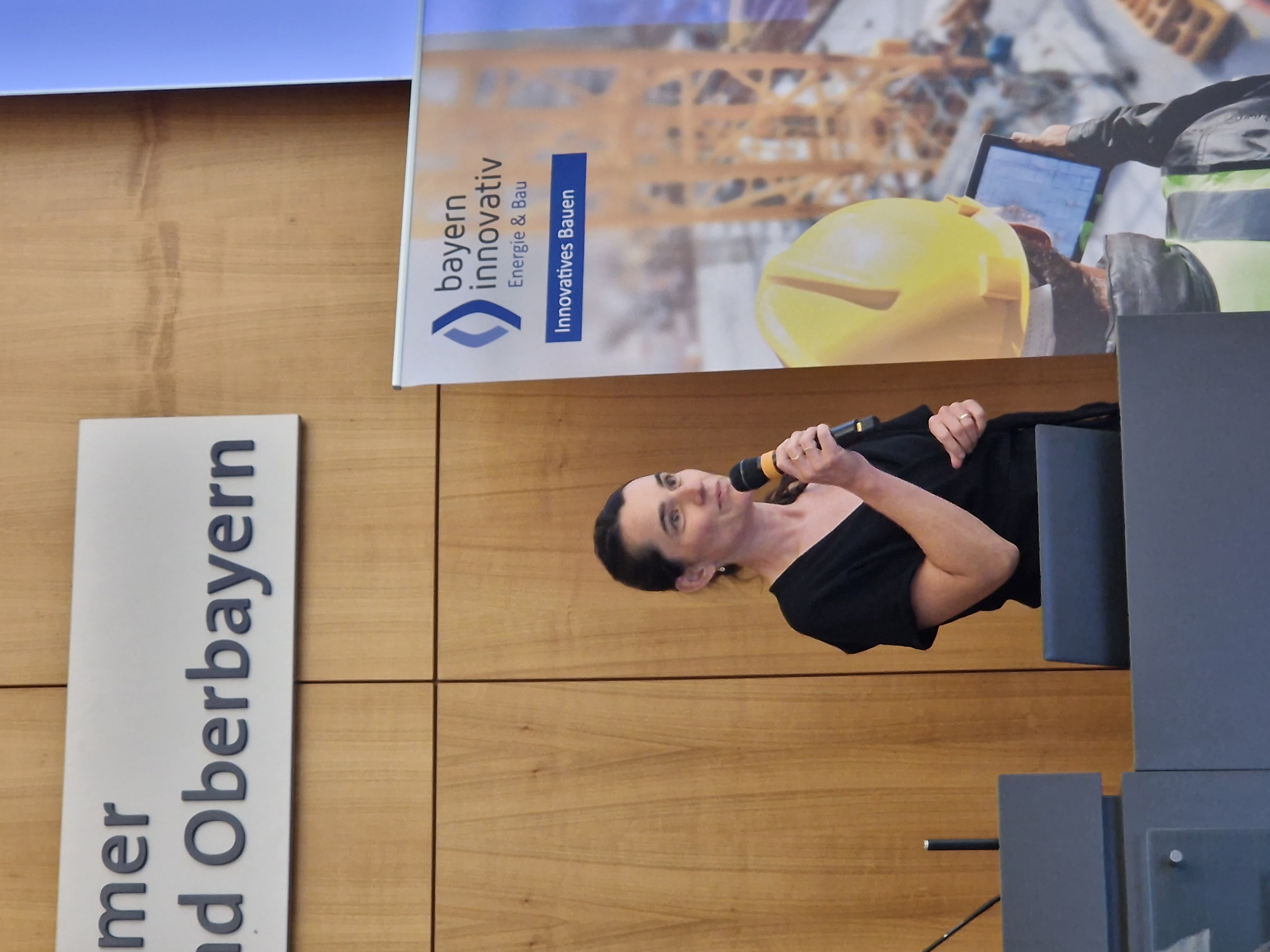
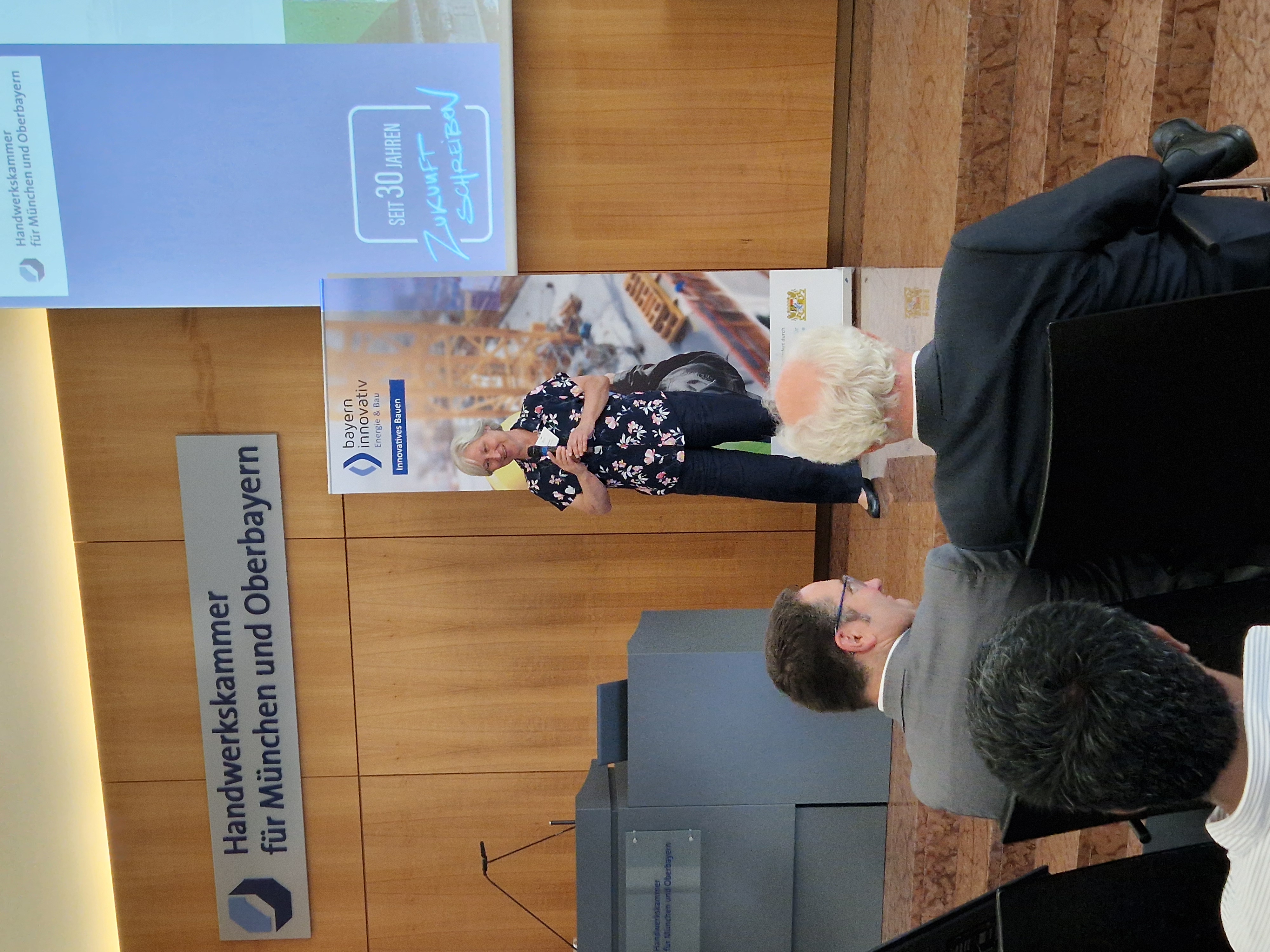
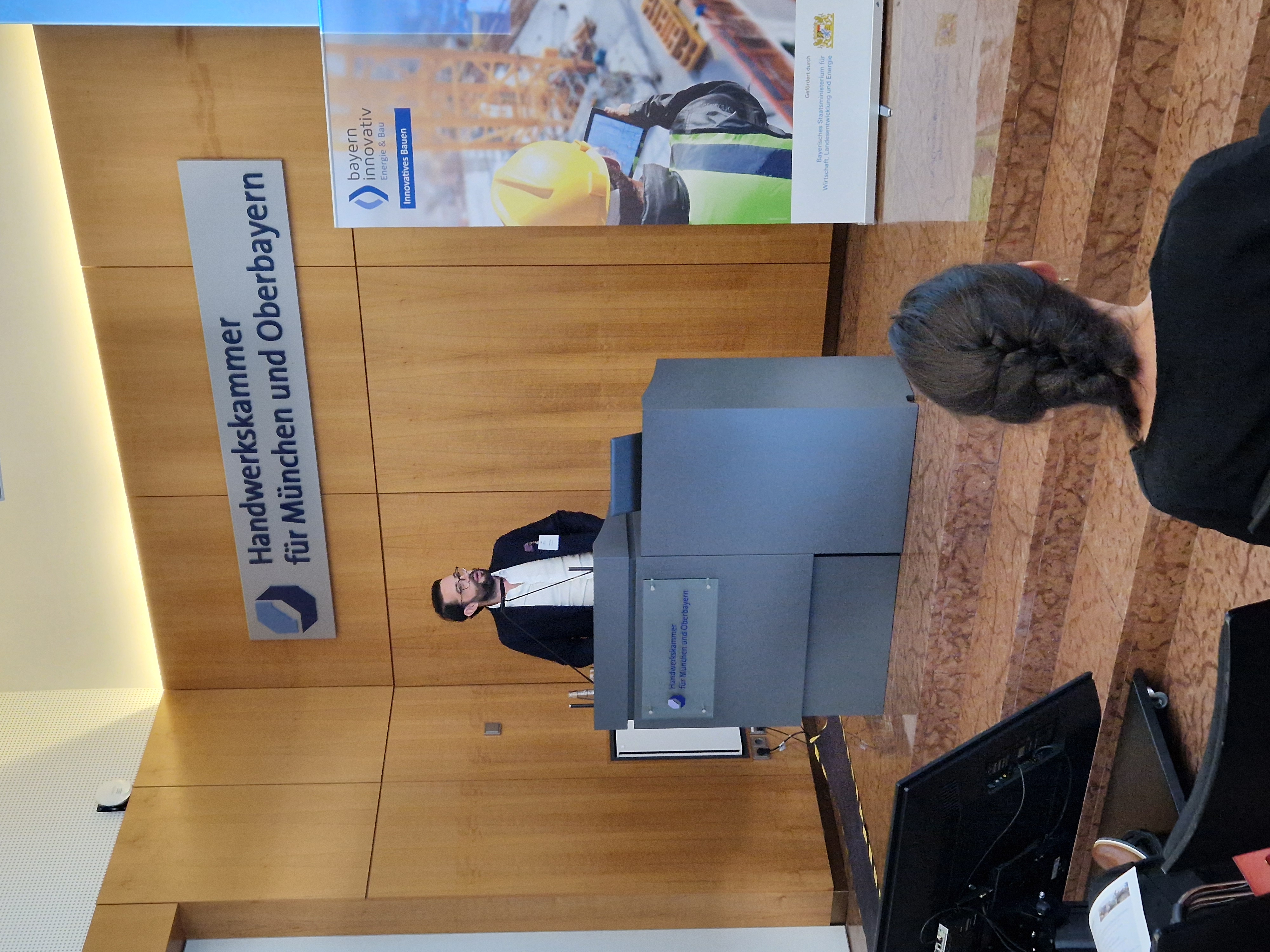
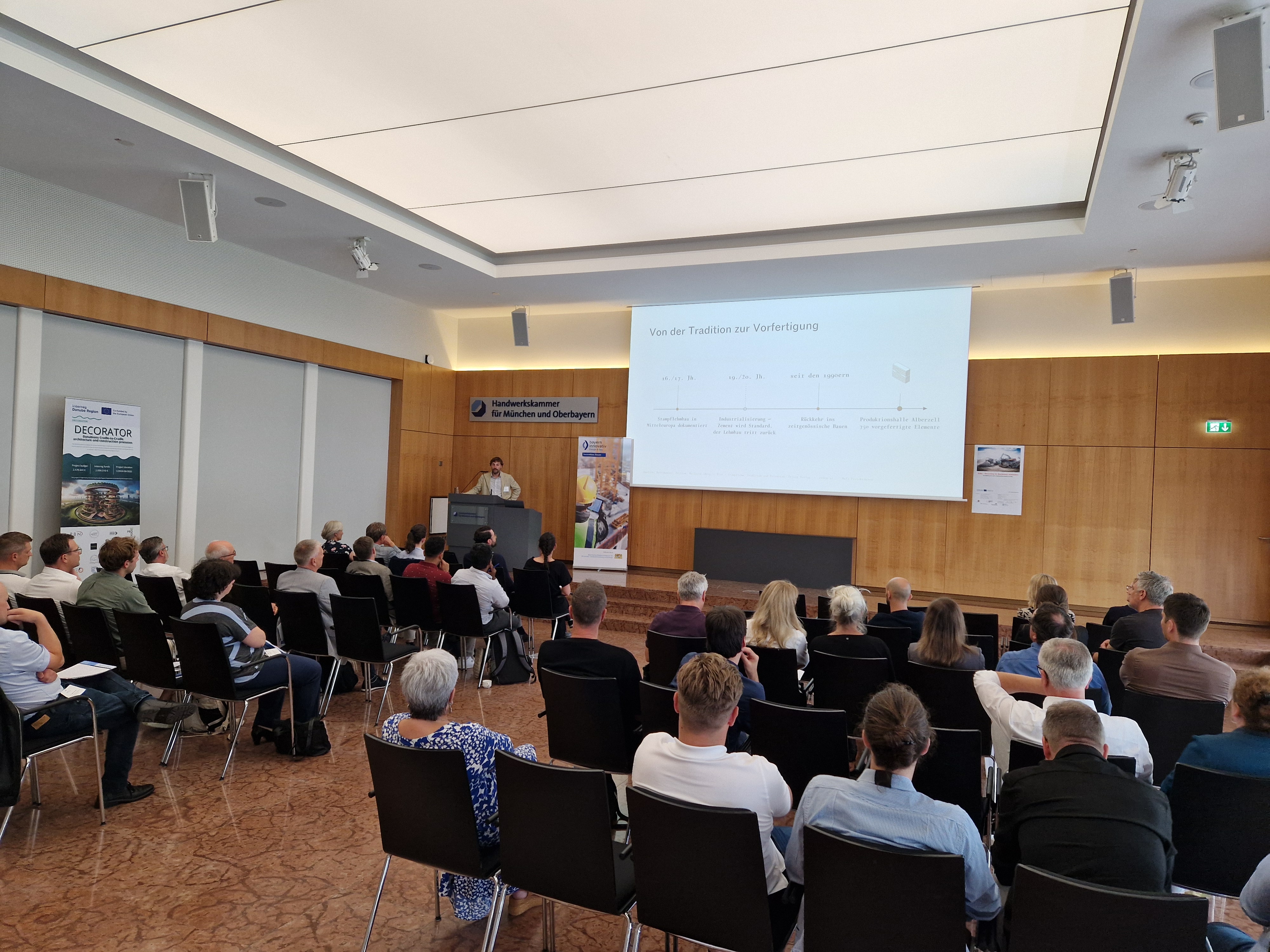
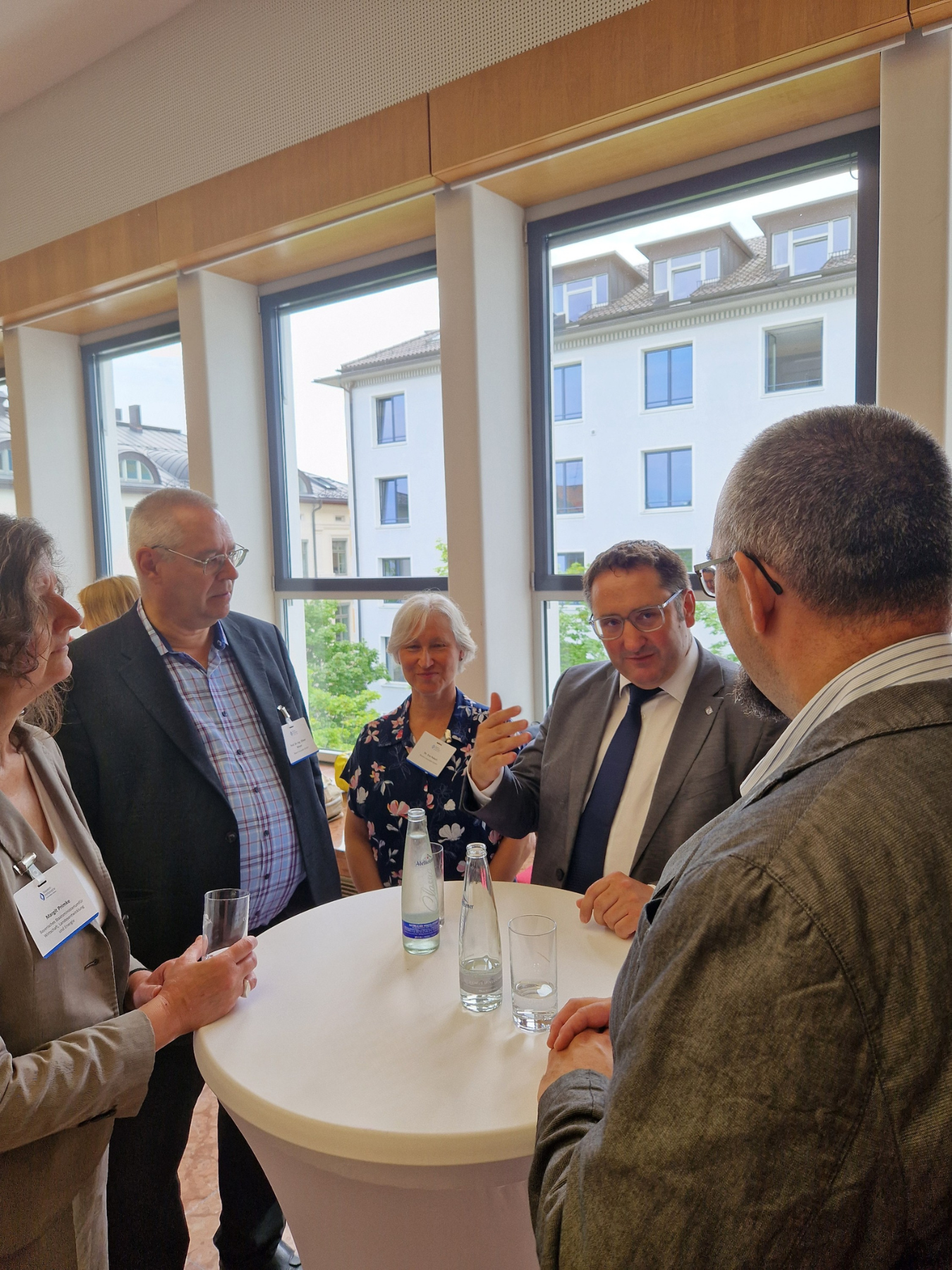
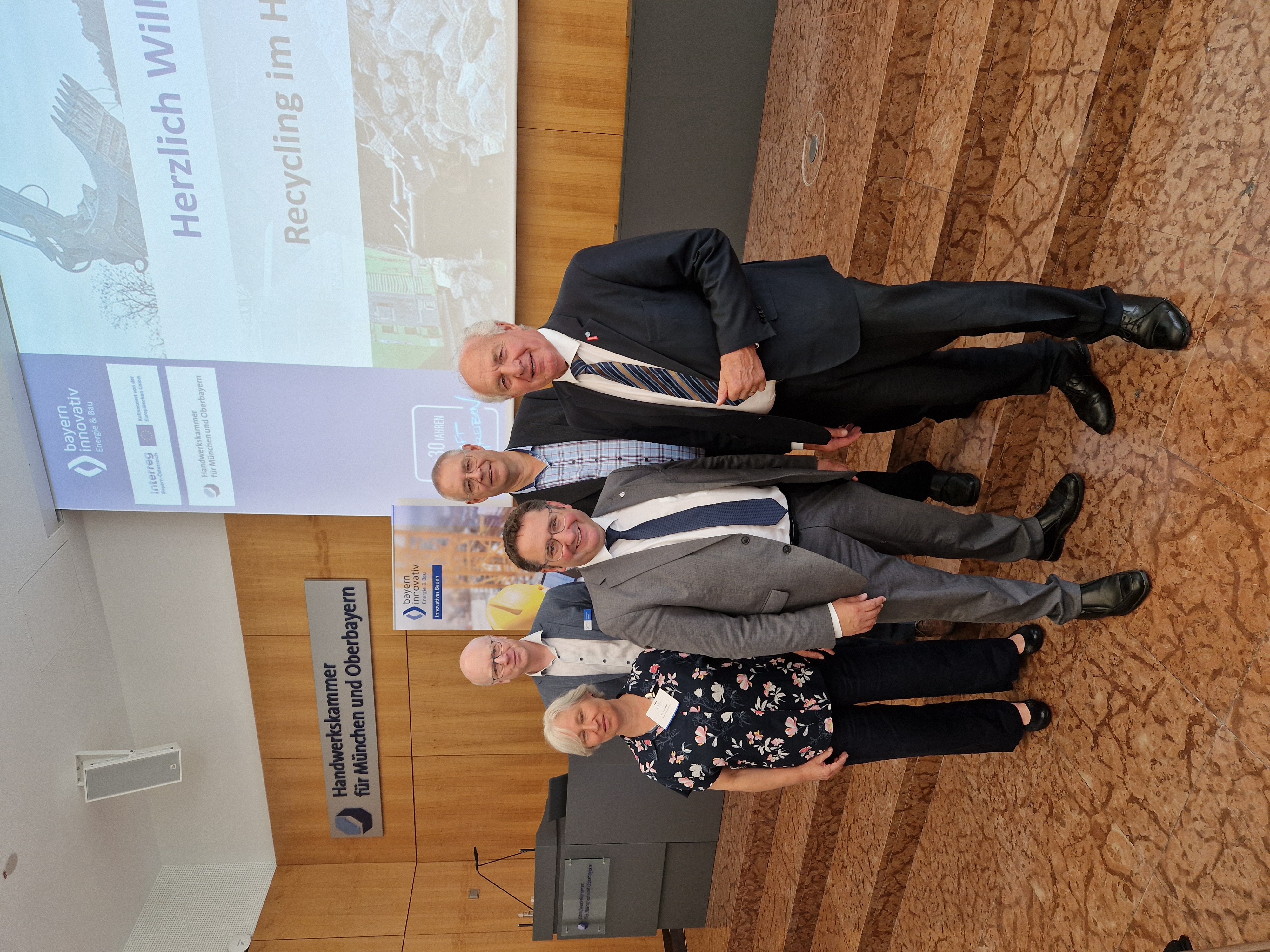
The event“Recycling in Building Construction,”organized by Bayern Innovativ in collaboration with the Chamber of Crafts for Munich and Upper Bavaria, was designed to illustrate exactly what this looks like. Together with experts from the construction industry, planning, politics, and innovation, it became clear that: The transformation in the construction sector has long since begun and offers great opportunities for resource-efficient, economical, and sustainable construction practices. Around 50 participants accepted the invitation, engaged in lively discussions, and took away many new ideas to apply in their own work.
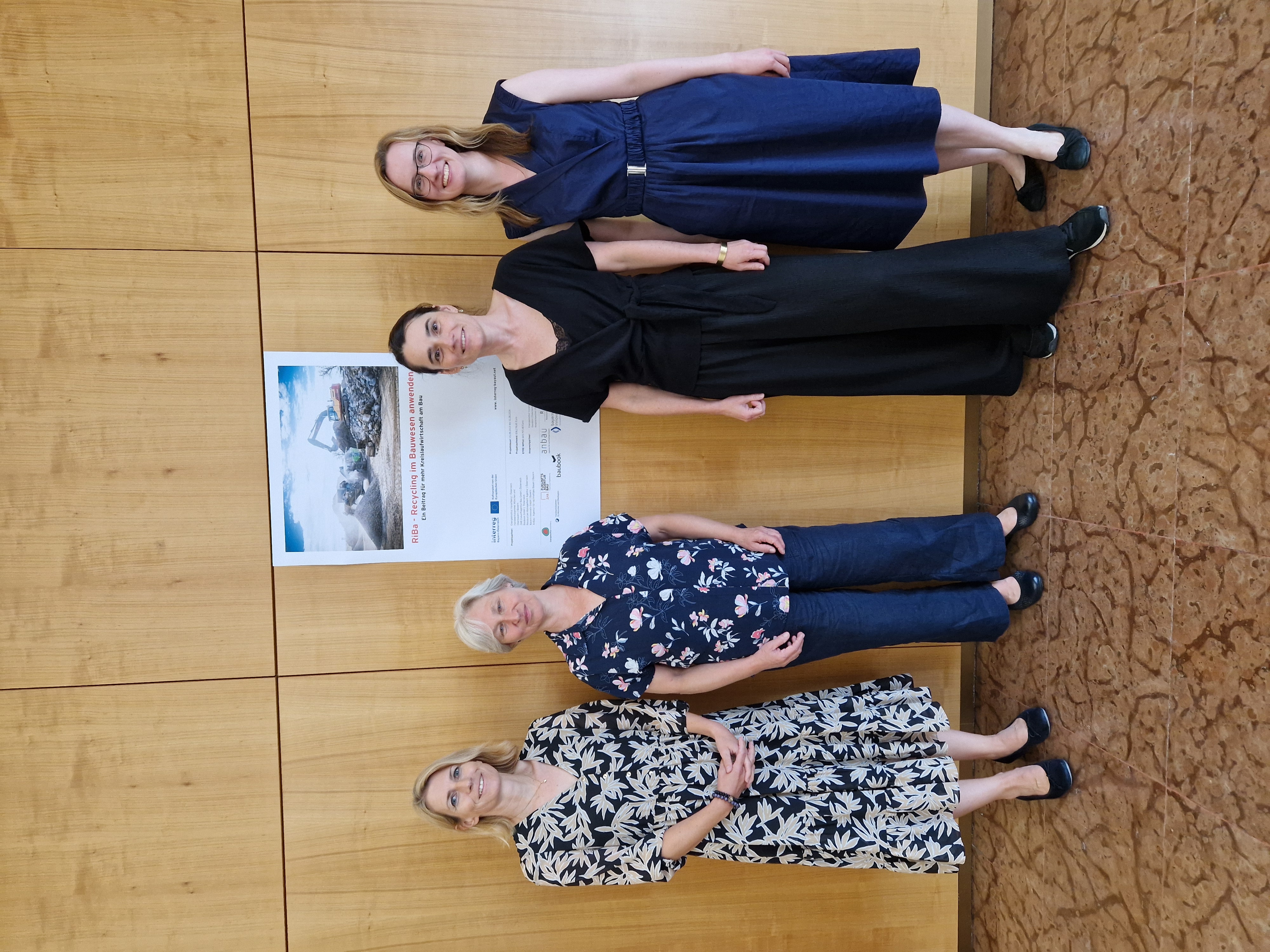
At the same time, the event marked the conclusion of the Interreg project RiBa, which began in September 2023. A summary of the results from all seven project partners in Bavaria and Austria will be published by September at the latest.
RIBA – Recycling In Use was particularly well illustrated by the practical examples presented:
The Eichstätt district and the regional construction company Martin Meier AG successfully ventured into using a building material that is not yet fully supported by current building codes: recycled concrete with aggregate made from 100 percent recycled material (RC material). The service center, completed in 2024, was the first public building in Bavaria to use recycled concrete on a large scale.
The project demonstrates that a circular economy can be effectively implemented in public construction as well. Furthermore, the building incorporates sustainability measures in other areas. Energy-efficient building systems, photovoltaic systems, heat recovery, and a green retention roof help reduce energy consumption and improve the microclimate. Added to this is the use of products and materials from the region, which reduces transportation distances and strengthens local material cycles. The flexible construction design is also an important aspect: The layout of the rooms can be changed at any time, making the building adaptable in the long term.
Another impressive example came from the construction firm Irrenhauser & Seitz, which built a production hall in Alberzell in collaboration with the Max Pfaffinger architectural firm. The project primarily used materials available directly on site: demolition debris from other structures and rammed earth—that is, compacted soil used as a building material. From the soil excavated for the hall, 750 individual rammed-earth elements were produced on site, dried, and installed.
The result is not only the largest earthen structure currently in Bavaria, but also a project that has yielded valuable insights for future earthen construction. It demonstrates how regional resources and simple, material-conscious construction methods can become increasingly important. Max Pfaffinger, owner of a small, innovative engineering firm in Dachau, posed three questions: “Can clay become a viable alternative to concrete in structural work?”, “Is low-tech a niche or the standard of the future?”, and “Do we need to plan for demolition from the very beginning?” Three questions that highlight just how fundamentally construction could change in the coming years.
Another project that consistently embraces a circular approach is one by RATISBONA, an owner-managed family business based in Regensburg and a project developer for retail real estate. The company is breaking new ground in supermarket construction, moving away from the single-use of materials toward their reuse at the end of their service life.
With the new“Loop Markt”concept, this approach is currently being fully implemented for the first time in Haimhausen. The prototype demonstrates how a whole range of new concepts can be practically tested and showcased. For example, the project uses bolted foundations, demountable floor slabs, modular walls, plug-in connections, and blown-in cellulose insulation. At the end of its service life, approximately 90 percent of the materials are designed to be dismantled and separated. The outdoor area is also designed according to sustainable principles, with as little soil sealing as possible and greater biodiversity. Particularly noteworthy is that, according to the company, the concept is also five to seven percent more cost-effective than conventionally built markets.
Just how visible and tangible the circular economy in construction has already become is also demonstrated by the online innovation map from the Zukunftsagentur Bau, which was developed over the past three years as part of the EU project RiBa in collaboration with Bayern Innovativ. It was presented in Munich by Maria Rehbogen. More than 100 construction projects and over 200 experts make it clear that circular construction is no longer just a vision for the future, but is already standard practice in many areas.
The right framework conditions are essential
For circular construction to succeed on a broad scale, it requires not only good examples but also the right framework conditions. Tobias Gotthardt, State Secretary at the Bavarian State Ministry of Economic Affairs, Regional Development, and Energy, opened the event with a keynote address and invited participants to an open discussion about obstacles and challenges. In doing so, he emphasized the importance of innovation and collaboration for the further development of this field.
Andrea Heil of EPEA GmbH—Part of Drees & Sommer—also made it clear that circular construction is far more than just the use of recycled materials. In her presentation, she demonstrated that it is about holistic thinking and the Cradle-to-Cradle (C2C) principle —that is, planning materials and buildings from the outset so that raw materials can be kept in cycles and reused as much as possible. This approach begins as early as the planning phase and extends through all phases of a construction project: from initial considerations and material selection all the way through to implementation. This approach is now also supported by digital tools such as building resource passports and material inventories.
Closely related to this is the principle of urban mining—that is, the approach of viewing existing buildings not as waste but as a valuable repository of materials. This concept is also gaining increasing importance in the construction industry.
Holger Seit, an expert in environmental law in construction from Chemnitz, provided guidance on the complex legal framework. He covered existing standards and regulations, thereby offering a helpful practical overview. Holger Seit supports the RiBa project with his technical expertise and, together with the Chamber of Crafts for Munich and Upper Bavaria, has developed a guide that is available for download.
The event made it clear that the circular economy in building construction is not a distant vision, but is already being implemented in many areas today. Key factors include bold building owners, innovative companies, suitable framework conditions, and collaboration between planning, construction, research, and policy. It is precisely where different perspectives converge and practical experiences are shared that circular construction can continue to gain momentum.
With“Recycling in Building Construction,”the conclusion of the RiBa project once again highlighted how much is already in motion and how great the potential is for construction practice in Bavaria and beyond.
 Bayern Innovativ,
 Bayern Innovativ,
 Bayern Innovativ,
 Bayern Innovativ,
 Bayern Innovativ,
 Bayern Innovativ,
 Bayern Innovativ,
 Bayern Innovativ,
 Bayern Innovativ,
Contact