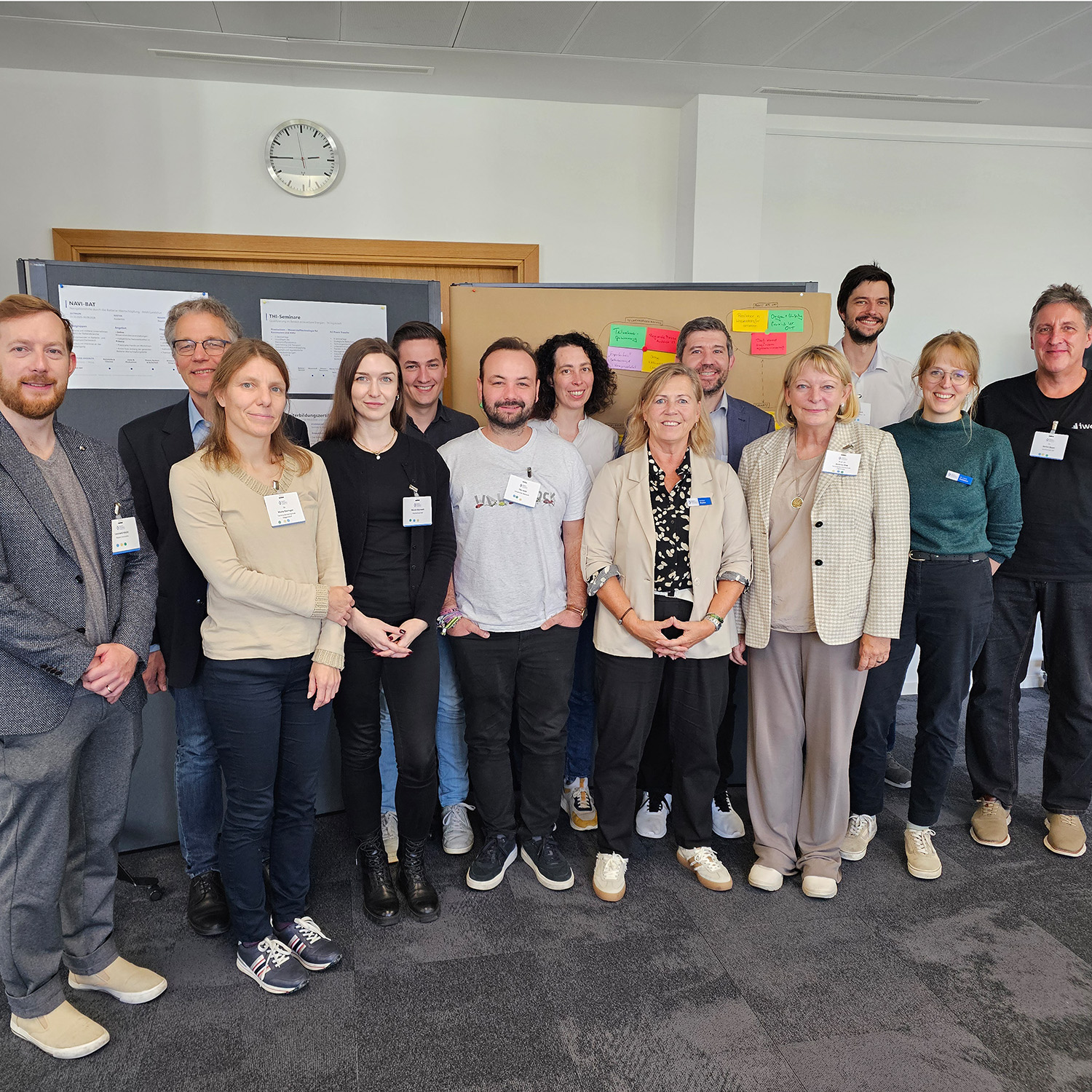
Geothermal Energy Awards for Unterhaching and Dürrnhaar
At the 2026 Deep Geothermal Energy Practice Forum, the plants in Unterhaching and Dürrnhaar were recognized for their outstanding operational performance, while geothermal energy use nationwide reached new record highs.
October 20, 2026
Source: E & M powernews
The Deep Geothermal Energy Practice Forum honored plants in Unterhaching and Dürrnhaar. German geothermal plants generated an estimated 3.8 billion kWh of heat in 2025.
The geothermal plants in Unterhaching and Dürrnhaar were honored at the “Deep Geothermal Energy Practice Forum 2026” for their operational performance in 2025. Unterhaching received the “Golden Heating Plant” award, while the geothermal power plant operated by Stadtwerke München (SWM) in Dürrnhaar was honored as the “Golden Power Plant.” According to a statement from the organizer, Enerchange GmbH, the awards were based on a survey of plant operators conducted for the first time on a nationwide scale in Germany.
Of the 33 operators of hydrothermal geothermal plants surveyed, 21 provided their operational data for 2025. According to the survey, Bavarian geothermal plants generated a total of 3.4 billion kWh of heat. Based on the organizer’s extrapolation, this translates to a heat generation of 3.8 billion kWh for Germany as a whole.
The data collected included operating hours, heat production and heat sales, electricity generation, plant availability, maintenance work, and damage. Additional evaluation criteria were electricity consumption for geothermal heat production, extraction and injection temperatures, and extraction rates.
Unterhaching Achieves Highest Heat Production
The Unterhaching geothermal plant produced a total of 185 million kWh of heat in 2025, thereby achieving the highest heat production among the dedicated heating plants surveyed, according to the organizer.
The plant was originally designed for combined electricity and heat generation. As part of the district heating network expansion, operations were fully converted to heat supply. Franz Barenth of Geothermie Unterhaching GmbH & Co. KG accepted the award.
In the electricity generation category, the SWM geothermal power plant in Dürrnhaar was honored. The plant generated more than 35 million kWh of electricity in the 2025 operating year and achieved a capacity utilization rate of 80 percent.
According to the Praxisforum, year-round electricity generation and the associated continuous extraction of thermal water enable greater utilization of geothermal heat from the subsurface. Stefan Birle accepted the award on behalf of SWM.
Honorary Award for Geothermal Development in North Rhine-Westphalia
In addition to the plant awards, the Praxisforum presented an honorary award to Ulrich Pahlke, the former director of the Geological Service of North Rhine-Westphalia (GD NRW).
Pahlke worked at the GD NRW for a total of 42 years, ten of which he served as director. During his tenure, among other achievements, he brought a cross-border EU project on deep geothermal energy to North Rhine-Westphalia.
This led to the development of a state-level exploration and drilling program, which has been continued since 2024 as part of a master plan. The subsurface data collected is intended to serve as a basis for municipalities and municipal utilities to develop their own geothermal projects.
Young Researchers’ Award for Research on Geothermal Reservoirs
The Christian Hecht Prize was awarded to doctoral candidate Valerie Ernst from the Technical University of Munich (TUM). Her research focuses on the “relationship between transmissibility and hydraulically active zones in deep geothermal reservoirs in Bavaria.”
The prize honors geothermal scientist Christian Hecht, who passed away in 2017. The prize money was provided by SWM.
Practice Forum Attracts More Than 260 Participants
According to the organizers, more than 260 experts from Germany and abroad attended the Deep Geothermal Energy Practice Forum from October 14 to 16, 2026. Key topics included the development of district heating networks, technical optimizations in geothermal drilling, production conditions, and current project developments.
The conference concluded with field trips to the geothermal projects in Pullach and to the intermunicipal project involving the municipalities of Aschheim, Feldkirchen, and Kirchheim. Both projects are expanding their facilities with additional borehole pairs to tap into further heat resources for the expansion of their district heating networks.
According to the organizer, there are currently around 45 deep geothermal plants in operation in Germany. The most important geological areas for geothermal energy are located in the Molasse Basin in southern Germany, the Upper Rhine Graben, and the North German Basin.
Author: Katia Meyer-Tien