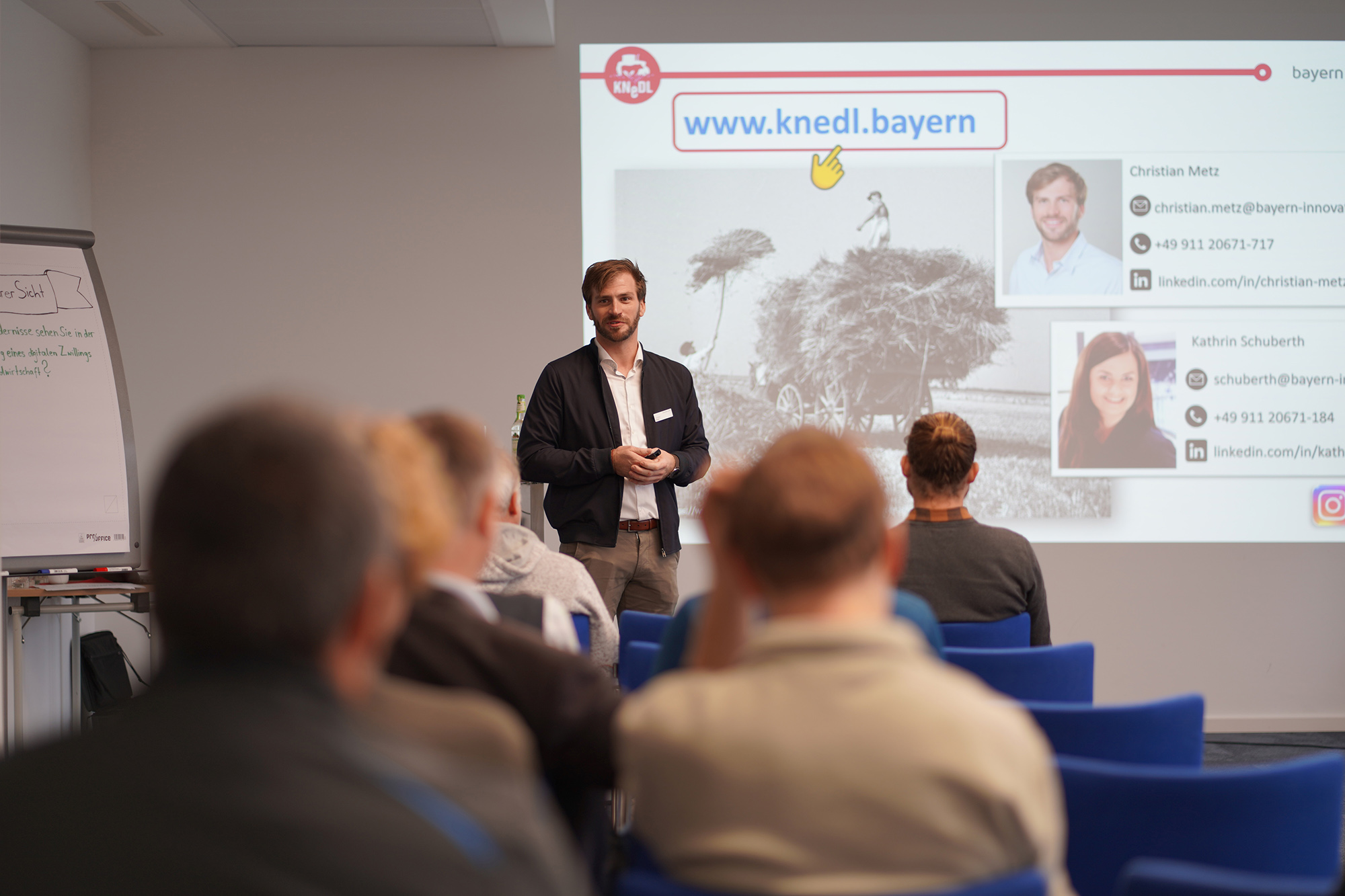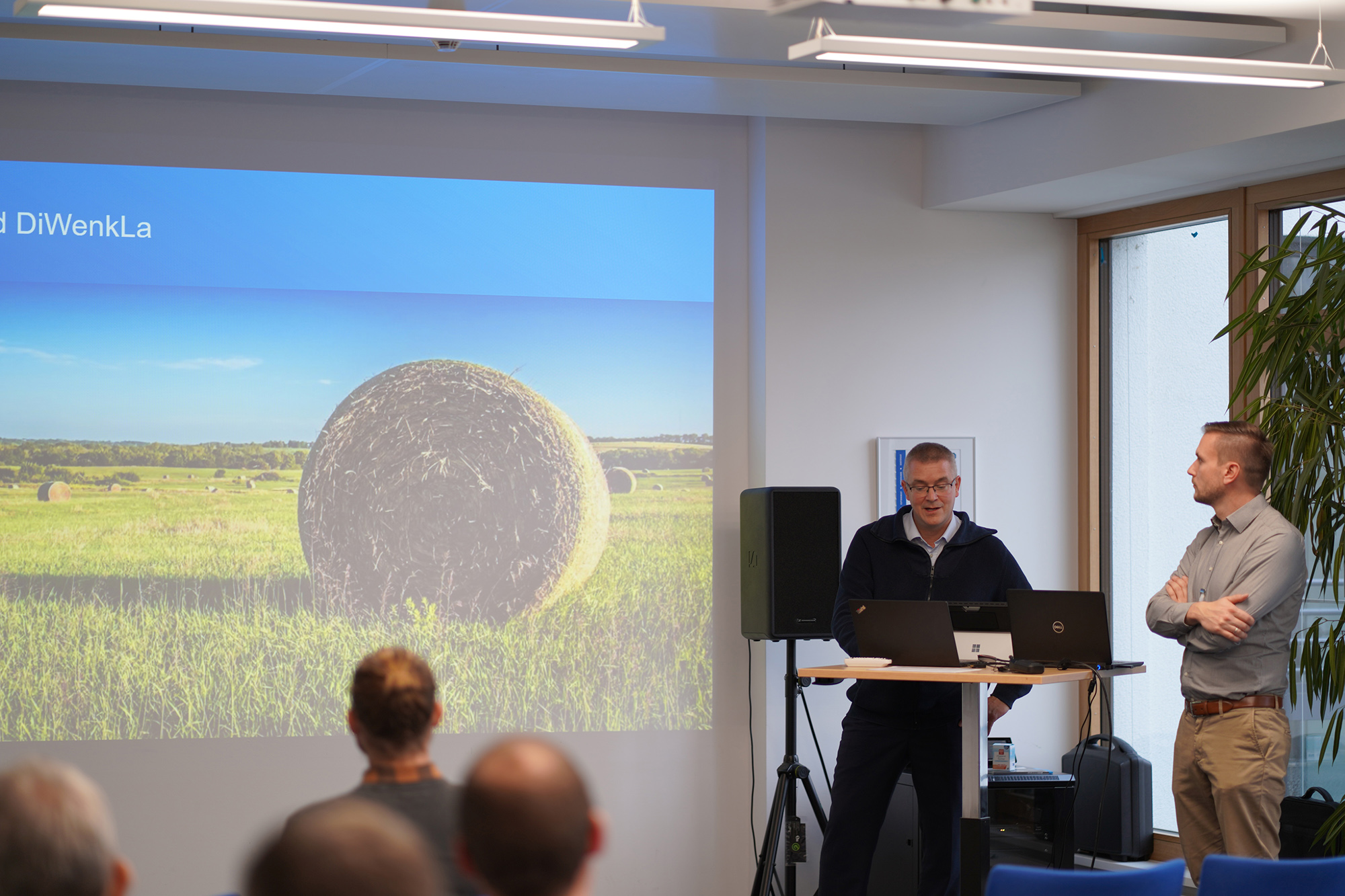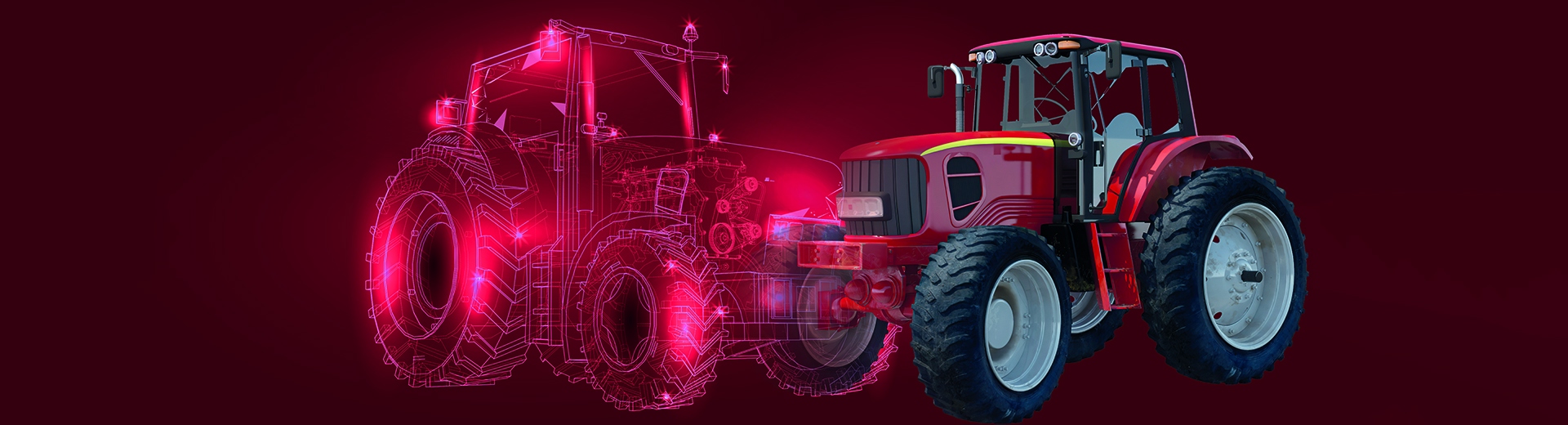
We’ll show you what a digital twin of a farm might look like, provide information on research projects, and introduce the concepts behind Bavaria’s model regions while explaining their background and rationale.
The Digital Twin—The Interface of the Future?
In industry and logistics, the concept of the digital twin is already familiar and well-established. Tracking a shipment with a single mouse click, for example, is already part of our everyday lives and has become almost indispensable. Without a digital twin that maps such processes, these applications would not be feasible.
But why create a digital replica of a farm? Does it make sense to connect all the relevant stakeholders and systems? Can digital tools simplify on-farm processes, and can this approach be adapted to agriculture? Could this perhaps even optimize the use of water, fertilizers, and pesticides?
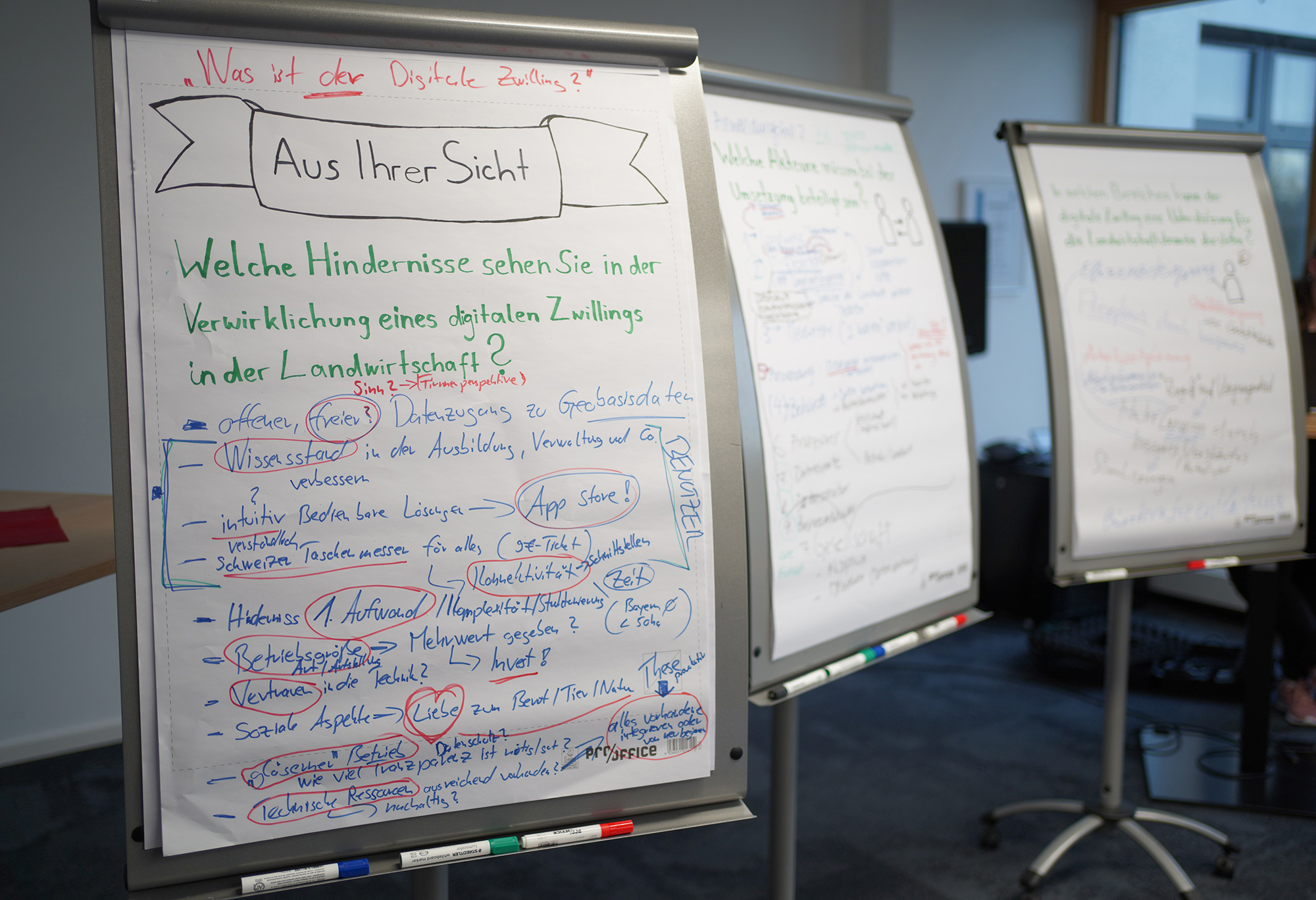
These are precisely the questions we’d like to discuss with you at our in-person event on November 9, 2022, in Nuremberg.
We’ll show you what a digital twin of a farm might look like, provide information on research projects, present the concepts of Bavarian model regions, and explain the reasoning behind them.
We encourage you to register right away!


Technical Contact

Organizational Contact
Follow-up Report: Smart Agriculture, Smart Region—The Digital Twin for Agriculture
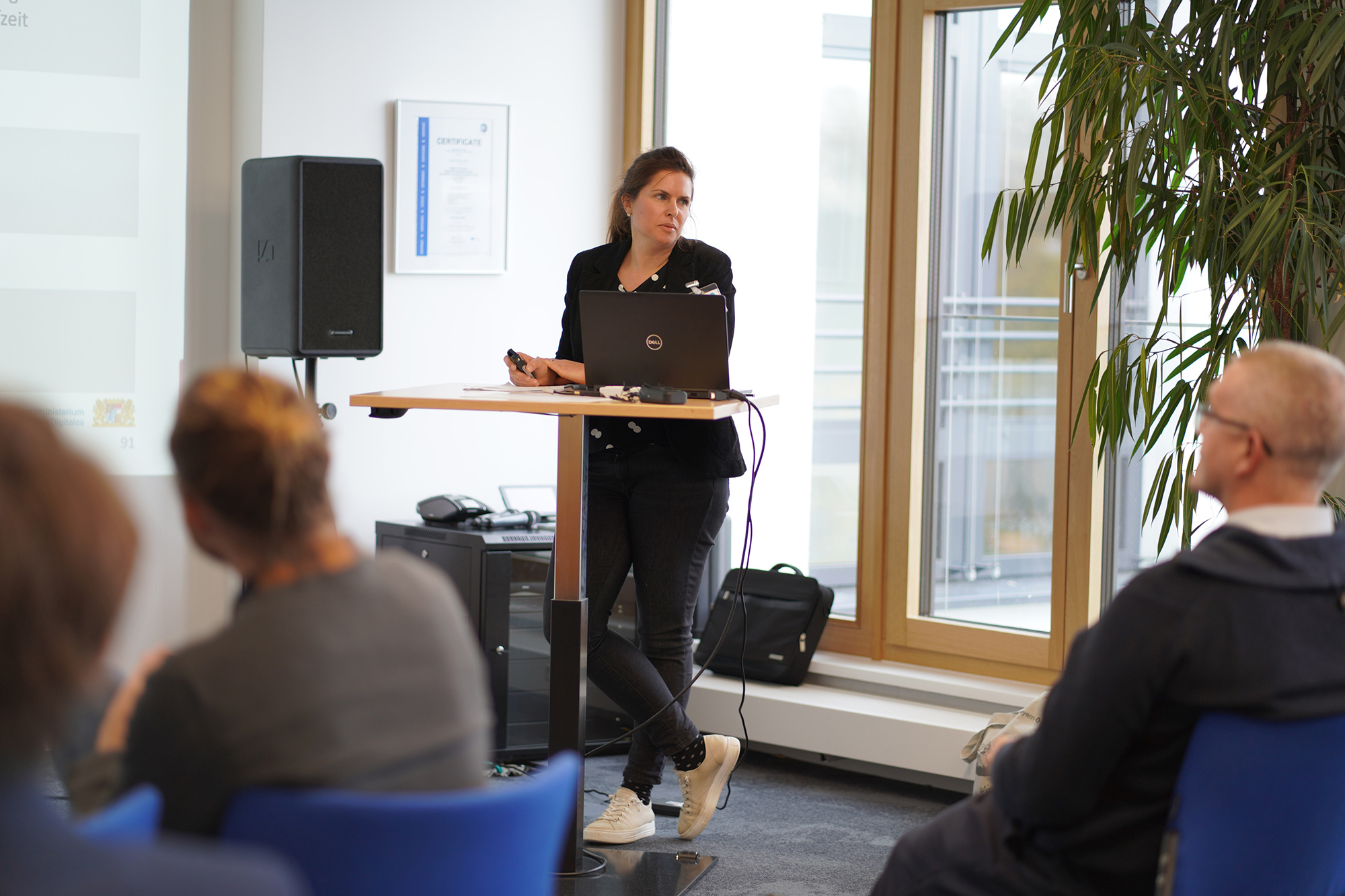
The event “Smart Agriculture, Smart Region—The Digital Twin,” held on November 9 in Nuremberg by the Bavarian Digital Agriculture Competence Network (KNeDL), provided a glimpse into the digital reflection of a farm.
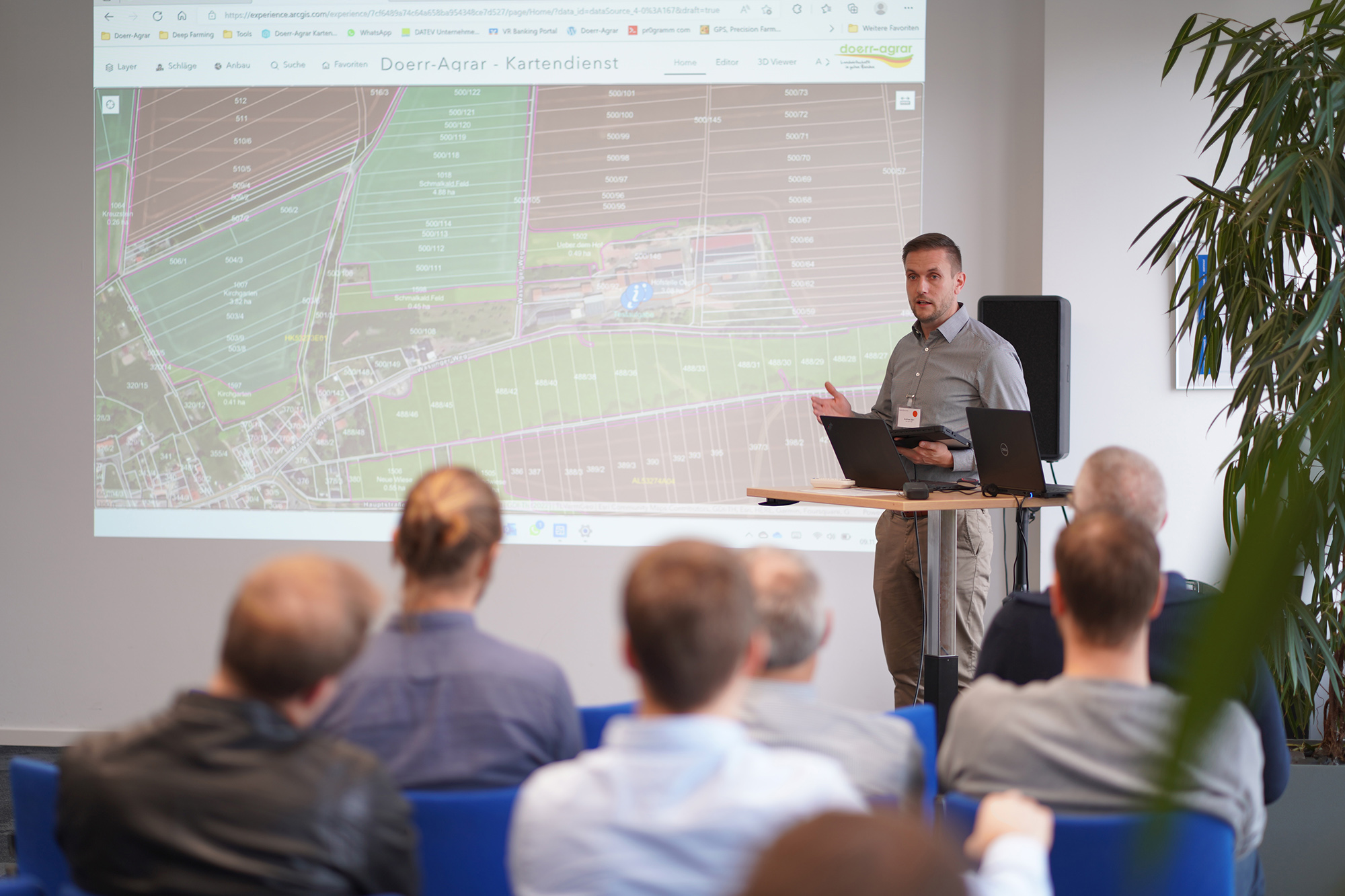
The focus was on the implementation project developed within KNeDL by farmer Andreas Dörr and the company ESRI, represented by Mr. Michael Mundt.
Taking practical needs into account, the two created a digital twin of Mr. Dörr’s farm, including the farmstead and fields.
“Society and policymakers expect more and more from us farmers. In my view, digitalization should serve as a simple decision-making tool for farmers. Above all, digitalization must be smart; farmers will only be willing to adopt it if it genuinely makes their work easier.”
Andreas Dörr, farmer / Managing Director of Dörr Agrar GbR
What motivates you to explore the digital twin?
The beneficial use of digital tools in agriculture for the environment, society, and day-to-day operations on the farm. By digitally representing processes and simplifying their documentation, the goal is to create greater efficiency as well as transparency. Specifically, this means that a digital twin primarily serves as a decision-making and planning tool for farm management.
The focus of the event was an in-depth discussion of the prototype developed by the two keynote speakers. The proper and efficient use of “well-prepared” data from practical agriculture and its surrounding context on a single platform can support farm management in their planning and documentation for the farm.
What does this support look like, and what are the areas of application for the digital twin both within and outside of agriculture?
Examples of how the digital twin can be used include:
- Creating to-do lists for employees
- A documentation tool for compliance requirements
- Support for compliance with environmental measures and other requirements
- Transparency in the value chain
- Forecasting and simulation models regarding operational planning and crop planning
- Land management: topographic view, planning of tramlines, erosion control, lease agreements, etc.
- Daily tool incorporating real-time data
The discussion about this practical application in agriculture was further enriched by additional insights.
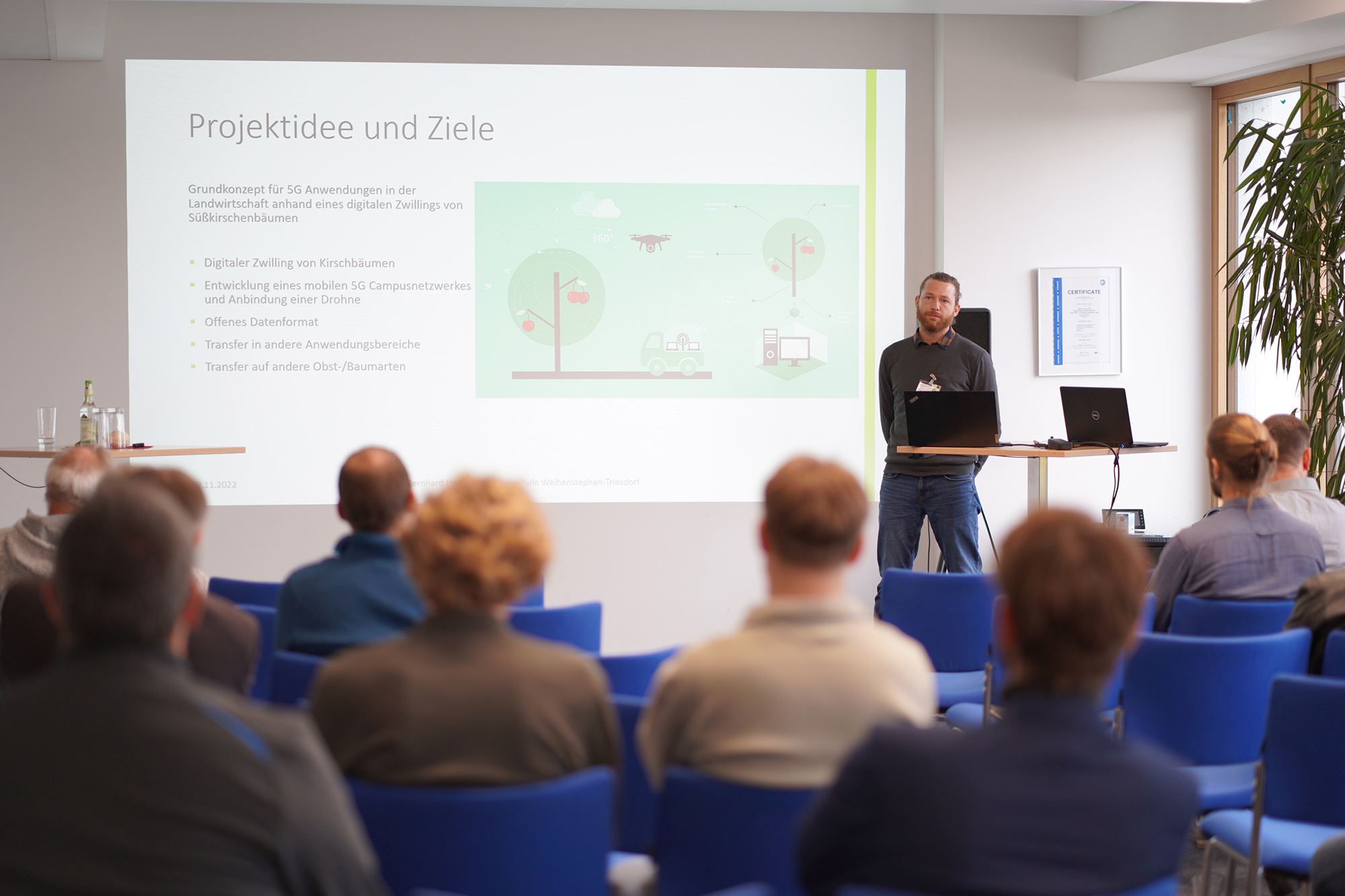
Weihenstephan Triesdorf University of Applied Sciences presented a project currently being implemented in collaboration with the Forchheim district. “For5G – Digital Twin.” This project focuses on the digital twin of cherry trees and serves to enhance understanding and provide a basis for decision-making regarding the management of orchards in terms of diseases, harvest timing, etc.
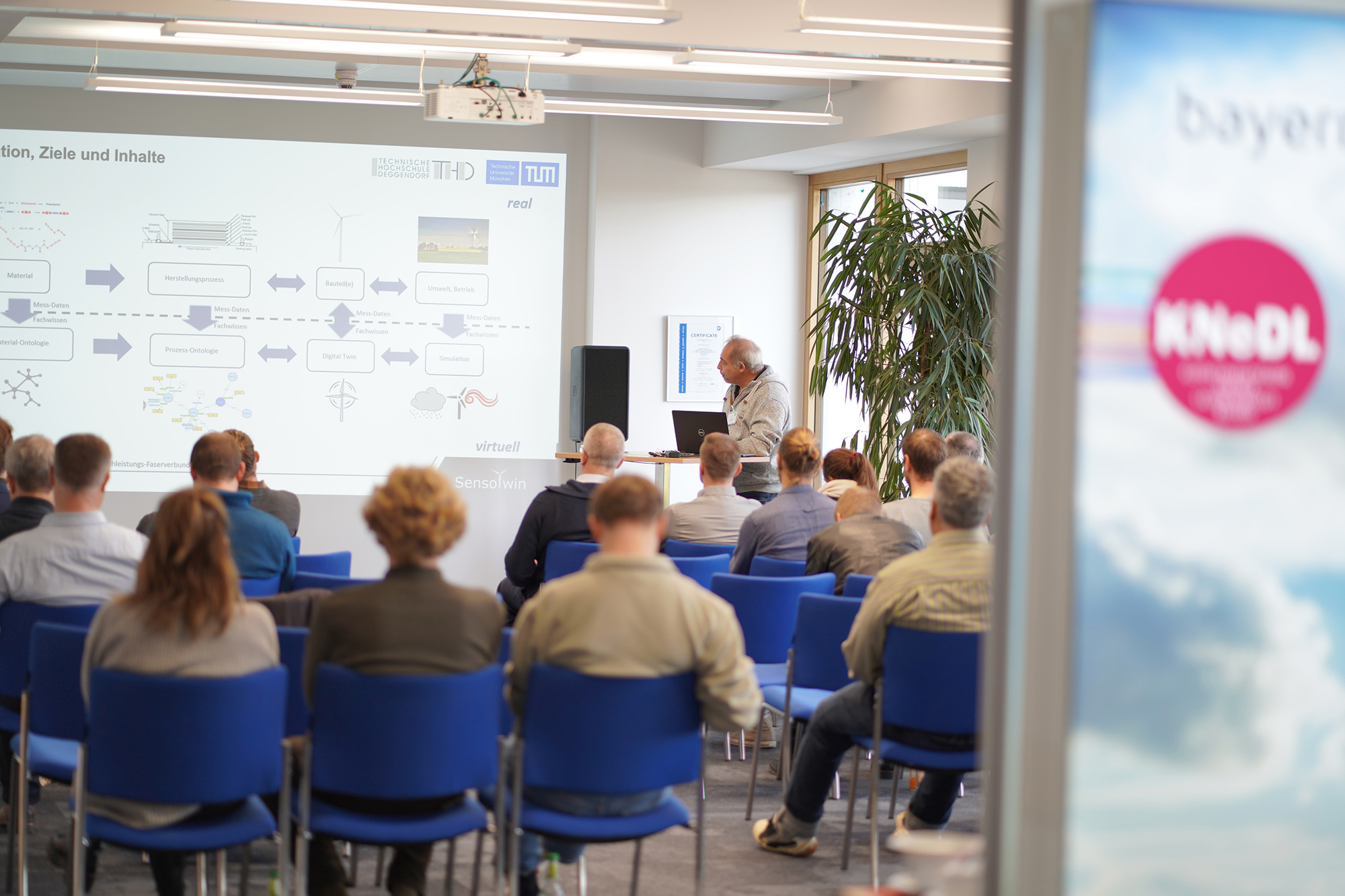
The Deggendorf University of Applied Sciences contributed a perspective from outside the industry with the “SensoTwin” project, which explores the potential of digital twins for wind turbines. It focuses on linking a digital twin of individual components with sensor data to simulate, record, and evaluate actual maximum loads and the condition of individual components throughout their lifecycle. This simulation can help extend the service life of various components, some of which are oversized.
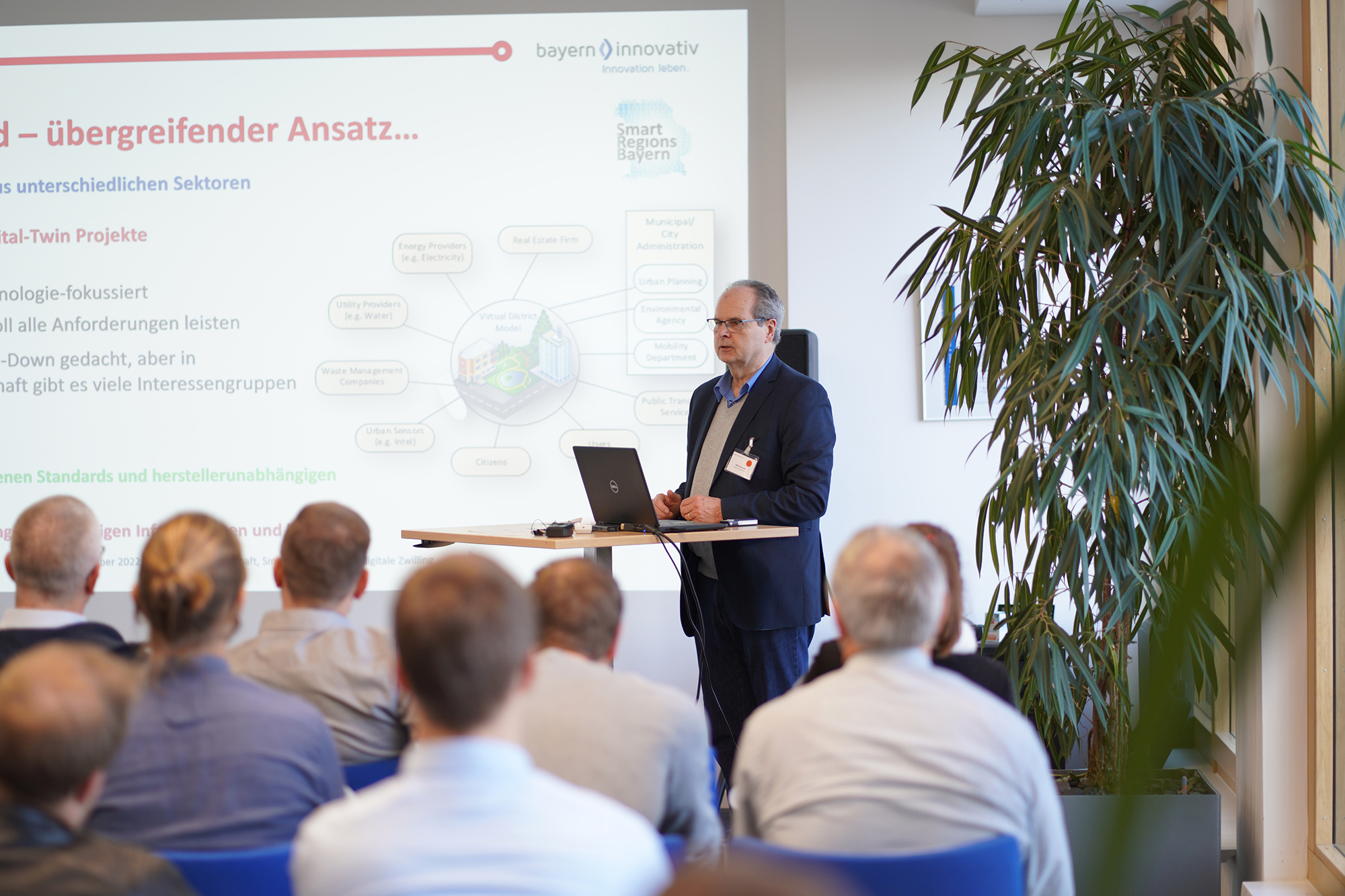
The event was rounded out with an overview of the projects from Bayern Innovativ’s “Smart Cities and Regions” thematic platform. This platform has long been engaged with the concept of digital twins for municipalities. As an example, the “TwinBy” project was presented, which supports the development of digital twins in municipalities.
The possibilities offered by digital twins are diverse, including for agriculture. The integration of administrative and planning processes into such a tool is particularly exciting. The implementation of a digital twin should always focus on ease of use and immediate added value for the user. This applies to small and medium-sized family farms as well.
Through collaboration with other industries and sectors, countless scenarios can be implemented to create an efficient and labor-saving future in terms of shared planning processes and administrative tasks.