Wind Turbines as a Competitive Advantage
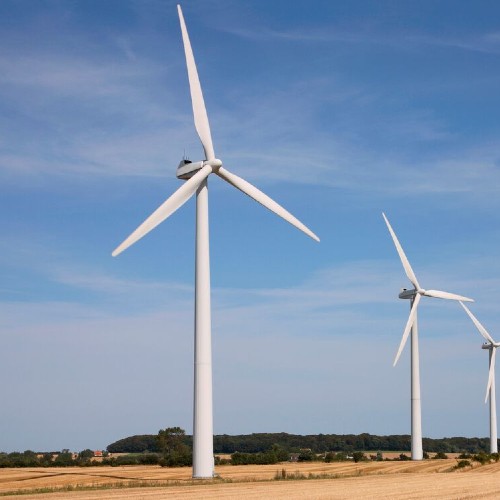
Three wind turbines are expected to cover about two-thirds of the tire plant's electricity needs in the future
July 7, 2026
Source: E & M powernews
With its own wind farm, tire manufacturer Continental aims to generate a large portion of the electricity needed by its tire plant in Korbach.
Tire manufacturer Continental is building its first wind farm in Twistetal near Korbach (Hesse). The company cites the following reasons: diversification of its energy supply, improved cost competitiveness of the plant, and independence from energy markets. The wind turbines are intended to supply electricity to the tire plant in Korbach (Hesse), located about eight kilometers away.
Bernhard Trilken, Head of Production and Logistics for Continental’s Tire Division, sees the wind farm as a competitive advantage. “With our own wind turbines near the plant, we gain planning certainty regarding energy costs and become less dependent on fluctuating energy markets—crucial factors for competitive tire production in Germany.” This aligns with Continental’s global strategy to further expand the company’s own electricity generation using renewable energy. It is also intended to serve as a model for other locations worldwide.
According to the company, three wind turbines, together with the existing photovoltaic systems, will cover approximately two-thirds of the Korbach tire plant’s electricity needs in the future. The turbines to be installed are Nordex N175/6.X models with a hub height of 179 meters and a rotor diameter of 175 meters. Continental estimates annual electricity generation at around 55 million kWh.
“To this end, Continental plans to invest an amount in the mid-double-digit millions of euros into the project,” the company announced. Construction is scheduled to begin in 2026; commissioning is planned for about a year and a half later. The necessary regulatory approvals have already been obtained.
The wind power generated is to be used directly in tire production. Energy is needed there in particular for mixing the raw rubber materials and for the extrusion process used to shape tire components. At its Korbach site, Continental produces passenger car, motorcycle, road bike, and industrial tires and employs approximately 2,400 people.
Continental is also exploring the use of its own wind and solar power plants at other tire production sites worldwide. Factors influencing the selection process include local wind and solar potential, regulatory frameworks, energy storage options, integration into the existing energy grid, and economic viability. In addition, the company intends to continue relying on long-term electricity supply contracts.
Author: Stefan Sagmeister