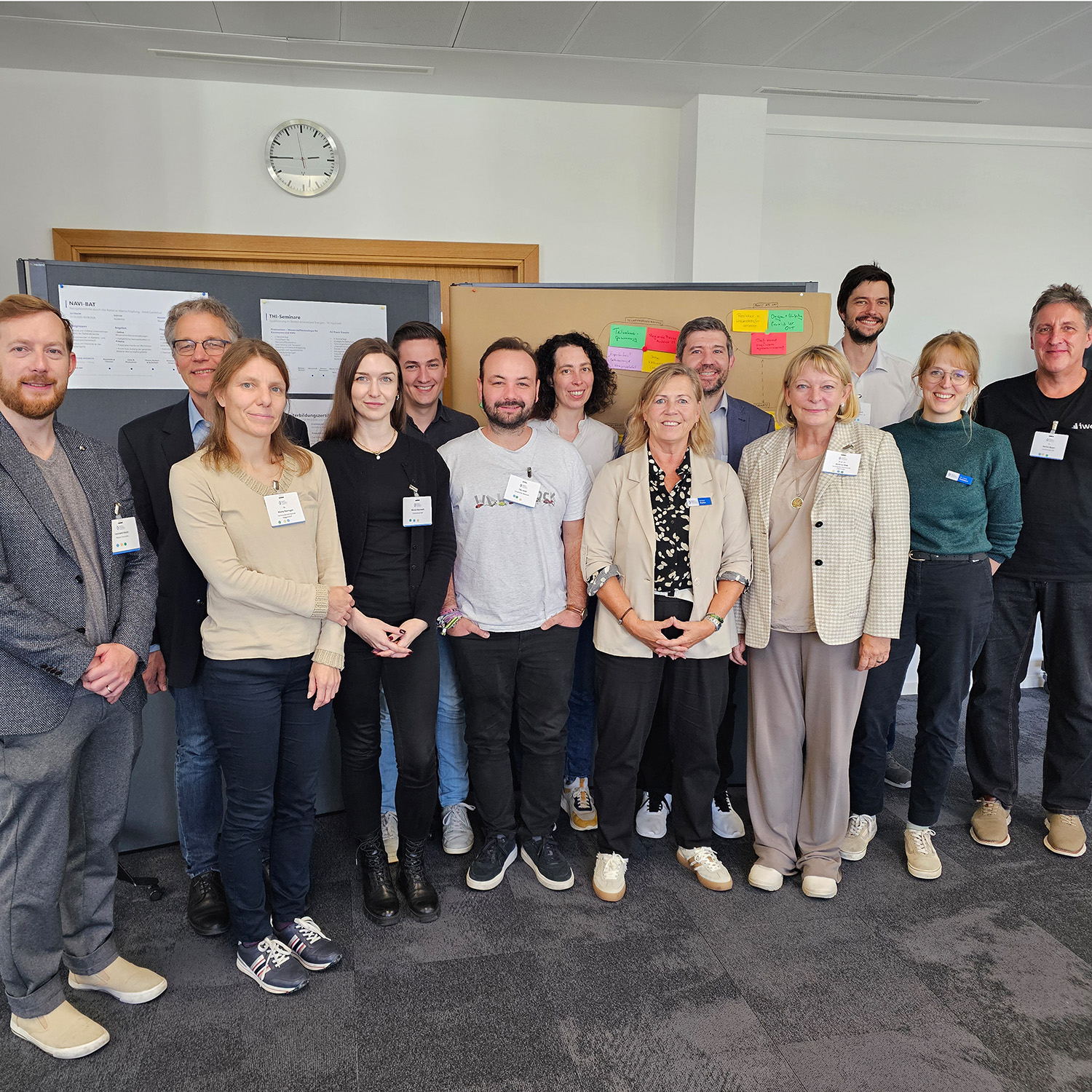
The 500th Energy Efficiency and Climate Protection Network has been launched
More than 4,000 companies are now taking advantage of the exchange of experiences within networks to lower energy costs, reduce emissions, and strengthen their competitiveness.
Source: Initiative for Energy Efficiency and Climate Protection Networks
September 7, 2026
The Initiative for Energy Efficiency and Climate Protection Networks (IEEKN) has reached an important milestone with the registration of its 500th network. Across Germany, more than 4,000 companies are benefiting from the advantages of networking.
In light of high energy prices and a strained economic situation, the importance of improving energy efficiency for companies continues to grow. Consequently, companies’ involvement in the IEEKN—an initiative supported by the federal government and key business associations and organizations—is also gaining relevance. Already, 500 networks are strengthening their competitiveness by tapping into energy efficiency potential, implementing climate protection measures, and engaging in an open exchange of ideas regarding these solutions. The effectiveness and added value for participating companies are tracked annually. According to the initiative’s latest surveys, a participating company saves an average of 3.36 GWh of final energy and 1,020 metric tons (t) of CO₂ equivalents per year.
Stefan Rouenhoff, Parliamentary State Secretary to the Federal Minister for Economic Affairs and Energy, takes stock after more than ten years of the network initiative: “The Energy Efficiency and Climate Protection Networks initiative is a proven tool for the energy transition. Over the course of two program phases, more than 4,000 companies have already joined forces in 500 networks and are benefiting from the shared exchange of experiences. The energy efficiency measures initiated through these networks not only reduce energy costs for businesses but also strengthen our country’s economic resilience.”
Rita Schwarzelühr-Sutter, Parliamentary State Secretary to the Federal Minister for the Environment, Climate Action, Nature Conservation, and Nuclear Safety, emphasizes: “Resource conservation and economic growth are two sides of the same coin. The energy efficiency and climate protection networks demonstrate this time and again in a very impressive way. Companies that rely on efficient, climate-friendly technologies will continue to be successful in the future. With the 500th network, it is clear that this approach to business has become a genuine trend. Through voluntary commitment and innovative strength, every single network company is contributing to greater climate neutrality in the German economy and thus to the quality of life for all of us.”
Holger Lösch, Deputy Executive Director of the Federation of German Industries, praises the initiative: “The networks bring together peer groups of like-minded individuals, in which the companies are the key players. They decide for themselves on their goals and level of commitment, and do so through dialogue with other companies. This fosters motivation, enhances the expertise of those involved, and leads to impressive innovations, investments, and a significant reduction in energy costs. The business community welcomes the fact that the federal government is revising the Energy Efficiency Act and intends to significantly reduce regulatory red tape in that area.”
The 500th network, “Klimabündnis Ebersberg-München,” brings together 29 small and medium-sized enterprises from more than eight industries—a remarkable number of diverse companies that are facilitated and advised by the Ebersberg-München Energy Agency. Together, the network initially aims to save 5.1 GWh of final energy and 1,500 metric tons (t) of CO₂ equivalents per year. To achieve this, the plan includes renovation measures for building envelopes, conversion to LED lighting, and the installation of heat pumps. Cross-sector learning is part of the concept, as are regional roots and visibility within the respective county: “Every sector and every member company contributes to expanding the pool of tried-and-tested measures. This broad exchange of experience maximizes energy savings and the leverage effect in the regional energy transition,” explains Dr. Willie Stiehler, Managing Director of the Ebersberg-Munich Energy Agency.
The shared goal of the federal government and the supporting associations is to ensure that the German economy can continue to leverage its energy efficiency and climate protection potential without interruption under the umbrella of the initiative. In July 2026, the IEEKN steering committee unanimously sent a clear signal: The agreement to continue the initiative through 2030 should be signed as soon as possible.
This is an energy efficiency and climate protection network
In an energy efficiency and climate protection network, several companies collaborate to increase their energy efficiency and advance climate protection measures. Key elements include a moderated exchange of experiences among participants, as well as shared savings targets and the implementation of measures. This enables companies to expand their expertise more quickly in order to reduce their energy consumption and contribute to climate protection. The latest issue of the success stories brochure demonstrates how networking works in practice.
About the Energy Efficiency and Climate Protection Networks Initiative
The Energy Efficiency and Climate Protection Networks Initiative helps companies of all sizes and across all industries to exchange ideas in networks—whether cross-industry, within a specific industry, or within a single company—and to implement measures that promote energy efficiency and climate protection. The initiative began in 2014 as the Initiative for Energy Efficiency Networks. With the launch of its second phase in 2021, it was expanded to include the topics of climate protection, the energy transition, and sustainability. Currently, the IEEKN is jointly sponsored by 20 business associations and organizations together with the federal government and supported by numerous other project partners. At the most recent meeting of the steering committee—the initiative’s central decision-making body—the sponsoring associations and the federal government declared their intention to continue the initiative into a third phase. A formal resolution on this matter is still pending.
The final monitoring report for the Energy Efficiency Networks Initiative (IEEN) shows the overall impacts of all networks launched during the initiative’s first phase, from December 2014 to the end of 2020: The networks have achieved annual savings of 7,283 GWh of final energy and 2,620,000 metric tons of CO₂ equivalents. According to the IEEKN’s latest monitoring report, the Phase 2 networks—which will be completed by the end of 2025—will save 2,772 GWh of final energy and 842,000 metric tons of CO2 equivalents annually. The trend indicates that companies continue to make a significant contribution to climate protection and improving energy efficiency under the umbrella of the initiative.
Author: Editorial Team, Initiative for Energy Efficiency and Climate Protection Networks