Oranienburg Tests Flexible CHP Plant Operation
The hydrogen-compatible combined heat and power plant can run on natural gas, biomethane, and hydrogen, and also serves as a real-world testing ground for the operation, logistics, and integration of hydrogen into municipal heating networks.
October 12, 2026
Source: E & M powernews
Stadtwerke Oranienburg is testing hydrogen in a dual-fuel CHP plant. The project aims to provide insights into operation, supply, and H2 transport.
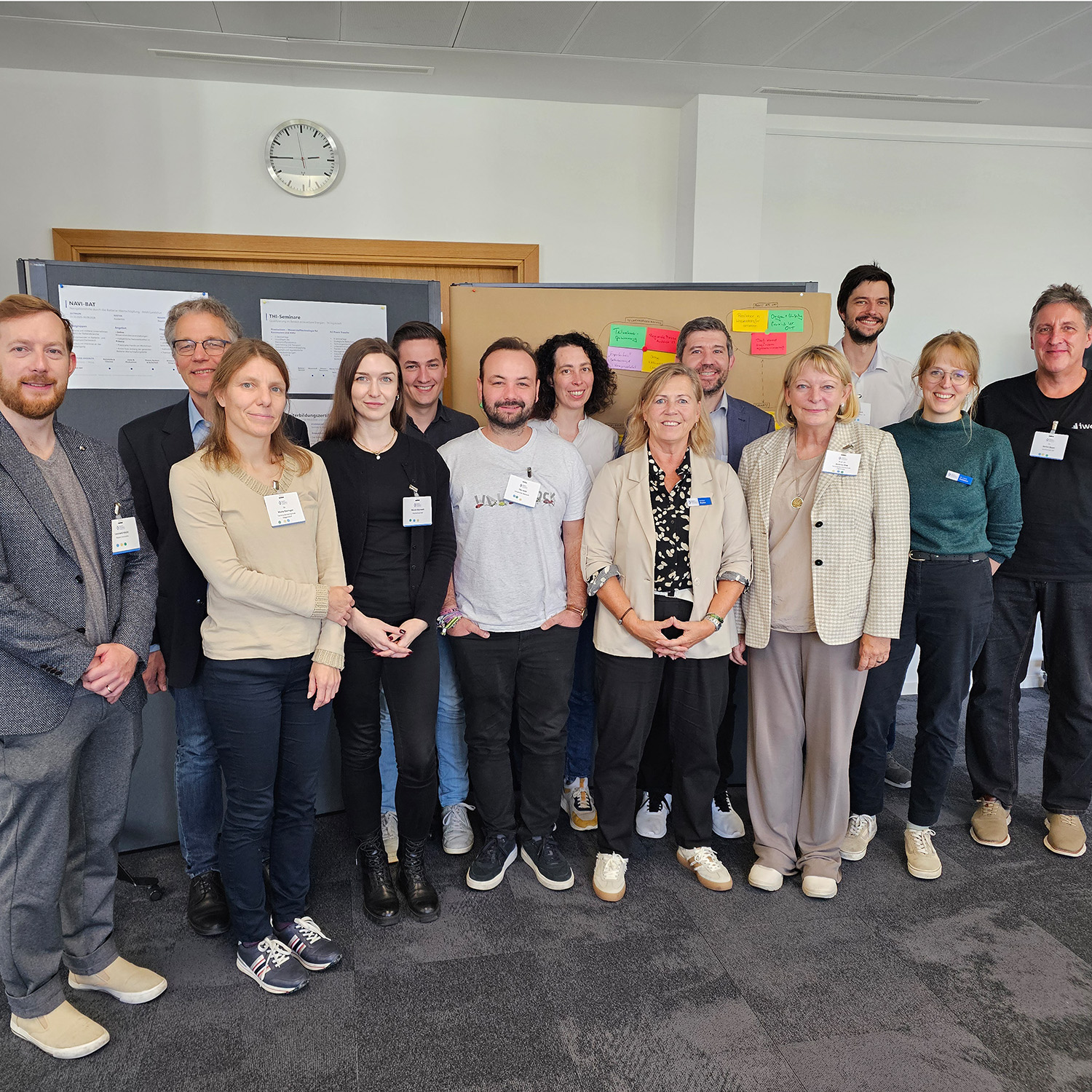
Oranienburg Municipal Utilities has expanded its heating plant in the Lehnitz district with a combined heat and power (CHP) unit capable of running on both hydrogen and other gases. The utility aims to gain experience with hydrogen without making the operation of the heating network dependent on a hydrogen-only supply. “Instead of waiting for regulations or a hydrogen transmission pipeline, we’re testing it now. We want to use hydrogen as a new energy source, test its technical operation under real-world conditions, and gain new insights in the process,” says Peter Grabowsky, managing director of Stadtwerke Oranienburg.
Martina Klement (CSU), Minister of Economic Affairs for the State of Brandenburg, also emphasizes: “With the commissioning of the hydrogen-compatible combined heat and power plant, we are opening a new chapter in regional energy supply in Brandenburg. What particularly impresses me is the innovation taking place here: a process is being implemented that makes it possible to use different energy sources to operate the plant.”
The heating plant where the new CHP unit is installed was originally built by the National People’s Army. After it was taken over by the German Armed Forces, it was converted to natural gas. In the mid-1990s, Stadtwerke Oranienburg took over the heating plant. At that time, the site had three boilers with a combined output of 7.2 MW. Today, the district heating network primarily serves commercial customers. To accommodate this, the municipal utility decommissioned one of the existing gas boilers and installed a combined heat and power plant. As the commercial operations changed, so did the load profiles. The municipal utility adjusted heat production accordingly.
50 kW of electrical output with both fuels
In April 2026, Stadtwerke Oranienburg also commissioned the H2-ready combined heat and power plant in Lehnitz, thereby “laying the foundation for hydrogen use,” reports the municipal utility. The CHP manufacturer Tuxhorn Blockheizkraftwerke designed the unit as a dual-fuel system. Natural gas, biomethane, or hydrogen—as well as mixtures thereof—can be used without any issues. According to the project partners, this fuel flexibility is intended to enable a gradual transition to a new energy source while continuing to utilize the existing gas infrastructure.
The CHP unit delivers 50 kW of electrical power in both hydrogen and natural gas modes. Differences arise in fuel consumption, thermal output, and efficiency. The manufacturer specifies a fuel consumption of 138 kW in hydrogen mode and 142 kW in natural gas mode. The thermal output is 76 kW for hydrogen and 81 kW for natural gas. According to Tuxhorn, when accounting for condensing heat recovery at a return temperature below 40 degrees Celsius, the figures are 97 kW for hydrogen and 92 kW for natural gas. For both operating modes—that is, with both natural gas and hydrogen—the manufacturer specifies an overall efficiency of 93 percent.
The greatest differences lie in the emission values: In hydrogen operation, Tuxhorn reports carbon monoxide and nitrogen oxide levels of less than 20 mg/Nm³ each. For natural gas operation, the manufacturer specifies less than 650 mg/Nm³ of CO and less than 500 mg/Nm³ of NOx. Tuxhorn cites lower fuel consumption for the same net electrical output, smoother operation, and reduced wear as additional benefits of hydrogen operation.
The fuel mixture ratio can be adjusted during operation
The technical innovation lies less in the power class than in fuel flexibility. The dual-fuel system can use hydrogen and natural gas in variable mixing ratios. According to the plant manufacturer, these ratios can also be adjusted during operation. This allows the operator to respond to the availability of the respective fuels. In addition to natural gas, biomethane can also be used as a fuel for mixed operation.
The company is pursuing several goals with this: The CHP plant is intended to supply heat for the base load of the local heating network and to reduce the primary energy factor of the heating network through combined heat and power generation. In addition, the municipal utility is examining whether the unit can be used for emergency power generation. In this case, the CHP plant could take over the functions of a separate emergency power system.
At the same time, the plant serves as a pilot project. The municipal utility aims to gain practical experience on a small scale with the operation of a hydrogen-fueled CHP plant and to determine the technical and operational costs associated with a future transition from natural gas to hydrogen. The company does not intend to wait for a supraregional hydrogen infrastructure to be established. Until appropriate transport pipelines are available, the transport and storage of hydrogen will be tested on-site. The hydrogen is supplied by FPS.Energy, which transports it using trailers of various pressure levels and capacities. The supply chain thus forms part of the field test.
Hydrogen Arrives by Trailer
For the municipal utility, the project thus combines regular heat generation with technical testing. The CHP plant plays a role in the local heating network while also enabling tests with different fuel compositions. The dual-fuel approach limits dependence on hydrogen logistics: If hydrogen is available, the unit can use it; if supply bottlenecks occur, operation on natural gas remains possible. This allows hydrogen to be tested in an existing supply system without completely tying heat supply to the availability of the new fuel.
According to Tuxhorn, the compact design also allows for flexible integration into existing energy centers and makes the system particularly attractive for municipal, commercial, and neighborhood-based applications.
Author: Heidi Roider