In Borken, drinking water is now gaining attention as a heat source
The “WasSERDICHT” research project is investigating how drinking water can be used in the future as a climate-friendly heat source for the municipal heating transition
June 12, 2026
Source: E & M powernews
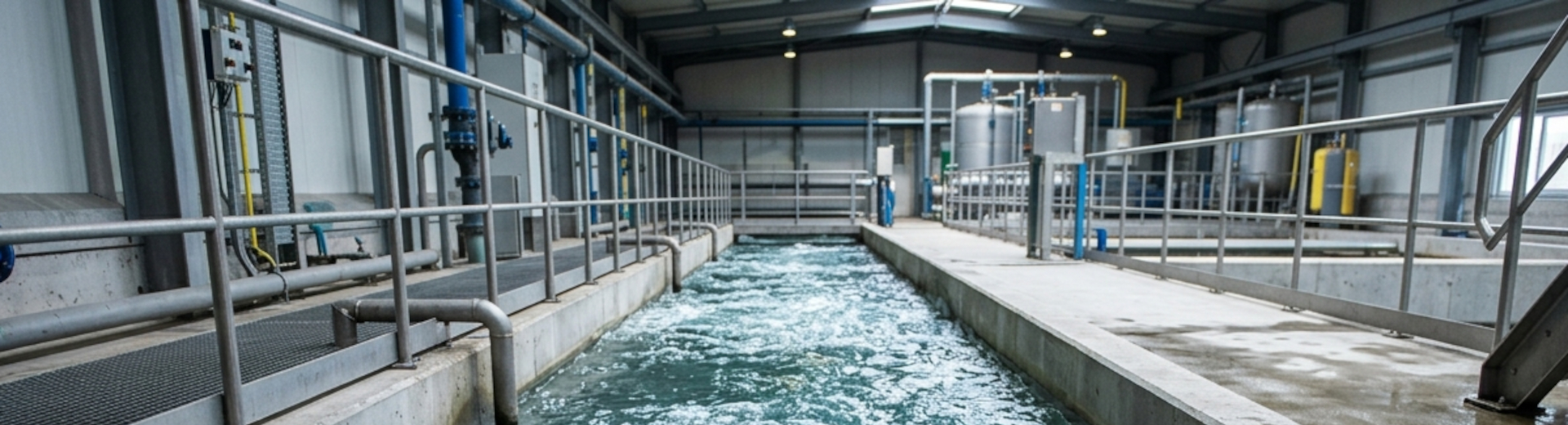
Generating Heat from Drinking Water: A pilot project has begun in the Westmünsterland region. Part of the research project is a pilot plant at a water treatment facility operated by Stadtwerke Borken.
Wastewater isn’t the only source that can play a role in heat supply. That’s the conviction of those involved in a pilot project aimed at harnessing the thermal energy from drinking water. The project is called “WasSERDICHT” and brings together Stadtwerke Borken, Münster University of Applied Sciences (FH Münster), the aquatic ecology institute “AquaEcology” in Oldenburg, and the Berlin Institute for Climate Protection, Energy, and Mobility (IKEM).
The project is receiving funding from the Federal Ministry for Economic Affairs and Climate Action as part of the 8th Energy Research Program. At the heart of the project is a pilot plant to be built on the grounds of the Trier waterworks operated by Stadtwerke Borken. For over a year and a half, teams of scientists will monitor the plant’s operations in the Westmünsterland region.
The partners have high expectations. According to a joint statement, IKEM hopes to tap into drinking water as a new climate-friendly heat source. Markus Niehaus from the development department at Stadtwerke Borken believes that drinking water infrastructure “could play an important role in the heat transition in the future.”
Drinking water typically has a much lower temperature than wastewater, which is already used as an energy source. However, the project partners note that the use of heat exchangers and heat pumps could also raise the thermal energy contained in drinking water to a usable temperature level. Germany is lagging behind other European countries in this regard.
Roin Keßeler, head of Borken’s municipal utility, aims to tap into the “enormous potential” of combining drinking water and heat supply. The project is intended to provide important insights into “a possible future implementation on a larger scale.”
The Münster University of Applied Sciences is responsible for developing the technical concepts for the pilot plant, analyzing the energy potential, and scientifically evaluating the pilot plant’s results. IKEM, in turn, is examining the legal framework as well as the public acceptance of the technology.
Aqua Ecology is also involved in this aspect. According to Managing Director Thomas Raabe, ensuring drinking water quality is a top priority. To this end, the company provides continuous monitoring as well as microbiological and chemical analyses.
The project’s results could be useful for other municipal utilities, many of which are responsible for drinking water services. For this reason, Wasserdicht intends to make the analyses available to other municipalities and utility companies to support sustainable heat supply in Germany.
Author: Volker Stephan