Federal Government Bets on Optimism in Carbon Management
The Federal Ministry of Economics is relying on funding programs, infrastructure development, and international cooperation to advance carbon management as a key component of industrial decarbonization.
October 7, 2026
Source: E & M powernews
The Federal Ministry for Economic Affairs and Energy plans to accelerate the rollout of CCS and CCU in Germany through an action plan and secure investments in the necessary infrastructure.
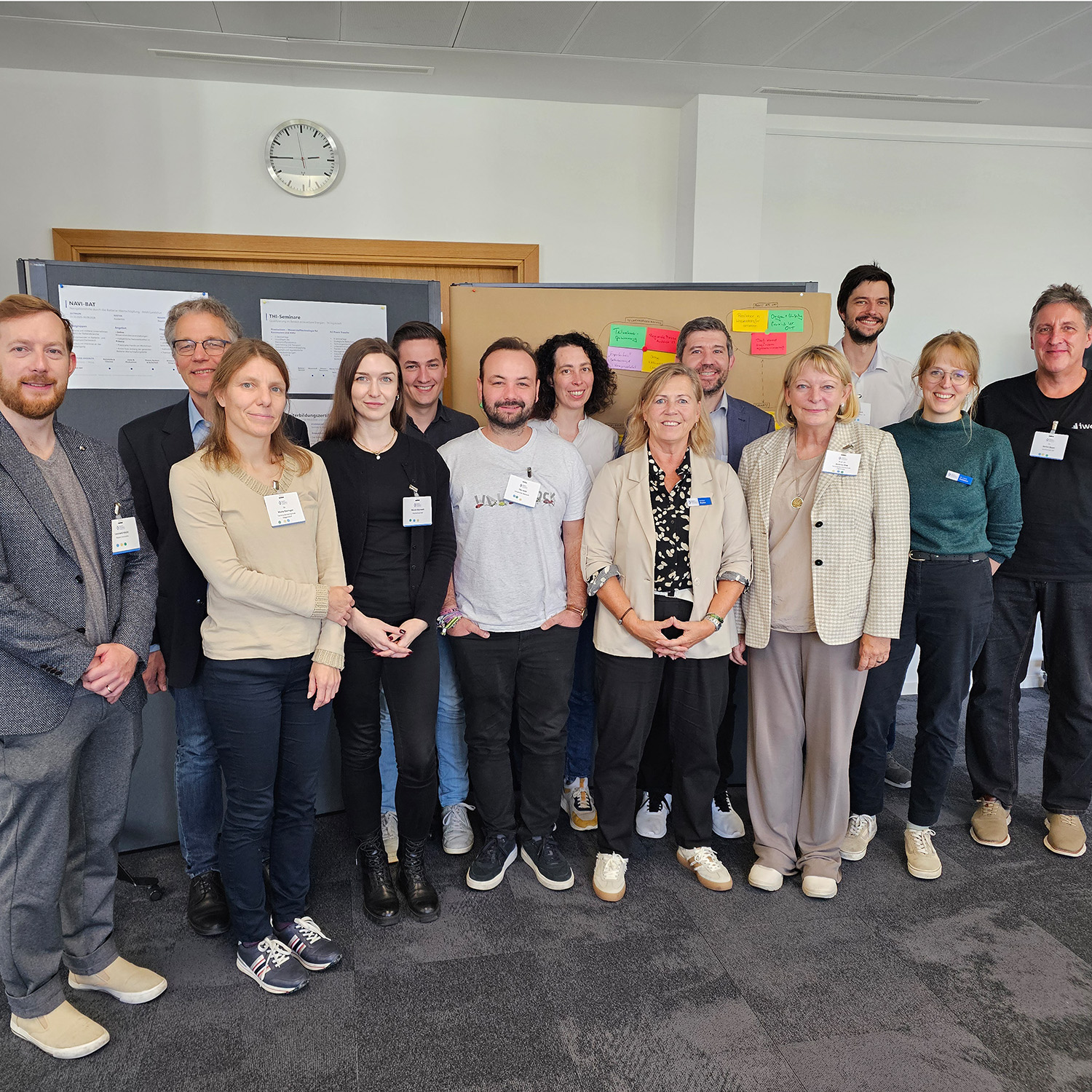
The Federal Ministry for Economic Affairs and Energy (BMWE) aims to advance Carbon Capture and Storage (CCS) and Carbon Capture and Utilization (CCU) in Germany. State Secretary Frank Wetzel announced this on October 6 at the first Strategic Dialogue of the Carbon Management Forum (CMF) in Berlin. More than 200 participants from business, politics, and civil society gathered there to discuss the framework for these technologies.
The BMWE is currently working on an action plan, which is to be presented by the end of the year and is intended to provide industry with a basis for investment decisions. The goal is to make carbon management a competitive advantage for German industry and to keep industrial value creation and jobs in Germany.
“We need optimism for this generational challenge,” said Wetzel. The government must establish a framework that encourages business decisions but does not replace them. At the same time, regulations at the national and European levels must be coordinated. Wetzel cited Carbon Contracts for Difference (CCfD) as one such instrument.
For the first time, calls for proposals for CCU and CCS projects are possible. “Several projects are already in the starting blocks,” he said. According to the State Secretary, the funding volume will be determined based on demand in the preliminary round starting in mid-October. Another round of funding is planned for 2027.
CO2 infrastructure is also to receive government support. The planned Carbon Storage and Transport Act will establish the legal framework for this. Storage under the North Sea has been made legally possible. According to Wetzel, there will be an “opt-in” option for the federal states regarding CO2 storage under the German mainland. “There will be no Germany-wide CO2 network; there must be effective, localized solutions,” said Wetzel.
He cautioned against rejecting necessary infrastructure outright based on the “Not in my Backyard” principle. The federal states must decide whether they want to maintain industrial production and jobs—such as those in the cement industry—in the long term, he said. Germany also plans to collaborate with Denmark and the Netherlands on CO2 exports. As part of the dialogue, two memoranda of understanding (MoUs) were signed with the ambassadors of the two neighboring countries.
Industry Calls for a Predictable Timeline
Alexandra Decker, a member of the executive board at Cemex, welcomed the legal framework for CO2 exports. She expects the action plan to provide, above all, more predictable economic risks and clear timelines. At the cement manufacturer Cemex, CO2 capture is already being tested in Rüdersdorf.
Decker described CCfDs as an important tool and welcomed a second round of funding in 2027. She added that the economic viability of CCS and CCU could also be improved by accounting for biogenic CO2 and negative emissions. Storing CO2 near industrial sites could reduce transportation costs. “We need green lead markets to create demand for more climate-friendly products,” Decker urged.
Thomas Hüwener, spokesperson for Open Grid Europe, pointed to concrete plans for CO2 pipelines. OGE is already evaluating pipeline connections—including in North Rhine-Westphalia—that could enable the transport of CO2 to the Netherlands.
Funding programs must take effect quickly so that the infrastructure can be built and companies that invest early do not face a competitive disadvantage. The logistics industry also sees a need for infrastructure. Juliet Reiss, Head of Sustainability at DB Cargo, called for clear target ranges and volumes for CO2 transport.
Climate Protection as a Benchmark
Jan-Justus Andreas, CEO of the environmental organization Bellona, called for clear prioritization. Due to limited time, financial resources, and storage capacity, he said, the action plan must specify for which applications CCS is unavoidable.
Andreas also advocated for a rising CO2 price in the European Emissions Trading System (ETS). This price must be high enough to make CCS economically viable. However, an abrupt increase to 300 euros per metric ton of CO2 would not be sensible. Instead, a reliable trajectory for price increases is needed so that companies can invest in a timely manner.
Wetzel also emphasized the importance of the European ETS. He said the European Union’s current approach makes sense and is supported by Germany to ensure planning certainty. An effective Carbon Border Adjustment Mechanism (CBAM) is also necessary to preserve industry in Germany and Europe.
Author: Susanne Harmsen