Event
Smart Helpers in Bavaria's Fields - Agricultural Robots in Practice
19. October 2022
09:30 - 16:29

Autonomous, safe, and sustainable. What can field robots do? In the future, digital assistants will be able to make an important contribution to efficient and sustainable agriculture.
Autonomous, safe, and sustainable. What can field robots do?
In the future, digital assistants will be able to make an important contribution to efficient and sustainable agriculture. Sowing and weeding are already part of their range of tasks. In this way, they fill the labor gap and help the agricultural sector produce in a more resource-efficient manner.
Together with the Bavarian State Institute for Agriculture, we’re showcasing everything related to these new, smart helpers at the Siemens Technopark in Ruhstorf.
Here’s what awaits you:
- Demonstrations of the technology behind the most widely used field robots
- Information on cybersecurity in agriculture
- Discussions on the socioeconomic aspects of field robotics
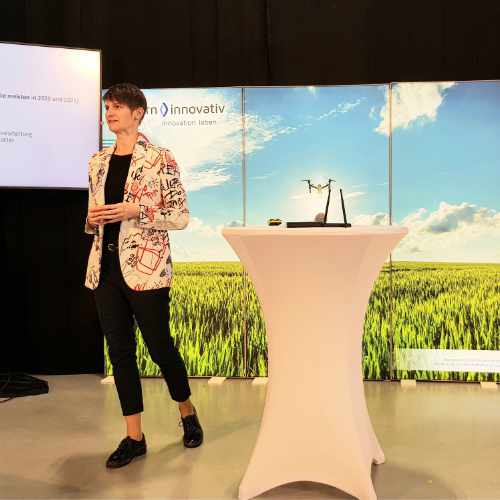
- Insights into the use of drones and the relevant legal considerations
- Expert insights from specialists in academia, industry, and the field
- Virtual showroom for stakeholders in the robotics industry
We look forward to your participation.




It is my honor to welcome you!
Christian Metz, Head of the Bavarian Digital Agriculture Competence Network, Bayern Innovativ GmbH, Munich
Stefan Florenz, Director of Technopark Ruhstorf, Siemens Real Estate
Video message from
Michaela Kaniber, Bavarian Minister of State for Food, Agriculture, and Forestry
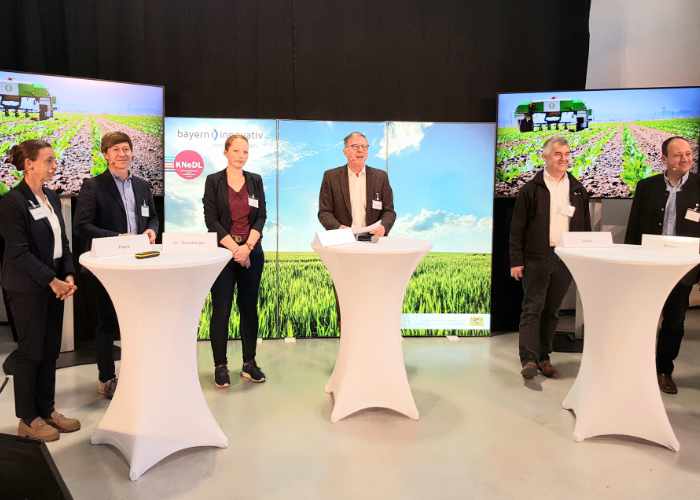
Opportunities and Challenges of Field Robotics in Domestic Food Production - Panel Discussion
Olivia Spykman, Digital Farming, Bavarian State Institute for Agriculture
Annette Plank, Agricultural Education Specialist/Farmer
Michael Braun, Head of Marketing, HORSCH Maschinenbau GmbH
Thomas Muhr, Economic Spokesperson for KNeDL, Managing Director, geo-konzept GmbH
Dr. Markus Gansberger, Director of the Innovation Farm, HBLFA Francisco Josephinum
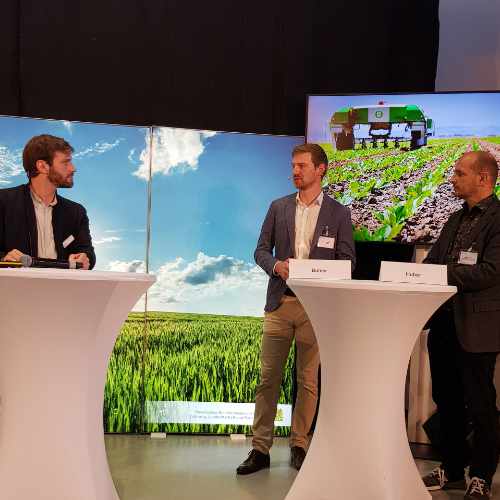
Agriculture from the Air - Discussion on the Practical Use of Drones in Germany
Moderators
; Christian Metz, Head of the Bavarian Digital Agriculture Competence Network, Bayern Innovativ GmbH, Munich
Josef Bühler, Head of Smart Farming Solutions, BayWa AG
Anton Huber, Advisor for Grains and Oilseeds, Bavarian Farmers’ Association
Dr. Alexander Dümig, Project Manager in the “Resource-Conserving and Efficient Irrigation in Horticulture and Agriculture” division, LWG
Dr. Lukas Prey, Research Associate, Weihenstephan-Triesdorf University of Applied Sciences – Institute for Biomass




On-site exhibition:
- Exhibition booth at the event venue (approx. 3x2m space, electricity, 1 table and chairs—as needed)
- Exhibition hours: October 19, 2022, 8:30 a.m. – 5:00 p.m.
Take this opportunity to showcase your company, products, and innovations completely free of charge and engage with interested visitors.
A Look Back: Smart Helpers in Bavaria’s Fields—Agricultural Robots in Practice
From Vision to Reality—What Can the Robot Do?
The hybrid event “Smart Helpers in Bavaria’s Fields – Agricultural Robots in Practice” focused on digital technologies for use in the field.
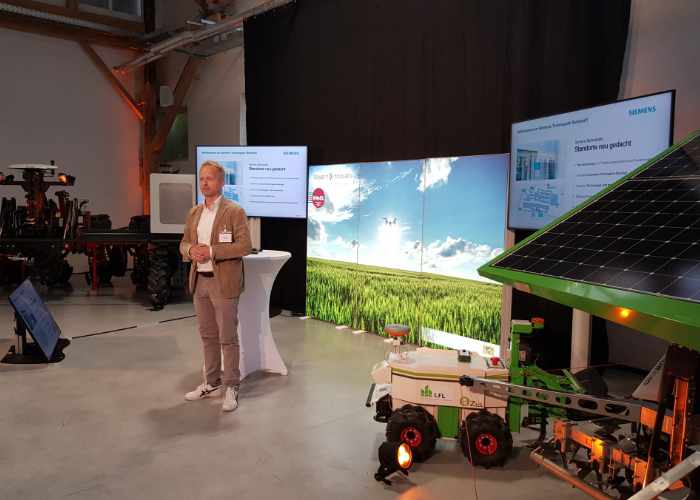
On October 19, 2022, at the Siemens Technopark in Ruhstorf a. d. Rott, the Bavarian Digital Agriculture Competence Network, together with the Bavarian State Institute for Agriculture (LfL), presented solutions for sustainable agriculture.
A total of 170 people on-site and over 100 watching online—representing business, education and training, academia, and the field—learned about field robots, cybersecurity, and the use of drones.
Agricultural Robotics – What’s the Real Picture?
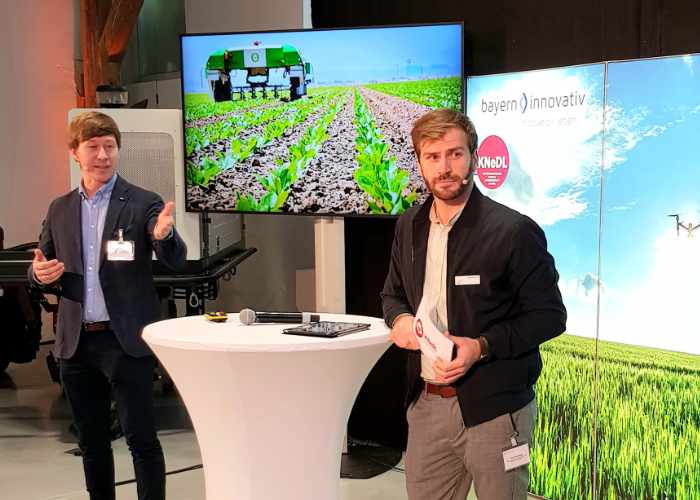
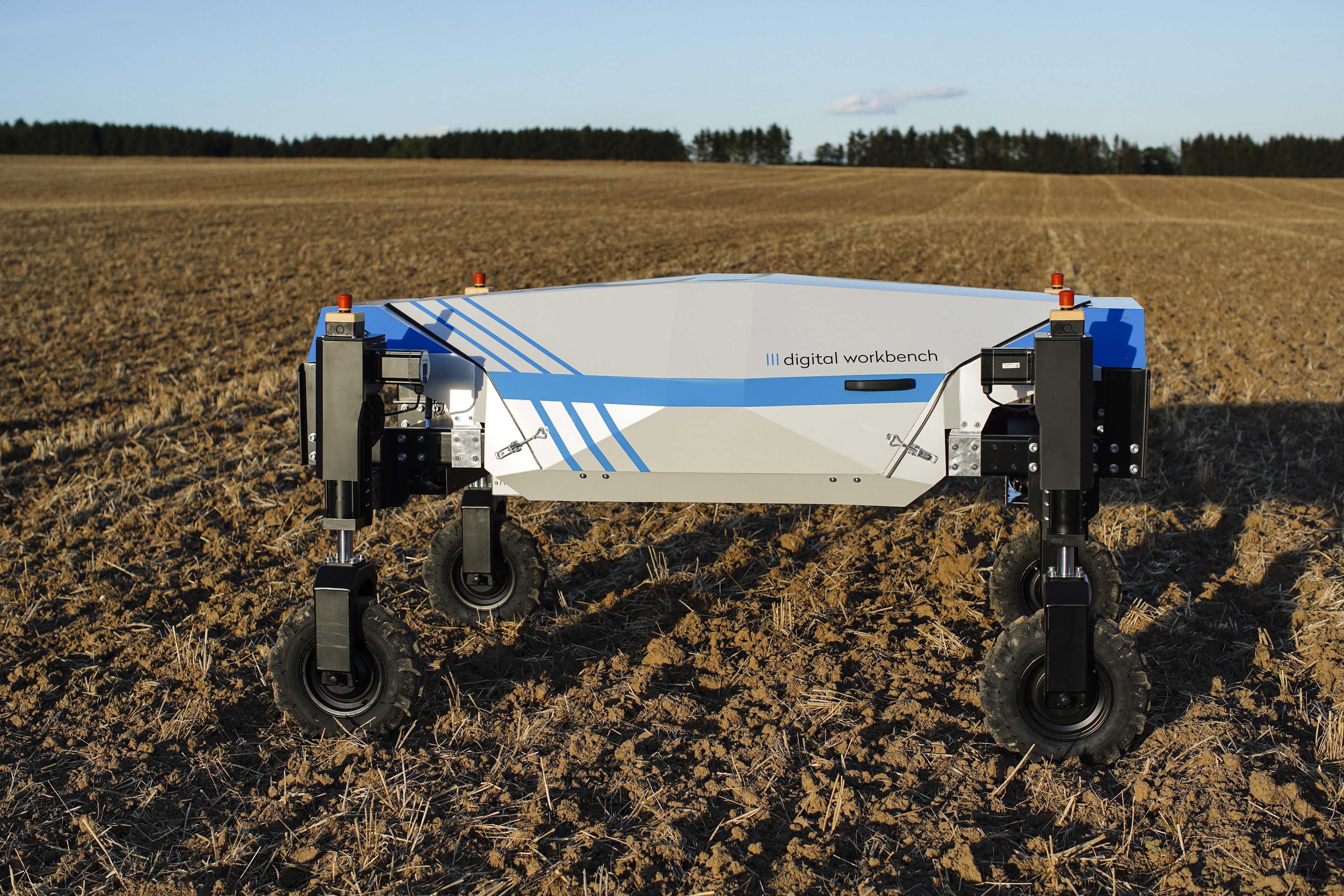
Digitalization in general is viewed positively, according to Olivia Spykman of the LfL. And the same is true for robots. They offer many opportunities to make work easier and increase efficiency on farms. Currently, there are more and more models available, mostly from young startups. At the moment, the main tasks include seeding and weed control, primarily using mechanical hoes. The most common crop for robot use is sugar beets. But work is already underway in the field of traditional horticulture as well, such as the open-field cultivation of lettuce. Basically, the robots operate either “blind.” This means they plant a seed and store the exact geodata of the planting location so they can retrieve it during a subsequent work step. Or they use sensors and camera systems to visually survey the field. A major issue in the context of the legal framework is the logistics of the robots—specifically, their movement from the farm to the field or from one field to another. This step still must be handled conventionally by loading the robots onto transport units.
Ultimately, the challenge remains to convey a realistic picture: Where do we stand, and what can robots realistically contribute to more sustainable agriculture in the coming years? Dr. Markus Gansberger, head of the Innovation Farm in Austria, conveyed this point to the audience in his practical report on field robotics in Austria.
Cybersecurity – Not Sexy, but Necessary
Dr. Christa Hoffmann stirred things up with her presentation on cyberattacks targeting businesses in the agricultural and food industries. This issue needs to be brought more into focus, even for smaller businesses and private individuals. Protecting against cyberattacks isn’t rocket science. Peter Wilfahrt, one of Germany’s top hackers, attempted to demonstrate this to the audience through a live hack. As is often the case, humans are a weak link in the system and represent a common entry point for cyberattacks in both private and professional settings. Everyone should therefore engage with this topic and, in addition to exercising caution when using digital systems on a daily basis, develop security strategies in a timely manner and continually evaluate them.
Drones—A Modern and Highly Precise Tool
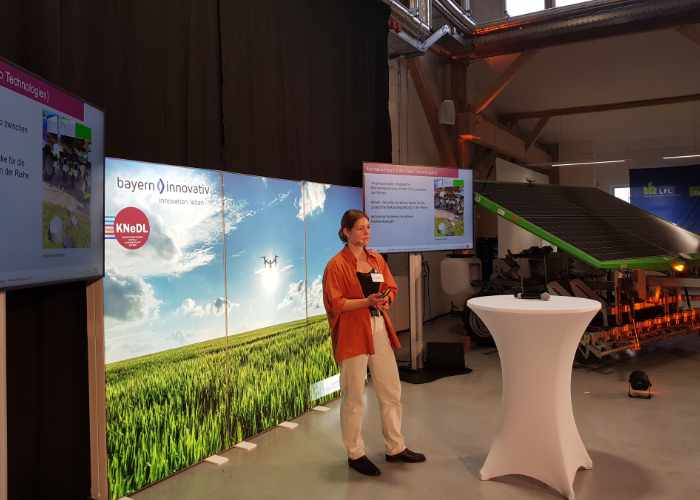
The use of drones in agriculture is also on the rise in Germany. In addition to their use in rescuing fawns or monitoring fields, they are primarily used for releasing Trichogramma parasitic wasps, which act as natural predators of the European corn borer. In addition, the application of cover crops into existing corn stands is an interesting example of how drones can be used to promote more environmentally friendly crop production. Currently, the approval process for drone use in Bavaria—which is still impractical and bureaucratically cumbersome—is an obstacle to the efficient and widespread use of drones. Setting this issue aside, Josef Bühler of BayWa AG sees the potential for drone use in weed control in the future, particularly in spot-spraying technology. The bottom line is: The use of drones is welcomed by farmers and promises many solutions for more sustainable crop production.
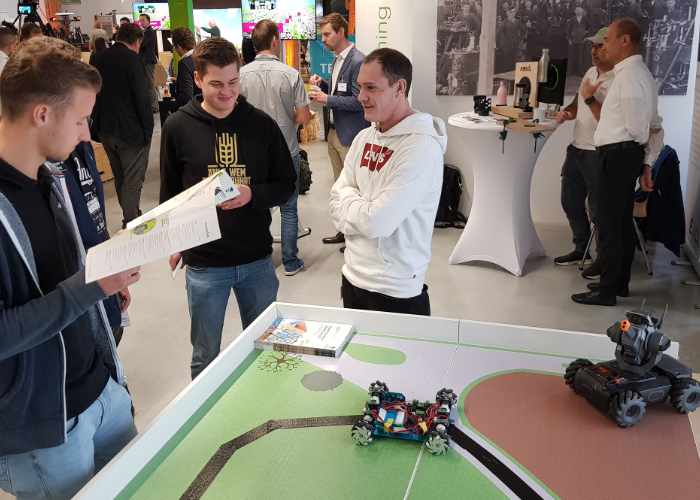
In addition to the technical presentations, there were also many discussions held as part of an exhibition on the topic of “Smart Helpers.” Click through our ingenious exhibitors.