Growth Through Innovation
A Discussion on the Factors Behind iba's Success
October 23, 2026
In early October, the Handelsblatt recognized iba AG as one of Germany’s fastest-growing medium-sized companies. This was a great opportunity to congratulate our cluster partner and to meet with Dr. Ulrich Lettau, CEO of iba AG, to discuss the strategic decisions, technological developments, and partnerships that have enabled this growth, as well as what other industrial companies can learn from this experience.
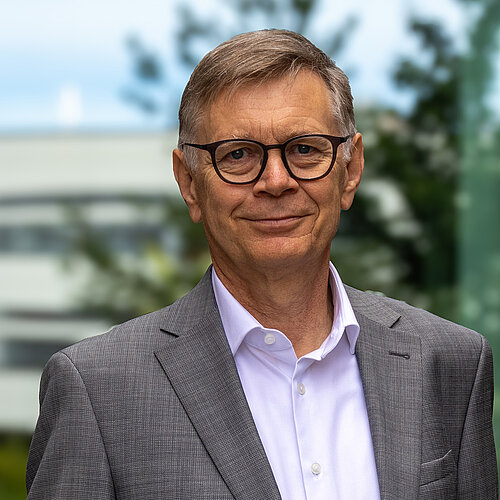
CMA (Andreas Hackner): Congratulations on this well-deserved award. When you look back on iba’s development, what do you think were the key drivers of this success?
iba (Ulrich Lettau): Thank you very much. Above all, a long-term corporate strategy consistently focused on sustainable success was crucial. Three factors are intertwined here: We continuously develop our products with a focus on concrete customer benefits; we diversify our target markets across various industrial sectors, including electrical power engineering; and we have a broad international presence.
CMA: That brings us to the topic of innovation. What role do technological innovations and ongoing research and development play in your growth?
iba: Innovation and the continuous improvement of our products are central to our business. Our customers’ requirements serve as our benchmark. At the same time, we take care not to create isolated, one-off solutions. Our customers expect solutions that can be used in their facilities over the long term while still enabling them to continuously benefit from technological progress.
CMA: At the same time, the industry faces major challenges, ranging from a shortage of skilled workers to geopolitical uncertainties. How does iba manage to achieve above-average growth under these conditions?
iba: In our view, our success is based on four pillars: customers, innovation, employees, and finances. With our customers, we focus on long-term, partnership-based relationships, excellent consulting, and high-quality support. At the same time, we are continuously expanding our global sales activities. In the area of innovation, we involve customers in the ideation process at an early stage, tap into new technologies, and translate them into viable business models. At the same time, we keep our core products technologically up-to-date over many years.
CMA: And what role do employees and the company’s financial stability play in this?
iba: We want to empower and motivate our employees to make decisions independently and take responsibility for their tasks. This also includes attracting talent, retaining it over the long term, and providing targeted professional development. A motivating work environment throughout the company is an important foundation for this. On the financial side, we ensure cost transparency as the basis for sound decision-making. Long-term profitability and sustainable growth secure our ability to invest. At the same time, it is important to us to maintain our financial independence from third parties.
CMA: iba has deep roots in automation technology. How have digitalization, automation, and software solutions shaped your competitiveness?
iba: Without these areas, iba AG would not exist in its current form. We have our roots in automation technology and have evolved into a leading provider of systems for troubleshooting, process and quality optimization, and predictive maintenance. In addition, we support the digitalization of heterogeneous automation architectures. Digitalization, automation, and software are therefore not merely additions to our business, but its very core.
CMA: Innovation rarely arises in isolation. What role do collaborations with customers, universities, and networks such as the Mechatronics & Automation Cluster play?
iba: We have been actively participating in collaborative projects with universities for many years. This allows us to keep our expertise up to date and gives our employees the opportunity to work with top-notch researchers. We have also been an active member of the Mechatronics & Automation Cluster for a long time. The cluster has initiated interesting research partnerships and, through exchanges with other members, has helped us identify which innovation topics are currently relevant and should be pursued further.
CMA: So your connection to the cluster has grown over many years?
iba: Yes. I was previously a member of the CMA e.V. executive board and helped oversee the association’s successful integration into Bayern Innovativ. This integration has given rise to numerous cross-cutting topics and synergies with other clusters and networks. This results in significant added value for the partners of the Mechatronics & Automation Cluster.
CMA: Looking ahead, which technological trends will be particularly important for industrial SMEs over the next five years?
iba: I see three key areas. First, the integration of agent-based AI into internal processes, including development. Second, the integration of AI into software solutions. And third, the ability to integrate legacy systems and heterogeneous system landscapes into modern solutions. For medium-sized companies in particular, it will be crucial to combine innovation with existing structures.
CMA: Looking back, was there a strategic turning point or a bold decision that proved particularly successful?
iba: An important turning point was the decision to stop trying to do everything and instead consciously focus on selected applications and solutions. We combined this focus with a strategic expansion of our workforce. This allowed us to build on our strengths in a more targeted manner and chart a clearer course for the company’s future development.
CMA: In closing: What advice would you give to other medium-sized industrial companies that want to grow sustainably and strengthen their innovative capacity?
iba: First, it must be clear where the company is headed. Just as important, however, is the perseverance to consistently pursue these goals over many years. It’s helpful to break the journey down into stages, each of which already generates concrete customer value and, consequently, market success. Financial independence is an essential prerequisite for this. At the same time, it takes courage to adjust goals when conditions change, without losing sight of the long-term direction.