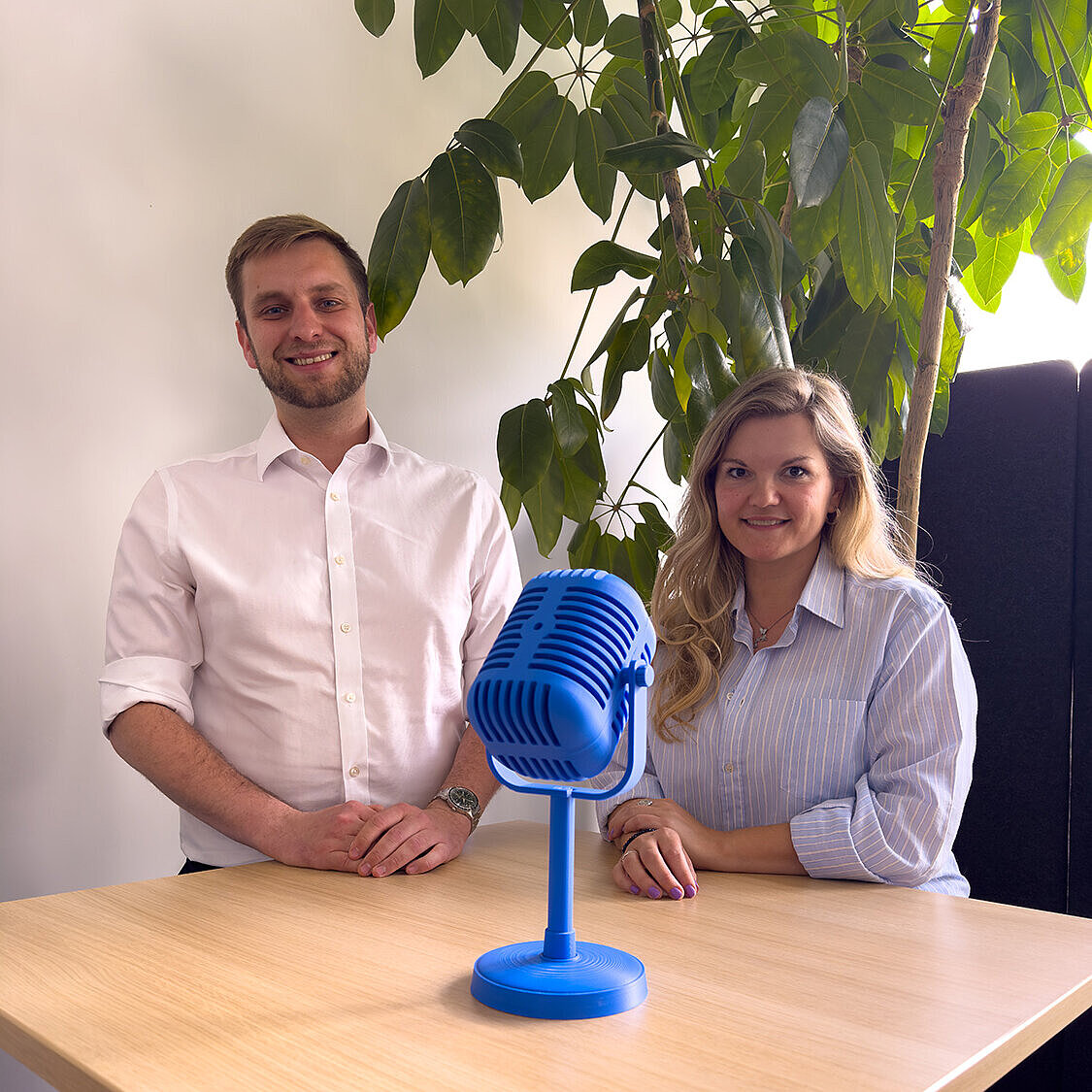
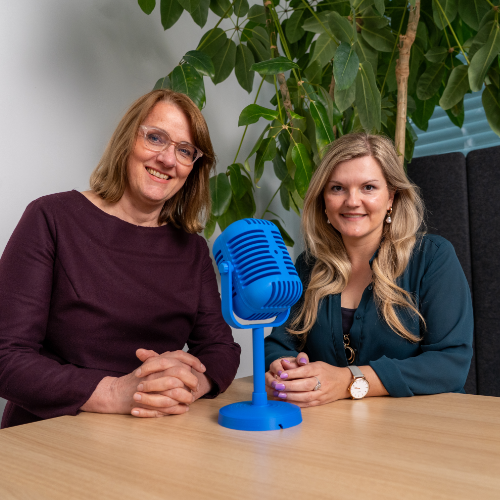
Transfer Requires Encounter Through Dialogue
Knowledge Transfer: How Ideas Change Sides
July 21, 2026
As the Innovation Management Team, we are always on the lookout for new methodologies that lead to innovative solutions through knowledge transfer. With this in mind, we assessed the needs in the area of knowledge transfer and sought out suitable approaches. Two formats have proven to be particularly promising.

We are referring here to the structured, socially embedded learning and reflection formats Working Out Loud (WOL) and Peer Case Consultation (KFB). Both approaches promote a diversity of perspectives and reflection, and are based on the belief that people can learn from one another when they openly share their experiences and actively support each other. Combining these two methods creates a space where knowledge is exchanged, perspectives are connected, and knowledge transfer is specifically strengthened.
Two methods that make knowledge transfer possible

WORKING OUT LOUD
Working Out Loud fosters relationships, openness, and visibility—fundamental prerequisites for knowledge to be shared and adopted in the first place.
Working Out Loud is a structured format for social learning. Typically, three to five people work on self-selected goals and meet weekly for about an hour, following a guide. It’s not just about “publicly sharing” work. The method is understood as an approach to building relationships with participants that can help them achieve a goal, learn new skills, or advance their professional development. In a safe space, mutual support, network expansion, and learning by example take place.
WOL is also described as a form of personal development, as the method strengthens self-efficacy, networking, and collaborative learning. All of these are factors that are also crucial in technology transfer.
Characteristics of the structure
- a self-selected personal goal
- small peer group
- Fixed timeframe
- mutual support in a safe space
- Targeted networking
- Sharing of knowledge, experiences, and insights
- Promotion of self-efficacy and reflection

COLLEGIAL CASE CONSULTATION
Peer case consultation creates a safe and structured space to reflect together on specific challenges and develop new solutions.
Peer case consultation addresses a specific professional concern. It is a structured, solution- and resource-oriented method. One person presents a case—a real-life professional challenge, conflict, or decision-making situation. The group listens, asks questions, shifts perspectives, and collaboratively develops new approaches. The method aims to integrate experiential knowledge from organizational practice into concrete solutions. Using a formalized process with clear roles and phases, the group works in a self-directed manner. Complex transfer questions for which there is no standard solution become manageable thanks to the method’s clear structure. Methodologically, the focus is less on general learning over extended periods and more on the focused, collaborative examination of a single case.
Characteristics of the Structure
- Presentation of the case by the person seeking advice
- Clarifying questions from the group
- Processing with a change of perspective (reflection by the advisors)
- Development of solution ideas
- Feedback from the person presenting the case
Why These Approaches Are Such a Good Fit for Technology Transfer
Technology transfer is often viewed in purely technical terms: as the transfer of research findings, processes, or innovations into practice. In reality, however, it is above all a social translation process. Knowledge must be understood, contextualized, adapted, and transferred into new contexts.
This requires formats that not only convey information but also bring people together in ongoing dialogue over an extended period of time. After all, transfer rarely occurs in the short term; rather, it develops where relationships grow, trust is built, and challenges are reflected upon together. Through regular exchange, experiences come to light, perspectives are linked, and knowledge is developed step by step. This creates a space where ideas flow freely and new knowledge is generated collaboratively.
How Two Approaches Led to a New Format for Transfer Support
We have taken the fundamental principles of Working Out Loud and peer-based case consultation and further developed them in a targeted, user-centered manner. We were particularly inspired by the combination of personal reflection, structured exchange, mutual support, and a diversity of perspectives. Building on this foundation, we created TRANSFERleben: The Dialogue Journey—a unique knowledge transfer format that incorporates and further develops these elements to meet the specific needs of technology transfer.
TRANSFERleben: The Dialogue Journey brings together people from business and academia in a structured, solution-oriented exchange. At the heart of the “Dialogreise” are the people and the professional topics closest to their hearts. In small groups, participants explore approaches to their professional challenges. They share experiences, discover new perspectives, and—above all—gain inspiration from their group. In the process, a variety of questions can be raised, such as:
- an idea that is further developed through new perspectives,
- a difficult project situation,
- questions about collaboration between business and academia,
- or personal development topics in a professional context.
Following a joint kick-off session, small groups are formed from different organizations, bringing together individuals from academia and the business world. From this point on, the groups are guided by a proven framework that provides structure and sparks new ideas. Over the course of five to six self-organized dialogue sessions, the group works through the individual topics.
These differing perspectives have, in the past, already opened up many new insights and solutions that often remain hidden within one’s own organization. The Transfer format not only fosters valuable reflection but also leads to new contacts and, in many cases, even long-term connections.
"I found the Dialogue Journey to be an effective format for peer-to-peer case consultation. The pairing of business and academia perfectly meets the need for dialogue and a diversity of perspectives in knowledge and technology transfer. Within the group, we had an engaging and trusting exchange on topics that are important to us. The methodology helped us work on these issues in a focused manner.”
Annette Funke
Knowledge and Technology Transfer Specialist
Participant in the first Dialogue Tour
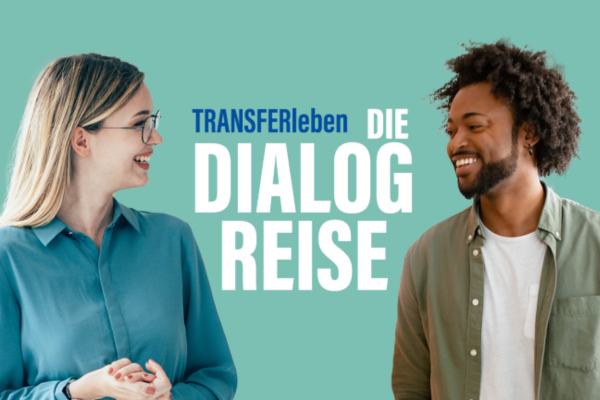
An Invitation to the Next Dialogue Journey
Following the positive experiences of previous editions, the next round of TRANSFERleben: The Dialogue Journey will begin on October 21.
Anyone who is open to new perspectives, wants to reflect on professional challenges, and values dialogue among equals is cordially invited to take part in the next “Dialogreise.” Because sometimes innovation doesn’t start with a new technology—it starts with a good conversation.
Sources:
Oelker, B., Meißner, A. (2023). Social Learning—Shaping Innovative Collaboration in the Digital Age Using the Working Out Loud Method. In: Mrohs, L., Franz,
, J., Herrmann, D., Lindner, K., Staake, T. (eds.) Developing Digital Cultures of Teaching. Perspectives on Higher Education Pedagogy. Springer VS, Wiesbaden. https://doi.org/10.1007/978-3-658-43379-6_12
Salowski, C. (2022). Working Out Loud (WOL): The Method for Visible Progress. In: Empowering Women—Promoting Women’s Professional and Social Standing with Working Out Loud. Springer Gabler, Berlin, Heidelberg. https:doi.org/10.1007/978-3-662-64635-9_2
Tietze, K.O. Peer Counseling—Simple from a Distance, Complex Up Close. Organisationsberat Superv Coach 26, 439–454 (2019).
https://doi.org/10.1007/s11613-019-00622-x