New Fusion Hubs for Germany: Bayern Innovativ Involved in All Three Hubs
July 30, 2026
The Federal Ministry of Research, Technology, and Space (BMFTR) has announced its funding decision for three new German fusion hubs. STRIDE, VEGA, and MAT-TRIx bring together key technology areas for the development of future fusion power plants. And right in the middle of it all: us, at Bayern Innovativ.
The goal is to integrate research and industry more closely, establish fusion-related value chains, and accelerate the path toward Germany’s first fusion power plant. In the first funding phase, the BMFTR is providing approximately 125 million euros. Bayern Innovativ is involved in all three fusion hubs in various roles.
STRIDE: Magnetic Fusion and Stellarator Fusion Power Plants
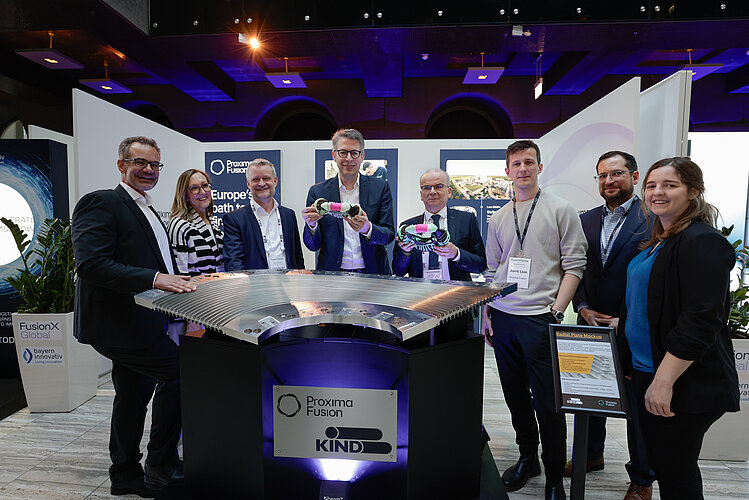
The concept: The STRIDE Hub brings together German expertise in the development of stellarator fusion power plants. Research institutions, universities, startups, and industry partners are working together to bring key technologies for future power plants to market readiness. The focus is on developing and testing new components and test infrastructures, establishing an efficient industrial supply chain, and training the skilled workers needed for the planning, construction, and operation of future fusion power plants. The hub is coordinated by Proxima Fusion, Gauss Fusion, and the Max Planck Institute for Plasma Physics (IPP). In addition to the coordinators, nine other active partners are currently involved. Research institutions, universities, startups, and industry partners are working together to further develop key technologies for future stellarator power plants and bring them to market.
Our Role: Bayern Innovativ provides support, particularly with operational implementation and coordination during the start-up phase, as well as coordination and networking activities. The focus is on technology transfer.
See also: 411 million euros for Proxima Fusion: Another milestone for the German fusion landscape
VEGA: Laser Fusion
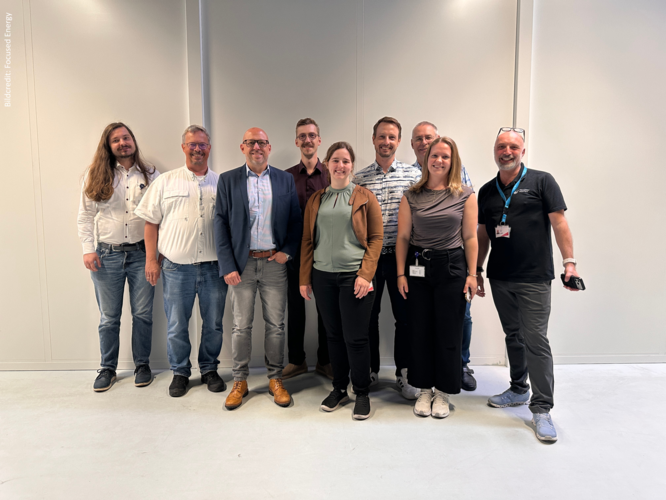
The Concept: The hub iscoordinated by the two German fusion companies, Marvel Fusion and Focused Energy. In addition, 14 other active partners are currently involved. The VEGA Hub is driving the development of laser fusion and, to this end, connects German laser fusion companies with research institutions and industry partners.
Key areas of focus include the further development of laser systems, targets, and diagnostics; the establishment of joint research and testing infrastructures; and the development of an industrial value chain for the eventual mass production of fusion power plants. At the same time, the hub is laying the groundwork for future demonstration facilities and the transfer of the technology to industrial applications.
The hub is thus laying the groundwork for future demonstration facilities, the subsequent industrial use of the technologies, and the development of an industrial value chain for the manufacture of fusion power plants. To this end, the BMFTR designates, among others, the sites in Biblis and Hamburg/Schenefeld as central research and development locations.
Our Role: Bayern Innovativ is listed as a transfer partner in the VEGA Hub. Other transfer partners mentioned include EurA AG, Hessen Trade & Invest GmbH—through a memorandum of understanding with the State of Hesse—and SAXFUSION.In cooperation with other network organizations, Bayern Innovativ thus supports the networking of research institutions, companies, and industry partners and helps accelerate the transfer of technological developments toward industrial application.
MAT-TRIx: Materials and Fuel Cycles
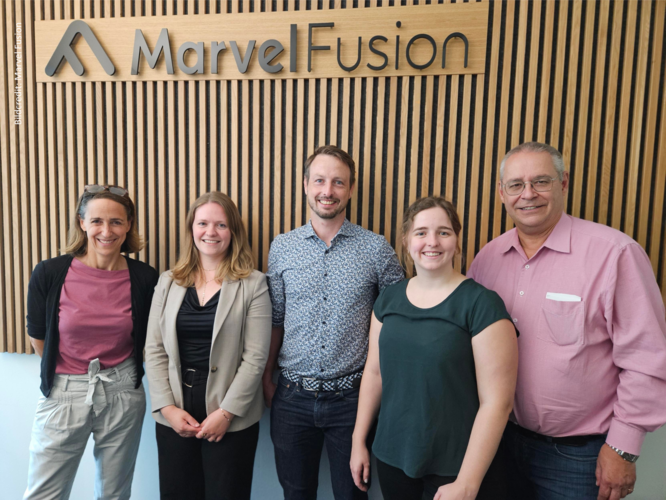
The concept: The MAT-TRIx Hub is coordinated by the Karlsruhe Institute of Technology (KIT). All four fusion companies active in Germany are involved in the hub: Proxima Fusion, Gauss Fusion, Marvel Fusion, and Focused Energy. In addition, nine other active partners are currently participating.
The MAT-TRIx Hub is developing the fundamental technologies required for nearly all fusion power plant concepts. These include neutron-resistant materials, breeding blankets for tritium production, and systems for the safe handling of tritium. Furthermore, the hub provides unique research and testing infrastructures that enable materials, components, and processes to be investigated and qualified under realistic fusion conditions. In this way, MAT-TRIx lays the groundwork for the safe and economical operation of future fusion power plants. Karlsruhe is to be further established as a leading site for tritium and fuel cycles; in addition, the development of the Gundremmingen site is planned.
Our Role: Bayern Innovativ is involved in the MAT-TRIx Hub as an associate partner. The associate partners include other members of the Association for the Promotion of Fusion Technology who do not receive BMFTR funding in the MAT-TRIx technology area.
Bayern Innovativ contributes its networks and expertise in the areas of technology transfer, clusters, and regional innovation ecosystems. The hub is to be connected to strong regional, national, and international networks. This includes, among other things, activities in the field of materials science as well as links to existing regional innovation structures.
Three Hubs, One Common Goal
Together, the three fusion hubs cover key technological building blocks for future fusion power plants: STRIDE is developing stellarator power plants based on magnetic fusion, VEGA is advancing laser fusion, and MAT-TRIx is working on materials, fuel cycles, and the necessary testing infrastructure.
Funding for the hubs will begin in August 2026. The governance and cooperation structures are to be established as early as this year, and additional research and development projects will be implemented in phases. By 2029, each hub will be expanded through six phases of funded research and development projects.
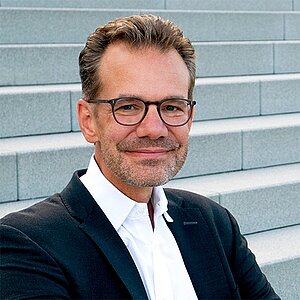
Dr. Rainer Seßner, Managing Director of Bayern Innovativ GmbH:
“The three fusion hubs combine scientific excellence with entrepreneurial dynamism and industrial implementation capabilities. Bayern Innovativ will contribute its expertise in technology transfer, networking, and ecosystem development to all three hubs—in different roles, but with a common goal: to bring technologies into practical application more quickly and to involve companies in the emerging value chains at an early stage. In this way, we are jointly laying the groundwork for a high-performing fusion industry in Germany.”