From Trend to Qualification
Continuing education as a key factor in new energy technologies
June 12, 2026
The Energy 2025 Trend Radar highlights the developments shaping the future of energy. At the same time, it shows that technological innovations alone are not enough to make new solutions effective. The right skills are also crucial. The B³ project—Battery Education Network Bavaria—illustrates how this transfer into practice can be achieved.

With the Energy 2025 Trend Radar, Bayern Innovativ brings together technological, economic, and structural developments that are relevant to the energy system of the future. The goal is not only to identify trends but also to classify them in terms of their significance for businesses and research.
This makes one thing clear: The transformation of the energy system is not merely a technological task. It is equally a matter of building expertise and transferring knowledge.
“The Trend Radar makes it clear that technological developments should never be viewed in isolation. What matters is what consequences they have for work processes and skills requirements, and how early we respond to them,” says Ina Schabesberger from the Energy & Construction team.
Technological change requires new skills
New technologies are changing not only markets and products, but also the requirements for job profiles. Solutions must be developed, implemented, and refined. For innovations to actually take hold in practice, skilled workers with the appropriate competencies are needed.
This is precisely where a key need for skills development lies, as described by the Trend Radar. Technological development is disrupting existing workflows, altering skill profiles, and requiring new forms of learning.
This is particularly evident in dynamic technology sectors such as battery value creation. Materials, production processes, safety requirements, and recycling processes are evolving at a rapid pace. At the same time, the economic relevance of the topic is increasing. Companies are thus faced with the challenge of not only monitoring technological developments but also systematically building the necessary expertise.
From Trend Observation to Implementation
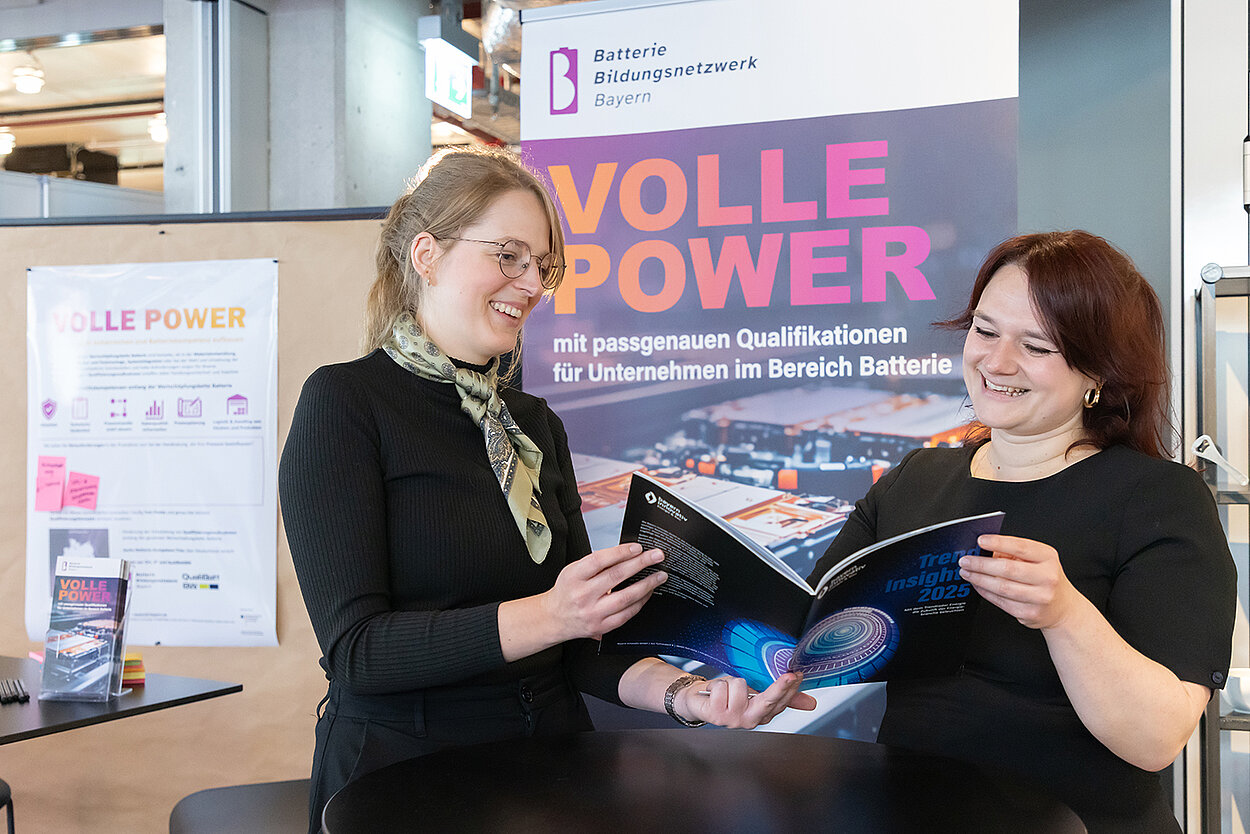
The B³ project —Battery Education Network Bavaria—demonstrates how this transfer can be put into practice. It addresses the specific skills needs arising from technological development and creates practical training programs centered on the battery value chain. The project is implemented through the collaboration of technical input from research institutions and the pedagogical expertise of educational providers.
The particular added value lies in the connection between future-oriented topics and concrete implementation: continuing education is not viewed as a downstream measure, but as an integral part of technological transformation.

This is precisely where the strength of the partnership between Trendradar and B³ lies: Trendradar provides strategic context and highlights which trends are gaining relevance. B³ demonstrates how this can be translated into concrete actions to prepare companies and employees for these changes.
Continuing Education as a Strategic Lever
For Bayern Innovativ, this is a central perspective on the future of energy. After all, new technologies only realize their full potential when they can be translated into applications, processes, and value creation. Continuing education is therefore not a side issue, but a strategic lever for innovation capacity, competitive strength, and successful transformation.
The focus on training needs is therefore more than a footnote in technological change. It is an essential prerequisite for turning innovations into effective solutions. Projects like B³ are prime examples of how this goal can be put into practice—and how trend observation leads to concrete action.
Your contact