Eon wants to put bidirectional charging on a broad footing
In the BDL Next research project, Eon and its partners are testing how bidirectional charging electric vehicles can contribute to grid stability, flexibility marketing and the integration of renewable energies in the future
28.05.2026
Source: E & M powernews
In the "BDL Next" research project, the energy company Eon is working with partners to test how bidirectional charging can be scaled to serve the grid and the market.
With the pilot operation of the BDL Next research project, Eon is launching the next development stage of bidirectional charging together with industry, grid and research partners. The focus is no longer solely on optimizing the self-consumption of individual households, but on the system-friendly integration of electric vehicles into the energy system. According to a company press release, the aim is to make flexibility from households usable on a large scale in future for grid stability, redispatch processes and the integration of renewable energies.
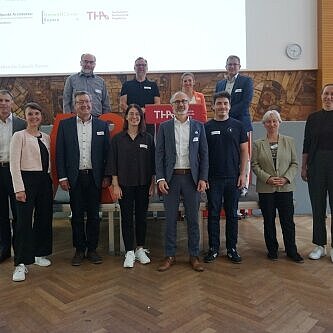
To this end, real households will be equipped with bidirectionally chargeable vehicles as part of the pilot project. The vehicles were recently handed over to the participants at BMW Welt in Munich. Over a period of several months, the project partners are investigating under real-life conditions how electric cars, photovoltaics, home storage systems and intelligent energy management systems can be interoperably linked.
Grid-friendly flexibility from households for the grid
The project focuses on the question of how thousands of decentralized flexibilities can be coordinated and integrated into existing market and grid processes. Eon is testing how electric vehicles can be activated in a targeted manner and controlled in real time without restricting the convenience of households.
A central challenge lies in the precise measurement and accounting allocation of energy flows. Decisive questions include when electricity from the vehicle is fed into the grid, which sources the energy comes from and how these processes can be mapped in regulatory terms. At the same time, the project partners are testing standardized communication processes between transmission system operators, distribution system operators and households.
In this way, BDL Next is addressing key requirements of Redispatch 3.0. In future, decentralized resources at low-voltage level should also contribute to avoiding grid congestion. This requires scalable and manufacturer-independent processes that enable the coordinated control of many individual systems.
"The next step in bidirectional charging is clear: away from individual solutions and towards use in the energy system," says Stefan Padberg, Head of Innovation at Eon.
Open systems as the basis for scaling
Another focus of the project is the intelligent linking of bidirectional charging and photovoltaics. The vehicles are used both to optimize self-consumption and to market flexibility via vehicle-to-grid applications.
According to the project partners, a high degree of interoperability is a prerequisite for scaling. Vehicles, wallboxes, energy management systems, PV systems and home storage systems are to work together across manufacturers, with open standards between the automotive industry, energy industry and research.
BDL Next has been running since November 2023 and is funded by the Federal Ministry for Economic Affairs and Energy. The scientific management lies with the Research Center for Energy Economics (FfE). In addition to Eon and BMW, the project partners include Bayernwerk Netz, Tennet, KEO, Compleo and several scientific institutions.
Author: Günter Drewnitzky