Accessibility

 Language
First university in the EU: TUM develops its own AI chip using 7 nm technology
This is a press release from the Technical University of Munich.
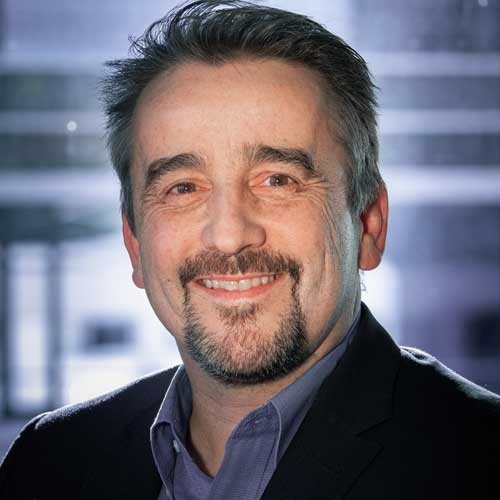
The Technical University of Munich (TUM) has created the EU's first AI chip using modern 7-nanometer technology. Prof. Hussam Amrouch developed the neuromorphic chip based on the standard of the world's leading chip manufacturer TSMC. In future, the Professor of AI Processor Design and his research group plan to create at least three new designs every year, which will be manufactured by the European Semiconductor Manufacturing Company (ESMC) in Dresden from 2028.
The Covid pandemic, the war in Ukraine and geopolitical changes have made supply chains uncertain. "This is why it will be important in future to carry out all steps in Germany and Europe, from the training of AI chip specialists to the technological development and production of AI chips," says Amrouch. Just three months ago, he opened the AI chip research and training center MACHT-AI at TUM - funded by the Bavarian Ministries of Science and Economic Affairs. In the future, he envisages that students in Germany will learn AI chip design and develop AI chips and algorithms themselves in companies. It will also be possible to produce them in Germany.
AI chip processes data locally
Unlike manufacturers of cloud-based AI chips such as NVIDIA, the Munich professor is focusing on a technology that processes data directly on the device and does not send it to the cloud. "This is a fundamental solution for protecting the privacy of our citizens," says Amrouch.
The AI chips, which are based on the RISC-V open source standard, can be customized for a specific task, for example to record and evaluate heartbeat or brain signals in a health application or to use a language model. This specialization is more efficient than a one-size-fits-all AI chip. Amrouch: "You can buy a Ferrari, but you won't necessarily be faster in the city. An e-bike is more efficient here." Also important: his AI chips will also be used for control electronics in quantum computing in a few years' time.
Data remains private and secure
By processing the data locally, the technology is cyber-secure and therefore also protected against misuse by third parties. "Whoever designs and builds the chip knows what's inside and can guarantee what it will do," says Amrouch, who believes it is important that companies can guarantee their customers the privacy of their data.
Trust is an important "currency" for economic sectors such as the automotive industry, which is currently not in European hands when it comes to powerful chips. And the defense industry also demands absolute security when it comes to the use of chips for drones, for example. Possible built-in Trojans are an incalculable risk here, especially if chips are developed and manufactured outside Germany and the EU.
Bavaria's Science Minister Markus Blume: "A real AI coup at TUM! The EU's first AI chip with 7-nanometer technology comes from Bavaria. It combines performance, energy efficiency and security. The fact is: with MACHT-AI, TUM is at the heart of our Bavarian semiconductor ecosystem. In order to be competitive, independent and sovereign, we develop technologies and train talent here."
Bavarian Minister of Economic Affairs Hubert Aiwanger is convinced: "Artificial intelligence has developed enormously in recent years. As an economy, we must be in a position not only to keep up with this development, but also to help shape it. The development of our own AI chip at TUM is an impressive example of how well the Bavarian semiconductor ecosystem is developing."
TUM President Thomas Hofmann emphasizes: "Geopolitical risks have increased dramatically in recent years. That is why it is important that cutting-edge technology is developed and produced in Germany and Europe. With his AI chips, Prof. Hussam Amrouch impressively demonstrates how dependence on Asia and the USA can be successfully reduced and how Europe's technological self-determination can be strengthened. And, incidentally, with a very sustainable concept."
Further information
The official press release and contact details of the TU Munich can be found here.