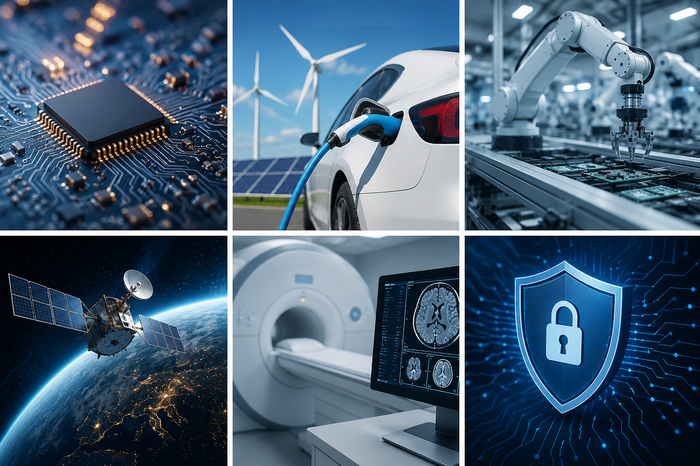

Today, microelectronics is the central driver of innovation in almost all of Europe's key industries. It increases efficiency in mobility, enables innovations in medical technology, forms the basis of modern communication networks, plays a strategic role for the defense industry and is essential for industrial automation. Without highly developed semiconductors, neither electromobility nor renewable energy systems, robotics or modern AI applications would be conceivable. In all of these areas, the quality of semiconductors determines the speed of innovation, competitiveness and technological leadership.

Europe is therefore currently focusing on the following high-tech and deep-tech topics
- Highly reliable microelectronics: For aerospace, defense and critical infrastructures, the focus is on robustness, radiation resistance, long service life and tamper-proof designs. European manufacturers have traditional strengths in this area, which are being further expanded through new security architectures and certification procedures.
- Power semiconductors: Wide-bandgap semiconductors such as SiC and GaN in particular enable higher switching frequencies, lower losses and more compact designs in electronic components that are designed for switching and controlling high electrical currents and voltages. They are at the heart of modern energy and drive technologies.
- Sensors: Europe is a leader in precision sensors for automotive, industry, medical technology and environmental monitoring. Trends range from integrated gas sensors and high-precision inertial measurement systems to miniaturized ultrasonic and optical sensors.
- Artificial intelligence on a chip: Edge AI processors are becoming increasingly important as they process data locally, reduce latency and strengthen data protection. European research programs focus on energy-efficient architectures for autonomous vehicles, robotics, industrial quality control and medical diagnostics. The aim is to make AI capabilities controllable and trustworthy in safety-critical applications.
- Photonic integrated circuits: Photonic chips use light instead of electrons for signal processing and enable extremely high bandwidths, low latencies and energy-efficient data transmissions. They are central to future data centers, high-speed communication, quantum computing and high-precision sensor systems. Europe has strong research clusters working on scalable manufacturing platforms, hybrid integration concepts and new packaging approaches.
- Advanced manufacturing technologies: EU programs such as IPCEI Microelectronics promote state-of-the-art manufacturing processes, chiplet architectures, 3D stacking and EUV lithography with the aim of reducing dependence on Asian manufacturers while strengthening the European value chain.
Microelectronics forms the core of European technological sovereignty
Without its own design, manufacturing and packaging capabilities, Europe remains dependent on global supply chains that are increasingly exposed to geopolitical risks. Europe must therefore build on strengths and close critical gaps. This includes:
- Building a resilient semiconductor ecosystem to strengthen security of supply, enable control over safety-critical technologies and provide the basis for economic stability and political agility
- Improving site conditions - from less bureaucracy to lower electricity prices and more well-trained specialists
- Increasing investment in research, talent and industrial scaling to remain a competitive location and become more attractive for investment.
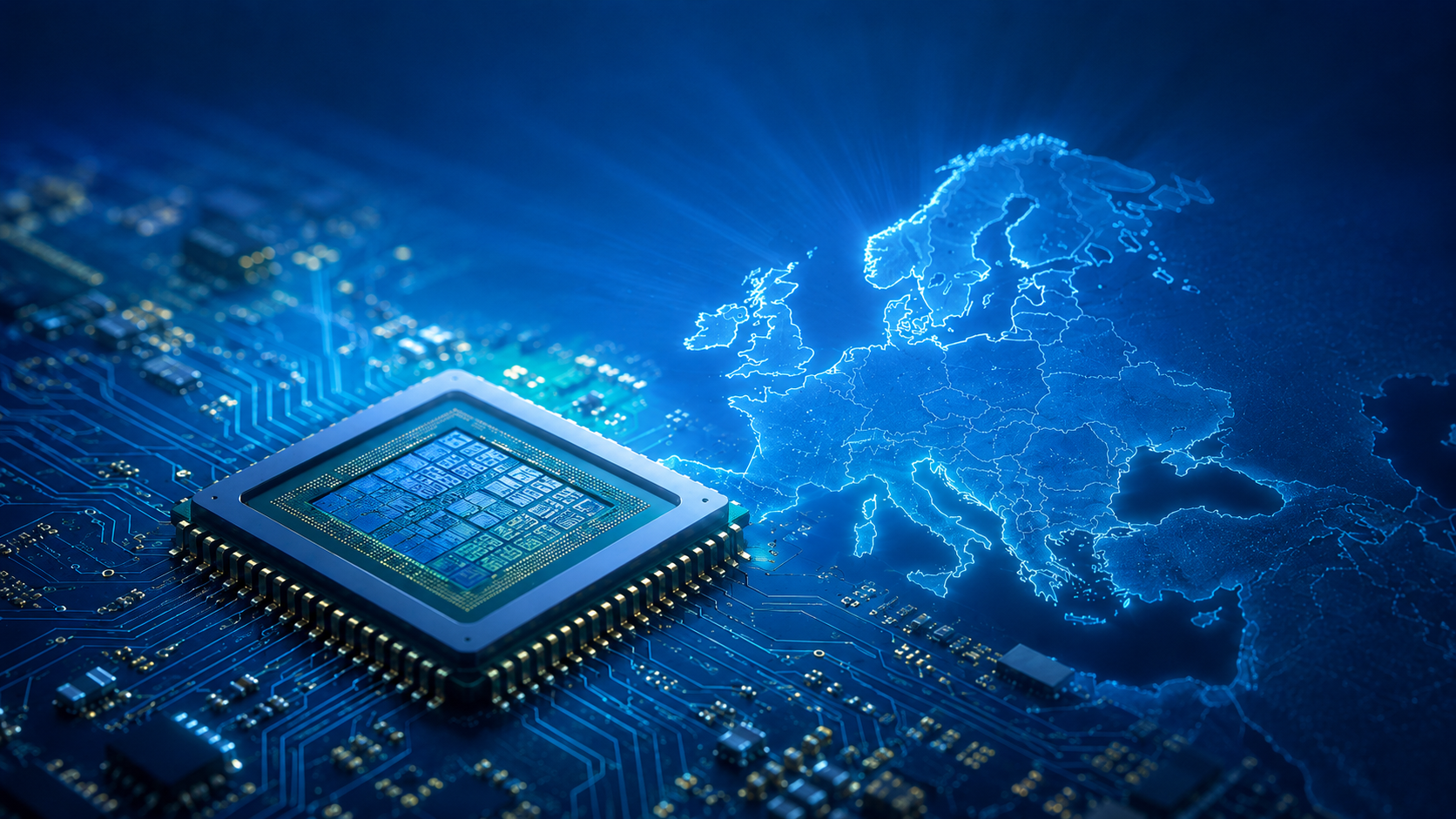
Technology sovereignty needs a holistic funding policy
The current European funding measures are right and important, but they reveal a decisive risk: they focus exclusively on semiconductors and not on the downstream production steps - in particular printed circuit boards (PCBs) and electronics manufacturing services (EMS). These are essential components of the European technology ecosystem, as they play a key role in determining the performance and safety of end products.
Europe is at a critical juncture for PCBs and electronics manufacturing, as the global market distribution has shifted dramatically: Europe's market share in the PCB sector has fallen from 20% to just 2% since 2000. In electronics manufacturing, Europe's market share has fallen from 22% to 10%. This development harbors considerable risks for Europe's resilience and security. Without targeted measures, there is a risk of a complete loss of the industrial base. This would have a direct impact on security, resilience and technological sovereignty, which is why we now need a holistic support policy that includes all relevant stages of value creation. This is the only way Europe can secure its technological sovereignty and actively shape its industrial future.
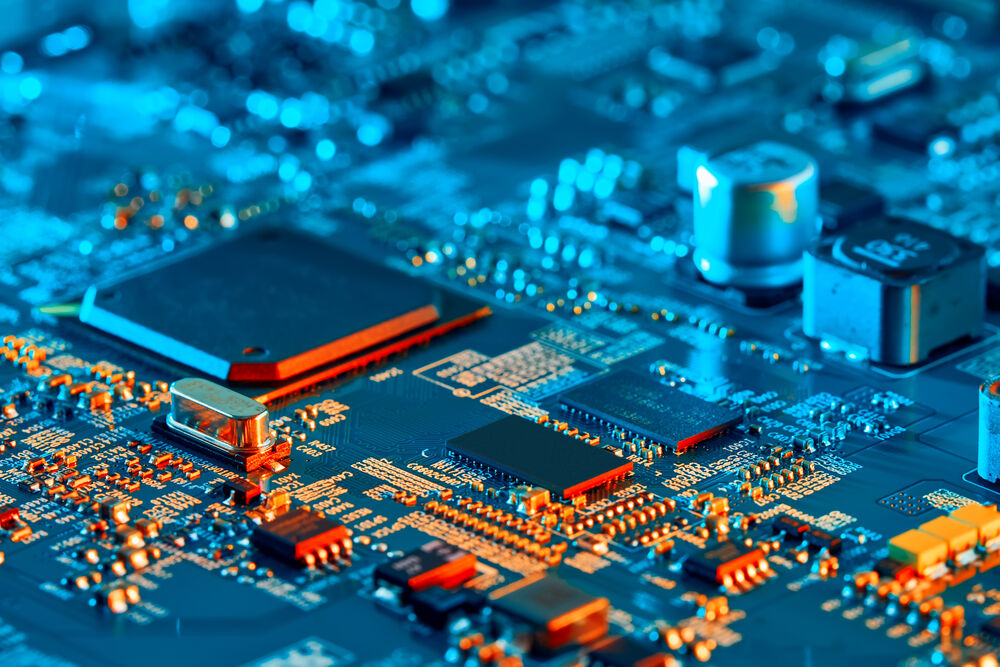 AdobeStock©Raimundas_255223008,
PCB technology has been the focus of Bayern Innovativ for 20 years
The Bavarian Chips Alliance and PCB-NETWORK, together with VDMA, FED and ZVEI, will therefore not only provide information about technological innovations and the enormous range of possible applications for printed circuit boards at the 20th edition of the PCB Forum, but will also focus primarily on the European market and on HDI printed circuit boards in safety-critical areas such as packaging, mobility & defense.
Contact us