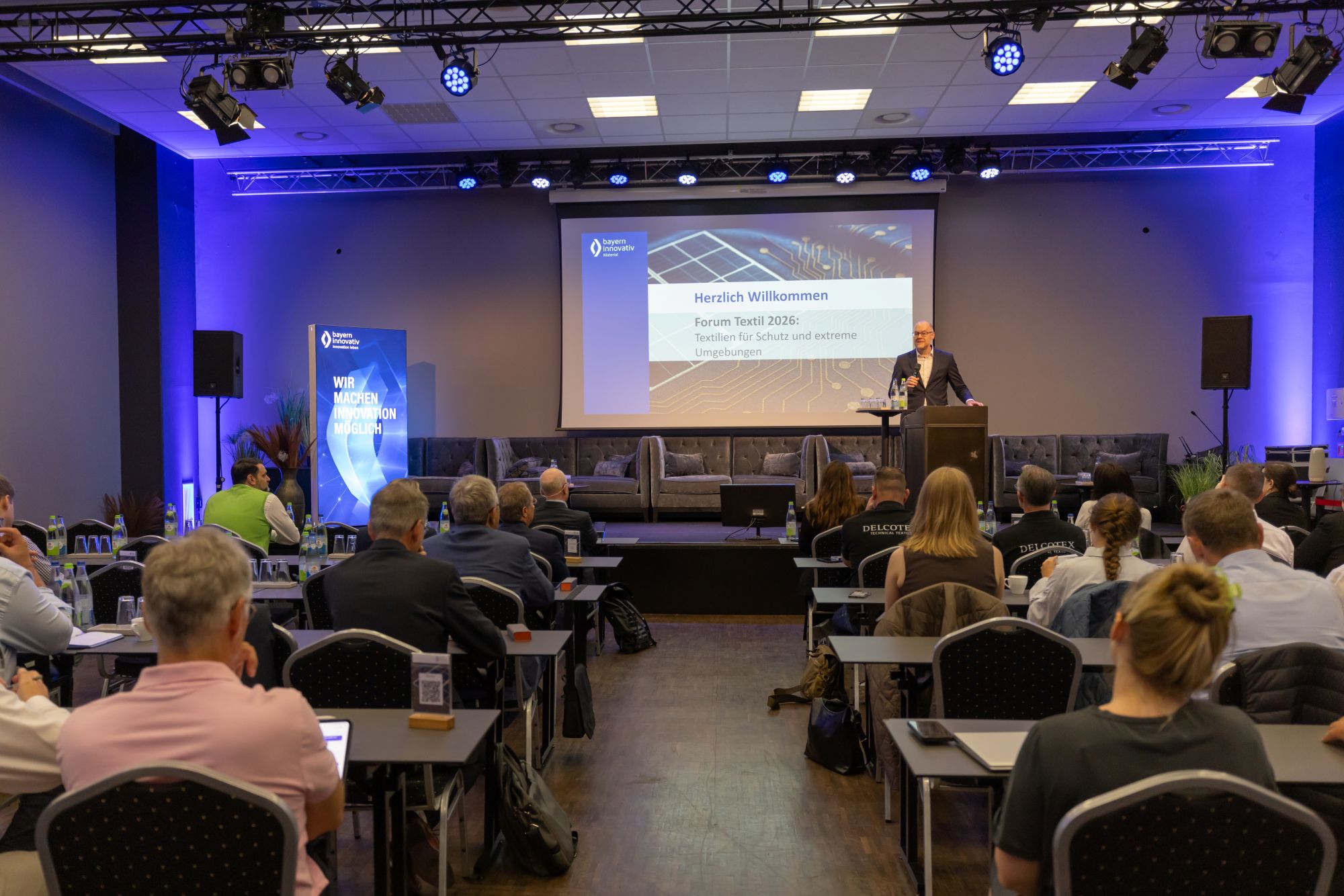
Forum Textil 2026: How Protective Textiles Are Evolving at the Intersection of Innovation, the Circular Economy, and Smart Textiles
July 27, 2026
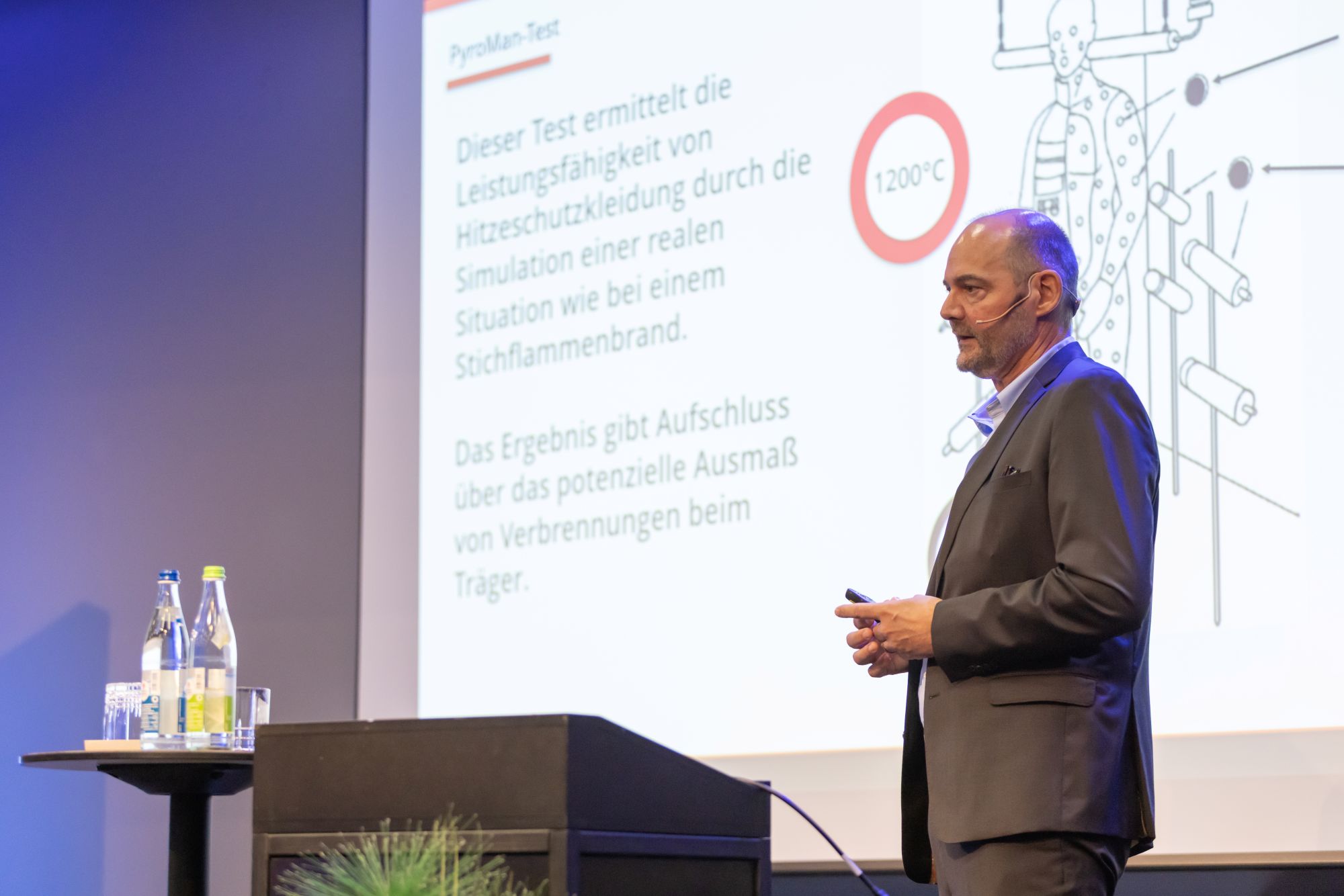
How can protective textiles be further developed so that they not only provide reliable protection but are also comfortable, durable, more sustainable, and technologically compatible? Forum Textil 2026 highlighted the topics currently of particular interest to the industry—from recycling and circularity to standardization and market entry, all the way to smart textiles and protective solutions for extreme environments.
The Textile Forum 2026 highlighted how significantly the requirements for protective textiles within the technical textiles sector are changing. For a long time, the focus was primarily on individual protective functions. Today, the focus is increasingly on balancing different requirements: protective performance, comfort, washability, durability, regulatory requirements, recyclability, and technological scalability.
This was precisely where the event’s technical strength lay. The presentations not only showcased new materials and fields of application but also highlighted that protective textiles can no longer be developed in isolation. They emerge from the interplay of material development, design, application, standardization, and market requirements.
Today, protective textiles must do more than simply provide protection
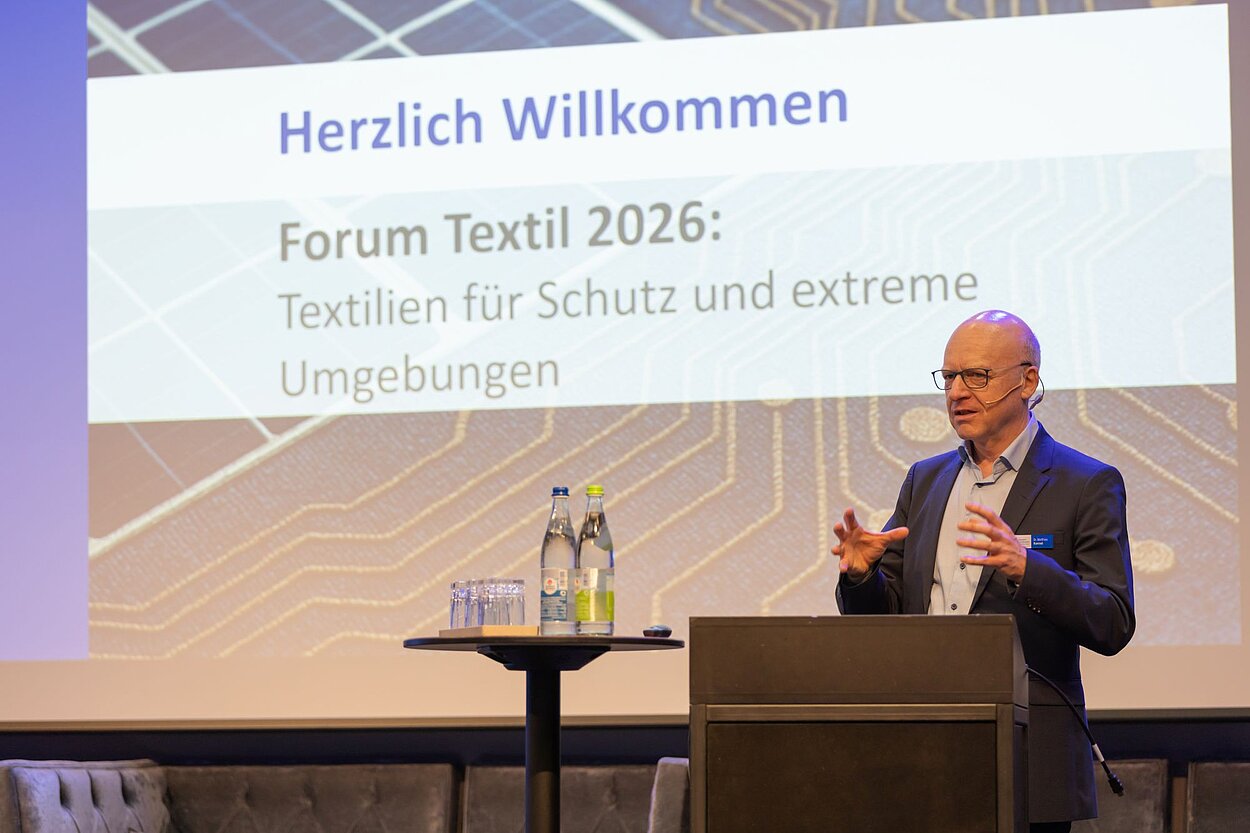
A key finding of the forum was the realization that protective textiles today must do significantly more than they did just a few years ago. In many areas of application, it is no longer sufficient to meet a single protective requirement. Modern protective clothing often must simultaneously protect against heat and flames, mechanical stress, chemicals, weather conditions, or other risks—while remaining comfortable to wear for many hours.
The presentations on military and specialized protective applications in particular made it clear that protective clothing must therefore increasingly be conceived of as a protective system. It is not just about the fiber or the fabric, but also about construction, wearability, mobility, and the question of how protective performance can be reliably maintained under real-world conditions.
Among other things, it became apparent that modern combat uniforms are far more than just uniforms: they must address various hazards simultaneously while maintaining a balance between comfort and functionality. The same applies to protective clothing in highly sensitive areas such as the decommissioning of nuclear power plants: Protection does not come solely from the thickness of the material, but from a precisely coordinated system comprising clothing, seals, positive pressure, particle protection, and operational practices.
From Material Performance to System Logic
Several presentations made it clear that protective textiles today can no longer be understood solely in terms of individual material properties. While high-performance, heat-resistant fibers, robust fabric constructions, and functionalized surfaces remain a central area of development, At the same time, practical experience shows that the effectiveness of a protective system only becomes apparent through the interaction of various components.
The forum also emphasized the importance of inherent protective functions —that is, properties that are already inherent in the fiber itself and are not added later. This is particularly relevant for applications in which protective performance must remain stable even after many wash cycles or under high stress.
At the same time, it became clear that material innovation alone is not enough. What matters most is how these materials are integrated into textile systems that prove themselves in practice. This is precisely why questions regarding comfort, moisture management, freedom of movement, and long-term usability repeatedly took center stage at the forum.
Recycling and Circularity Are Becoming Key Development Issues
A particularly prominent topic at the forum was the question of how protective textiles can be more fully integrated into circular approaches in the future. It became clear that circularity does not begin with disposal, but rather with development.
This is particularly challenging in the field of high-performance protective and functional textiles. Different materials, complex constructions, and additional functions make many products high-performing—but at the same time, they make separation, recycling, and reintegration into circular loops more difficult. This makes approaches such as “Design for Recycling,” monomaterial strategies, targeted material selection, and early consideration of future recycling pathways all the more important.
It was emphasized repeatedly during the forum that new regulatory requirements are further increasing the pressure to act. At the same time, however, it also became clear that circularity in the high-performance sector is not simply a matter of sustainability. It must remain compatible with functional requirements. This is precisely where one of the central development challenges of the coming years lies: not pitting performance against circularity, but rather considering them together.
Initial pilot projects from the military sector were presented, in which fibers from clothing systems are recovered for new textile applications. This shows that circular approaches are also being pursued in this field—even if practical implementation remains challenging. At the same time, economic viability plays a decisive role alongside technical feasibility. In the long term, recycling and circular solutions can only become established if they are both ecologically sound and economically viable.
Innovation Requires Standardization, Testing Methods, and Market Readiness
Another key focus of the forum was the path from development to market. Especially when it comes to personal protective equipment (PPE), a good product idea alone is not enough. New solutions must not only function technically but also be testable, verifiable, and certifiable.
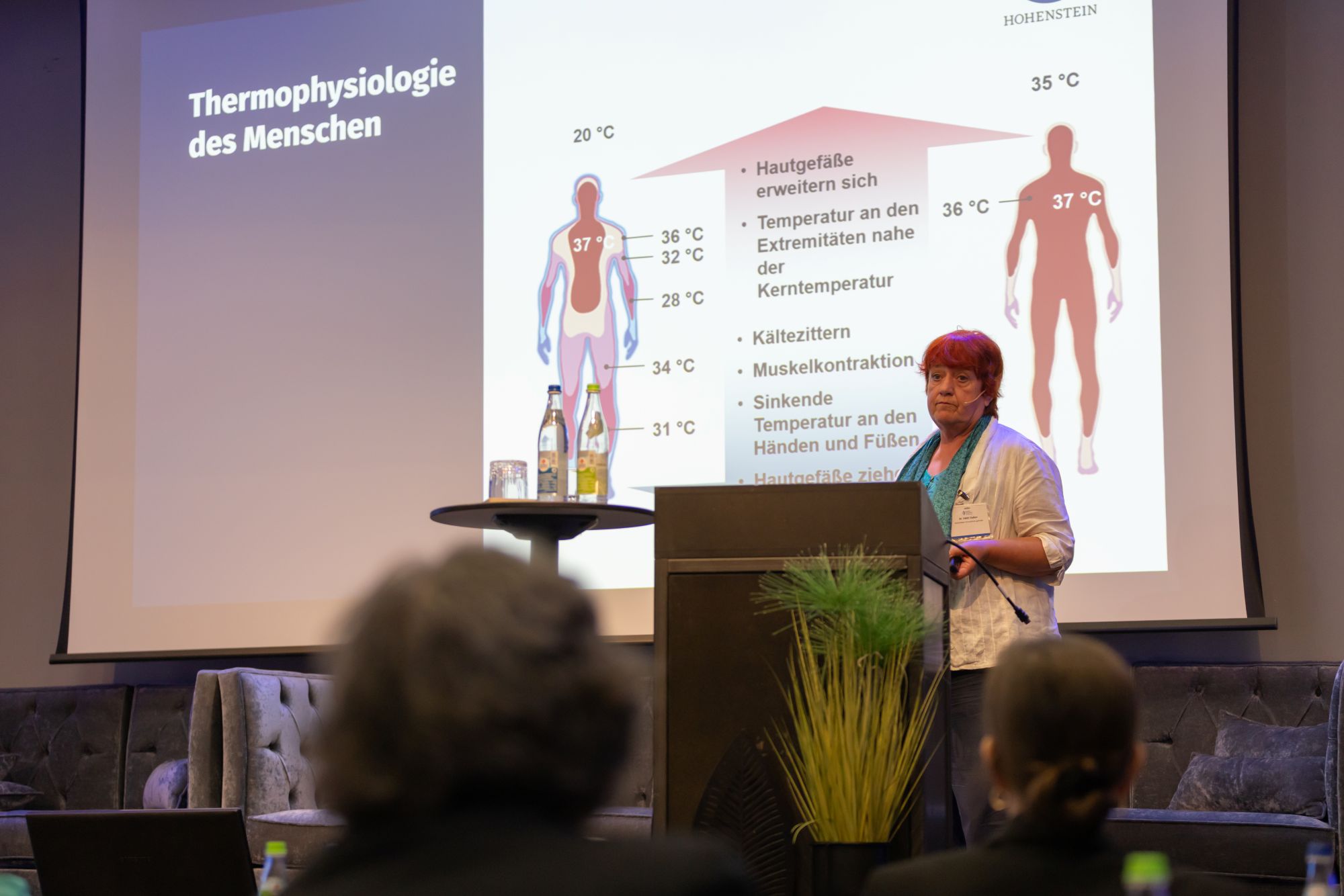
This became particularly clear with new features such as cooling protective clothing. Here, the deciding factor is not only whether a textile system is subjectively perceived as comfortable, but also whether its effectiveness can be objectively demonstrated using appropriate methods. Testing procedures, standardization, and regulatory classification are therefore not secondary considerations, but integral components of successful product development.
With regard to market entry as well, it became clear that textile innovation is often determined by very practical hurdles: Which standards apply? Which verification methods are recognized? To which area of application can a solution even be assigned? And how can different procurement and requirement structures be taken into account?
For companies, this has a clear implication: Those who develop protective textiles must incorporate standards, testing protocols, and market requirements into the development process at an early stage. Innovation only becomes effective when it is not only technically sound but also compatible with regulatory and practical requirements.
Smart textiles open up new possibilities—when practical considerations are taken into account
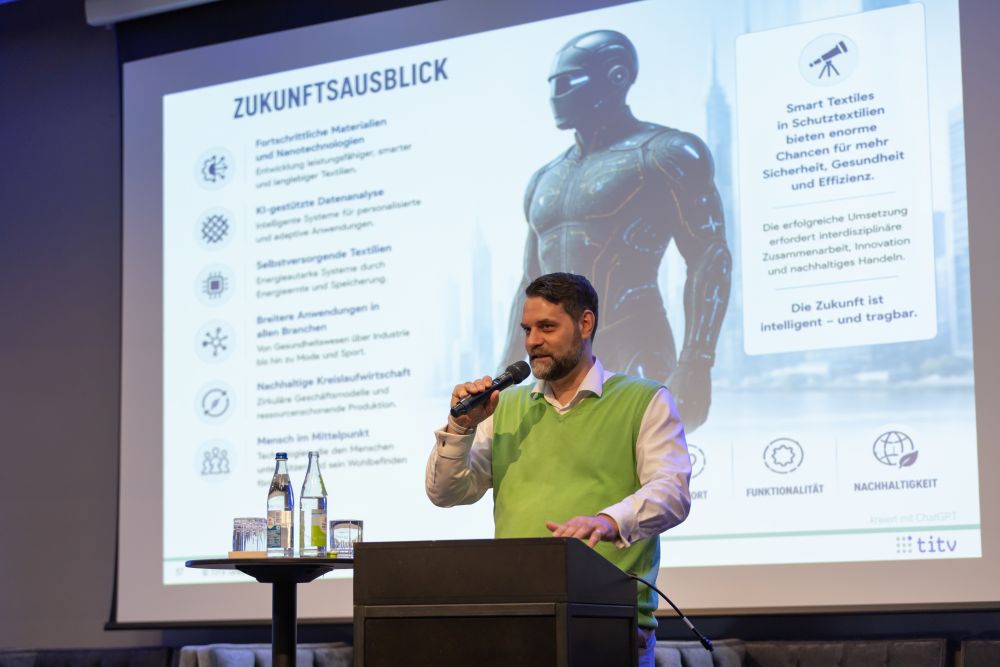
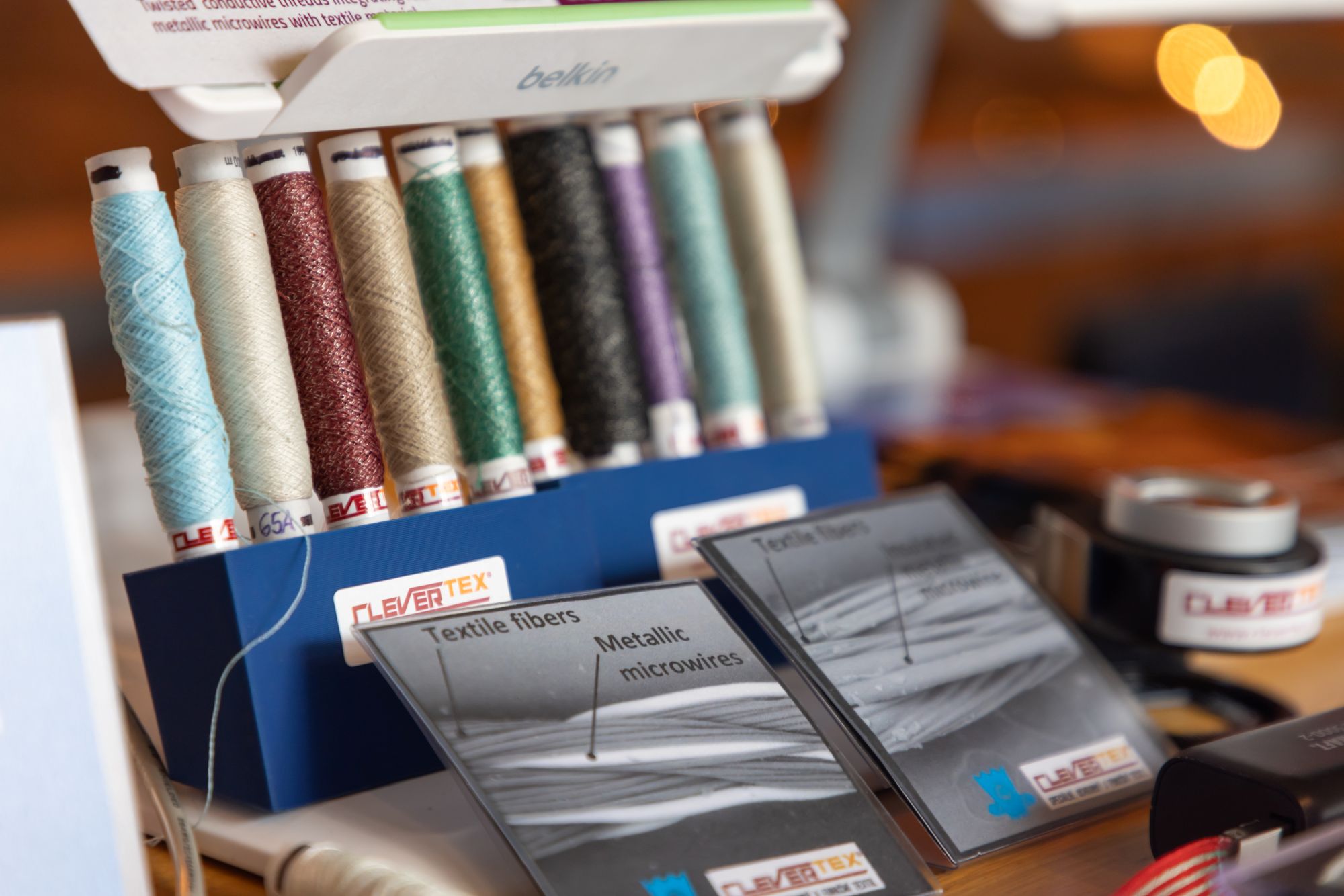
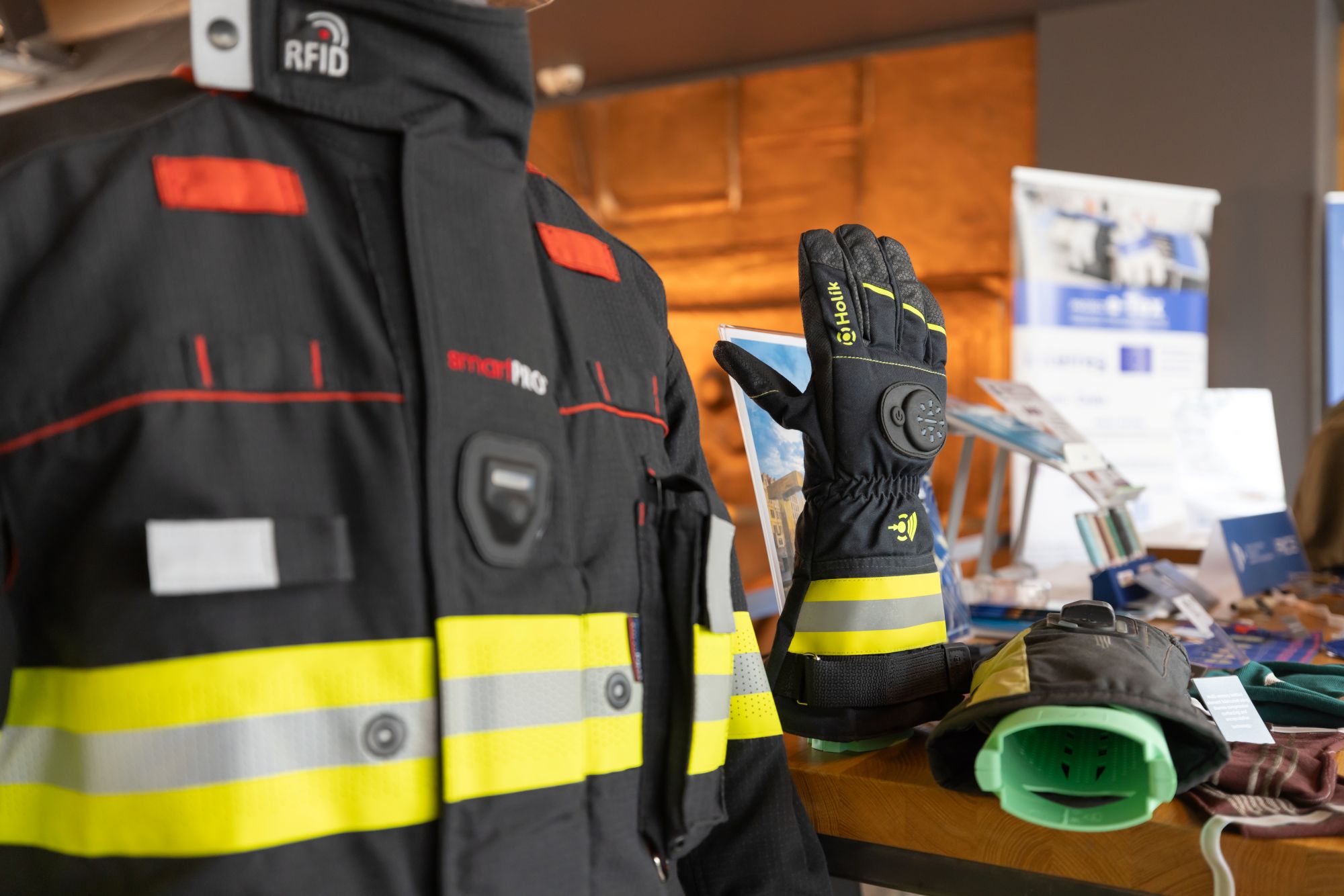
In addition to material considerations and regulatory aspects, technological advancements also played a central role. The forum highlighted the potential of smart textiles, sensor technology, energy harvesting, and AI-supported applications. As a result, textile systems can take on additional functions, collect information, or open up new application scenarios.
This development is particularly exciting in the field of protective textiles, because here functions are not merely added but, ideally, integrated directly into wearable systems. At the same time, the forum made it very clear that technological potential alone is not enough. Smart solutions must be durable, wearable, washable, and reliable in everyday use. They must be capable of being powered without disproportionately compromising comfort, and they must provide a clear practical benefit.
This also made it clear that the future of smart protective textiles does not lie solely in technological development. Collaboration between the textile industry, technology partners, and users is crucial. True added value is created only where textile expertise and technological development are meaningfully combined.
Extreme applications show where the industry is headed
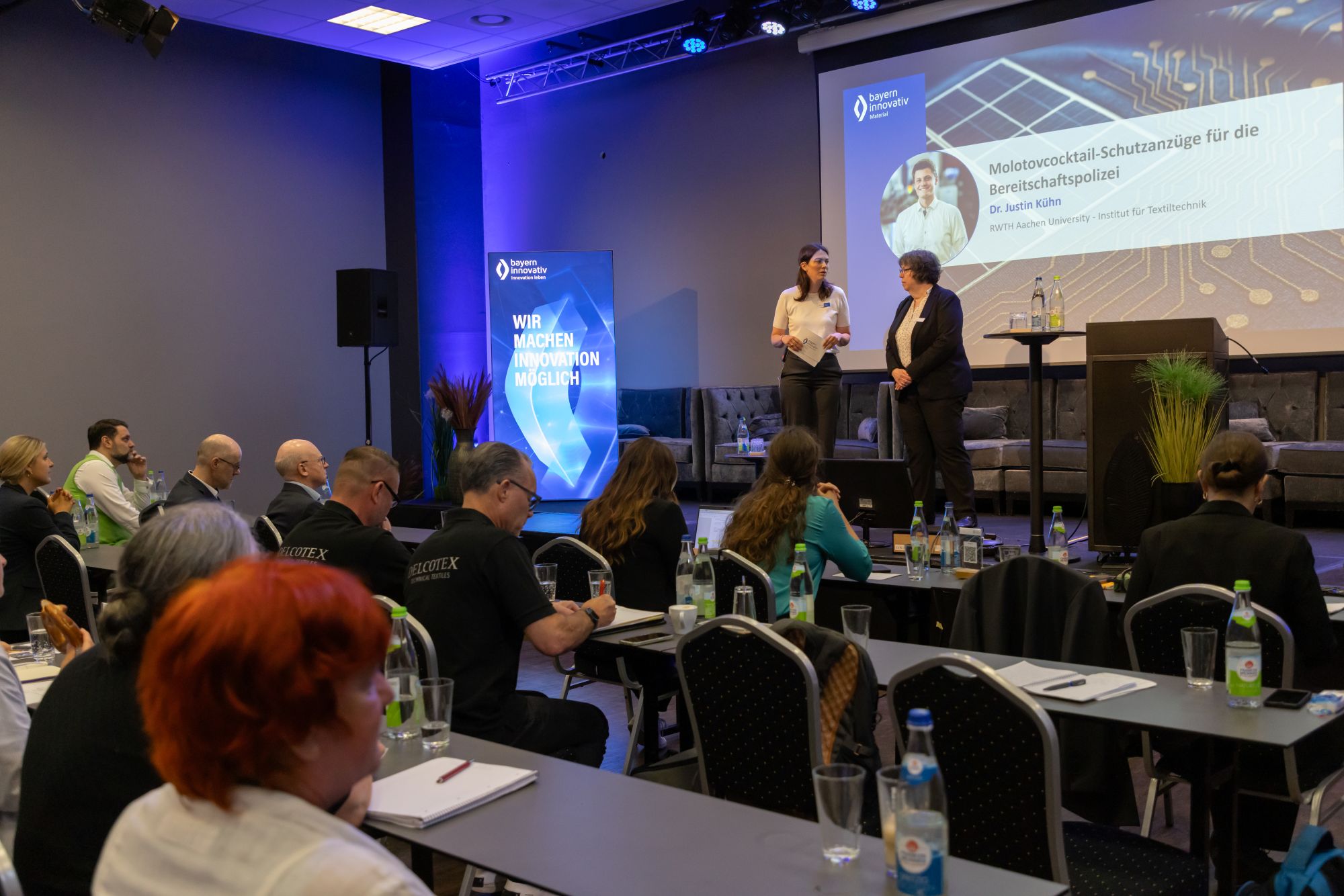
The diversity of the presentations highlighted just how broad the field of protective textiles has become. The spectrum ranged from protective suits for riot police to cooling personal protective equipment, military protective clothing, and nuclear protection systems, all the way to next-generation space suits.
This very breadth was particularly insightful because it demonstrated that very different application areas often face similar fundamental questions: How can protection be combined with comfort? How can systems be developed that function reliably under extreme conditions? How can new materials or functions be translated into real-world application scenarios? And how can sustainability and long-term usability be factored into the design?
The examples discussed thus made it clear that protective textiles are not merely a specialized topic for individual industries. They represent a highly dynamic field of innovation in which materials research, practical experience, safety requirements, and future technologies intersect particularly strongly.
What Remains from Forum Textil 2026
Forum Textil 2026 has shown that the future of protective textiles will not be determined by a single characteristic. Neither protective performance alone nor sustainability, smart textiles, or comfort are sufficient on their own. What matters is how these factors interact.
For the industry, this means that protective textiles will need to be developed in the future even more as integrated, application-oriented, and future-proof solutions. Material innovation remains important, but must be considered alongside recyclability, standardization, and practical application when addressing new functional requirements.
It is precisely here that the opportunity highlighted by the forum lies: Protective textiles are evolving from specialized individual solutions into comprehensive systems capable of responding to new requirements—technical, regulatory, and technological.