
28.04.2026
Antibiotics are considered one of the greatest achievements of modern medicine. They have made infectious diseases controllable, operations safer and medical progress possible in the first place. But this success is increasingly coming under pressure. Antibiotic resistance is spreading around the world, while new active substances are slow to follow. The dynamics of the crisis show: Existing systems no longer work reliably and are therefore blocking their own future.
The obvious response to such developments is often optimization: more efficient processes, better use of existing structures, incremental improvements. But this is precisely where the problem lies. Where framework conditions change fundamentally, optimization is no longer enough. Future viability requires more than technological development - it requires a willingness to make room for something new.
Letting go as a strategic decision
Creating space means consciously separating oneself from procedures, structures and thought logics that have long supported but now inhibit development. In transformation research, this step is referred to as exnovation. What is meant is not a radical break at any price, but the targeted scaling back, termination or reorganization of the status quo. Exnovation is therefore not an alternative to innovation, but rather its prerequisite: without free space, no progress can be made.
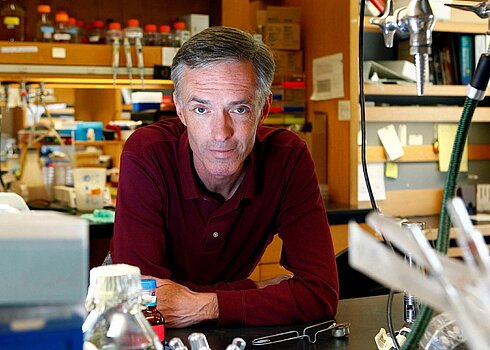
Current antibiotics research shows what such a change of perspective can look like. In the face of growing resistance, traditional development models are reaching their limits. Biomedical engineer James J. Collins and his team at MIT are responding by systematically expanding the search space: instead of pursuing known chemical structures, they are relying on generative artificial intelligence to identify completely new drug candidates.
The decisive step lies less in the technology itself than in the thinking behind it. Old patterns - linear development, focused on known substance classes - are being deliberately abandoned. AI opens up new possibilities, but does not replace existing work; instead, it shifts the focus away from the continuation of the known and towards a structured search for alternatives.
Creating space also means organizing differently
At the same time, it is clear that technological innovation alone is not enough. Many promising molecules do not fail due to a lack of knowledge, but due to practical hurdles such as complex synthesis or a lack of transitions to application. Here, too, it is a matter of creating space in processes, responsibilities and collaborations.
The answer to this is innovation ecosystems. Research, industry, start-ups and funding organizations are increasingly working together in a network. Value is no longer created along clear chains, but in flexible networks. Responsibility is shared, development processes become more iterative and roles are redistributed.
This pattern is relevant far beyond the life sciences. Many organizations face similar challenges: Structures provide security, but block adaptability. Successful models from the past tie up resources that are not available for new developments. Future viability arises where companies and institutions consciously create space: through prioritization, through reduction and through the willingness not to confuse the tried and tested with future security.
Progress needs freedom
Antibiotics research makes it clear that progress is not created by new technologies alone. It arises where organizations change their logic. Where they let go in order to remain capable of acting and design structures in such a way that new things can emerge. Creating space is not a loss, but a strategic investment in the future. It is not the new alone that determines progress, but the space that is given to it.