Main construction phase for large heat pump in Cologne begins
Rheinenergie starts construction of a 150 MW river water heat pump in Cologne-Niehl, which will supply climate-friendly district heating for up to 50,000 households from 2028
09.06.2026
Source: E & M powernews
Cologne-based Rheinenergie is starting the main construction phase of its river water heat pump in Cologne-Niehl. The plant is set to supply up to 50,000 households with district heating from 2028.
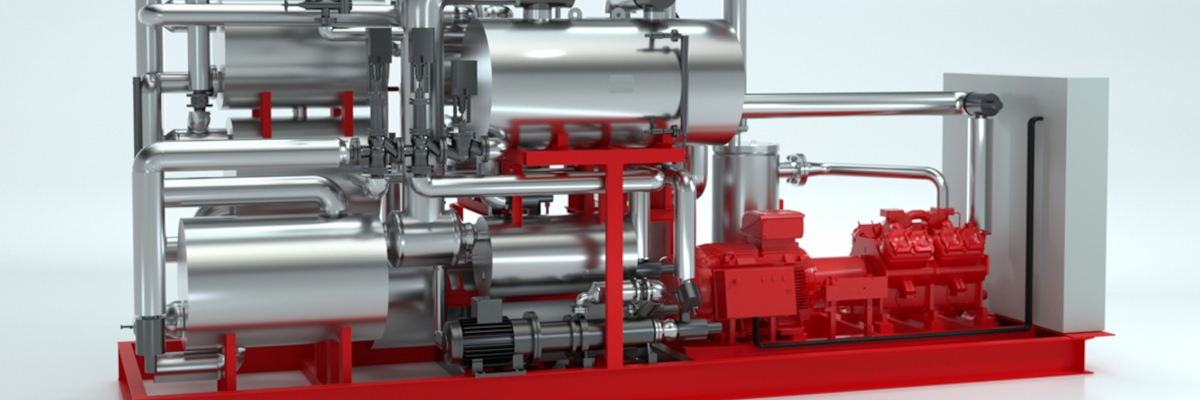
The construction phase for a river water heat pump has begun in Cologne-Niehl. According to Rheinenergie, it is investing around 280 million euros in the project, which will supply up to 50,000 households with heat from the Rhine from 2028.
The plant will consist of three modules, each with an output of 50 MW. The general contractor is Everllence SE. Further construction phases and components, including the intake structure for the Rhine water, will be built by Strabag and Züblin. Financing is being provided with the participation of Helaba.
According to Rheinenergie, the preparatory work on the Niehler Hafen site has already been underway for several months. This includes probing for explosive ordnance, foundation work and preparing the construction site. At the same time, the components of the heat pump were manufactured, including the integral gearbox in Berlin and compressors in Oberhausen. Construction of the building and ancillary facilities is scheduled to take around two years.
Combination of generation technologies
"We are combining different generation technologies in such a way that we can exploit cost benefits and stabilize district heating prices in the long term," explains Andreas Feicht, CEO of Rheinenergie, in a company press release at
.
During regular operation, the large heat pump will work together with the existing gas and steam turbine systems at the site. When electricity prices are low, the heat pump will take over heat production, while the conventional plants will provide electricity and heat when electricity prices are high. This combination increases the security of supply and limits the heat generation costs. In addition, the use of environmental heat from the Rhine can significantly reduce greenhouse gas emissions from heat generation - by at least 100,000 tons per year, according to Rheinenergie.
Rhine water is used to operate the plant and serves as a heat source in the heat pump process. The thermal energy of the river water is transferred to a refrigerant. The Rhine water itself remains unchanged and is only cooled by a few degrees Celsius before being returned to the river. According to Rheinenergie, the plant generates between two and three units of environmental energy per unit of electricity used.
The Niehl site is ideally suited for the large heat pump, it added. A grid connection up to the 380,000 volt level with a connection to the upstream Amprion grid is also available, as are all the necessary connections to Rheinenergie's largest district heating sub-grid in Cologne city center.
According to the company, the necessary permits for water extraction, plant construction and reintroduction of the cooled Rhine water have already been obtained. The project is being funded by the federal government and the European Union.
Author: Katia Meyer-Tien