Why a good component alone isn't enough to fly
From a 3D-printed part to a certified aerospace component
October 22, 2026
Additive manufacturing opens up new possibilities in the aviation industry—particularly for small production runs, complex geometries, and hard-to-find replacement parts. However, simply manufacturing a component successfully is not enough for it to be used in a certified aircraft.
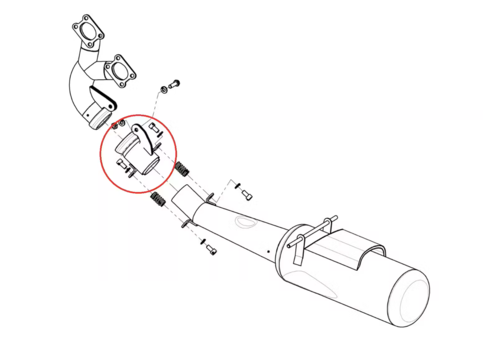
VOCUS, in collaboration with industry partners, has developed an additively manufactured spacer for the high-temperature exhaust system of the Solo 2625-02i aircraft engine. The component must withstand high temperatures, vibrations, and varying thermal expansion. For the Arcus M, VOCUS holds EASA Supplemental Type Certificate (STC) No. 10086856. The supplemental type certificate was issued on April 7, 2025.
In the following technical article, CEO Stefan Gorkenant explains the background of the project, the advantages of additive manufacturing, and the journey from the initial component concept to certified use in flight operations.
The project was honored with the BRE3D Award 2026. Further information on the technical development can be found in the VOCUS success story at EOS.
1. What was developed as part of the award-winning project, and what specific problem was it intended to solve?
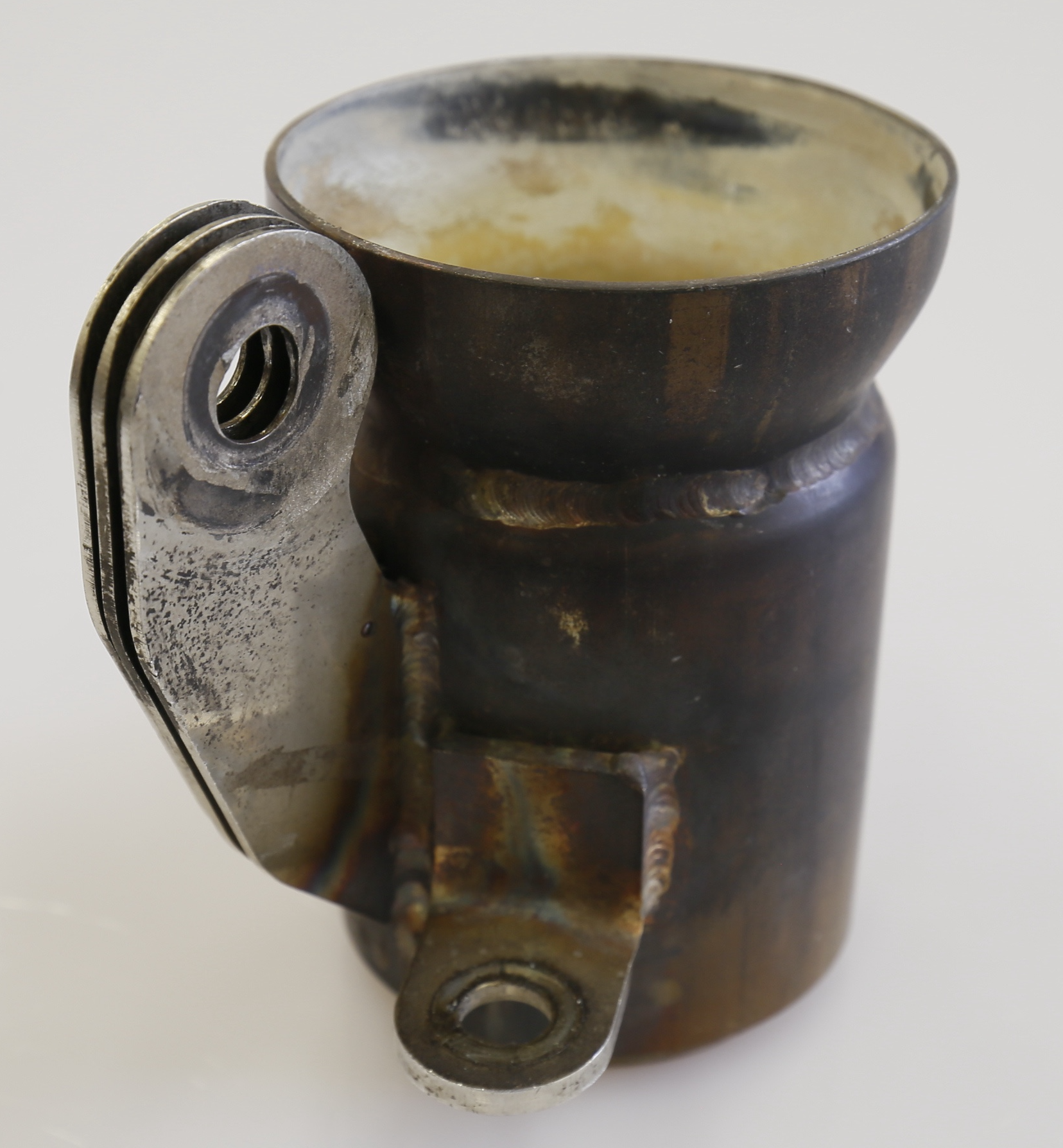
The award-winning project involves a component in the exhaust system of the Solo 2625-02i aircraft engine that is subjected to extreme thermal stress. This so-called sliding piece must withstand high temperatures, vibrations, and varying thermal expansion during operation. The previous conventional design was prone to wear and had to be inspected and replaced regularly.
Our goal, therefore, was not simply to 3D-print a replica of the existing component. We wanted to fundamentally improve its function, significantly increase its service life, and at the same time develop a solution suitable for use in certified flight operations. This resulted in an additively manufactured metal component for which VOCUS received EASA certification in the form of a Supplemental Type Certificate (STC) in April 2025.
2. Why was additive manufacturing chosen for this component?
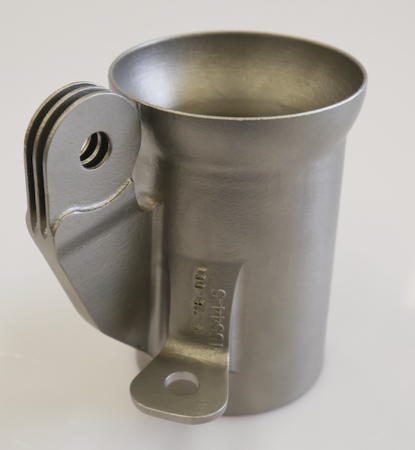
Additive manufacturing enables geometries and design solutions that would be very difficult or impossible to produce using conventional methods. This allowed us to specifically design the component to withstand the thermal and mechanical stresses.
In addition, the aerospace industry often deals with small production runs. Traditional tooling and large-scale production runs are frequently not cost-effective in this context. Additive manufacturing therefore offers particular advantages for specialized replacement parts, older aircraft, and technically complex small-batch production.
However, it is crucial to take the possibilities of the process into account as early as the design phase. Simply transferring an existing component to a 3D printer does not fully exploit the technology’s potential.
3. What distinguishes an additively manufactured aerospace component from a conventional industrial 3D-printed part?
In aviation, it is not enough for a component to fit geometrically and function on the first try. It must be demonstrated that it is manufactured under defined and reproducible conditions and that it reliably meets its performance requirements during intended operation.
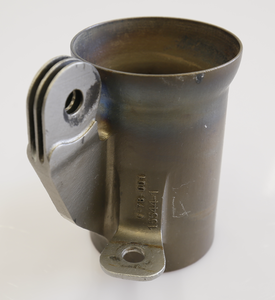
slide valve after a test run in the exhaust system
These include, among other things, qualified materials and manufacturing parameters, a controlled process chain, defined finishing and heat treatment processes, and full traceability. Testing, documentation, and proof of conformity are also integral parts of the product.
The actual component is therefore only the visible result. The bulk of the work lies in the controlled and documented development, manufacturing, and certification process behind it.
A key design improvement was the consolidation of the originally welded structure—which consisted of 23 individual parts— into a largely homogeneous, weld-free component manufactured using an additive manufacturing process. This reduced sharp transitions and sudden changes in stiffness, optimized load transition radii, and specifically reinforced areas subject to particularly high stress. At the same time, material was saved in areas subject to less stress.
By eliminating weld seams and heat-affected zones, stress peaks were reduced, and load distribution, dimensional accuracy, and reproducibility were improved.
4. Why must future certification be taken into account as early as the design phase?
In the aviation industry, design, manufacturing, and verification are inseparable. Even at the initial design stage, it must be clear what loads and environmental conditions will be encountered, what failure mechanisms are possible, and how the required properties can be verified later on.
If a component is initially developed based solely on technical or manufacturing considerations, and certification is only considered afterward, this often results in time-consuming modifications, additional testing, and avoidable costs.
Our experience therefore shows that the certification strategy should begin with the initial digital design.
5. What is the path from the initial component concept to approved flight operations?
The process begins with an analysis of the existing component, its function, the loads it experiences, and potential weak points. This is followed by the definition of requirements, the selection of materials and processes, and certification-oriented design.
Next, manufacturing and post-processing procedures are defined, and prototype parts are produced and tested. The results are then incorporated back into the design and process definition. At the same time, the technical documentation for the verification process is developed.
This is followed by the necessary tests under conditions that are as realistic as possible, as well as coordination with the involved development and certification partners. Only when the design, manufacturing process, test results, and documentation align can a solution be developed that is eligible for certification.
6. What role do quality assurance and traceability play?
Quality assurance and traceability are central components of the approval process. For an additively manufactured metal component, factors such as the raw material, the component’s orientation within the build volume, the process parameters, heat treatment, and mechanical post-processing can all influence its final properties.
Therefore, it must be possible to trace the material used and the conditions under which a component was manufactured. Documented tests and clear approval criteria are equally important.
Only with a closed and reproducible process chain can it be demonstrated that not only does a single sample function, but that additional components with the specified properties can also be produced.
7. What technical validations were required for the award-winning component?
First, the requirements regarding temperature, load, vibration, and installation conditions had to be determined. Subsequently, the design, material, and manufacturing process were evaluated and validated through appropriate material, dimensional, and functional tests.
The material used is EOS NickelAlloy IN718, a high-temperature and corrosion-resistant nickel-based alloy. The component is manufactured using the powder-bed-based laser beam melting process PBF-LB/M. Post-processing steps include stress-relief annealing, removal of support structures, precision machining, and ceramic bead blasting. Each production batch is uniquely identified and fully traceable through documented records.
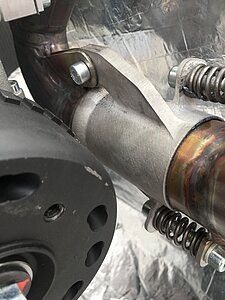
Another key component was testing under realistic operating conditions. The testing program totaled 55 hours: 20 hours of test bench runs at Binder Motorenbau and SOLO Aero Engines, as well as 35 hours of flight testing. In addition, material test specimens as well as dimensional, fit, and functional tests were conducted. The goal was to demonstrate that the component could reliably withstand the thermal and mechanical stresses of engine operation.
In addition to the actual test results, complete documentation of the design and manufacturing processes was also required. For certification, it is not only necessary that a test was successful, but also that the setup, boundary conditions, and results are documented in a way that is verifiable and reproducible.
8. Why is collaboration among different partners so important in projects like these?
An aviation certification is always an interdisciplinary process. The operator is familiar with the practical problems and operational demands. Design and analysis teams provide the technical specifications. Manufacturing and materials experts master the additive manufacturing process. Development and certification organizations evaluate the supporting documentation and coordinate the certification process with the regulatory authority.
VOCUS plays a coordinating role between component development, additive manufacturing, and certification. As the coordinating development partner and link between design, additive manufacturing, testing, and certification, VOCUS was responsible for development and certification coordination. The company is also the holder of the EASA STC.
Participants included Materialise as a certified production partner for pre-build preparation, additive metal manufacturing, and digital traceability; EOS, which provided the manufacturing system, the material, and the technical process platform; and Binder Motorenbau and SOLO Aero Engines for the test bench runs. EASA was involved as the competent certification authority but is not a project partner.
This close coordination is crucial, especially when it comes to novel technologies. Many projects fail not because of the technical concept, but because manufacturing, documentation, and certification requirements are brought together too late.
9. For which applications is this approach particularly interesting?
It is particularly interesting for components that are either no longer available, are needed only in small quantities, or for which conventional manufacturing is very costly. This applies to both older aircraft and current models with specialized or frequently worn components.
Other suitable applications include parts subjected to high thermal loads, complex geometries, the integration of multiple functions into a single component, or components whose service life can be improved through a redesign.
However, not every component is automatically suitable for additive manufacturing. Therefore, the process must always begin with a technical and economic evaluation.
10. What technical and economic advantages can arise compared to conventional remanufacturing?
In addition to design freedom in terms of geometry, additive manufacturing can reduce tooling costs, simplify supply chains, and enable the production of small batch sizes. For older aircraft, it can help make spare parts that are no longer available economically viable again.
The greatest advantage, however, often arises over the entire life cycle. When a component achieves a longer service life, maintenance intervals can be extended, or downtime can be reduced, the price of the individual component alone is not the decisive factor.
Additive manufacturing is therefore not necessarily the cheapest manufacturing method. When used correctly, however, it can be the more sustainable solution, both technically and economically.
11. Can the approach be applied to other components and aircraft models? The specific certification always applies to the respective component and the defined scope of application. However, the developed methodology, process knowledge, and experience gained from the technical validation process are transferable.
Through this project, we have learned which issues must be clarified early on, how to establish a robust process chain, and which interfaces between design, manufacturing, testing, and certification are particularly important. This knowledge can be incorporated into future minor change and STC projects and help reduce development risks as well as unnecessary iterations.
A minor change is an approved, minor modification to an aircraft’s type design. The methodology developed can therefore be applied to both smaller changes requiring approval and more extensive STC projects.
12. At what stage of a potential certification project should a company incorporate VOCUS?
Ideally, very early on—as soon as a spare parts issue arises or the initial idea for an additive manufacturing solution emerges.
At the outset, an assessment should be made to determine whether additive manufacturing is technically and economically viable for the specific application. If so, certification-oriented development, the definition of manufacturing and testing processes, as well as technical documentation and evidence management can be planned and supported in collaboration with the necessary certification partners.
The earlier design, manufacturing, and certification strategy are integrated, the more effectively the project can be implemented.
13. What other applications and developments do we foresee for additive manufacturing in the certified aviation sector?
Additive manufacturing will increasingly evolve from individual demonstrators into a standard manufacturing option. We see particularly great potential in replacement parts, components subjected to high thermal loads, functionally optimized parts, and small certified production runs.
In our view, the greatest challenge is no longer limited to printing technology alone. The key will be to integrate digital process chains, quality assurance, and certification requirements in such a way that reproducible and economically viable aerospace products are created.
At this intersection, VOCUS can contribute its expertise in development, additive manufacturing, and certification.
14. What is the most important lesson companies should take away from this project?
In safety-critical applications, additive manufacturing should not be viewed in isolation as a manufacturing process. It is crucial to consider design, materials, process, testing, documentation, and certification together from the very beginning.