
Why innovation risk means more than capital
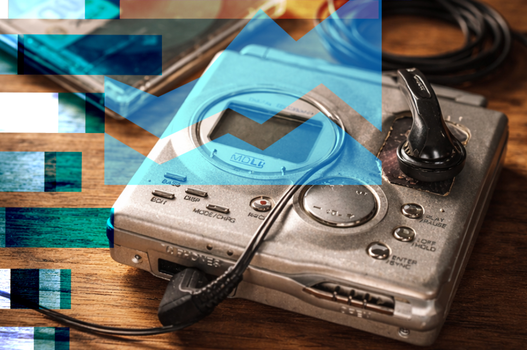
I hadn't missed it for a long time. It was at the very back of the cupboard. Between cables, old power supply units and things that were once urgent. A flat metal case, cool to the touch. The sliding lid still clicks into place precisely.
My MiniDisc player.
It brings back the memory of a moment when I consciously bet on something with an open outcome. A decision that was bigger than the device.

In the mid-nineties, this player cost me around 1000 marks. For a schoolboy, that wasn't an impulse, it was a setback. The Discman was too bulky for me, the Walkman too mechanical, too susceptible to faults. I wanted something digital. Something that not only played, but organized. The MiniDisc promised control. Rename tracks. Change sequences. Delete tracks. Music was no longer fixed, but editable. I began to restructure my CD collection. Albums became records. Sequences became decisions.
It was a small system change.
Years later, I saw similar moments in companies. Not out of necessity, but out of unrest. A traditional sales force suddenly got a CRM system. Production lines were equipped with sensor technology. A mechanical engineering company founded a joint venture with a software provider because it was clear that hardware alone would not be enough. No one was acutely threatened. But the feeling grew that the existing system was no longer enough.
The first few weeks with the MiniDisc consisted of trial and error. Setting recording levels, understanding compression, learning menu logic. Every recording was a small investment of time. I didn't just pay 1000 marks, I paid for hours of learning.
Economists would say: I had bought myself an option. Not a guarantee, but the opportunity to participate in a development. I learned to think about music digitally long before streaming became a matter of course. Companies do something similar when they invest in new technologies. A chemical company invests in a start-up for low-carbon processes. An automotive supplier sets up a software unit even though its core business is still running. A medium-sized company enters into a joint venture for battery materials, not because the market is secure, but because it could be open.
Capital is tied up even though it is still unclear whether the market will emerge at all. The option may expire. Without it, you remain trapped in what already exists.

While I played MiniDiscs, I continued to listen to CDs. Two systems were running side by side. I was investing twice: time, attention, money.
Organizations know this in-between well. Old structures still generate turnover, new ones consume resources. In production, tried and tested processes continue to run while digital process control is being worked on in parallel. In sales, personal relationships continue to be cultivated while data models reorganize customer profiles.
This phase is expensive because it produces inefficiency. Strategists call this ambidexterity, simultaneously exploiting and renewing. For those involved, it feels less elegant: as if you have to think with two logics at the same time.

Technically, the MiniDisc was convincing. Robust, editable, stable sound. At first, MP3 seemed like a poor copy. And yet MP3 prevailed.
Not because it sounded better, but because it was connectable. It fitted into the Internet, into file-sharing networks, into new business models. The MiniDisc remained a closed system.
Markets rarely make decisions based on technical superiority alone. They make decisions based on networks.
Something similar happens in industries. An outstanding engineering solution loses out if it cannot be integrated into digital platforms. Deep tech remains a niche if no ecosystem is created. This is why joint ventures, participations and consortia are created. Companies are looking for connection, not just perfection.
Innovation is not an individual battle. It is an interplay of systems.
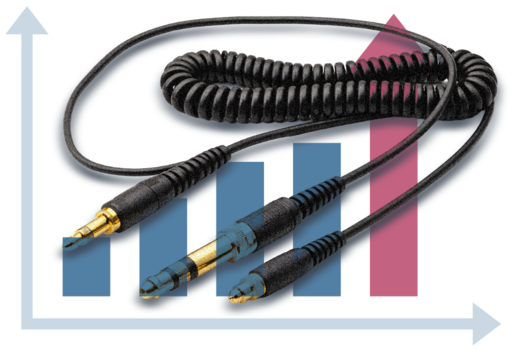

Technologies develop along S-curves. For a long time, they appear immature, inefficient and overpriced. Then they suddenly accelerate.
Those who invest early bear high costs and skepticism. If you invest late, you lose out.
I held on to the MiniDisc for a long time. MP3 seemed unphysical to me, cheap, flat sounding. Perhaps I wasn't just defending sound, but my judgment. Perhaps the MiniDisc was also a statement: I had decided early on that I wanted to be right.
Companies know this dilemma. Anyone who has invested billions in a technology does not change course easily. Sunk costs bind. Identities do too. A traditional company that sees itself as a hardware manufacturer finds it difficult to suddenly become a software provider. An energy supplier that has spent decades building up fossil fuel infrastructure is reluctant to invest in new sources. Not out of ignorance, but out of tied-up capital.
Why is change so difficult, even when it seems rational?
Because systems not only fulfill functions, but also carry meanings. A product stands for competence. A sales model stands for experience. A technology for pride.
When MP3 came along, music lost its shell. No more cases, no more medium, just files. For many, that was liberation. For me, it was a loss of materiality.
In companies, digitalization often means transparency. Key figures replace intuition. Algorithms replace experience. This can increase efficiency and shake identity.
Resistance is therefore not just persistence. It is the protection of self-image.
Many innovation projects disappear. Venture investments are written off. Pilot plants closed. Strategies revised.
From a distance, this looks like failure.
But innovation produces secondary values. Know-how, networks, skills, ways of thinking. A failed digital project can still make the organization more data-savvy. A discontinued deep-tech project can leave behind patents and talent.
The MiniDisc was not an end point either, but a stopover. It brought editable digitality to my listening behavior before streaming radically simplified it.
At some point, I swapped the MiniDisc for an iPod. Not because the first decision was wrong, but because the context had shifted.
Innovation does not require always being right. It requires being able to let go in time.
I look for a battery, insert a MiniDisc. A red one. The display lights up, I start the player. The sound is clearer than I remembered. What did this early decision cost me? Money, learning effort, doubts.
What did it bring me? Practice in changing systems. Practice in enduring uncertainty. Perhaps that is the real price of the future: the willingness to get moving, even though the outcome is open - and the willingness to get out again later.