
The personality of innovation - What do we have to be like to innovate?
OR: What makes innovation tick? The formula of the innovation personality
She was a movie star and inventor at the same time. He calculated with the logic of the world - until she drove him mad. Another wrote the first computer algorithm long before computers existed. Another deciphered the laws of nuclear fission while fleeing from the Nazis. And then there are those who built machines in their minds or laid the foundations of modern physics - with nothing but a sheet of paper and extraordinary clarity in their heads. Hedy Lamarr, Kurt Gödel, Ada Lovelace, Lise Meitner, Nikola Tesla and Emmy Noether - they all changed what we know about technology, science and thinking. Their personalities were as different as night and day. And yet we can ask: What do they have in common? What can we learn from them? - What is the formula for the perfect innovation personality?
What type am I?
People want to belong. This is deeply rooted in their nature. They want to fit in. This is based on a sense of survival from the Stone Age. Back then, loners had fewer chances of survival than people in a group. This desire to belong and fit in explains why there are so many ways to analyze people's character traits, behavioural patterns and stories in order to describe personalities. Even as teenagers, we encounter the first personality tests in magazines or online forums with titles such as "Which One Direction singer suits me?" or "Am I ready for my first relationship?". Even if such tests are usually not meant to be serious, they show The desire to find out more about yourself and compare yourself with others starts early. Later on, we come across more scientifically based models such as the MBTI (Myers-Briggs Type Indicator), the DISG model or the Big Five model. At the same time, there are countless non-scientific tests that are popular but hardly psychologically robust. The reason for this diversity lies in the complexity of the subject: personality is not rigid, but moves along spectrums. It is strongly influenced by subjective impressions, phases of life and social contexts - and therefore cannot simply be "measured". Each model attempts to bring order to this complex field - with different approaches, definitions and objectives. But what they all have in common is the desire to make human life and behavior more tangible.
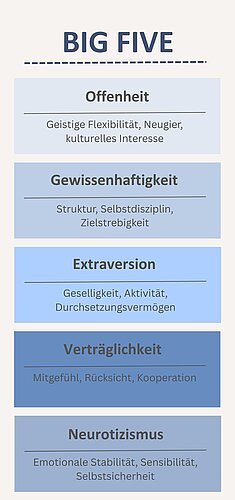
The big five
The Big Five model is one of the most established personality models in psychology. It describes individual differences based on five basic personality dimensions: Openness to experience, conscientiousness, extraversion, agreeableness and neuroticism. These characteristics are considered to be relatively stable over time and enable a differentiated assessment of personality. Openness describes the tendency towards mental flexibility, curiosity and cultural interest. Conscientiousness stands for structure, self-discipline and determination. Extraversion refers to sociability, activity and positive emotionality. Agreeableness describes how considerate, cooperative and compassionate a person is. Finally, neuroticism describes emotional stability - or its opposite: those with a high level of neuroticism tend to be nervous, insecure and susceptible to stress. The five dimensions are usually rated on a scale from "very low" to "very high", thus enabling a differentiated classification of individual personality profiles. The model is used in personality diagnostics, in work and organizational psychology as well as in research - for example, on the question of how personality traits relate to professional success, health or life satisfaction, or even to innovation.
The Big Five of the Big Six
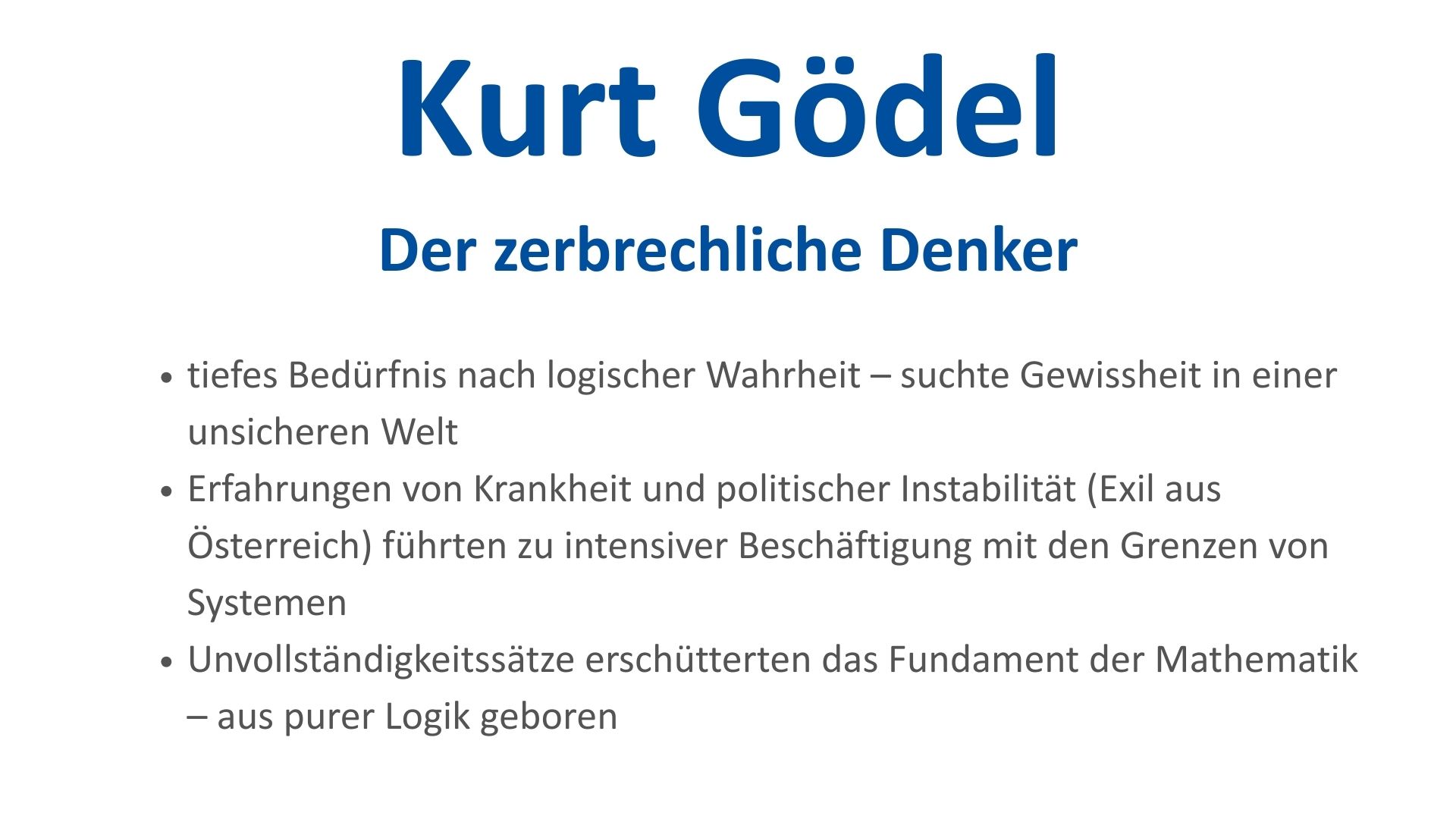
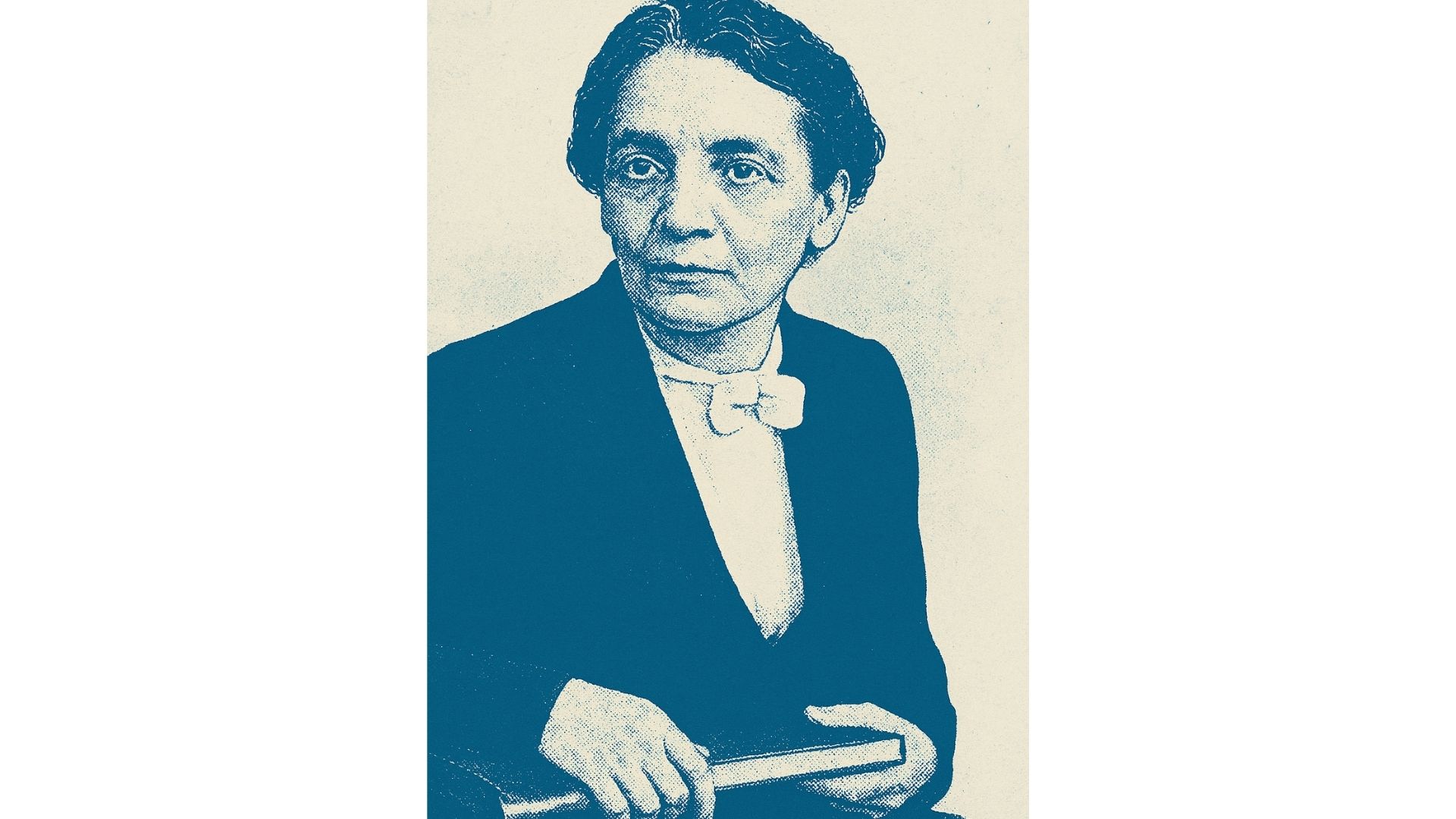
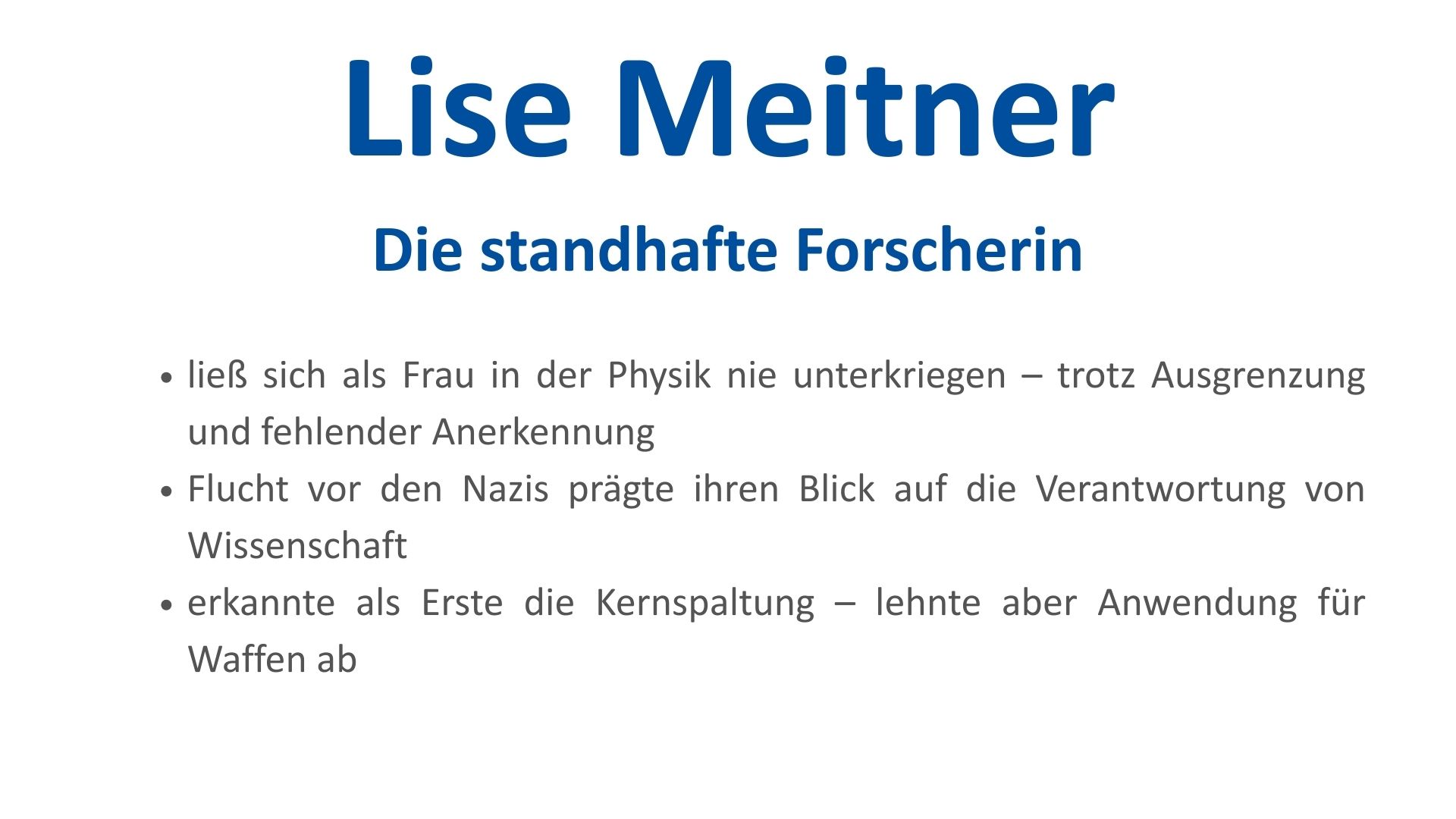
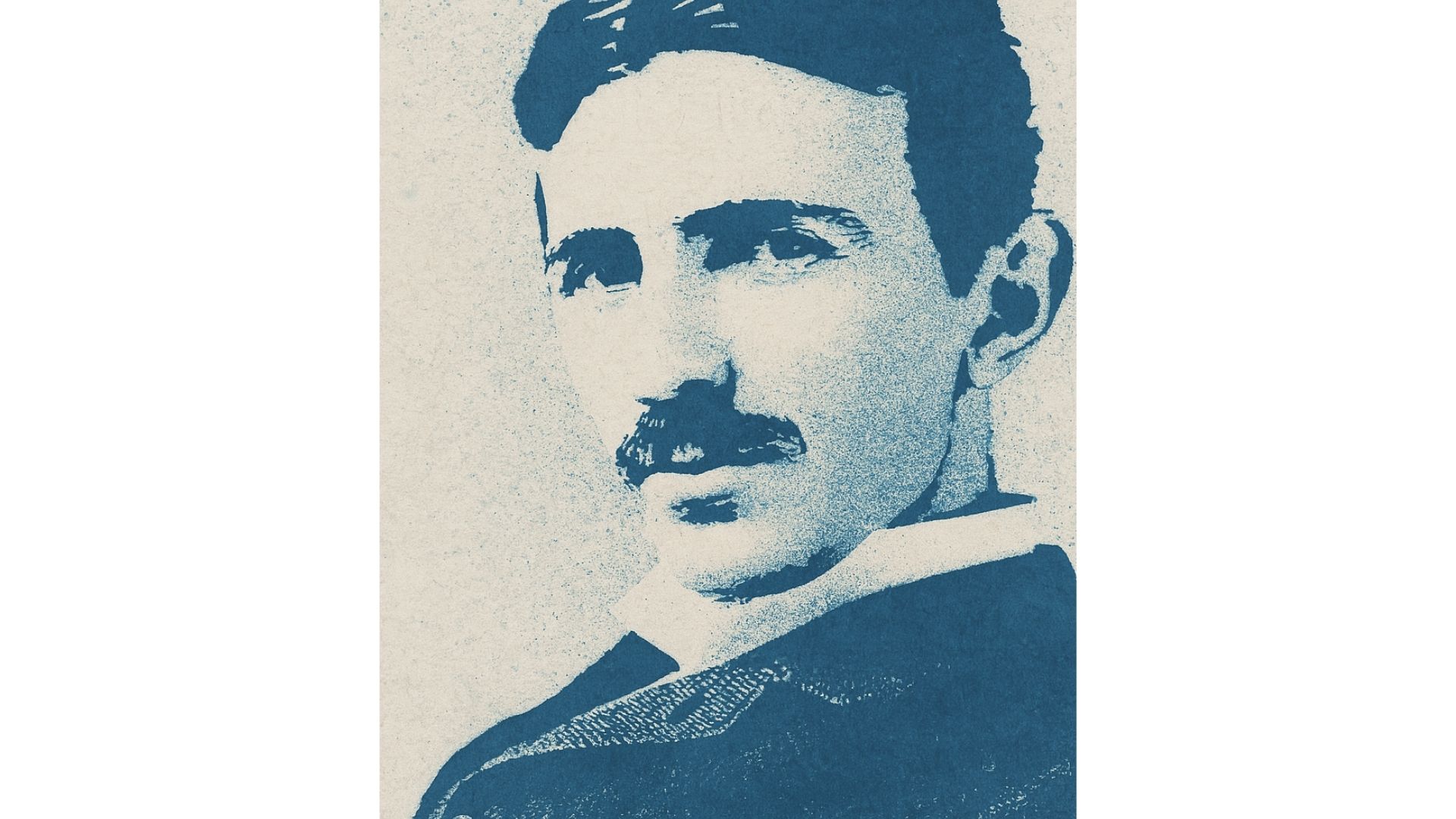
Nikola Tesla, Ada Lovelace, Kurt Gödel, Hedy Lamarr, Lise Meitner and Emmy Noether were extraordinary innovators who were ahead of their time with their thinking. Personality models such as the Big Five did not yet exist back then - their character often only remained tangible through stories. But what would happen if this model were applied to them? Where would Lamarr & Co fit in - and what does this reveal about the personality dimensions of innovation?
| openness | conscientiousness | extraversion | compatibility | neuroticism | ||
|---|---|---|---|---|---|---|
| Nikola Tesla | very high | medium | very low | low | high | |
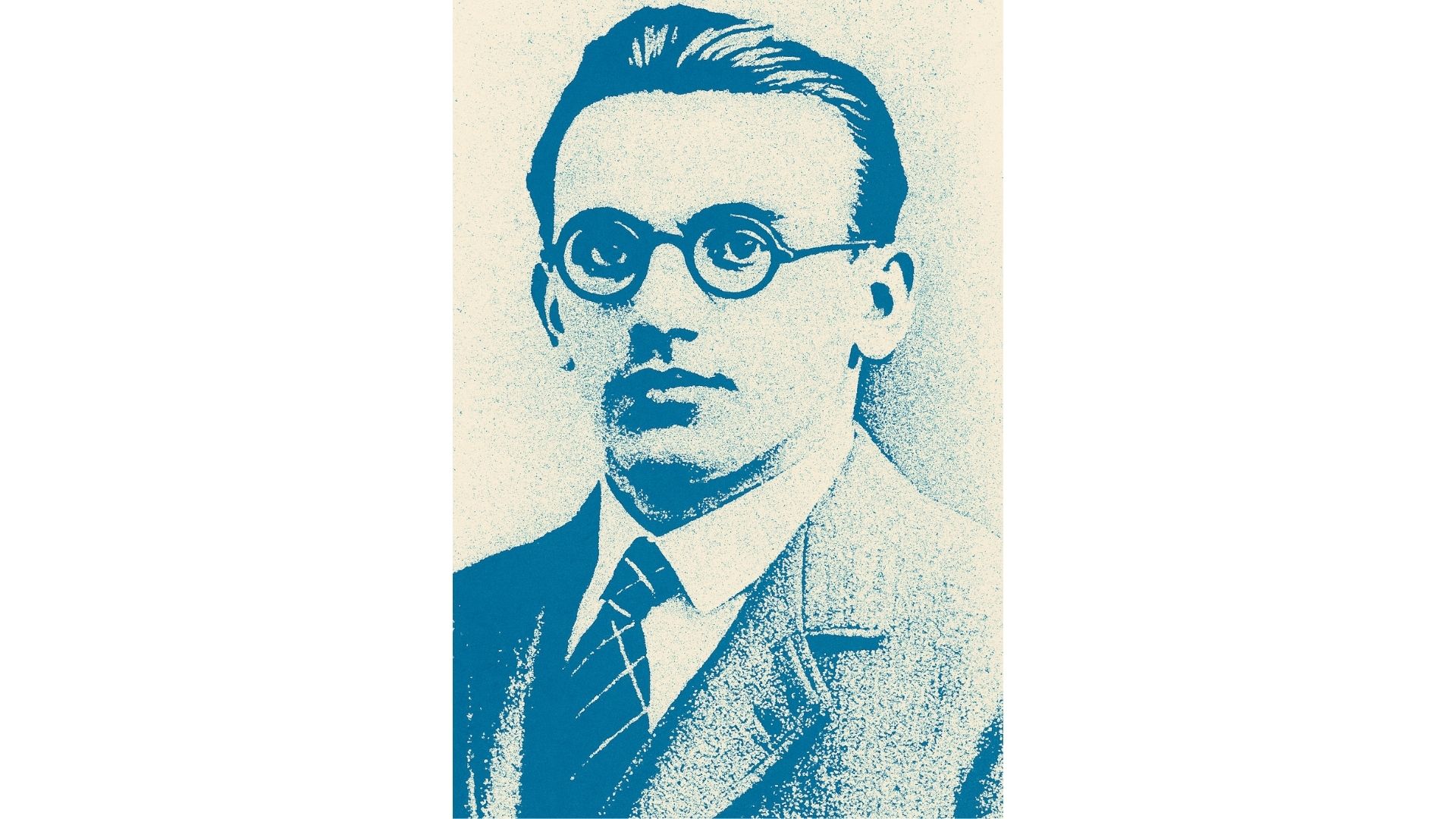
| Kurt Gödel | very high | high | very low | medium | very high | |
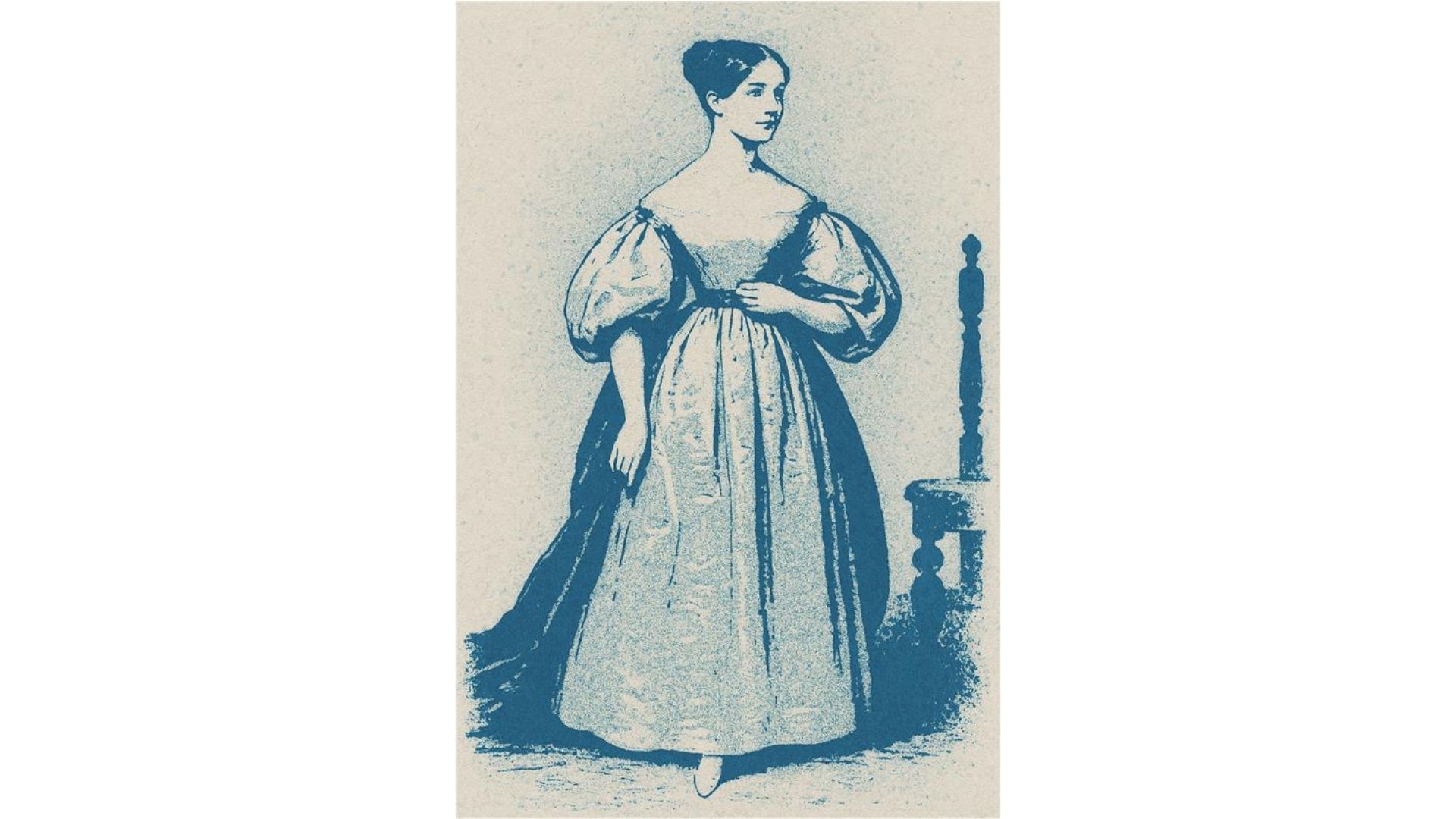
| Ada Lovelace | very high | medium to high | medium | high | medium | |
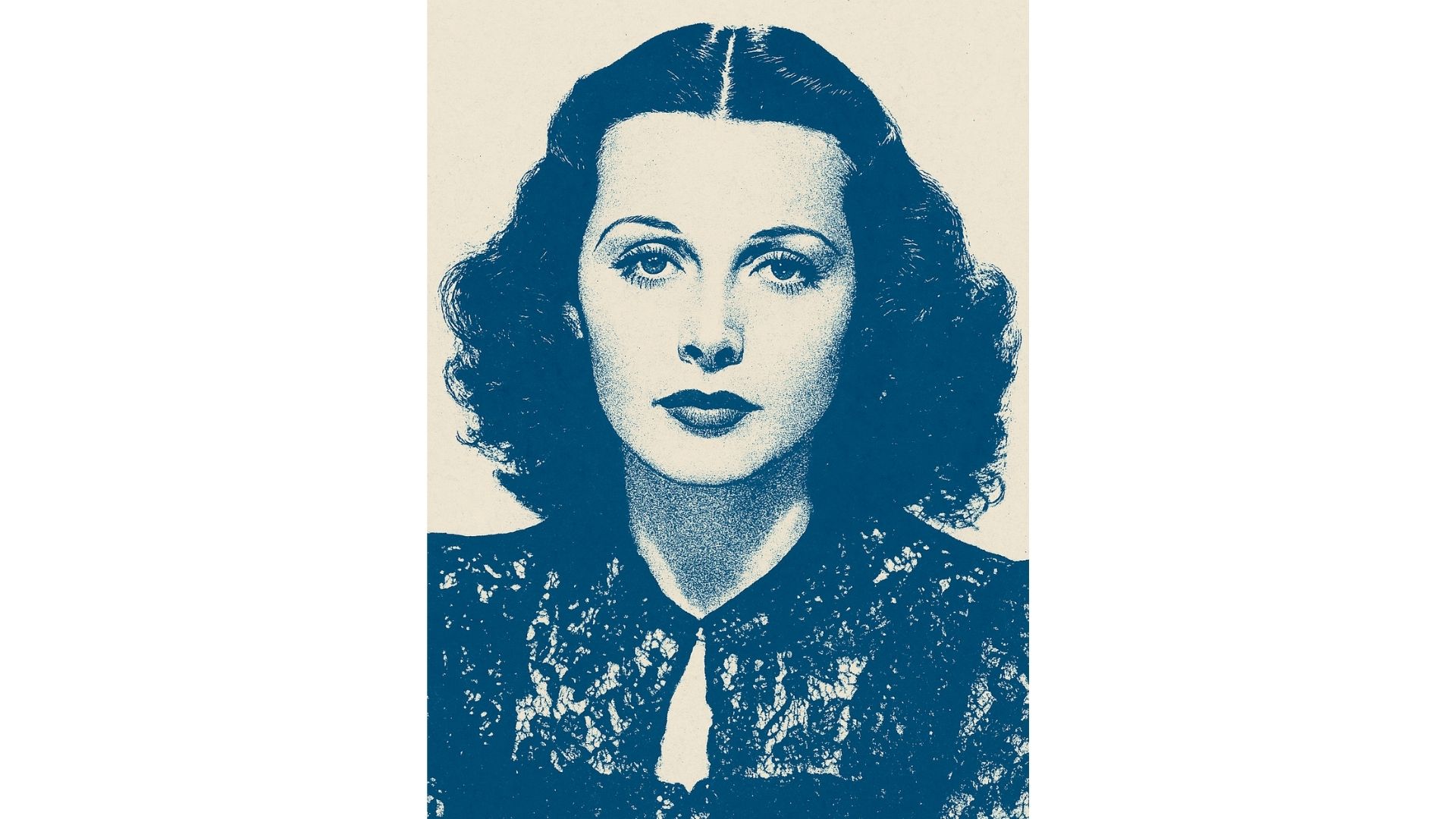
| Hedy Lamarr | very high | medium | high | medium | medium | medium |
| Lise Meitner | high | very high | low | very high | low to medium | |
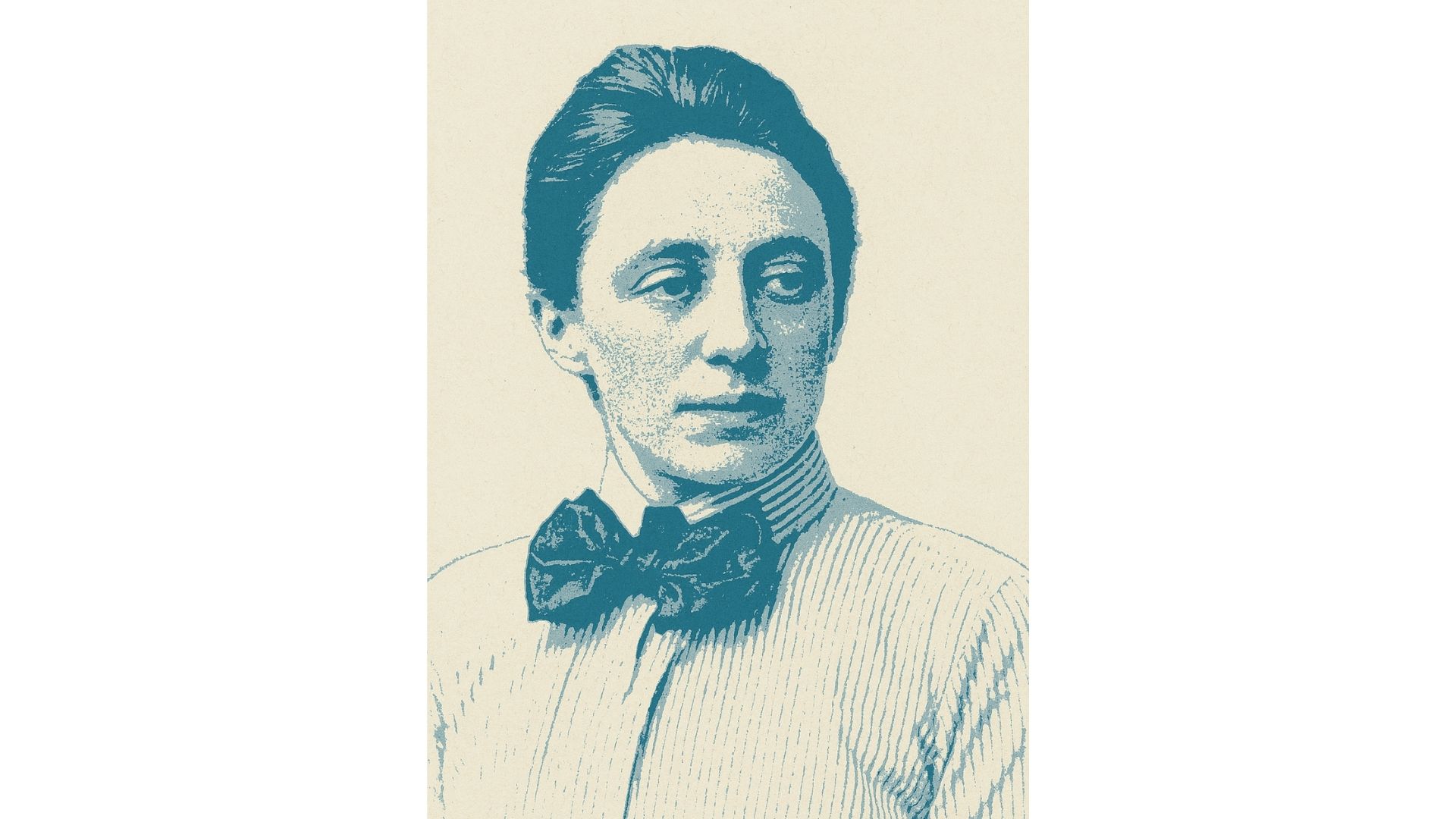
| Emmy Noether | very high | high | medium | medium | medium |
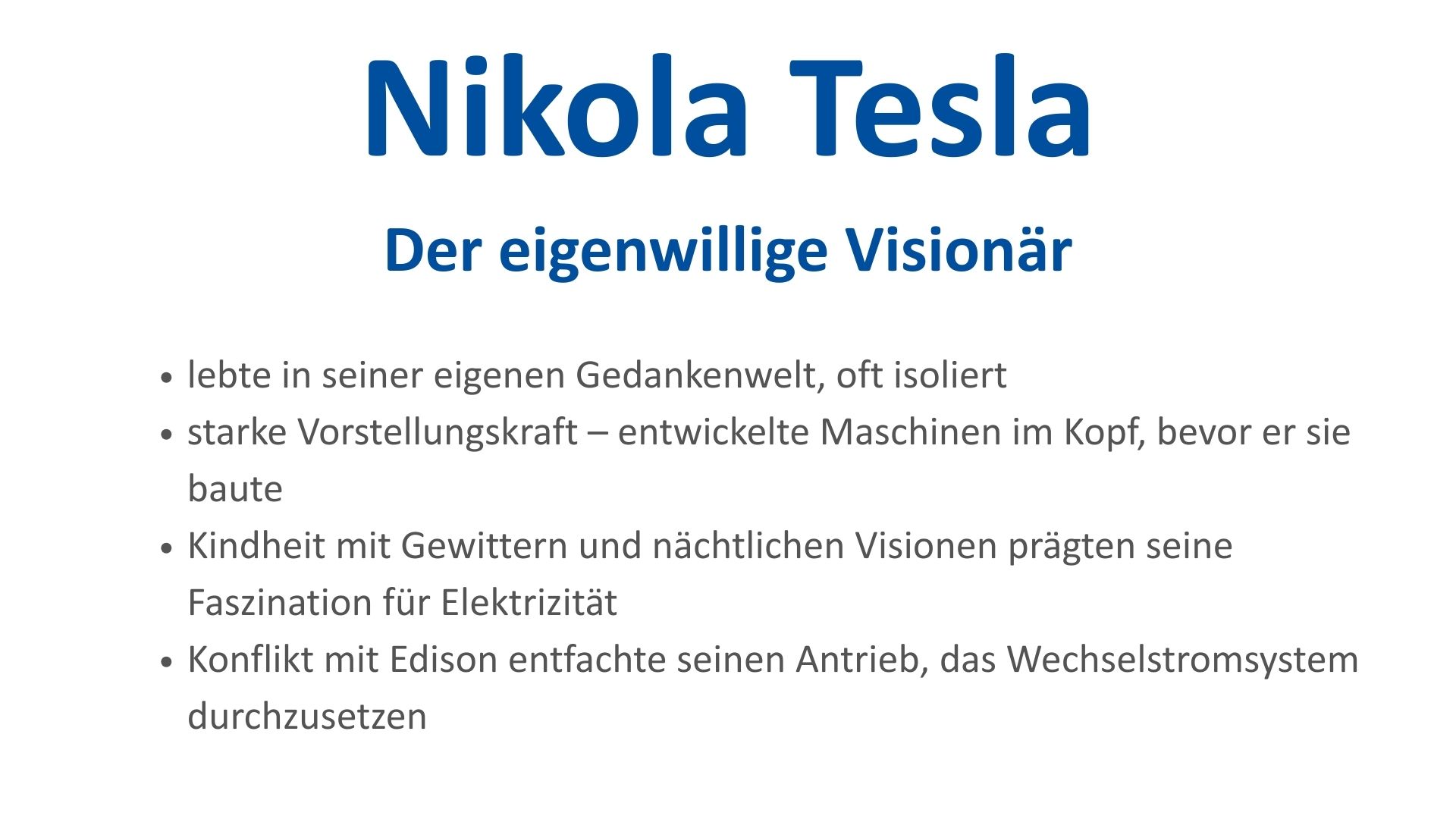
Nikola Tesla was highly creative and visionary, which explains his very high openness to experience. At the same time, he lived an extremely withdrawn life, which indicates very low extraversion. His emotional instability, obsessions and idiosyncrasies indicate high neuroticism. Kurt Gödel shows similar tendencies: his brilliant logical theories indicate high openness and conscientiousness, while his social anxiety and withdrawal tendencies suggest very low extraversion and high neuroticism. Ada Lovelace combined mathematical thinking with poetic imagination, which underlines her very high openness. She was both communicative and open to cooperation, which is why she can be rated as more extraverted and agreeable. Hedy Lamarr, on the other hand, was extroverted, self-confident and took unconventional paths - her high degree of openness and extraversion resulted from her dual activity as an actress and inventor. At the same time, however, she remained rather independent and critical, which explains her average agreeableness. Lise Meitner was disciplined, objective and morally stable. Her very high conscientiousness and agreeableness are reflected in her work ethic and ability to work in a team, while her quiet nature indicates low extraversion. Emmy Noether was humorous, helpful and theoretically brilliant - her very high openness and agreeableness are reflected in her enthusiasm for abstract mathematics and her collegial behavior.
The personality formula
What remains when you juxtapose the differences between these extraordinary personalities? When you ask yourself whether there is a common pattern despite all the diversity? At first glance, the lives of Tesla, Lovelace, Gödel, Lamarr, Meitner and Noether seem to have little in common.
Despite the differences in their personalities and life stories, a common thread can be recognized: An outstanding openness - not just in the classic sense of the Big Five model, but as an inner attitude. They were prepared to think in new ways, to question old ways of thinking and to face up to the uncertainties associated with innovative ideas. This openness was also found in the independence that united all these innovators: an independence that was often accompanied by resistance, doubt or a feeling of alienation.
The idea of a fixed formula for the perfect innovation personality is lost here in the diversity of stories. The personality formula for innovation is not a rigid equation. It consists of different factors such as creativity, courage, intelligence, but also a certain urge to break with the system or norms. Some of these characteristics don't seem to fit together perfectly - and yet, in the right context, they lead to groundbreaking ideas. Many people are suited to turning their ideas into something great. And those who don't yet feel they are suitable can learn to do so. But what other driving force is behind great innovations? A decisive factor for change and innovation is the will to change something - be it the world, the system or simply your own life. But where should it change to?
Change away or change towards?
An important impetus for innovation is the will to change. When people want to change themselves or their circumstances of their own accord, it is usually either a change "towards" something, for example to a new profession that the person longs for or to a new hobby. Or, as in the case of Gödel, towards absolute order and logic. The other possibility is the drive to change "away from" something. In this case, something about the here and now bothers the person so much that something has to change. This can be the case, for example, if the circumstances in your current job are so stressful that you can no longer stand it, or if you are arguing so much with your neighbors that you absolutely want to move. Or persecution in your own country, as with Lise Meitner, who fled into exile from the Nazis as a Jew. In this case, the negative circumstances drive you away from a situation. With the "towards" change, you are more likely to be attracted by a positive desired circumstance. In reality, most changes in life are based on a mixture of "away from" and "towards". The old job is extremely stressful and a position has just become vacant at my dream company. Tesla was driven both by a vision towards a better, more technologically advanced world and by frustration away from existing energy concepts and the monopolistic structures of the industry. He wanted to create a future where technology improved the world while freeing himself from the constraints of the existing system.
Hedy Lamarr strove for the opportunity to develop her intellectual abilities as an inventor, while freeing herself from the narrow, stereotypical Hollywood roles that limited her as an actress. Her drive to be more than just the movie idol led her to pioneering inventions in communications technology.
Innovation starts with openness
There is no clear formula for the perfect innovation personality - and that is precisely where her strength lies. Innovation does not arise from a fixed character type, but from an individual mix of creativity, knowledge, curiosity and personal experience. Creativity is the foundation - but it manifests itself in many forms: logical, practical, abstract or artistic. Everyone is creative, just in their own way. External circumstances can also trigger innovation: Some are driven by an "towards" change - they want to move towards something new, something better. Others are driven by the pressure to free themselves from stressful situations - an "away from" movement. Innovation can arise in both cases. Whether it was Hedy Lamarr, who broke out of the confines of her role as an actress, Kurt Gödel, who retreated into the world of pure logic, or Ada Lovelace, who combined mathematics and machines in a visionary way - they all had completely different personalities. Emmy Noether was cooperative and theoretically brilliant, Lise Meitner reserved and morally steadfast, Nikola Tesla an eccentric loner. What unites them is not a common personality profile, but a single constant: their openness. Openness to new ideas, to change, to the unknown. Perhaps this is precisely the strongest factor in the formula for innovation - together with the courage to follow it.