
The Next Phase of Fleet Electrification: Why Charging Alone Is No Longer Enough
Series of Articles on Fleet Electrification
September 10, 2026
The electrification of commercial vehicle fleets is advancing rapidly in Europe. Many companies are investing in charging infrastructure, expanding public charging networks, or broadening their range of charging services. Our partner, valantic Software & Technology Innovations GmbH, focuses on advancing fleet electrification, charging, telematics, and digital mobility platforms. In a short series of articles, they explore various aspects of the digitalization of electric commercial vehicle fleets. We’ll start with the next phase of fleet electrification and the question of why charging alone is no longer enough.
With the transition to electric commercial vehicles, charging options and charging infrastructure in Europe are being continuously expanded. This development is important—but it alone will not be enough to ensure smooth and cost-effective fleet operations.
This is because as soon as electric commercial vehicles are put into daily operation, new interdependencies arise: route planning, state of charge, available charging points, energy supply, driving and rest periods, as well as vehicle and operational data must all be coordinated.
Much of this information is already available—but often in separate systems.
How can fleet operations, charging processes, and mobility services be intelligently integrated?
Cihan Gökduman, Sales Director Automotive at valantic, comments:

"In our view, the future lies not in individual digital solutions, but in integrated platform ecosystems. They connect vehicle data, fleet operations, charging processes, and energy supply, thereby laying the foundation for more efficient and resilient operations."
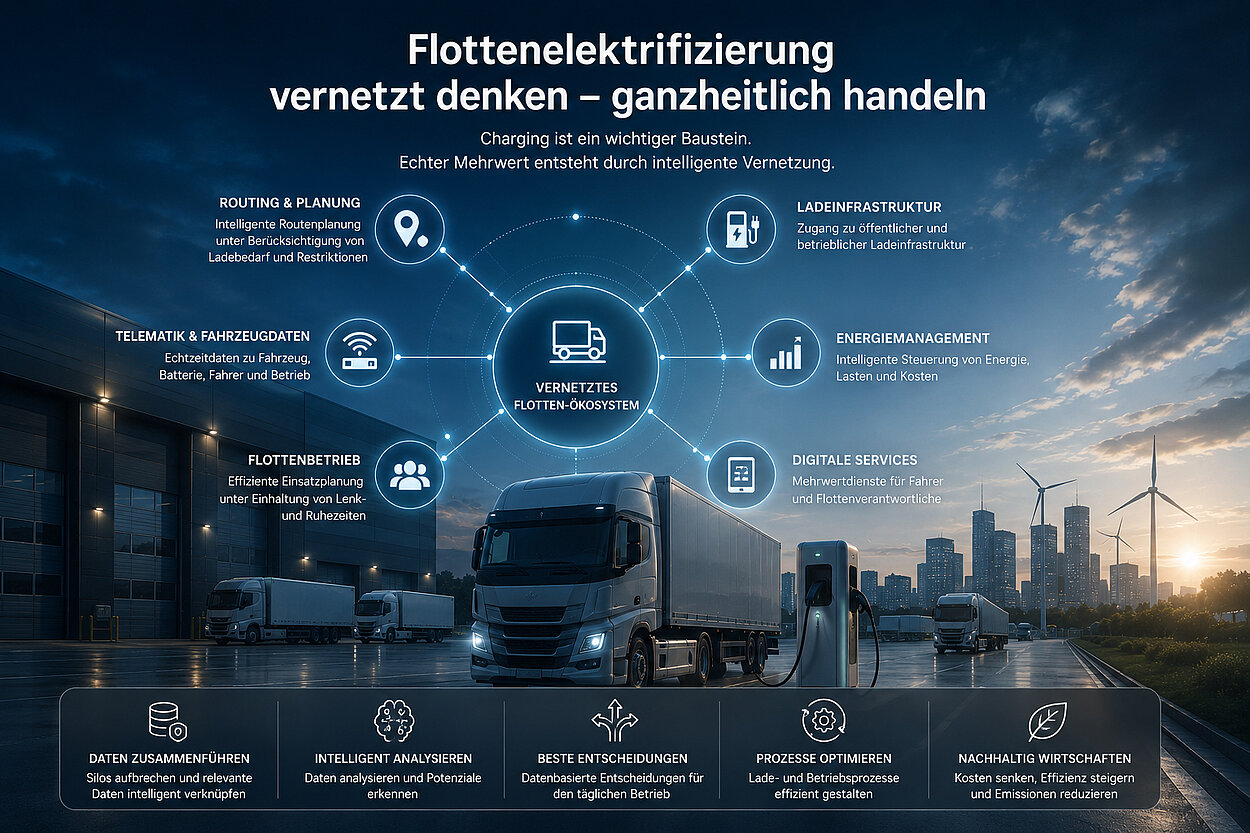
Charging is no longer viewed as a standalone service, but rather as an integral part of a digitally connected fleet operation. Numerous companies in the European mobility and commercial vehicle sectors are increasingly addressing this issue and are confronted with the following new questions:
- How can routing and charging be optimized together?
- How can vehicle, energy, and operational data be intelligently combined?
- What role will telematics platforms play in the mobility ecosystem in the future?
- How can data-driven support be provided for operational decisions?
- How can charging and operational processes be seamlessly integrated into existing fleet structures?
This clearly shows that the boundaries between telematics, charging, fleet operations, and digital mobility platforms are becoming increasingly blurred.
Intelligent Integration of Existing Systems and Services Is Crucial
The competitive advantage of the coming years will not stem solely from new features. Above all, the intelligent integration of existing systems and services will be crucial. We will explore this development in more detail in our series of articles and look forward to engaging with the community and hearing different perspectives on this exciting transformation.