
Curating Sustainably, Acting Consciously
How the Lenbachhaus Is Transforming Its Operations
July 30, 2025
Preserving art, protecting the climate, and fostering participation—all within a complex of historic buildings. The Lenbachhaus in Munich demonstrates how sustainable cultural work can succeed despite a wide range of challenges. In this interview, Hans-Peter Schuster, director of the Städtische Galerie im Lenbachhaus and Kunstbau München, discusses calculating the carbon footprint, low-emission exhibitions, and social sustainability in the day-to-day operations of the museum. It becomes clear that the path to sustainability is not a sprint, but a continuous learning process with opportunities for action that other institutions can also take advantage of.
As a museum with conservation requirements, you operate energy-intensive air conditioning systems to protect the artworks. How do you strike a balance between international conservation standards and environmental responsibility?
Hans-Peter Schuster: This issue presents challenges for all museums that preserve high-quality art and therefore require stable climatic conditions to protect the artworks, but at the same time strive to reduce energy consumption. Our first priority, therefore, was to optimize our existing climate control systems. We had the system in our main building inspected by an engineering firm. As a result, various measures—such as significantly reducing nighttime operation—led to energy savings of about 25 percent. In the Kunstbau exhibition space, located outside our main building, a new, more efficient air-conditioning system is currently being planned, which is expected to yield energy savings of at least 30 percent. We also purchase green electricity from Stadtwerke München. Addressing this challenge is therefore an ongoing process that we are refining step by step.
As a museum with conservation requirements, you operate energy-intensive air conditioning systems to protect the artworks. How do you strike a balance between international conservation standards and environmental responsibility?
Hans-Peter Schuster: This issue presents challenges for all museums that preserve high-quality art and therefore require stable climatic conditions to protect the artworks, but at the same time strive to reduce energy consumption. Our first priority, therefore, was to optimize our existing climate control systems. We had the system in our main building inspected by an engineering firm. As a result, various measures—such as significantly reducing nighttime operation—led to energy savings of about 25 percent. In the Kunstbau exhibition space, located outside our main building, a new, more efficient air conditioning system is currently being planned, which is expected to yield energy savings of at least 30 percent. We also purchase green electricity from Stadtwerke München. Addressing this challenge is therefore an ongoing process that we are refining step by step.
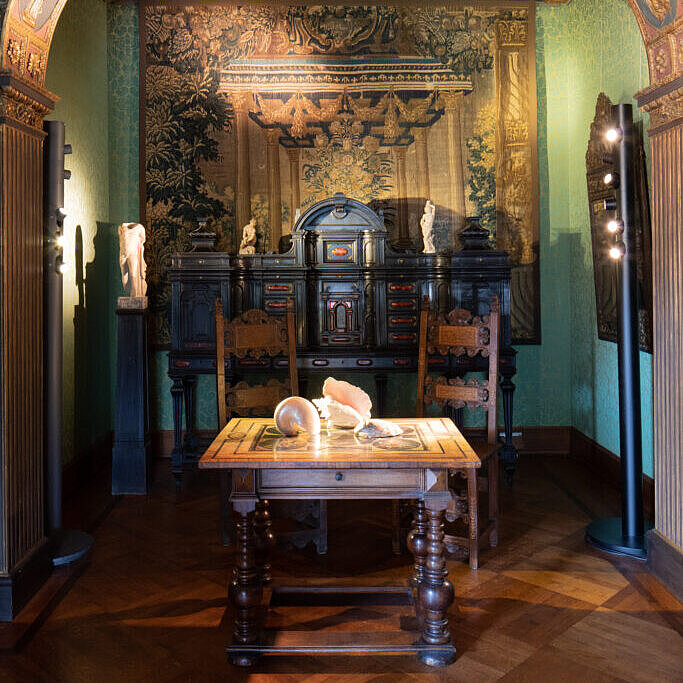
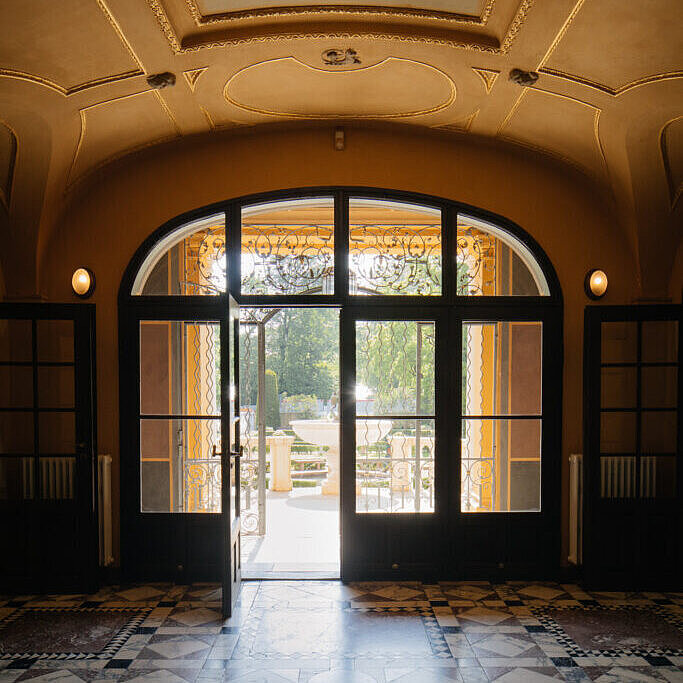
The Lenbachhaus is a complex of buildings designated as historic landmarks. To what extent does the historic building fabric pose a challenge to environmental sustainability goals, and where might there also be opportunities? How do you strike a constructive balance between these two objectives?
Hans-Peter Schuster: The Lenbachhaus underwent a comprehensive renovation between 2009 and 2014. The historic building fabric was, of course, preserved during this process, but thanks to the renovation, it no longer poses a significant obstacle to our sustainability goals. Although energy efficiency did not yet play such a central role at the time of the renovation, it was taken into account—for example, through the complete switch to LED lighting, making us, incidentally, one of the first museums worldwide to do so. This has created a solid foundation for further building-related measures to reduce our ecological footprint.
You were one of the first museums in Germany to conduct a carbon footprint assessment. What specific measures have you implemented since then, and how has understanding your emissions changed your day-to-day curatorial and operational work?
Hans-Peter Schuster: In addition to providing reliable data, the preparation of our carbon footprint assessment has led to a broader awareness of sustainability throughout the entire institution. As described above, technical measures to optimize building systems are being implemented on an ongoing basis. In the exhibition area, we now use reusable exhibition architecture; whenever possible, we avoid small-scale loaned items and instead increasingly rely on collection exchanges with other museums. In collaboration with our logistics partners, we are working to optimize transport routes, etc.
International exhibitions and loans are central to your work, but they also generate emissions. Visitors’ travel to the museum also has a significant impact on the climate. How do you address these mobility issues? Where do you focus your efforts to reduce emissions without sacrificing cultural exchange?
Hans-Peter Schuster: The measures already mentioned for reducing transportation emissions also apply to international loans. However, we are an art museum that operates internationally and will continue to do so. We will therefore likely only achieve climate neutrality in this area over the long term and are essentially dependent on developments in the mobility sector. When it comes to visitor mobility, we take an open approach: We do not wish to dictate to anyone, but we deliberately do not provide incentives for traveling by car—for example, by not offering visitor parking. The museum’s central location makes it easier to use public transportation.
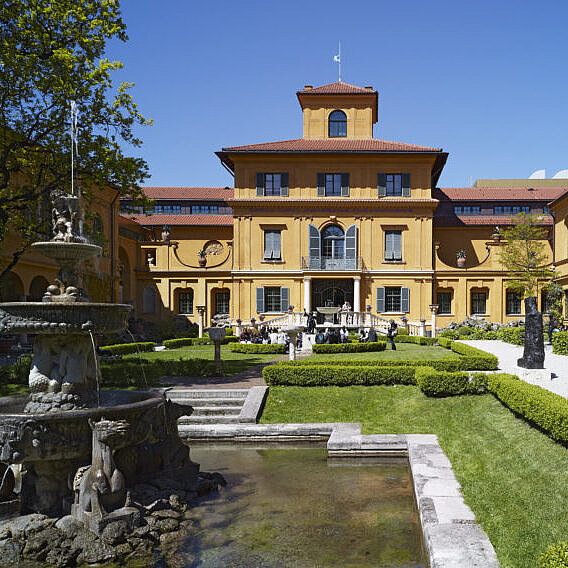
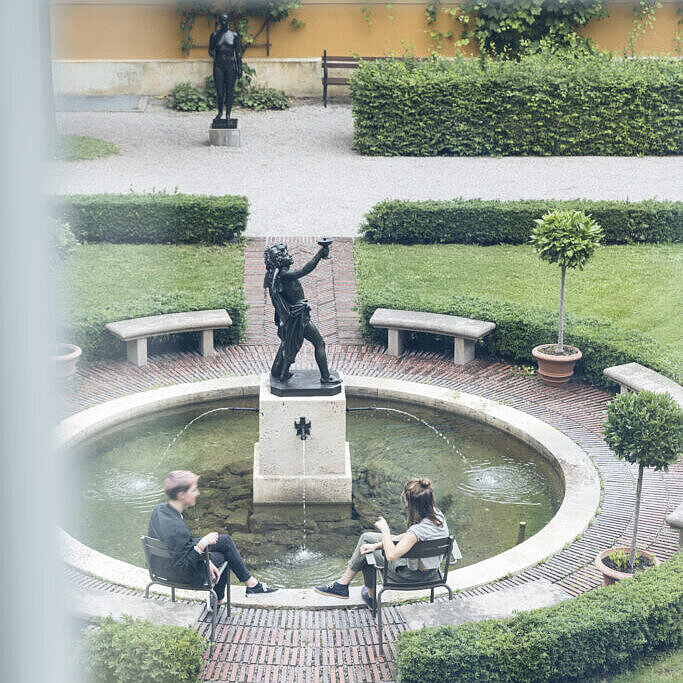
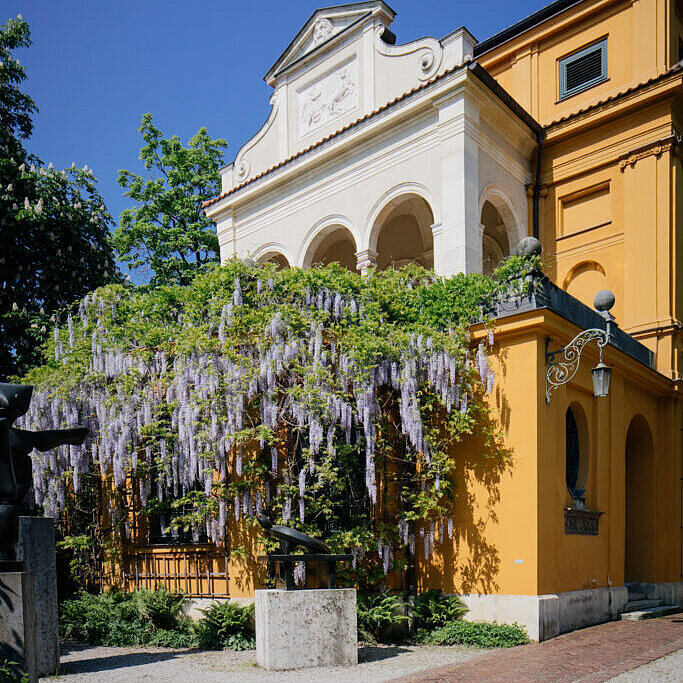
With the “Meet Your Bees” project, you’re bringing biodiversity right into the museum. What role does the project play in your sustainability strategy, and how have visitors responded to it?
Hans-Peter Schuster: The “Meet your Bees” project obviously doesn’t have a significant impact on our carbon footprint, but it should be seen as a conscious statement—both internally and externally—that we are committed to sustainability. It has been very well received by our staff and visitors. For example, the “Lenbachhaus Honey” produced at our apiary is very popular in the museum shop. We also offer a children’s workshop with our beekeeper, which is always a lot of fun for the kids (and us!).
Sustainability also encompasses social aspects such as participation, diversity, and accessibility. How do you integrate these topics into your daily work and program planning?
Hans-Peter Schuster: For us, sustainability always includes social participation, diversity, and accessibility. We also address these topics in many of our exhibition projects and events. In the exhibition area, we now use “plain language,” and guided tours have been and continue to be offered not only in English but also in Turkish, Ukrainian, sign language, and for people with dementia, among other languages. Socially disadvantaged visitors receive a 40 percent discount on admission; in many cases, they can even visit the museum for free. In this way, we aim to make access to art and culture as inclusive as possible.
What lessons from the “Climate Balances in Cultural Institutions” project would you share with smaller or less well-resourced museums that also want to operate more sustainably?
Hans-Peter Schuster: There are now numerous sources of information available, including the German Museum Association’s CO₂ Cultural Standard, which is certainly very helpful. However, our most important advice to smaller or resource-constrained museums is this: Don’t aim for perfection; instead, start with concrete, actionable steps you can implement on your own. Even small steps are meaningful and valuable—the key is to get started and make the most of the options available to you.