
People are the key to success
What Reich GmbH's development reveals about transformation, market opportunities, and timing
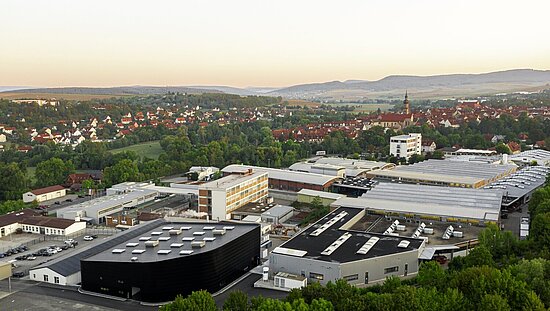
evolved from a manufacturer of bicycle bells to a high-tech producer of precision parts
October 16, 2026
When is the right time to enter a new market, and how can you tell if an idea has the potential to develop into a new business segment? There is no one-size-fits-all answer to these questions. However, the example of Reich GmbH illustrates which factors can help companies identify changes early on, evaluate opportunities, and successfully enter a new market.
The fact that Reich GmbH has been in existence for more than 100 years is no given—rather, the company has repeatedly reinvented itself and continuously evolved. In doing so, the company has been guided by the following motto: Nothing is more constant than change!
The World’s Largest Manufacturer of Bicycle Bells
As a manufacturer of bicycle parts, Reich GmbH was forced to leave its traditional line of business for the first time after the outbreak of World War II and switch to the defense industry. After the war, the company established its headquarters in Mellrichstadt and grew to become the world’s largest manufacturer of bicycle bells. Early on, Reich GmbH also expanded into other markets: first into the tool industry, and finally, in the early 1980s, into the automotive industry. This brought new challenges.
“We’ve been strongly influenced by the high quality standards in the automotive industry, where it’s crucial to manufacture parts with tolerances in the range of thousandths of a millimeter,” explains Key Account Manager Andreas Landgraf.
Another challenge lies in the production of high volumes, running into the millions. As the company grew, both the number of employees and the production space expanded.
The idea to enter the e-bike industry originated within the customer base
A decisive catalyst for the further transformation of Reich GmbH and its entry into the e-bike industry was the VW crisis, which was perceived as a watershed moment and a turning point for the entire automotive industry. After all, with the automotive sector accounting for over 90 percent of its business at the time, Reich GmbH wanted to tap into new business areas to minimize its heavy reliance on individual industries.
A fortunate coincidence helped them do just that—an existing customer was looking for suppliers of transmission parts for e-bikes, and a new business area was found! Initially, only small quantities were produced. It is precisely this kind of limited start that can be helpful: a new business segment doesn’t always begin with a large-scale project. Often, a specific customer need, a pilot order, or an initial opportunity to test the waters serves as the starting point.
What began as a small volume evolved into a new business model. The e-bike market grew rapidly, and Reich GmbH was able to leverage its existing expertise to ramp up production quickly. In this way, a customer’s idea became a significant business segment. The company evolved into one of the leading suppliers in this field.
Flexibility and the Ability to Adapt Quickly Are Crucial
As a family-owned business, Reich GmbH was able to adapt quickly to the new requirements. It helped that existing experience in the production of precision and transmission parts could be applied to a new application.
The e-bike business serves as an example that highlights several key factors for market entry:
- Specific need: An existing customer was looking for a solution, thereby opening up a concrete path to the market.
- Relevant expertise: Reich GmbH was able to draw on its existing technical and manufacturing knowledge.
- Limited entry: Small quantities made it possible to gain initial experience.
- Market potential: Demand grew rapidly, opening up the opportunity to expand the business.
- Adaptability: The company was able to align its production and organizational structure with the new requirements.
Market entry is not a one-time step. Companies must continuously monitor markets to identify changes and further opportunities early on. For Reich GmbH, potential areas of development include not only the e-bike sector but also the security and defense industries, as well as hydrogen applications and hydrogen production.
People as a Success Factor
Companies should not wait until all uncertainties have been eliminated. Markets are constantly changing, and the geopolitical environment, in particular, can create additional uncertainties. Those who wait to act until the situation is fully predictable may react too late.
At the same time, change cannot be achieved through market analysis or a good strategy alone. The people within the company are crucial. Employees must understand the change process, support it, and be won over to the new direction. Trust, communication, and a willingness to try new things are therefore key prerequisites for a successful transformation.
Trusting in One’s Own Strengths
Reich GmbH’s development has followed a clear path: The company has undergone multiple transformations without sacrificing its industrial identity. The individual markets differ significantly. However, the common foundation lies in the company’s capabilities: quality, precision, manufacturing expertise, high-volume production, and the ability to adapt to new requirements.
For companies considering entering a new market, it is therefore worth asking a key question: Which of our existing strengths can create tangible customer value in a new market?
There is no “right time” for transformation—but it becomes more tangible when market opportunities align with the company’s own capabilities and the next step is justifiable. Whether this results in a sustainable business segment, however, also depends on whether the people in the company support the change. After all, markets open up possibilities—but it is people who turn an opportunity into a successful transformation.