
October 15, 2025
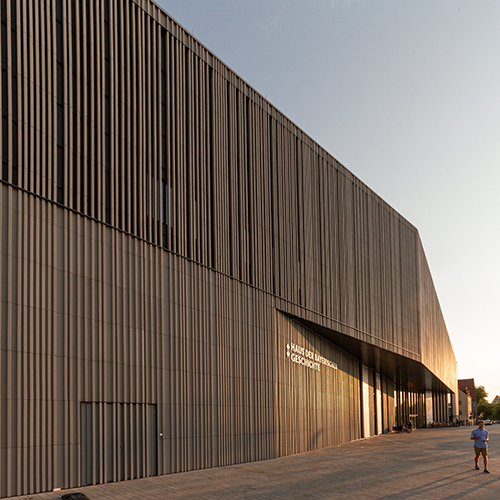
On June 13, 2024, the House of Bavarian History reached a milestone in resource-efficient energy use by becoming certified as the world’s largest Passive House museum. This has made the museum a flagship project and a model of best practices for climate protection in the cultural sector.
From intelligent climate control systems that respond flexibly to weather forecasts and visitor numbers, to resource-efficient exhibition design, and the use of wastewater heat—the museum demonstrates how sustainable operations pave the way for meeting museum requirements. The museum is continuously working on optimizations to tap into new savings potential and increase climate neutrality. After all, the path to sustainability in Regensburg has a clear goal: the long-term self-sufficiency of three buildings through renewable energy.
In late December 2024, Christina Schmitt, Head of Museum Operations, Collections, and Prevention, reported on, among other things, milestones achieved in energy conservation as well as the challenges of obtaining Passive House certification. The House of Bavarian History demonstrates that environmental awareness and cultural excellence are not mutually exclusive but can complement one another.
In late December 2024, Christina Schmitt, Head of Museum Operations, Collections, and Prevention, reported on, among other things, milestones achieved in energy conservation as well as the challenges of obtaining Passive House certification. The House of Bavarian History demonstrates that environmental awareness and cultural excellence are not mutually exclusive but can complement one another.

"Since 2022, we have maintained a steady monthly consumption of 65,000 kilowatt-hours (kWh) across all three buildings, and just 3,500 kWh in each exhibition hall. This was made possible by specifically adapting the ventilation systems to the use of the spaces. The starting point was the optimization of the ventilation systems in the permanent exhibition, the energy-saving success of which could be applied to all other areas of the museum.”
Christina Schmitt
Head of Museum Operations, Collections, and Preservation, House of Bavarian History
As of today, the House of Bavarian History—with 7,712 square meters—is considered the world’s largest Passive House museum in terms of floor area. The idea for a new building meeting Passive House standards was already in place when architectural planning began. Since opening, the museum has been optimizing its energy use.
Could you briefly outline the process from planning to certification?
Christina Schmitt: In 2012, the City of Regensburg and the Free State of Bavaria entered into an agreement. It was signed by Mayor Hans Scheidinger and Minister-President Horst Seehofer. The agreement stipulated that the city would provide both heating and cooling for the operation of our ventilation systems free of charge. Without this contractual basis, we likely would not have been able to draw on the knowledge and expertise of specialized engineering firms.
The challenge was to maintain consistent indoor climate conditions despite fluctuating visitor numbers and varying outdoor temperatures. A stable climate is essential for the damage-free display of collection items. However, rising visitor numbers lead to high levels of heat and humidity. Therefore, for our permanent exhibition, I specified indoor temperatures between 18 and 20 degrees Celsius in winter and between 23 and 26 degrees Celsius in summer, as well as a constant relative humidity of 45 to 55 percent year-round. To prevent condensation in the exhibition spaces, however, it was not only engineering firms specializing in HVAC that were needed; the structural engineering team also had to select the best possible building materials for formwork and component connections based on the simulated calculations for a passive house. In addition, it was necessary to assess solar radiation as well as internal heat loads—such as those from media technology and lighting—in as much detail as possible in order to account for them in the simulations for the passive house designs.
Certification of the museum was therefore considered the overarching standard for the designs of all engineering firms. It was intended to ensure that the building not only consumed as little electricity as possible but also a minimum amount of electrical energy. Operational experience from another state museum, which opened in 2009, showed that electricity and energy costs during ongoing operations could, under certain circumstances, exceed the expenses for temporary exhibitions. To reduce operating costs, it was crucial to construct the building envelope as airtight as possible, thereby significantly reducing the operational load on the HVAC system in the exhibition spaces.
Furthermore, the design team took care to program the widest possible climate corridors for controlling the HVAC system. This is because the narrower the range of temperature and humidity variations, the more electricity is required to operate the system.
The museum then opened in 2019. The fact that our preliminary considerations paid off while still meeting all requirements became evident to us in 2020 during the COVID-19 pandemic: On the one hand, during the closure, we had to figure out how to operate the HVAC systems as energy-efficiently as possible; on the other hand, we were required to keep the ventilation systems running at 100 percent capacity to ensure protection against infection. From a purely energy-efficiency standpoint, of course, these two goals were at odds. Our building services colleagues examined whether—and to what extent—the systems in our permanent exhibition would continue to function in the absence of visitors, even if we shut them down for hours at a time or even completely. When the systems were restarted after being shut down, the exhibition climate had not deteriorated significantly. Rather, the indoor climate responded very slowly, with fluctuations remaining within the accepted tolerances.
We refer to this system operation as “protective mode.” As a result of an operational concept with optimized control times, we began shutting down our ventilation system at night starting in November 2020. The energy savings achieved as a result formed the basis for the calculations toward the Passive House standard, for which we were certified by Eza (Allgäu Energy and Environment Center) in 2024.
Are there any specific data or performance metrics you can share with us? What criteria must be met for a museum to receive Passive House certification?
Christina Schmitt: We fell well short of the Passive House benchmarks in nearly all test criteria. This was the result of sustainable operation of the building’s HVAC system.
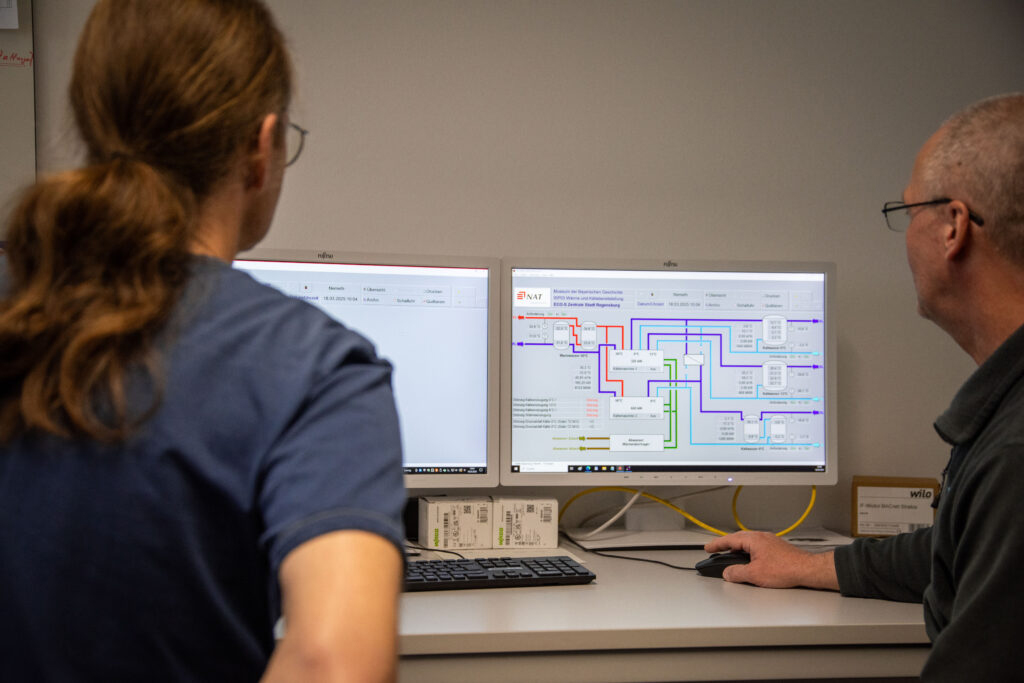
We began by monitoring our permanent exhibition. There, the monthly electricity consumption of the HVAC systems was still around 22,000 kWh in 2022. By the end of 2020, consumption had been cut in half to 11,000 kWh. This remarkable success confirmed that significant savings in electricity and electrical energy are possible by shutting down HVAC systems.
Since 2022, we have maintained a stable monthly consumption of 65,000 kWh across all three buildings and just 3,500 kWh in each exhibition hall. This was made possible by specifically adapting the ventilation systems to the use of the spaces. The starting point was the optimization of the ventilation systems in the permanent exhibition, the energy-saving success of which could be applied to all other areas of the museum.
The HVAC systems are now programmed to operate largely automatically, yet we are continuously working on further optimizations. The development described—which should be viewed largely independently of the certification—has been and remains crucial to our progress.
We ultimately received the certification because we were able to demonstrate continuous improvement in energy-efficient system management over a five-year period. This resulted in the following key performance indicators determined by the certification body:
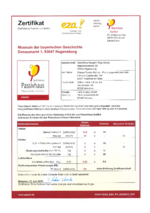
In most categories, the metrics fell well below the Passive House Institute’s evaluation criteria, resulting in the museum being certified as the world’s largest Passive House museum.
What are the benefits of Passive House status?
Christina Schmitt: The key advantage lies in the ability to actively conserve electricity and reduce the need for heating and cooling. This is made possible in the first place by an airtight building envelope. If the building envelope did not function as calculated according to building physics, it would be impossible to use heating and cooling efficiently to climate-control our exhibition spaces. Heat introduced into a room that immediately escapes to the outside would inevitably increase energy consumption, as the systems would have to operate at higher capacity to compensate for the energy loss. This aspect is less a direct consequence of the certification and more a fundamental advantage of the Passive House concept.
The certification process itself was a time-consuming step involving detailed documentation, which, in the case of a museum, is ideally completed before the facility becomes operational. However, this goal was not achieved because the HVAC systems had not yet been fully accepted in June 2019—that is, at the time of the building’s handover by the State Building Authority. Operations thus began under uncertain conditions, particularly with regard to the functioning of the HVAC system.
We found ourselves facing a real test as the opening date inevitably drew nearer. Yet it was precisely this situation that gave rise to creative solutions that led to success. We are proud to have overcome this difficult phase together with all our partners.
How is the success of your sustainability strategies evaluated, for example, in terms of energy savings?
Christina Schmitt: The systems are extremely sensitive, so we change no more than one parameter at a time to precisely observe the effects of the adjustment on our indoor climate. For example, we analyze what happens when the ventilation is gradually increased over a specific period of time, or what effects occur when the air exchange rate is reduced.
This approach enabled the monitoring that I, as the construction manager, requested during an early planning phase and that was ultimately commissioned by the Bavarian State Ministry of Housing, Construction, and Transportation. The monitoring involved regular meetings with engineers, building physicists, the State Building Authority and its engineers, as well as the systems contractor and control engineer responsible for monitoring and controlling the operation of the systems. The House of Bavarian History was part of this process from the very beginning. The results of the monitoring were recorded monthly in reports and directly incorporated into the certification calculations.
The museum uses neither gas nor oil, but rather climate-neutral energy derived from wastewater. Can you tell us more about the process of heat recovery from Regensburg’s wastewater?
Christina Schmitt: The Regensburg sewer line, which runs several kilometers underground along the Danube, is tapped at the museum’s location. The wastewater is routed through a screening system to the energy center in the museum’s basement. This technical center is operated by the City of Regensburg. The city uses heat pumps to transfer the heat present in the wastewater to storage tanks. These are necessary for heating, cooling, and dehumidifying our exhibition spaces. For example, cooling is maintained at 0 degrees Celsius and heating at 50 degrees Celsius. The museum’s building services system, in turn, draws on the water temperature required for our exhibition climate and all other areas of use.
What are your long-term goals for the sustainable development of the House of Bavarian History, and what projects are planned for the future? What milestones would you like to achieve?
Christina Schmitt: Another step we’d like to take is to shut down the HVAC systems not only at night but also during the day, provided weather conditions allow it.
Since June 2024, we have been focusing on optimizing air exchange rates and controlling air exchange based on the CO₂ content of the indoor air. We expect both of these parameters to yield further savings potential. This is because measuring the permissible CO₂ level in the air allows us to regulate the proportion of fresh air supplied to the lower limit of the permissible oxygen content in the air. Depending on visitor traffic in the exhibition spaces, the HVAC systems are then also shut down during the day.
Our next step is to equip exhibition spaces with CO₂ sensors to regulate the fresh air supply based on the CO₂ concentration in the indoor air. We hope this will once again reduce electricity costs and further lower actual energy consumption.
The concept of energy self-sufficiency also remains relevant. In mid-2025, we’ll begin with a pilot project on the museum roof, where PV film will be installed.
Under what conditions would you recommend the “Passive House” concept to other cultural institutions?
Christina Schmitt: Energy-saving regulations for construction in Bavaria have improved over the past ten years. Without these guidelines, Passive Houses would likely not be built. This is an important consideration, especially with regard to public construction projects. Our museum building served as a pilot project for the Free State of Bavaria, demonstrating through its operation just how worthwhile it is to invest in sustainability.
I recommend approaching similar projects with the necessary caution. It’s important to carefully examine in advance what goals are being pursued and how they can be achieved. Building materials play a decisive role in this regard. One approach could be to use less “gray energy” and consider alternative materials instead of relying exclusively on concrete, steel, and glass. Alternative materials should be prioritized, particularly in UNESCO World Heritage cities such as Regensburg.
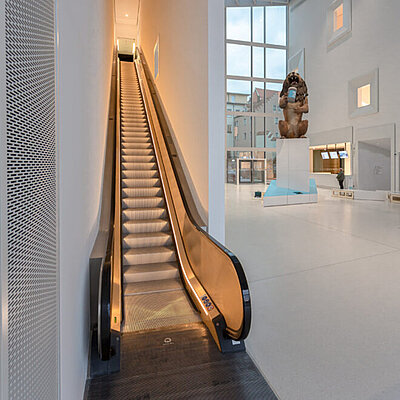
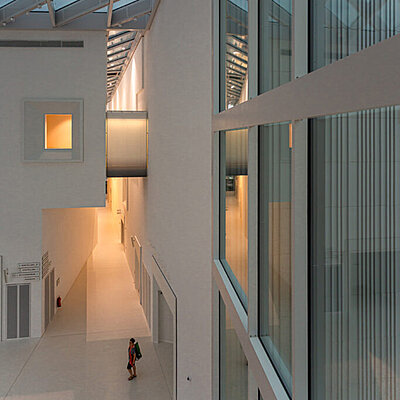
To what extent do you see your work as a model for other museums and cultural institutions in terms of sustainability and resource conservation?
Christina Schmitt: My hope is that other museums will have the courage to experiment more in their day-to-day operations to keep the energy consumption of their technical systems as low as possible.
Due to the COVID-19 situation, we’ve discovered that our museum’s exterior walls are well-insulated, allowing us to shut down the HVAC systems overnight without affecting the indoor climate. Therefore, I would like to encourage museums to establish long-term monitoring to determine how effectively the building envelope maintains indoor temperatures and how the building’s structural design can be improved in this regard without altering the indoor climate.