
Library of Things
How the Würzburg City Library Promotes Environmental Sustainability and a Culture of Sharing
December 1, 2025
Some things we use every day, others only rarely; there are some things we’d love to own but aren’t sure if they’re really right for us. So why buy something when you can borrow it instead? Why not try it out before buying? This is exactly the principle behind the Würzburg City Library’s “Library of Things.” At the Central Library in the Falkenhaus and the Hubland Branch Library, nearly 200 useful items are available for checkout—from sewing machines and cordless screwdrivers to game consoles and Tonieboxes, as well as bike bags and projectors.
But how does the concept work? What are the benefits? And how was it implemented? In this interview, Eva Eichhorn, director of the Hubland neighborhood library and an active member of the city library’s sustainability working group, and Julia Albrecht, deputy director of the Hubland neighborhood library and responsible for the “Library of Things” there, offer fascinating insights. They discuss the importance of a sustainable sharing culture and the measures the Würzburg City Library is taking to actively promote sustainability.
Dear Ms. Eichhorn, Dear Ms. Albrecht, what role does sustainability play in your overall strategy as the Würzburg City Library?
Eva Eichhorn (EE): Sustainability plays a central role in all libraries. We are already contributing in many ways to achieving the 17 goals of the 2030 Agenda—particularly in the areas of ecology and social justice: We provide information, education, and digital infrastructure in an accessible and free-of-charge manner for everyone. In doing so, we promote and enable participation and equal opportunity. The library principle of “borrowing instead of buying” contributes to environmental sustainability.
In addition, education for sustainable development is becoming increasingly important and offers libraries the opportunity to actively help shape the transformation process.
An important step in our commitment to sustainability was joining the Würzburg “KlimaKultur” alliance and establishing an internal working group on sustainability. Our goal is to continue this work and embed it structurally.
Our sustainability strategy is embedded in the overall strategy of the City of Würzburg, which—based on a City Council resolution—aims to become climate-neutral by 2040, with the city administration targeting this goal as early as 2028. An important partner for us in this process is the city’s Climate and Sustainability Office. It supports us with technical expertise and financial grants. We want to further expand this close collaboration and solidify it for the long term.
How does your participation in the “Würzburg Climate Culture Alliance” impact your work?
EE: The alliance promotes exchange and strengthens networking with other cultural institutions. This creates synergies, such as a joint coaching series in which we received training on various sustainability topics. We would not have been able to afford these training programs without the alliance.
Building on this, several carbon footprint assessments were conducted as part of the alliance using the so-called “convoy method,” which were also funded by the alliance. Without this technical and financial support, we likely still wouldn’t have conducted our own carbon footprint assessment to this day.
An important milestone was the Climate Action Day held at our facility. This event allowed us to present both the results of our carbon footprint assessment and the alliance itself to the public. Numerous stakeholders, including representatives from the City of Würzburg’s Environmental Station and the Zukunftshaus Würzburg, participated. It was a great opportunity for exchange and networking—a format we would like to continue in the future.
In addition to traditional media, the Würzburg City Library offers innovative services such as the “Library of Things.” What exactly is behind this concept, and how does it work in practice?
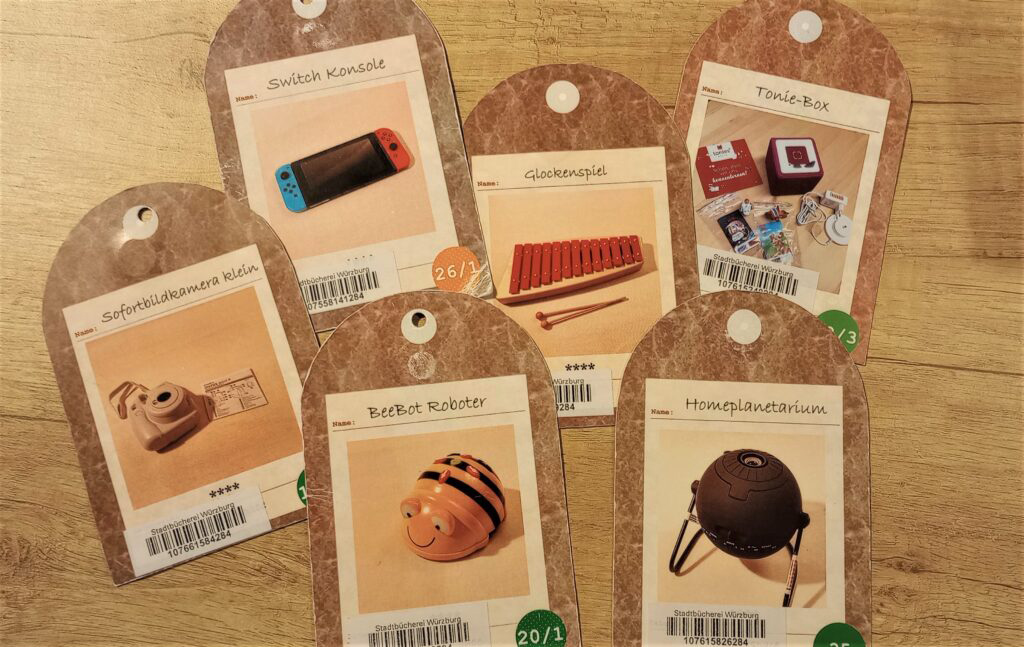
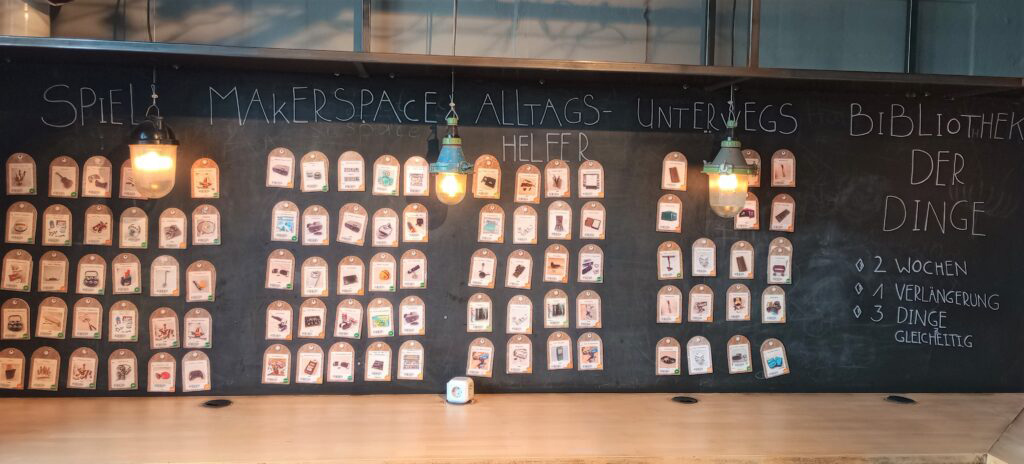
Julia Albrecht (JA): The concept is based on the idea of lending out not only media but also items from various areas of life, such as toys or technical devices. In practice, we use a card system: In a designated area, small cards are displayed featuring pictures of the available items along with brief information on size, weight, and portability. Users select a card, hand it to a staff member, and receive the desired item from the storage area. They can then take the item home. The corresponding card is placed in a box and is no longer visible to others. After each return, the items are checked for completeness and any damage before being put back into storage. We keep sufficient quantities of consumables—that is, materials that are used up during use—on hand to ensure smooth operation.
The loan period is two weeks and can be extended once for an additional two weeks. Reservations are possible, and a maximum of three items may be borrowed at a time.
How did the idea for the “Library of Things” in Würzburg come about, and what are your long-term goals for this initiative?
EE: The idea of a “Library of Things” had been on our minds for quite some time—inspired by similar concepts, such as those implemented at the Cologne City Library. While building up the media collection for our fifth branch, the Hubland Neighborhood Library, which opened in 2019, we were able to put this idea into practice: Once the budget for books, CDs, and other media had been covered, we used the remaining funds to purchase a basic stock of everyday items and technical devices for our “Library of Things.” The “Library of Things” at Hubland was intentionally designed as a pilot project to test the concept “on a small scale” and refine it as needed.
The experiment was a success. After gaining initial experience and resolving the initial problems, we were able to introduce the program at the Central Library in the Falkenhaus as well.
Are there any differences between the “Library of Things” at the Hubland neighborhood library and the Central Library at the Falkenhaus?
YES: At the Hubland neighborhood library, our “Library of Things” focuses primarily on outdoor games, since our main target audience here is families from the neighborhood. At the Falkenhaus, on the other hand, the collection primarily consists of technical devices such as 3D printers and plotters. We also have significantly more storage space available there, which makes it easier to expand the collection. We’ve even made smaller purchases at the suggestion of users, such as portable DVD players.
EE: Another current initiative at the Falkenhaus is the “Level 3 – Experience Digitalization” project, which was launched as part of an effort to promote the use of digital devices and make digitalization tangible. The “Library of Things” was incorporated into the concept from the very beginning. All devices that can be tried out at the Falkenhaus are also available for checkout to take home. Many devices require a certain amount of time to get used to, which is often not enough during a single visit to the library. Or the 3D printer simply takes too long to print to complete the job during opening hours. This way, the project can continue to have an impact at home as well.
Libraries have a mission to provide access to information and knowledge—and thereby promote equal opportunity. Access to digital devices that many people otherwise cannot afford is clearly part of this central mission.
What feedback have you received from users so far? Is there particularly high demand for certain items?
JA: The feedback has been very positive across the board. Items that aren’t needed very often—such as drills or furniture-moving aids—are especially popular. But larger purchases like projectors, Nintendo Switch consoles, Tonieboxes, or a telescope are also very well received. Many customers have also told us that they first borrow and test items from our selection to better assess whether a permanent purchase is worth it for them.
What challenges did you face in implementing this concept, and how did you overcome them? Were there—or are there—perhaps even different challenges at the two libraries?
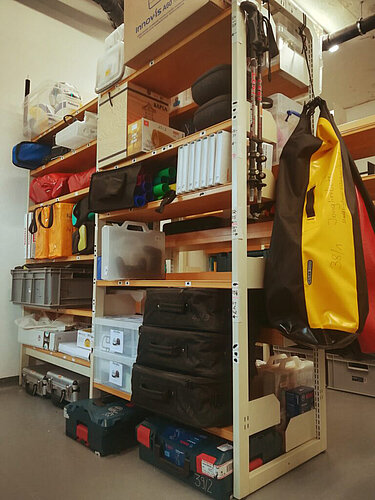
JA: First, we had to develop an efficient lending system at the Hubland Neighborhood Library. We found a practical solution for this with the placeholder cards. The “Library of Things” is a very successful concept, but it’s reaching its limits at the Hubland neighborhood library—mainly due to limited storage space. Particularly bulky items, such as party tents or beach buggies, are difficult to store. The return inspection process is also time-consuming and labor-intensive. Ideally, it should take place immediately upon return to identify any damage or missing parts early on. An inspection report with photos is particularly helpful for large items. However, due to the high frequency of checkouts, implementing this is challenging. At the Falkenhaus, trained volunteers take on this task—a major asset for ensuring smooth operations.
EE: Overall, the system works very well at both locations. However, due to limited space, the already extensive “Library of Things” at Hubland can only grow to a limited extent. In the long term, expanding to additional locations would be desirable and sensible, but this is not currently feasible.
To raise awareness of the service, effective communication channels are crucial. What channels do you use to make the “Library of Things” accessible to the general public?
JA: To kick things off, we held an opening ceremony where we displayed some items available for loan in the entrance area of the Falkenhaus. This allowed visitors to immediately see our new service and learn about the concept of the “Library of Things.” Many people are surprised that a library also lends out objects. At first, we often had to explain that items can be borrowed at no additional charge. Our service is highly visible—through our website, flyers, and information provided during registration interviews. The placeholder cards also spark curiosity and interest.
EE: Surprisingly, the service at Hubland took off immediately after opening during the COVID-19 pandemic, despite minimal advertising. Since we didn’t want to generate additional demand due to limited capacity, we deliberately avoided intensive advertising.
Fundamentally, the “Library of Things” benefits greatly from word of mouth, so traditional advertising materials, such as flyers, have not been necessary so far. However, should demand decline, flyers could certainly be a useful addition.
In Würzburg, we coordinate closely with the Zukunftshaus to avoid overlap and competition. Flyers could also be made available there in the future to draw the attention of interested parties to our services. Stronger networking with other sustainable initiatives is also conceivable.
Within the library, the highly visible placeholder cards serve as a natural form of advertising, and we also regularly highlight the program during guided tours—it has become a self-sustaining initiative.
Have you had any experiences that confirm this model works and has a positive impact?
YES: The circulation numbers are very good. Many people renew their loans, and we also see a high number of reservations. Many items are checked out for almost the entire year and are specifically requested. Once people discover our offerings, they usually come back and borrow items regularly. Overall, things are going very well.
How do you ensure that the items on loan are durable and properly maintained?
JA: Over time, we’ve developed a good sense of which items are particularly well-suited for the “Library of Things” and which are less so—for example, because they break easily or parts can get lost more quickly. This experience helps us plan future acquisitions more effectively, especially for high-demand items.
Users appreciate being able to borrow even expensive items and generally treat them with care. Damage occurs only rarely. In recent years, we’ve had about three cases where items were completely damaged—mostly due to normal wear and tear. Occasionally, small parts like a cable are forgotten, but after a brief reminder, borrowers usually return the missing parts right away.
After the warranty period expired, some defects occurred, but given the high volume of use, this is within expected limits and is completely normal. Many of these damages can be repaired or compensated for with replacements.
Are there any special programs or partnerships with social service organizations to make the “Library of Things” particularly accessible to low-income groups?
EE: Overall, we strive to make the library as accessible as possible. To borrow items from the “Library of Things,” all that’s required is a valid library card, which is available at a reduced rate or even free of charge for certain groups of people.
Are there any initiatives at the Würzburg City Library that promote an inclusive corporate culture?
EE: Inclusion is a key priority for us, and we actively promote it in a variety of ways, both internally and externally. We strive for clear and easy-to-understand communication, both in face-to-face conversations with customers and in our written publications.
Our facilities are designed so that all visitors can easily find their way around and move about freely. As part of our “Literatur Live” event series, we offer, among other things, a reading with sign language interpretation. In addition, we organize special library tours for people who do not speak German, as well as consultations and training sessions on using digital devices—including offerings that incorporate the “Library of Things.”
For our newly redesigned branch at Hubland, we conducted two joint site inspections with the City of Würzburg’s Disability Advisory Board. During these inspections, we specifically examined where barriers exist and how we can remove them. People in wheelchairs also participated and tested, among other things, the ramp and the accessible restroom. We always keep inclusion in mind and, wherever possible, put it into practice.
Internally, too, we place great value on an inclusive corporate culture. We work in a way that is as team-oriented and strength-based as possible, meaning that everyone can contribute to the best of their ability based on their own skills. Mutual trust, appreciation, and participatory decision-making processes shape how we work together.
The integration and professional advancement of people with disabilities are particularly important to us. In close collaboration with the city’s Department of Inclusion and Integration and the Mainfränkische Werkstätten, we were able to permanently integrate an employee into our team following his internship through an off-site work placement provided by the Mainfränkische Werkstätten. Today, he has found his professional home at the city library.
How is the “Library of Things” funded? Are there grants or partnerships that support the project?
EE: We have now allocated a fixed line item in our media budget for the “Library of Things.” This allows us to cover ongoing expenses, purchase new items, and finance replacements and repairs. We also receive support from private donations.
The “Library of Things” at the Falkenhaus was originally established with grants as part of the “Level 3 Project.” These grants enabled us to finance the initial collection for the Library of Things. Since then, the collection has been continuously expanded, although the ongoing costs for new acquisitions are no longer as high as they were at the beginning.
Who is responsible for new acquisitions, and how are the items to be acquired selected?
EE: Overall responsibility for the “Library of Things” lies with our media educator at the Falkenhaus. At the Hubland location, Julia Albrecht is in charge of the program.
As a team, we continuously gather feedback from our patrons. In our day-to-day operations, we pay close attention to which items are in particularly high demand. This allows us to continually adapt our collection to people’s needs and keep developing it.
Many libraries face the challenge of making their services financially viable in the long term. Do you see this model as offering an economically sustainable future for libraries, even beyond books?
EE: The current system works well, but it is heavily dependent on whether the respective municipality supports such a service. It is definitely advantageous to have a dedicated budget for such initiatives. In the long term, one could also consider sponsorship—from both private individuals and companies.
Of course, we could take our concept even further: the library could act as a mediator. Individuals could offer items they don’t need on a regular basis for loan and register them with the library. The library would then put them in touch with interested parties. There are already apps based on a similar principle, but perhaps a library, as an intermediary, enjoys greater trust than a purely digital platform.
Are there any other sustainability initiatives that the Würzburg City Library is planning to strengthen its commitment to the environment and society?
EE: Our sustainability initiatives are still in their early stages. An important first milestone is the event series “Jederland – Where People Shape the Future,” which we plan to establish as a long-term initiative with two programs per year.
Under the guiding principle of “Green Library,” we’ve set the goal of reducing our carbon footprint and achieving climate neutrality by 2028. Visitor mobility poses a particular challenge here, as we have only limited influence over it. Nevertheless, we’re actively seeking solutions.
Another focus is on networking with municipal stakeholders, such as the Office for Climate and Sustainability and the Würzburg Environmental Station. As a public space, we aim to serve as a networking hub to promote exchange and collaboration. Our first Climate Action Day on June 20, 2024, already demonstrated that this concept works very well.
Since we reach a very broad audience, municipal institutions, civil society initiatives such as “Omas for Future” or Foodsharing, as well as citizens, can easily come together and network here. We want to actively support and strengthen the multitude of initiatives that advocate for climate and sustainability.
The Falkenhaus is part of the city’s renovation roadmap, but it is not a top priority. Building-related measures are planned, and their specific implementation is currently being reviewed.
What recommendations do you have for other libraries or cultural institutions that would like to implement a similar concept?
JA: In my view, the “Library of Things” is a very good start.
It’s important to have the courage to commit to the project and not let concerns—such as handling the equipment or potential damage—deter you.
As a rule, users quickly figure things out on their own, and experience shows that defects aren’t a major problem.
However, it should be clarified in advance where the items will be stored and what staff resources are available for lending, maintenance, and repairs. The cost of repairs and replacement parts can vary depending on the item, especially if it’s necessary to communicate with different companies and send parts in. This requires both time and careful planning. If you take these aspects into account and have acquired the basic stock of items, the “Library of Things” is definitely a great idea.