
Let's make this awesome
How a Breakdance Crew Is Sparking the Creative Industry in Schweinfurt
July 8, 2022
The DDC Factory is one of the up-and-coming and exciting creative hubs in Northern Bavaria. Schweinfurt, known for its theater and museums, is home to this building, which serves as a place of exchange for creative professionals. But at the DDC Factory, “exchange” also means support for professional creative work and dance. It’s been a long journey to get here—one that began with a dilapidated building on a former military barracks site—and this year, it’s winning the State Prize for Bavarian Creative Hubs.
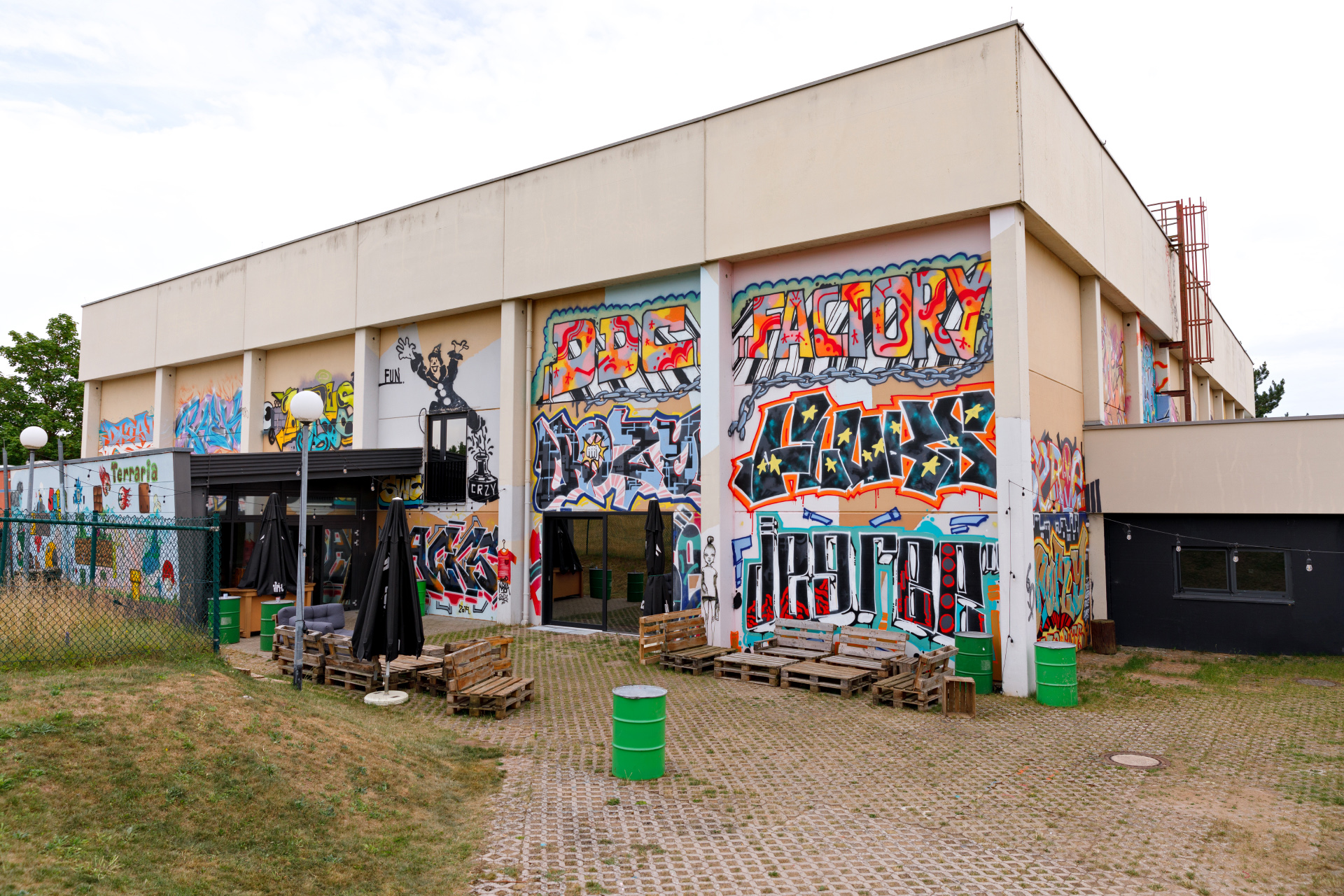
There were spiderwebs in almost every corner. Rain was pouring in through the roof. It smelled damp. Old, black exercise mats were stuck to the floor and could only be removed with a crowbar. There was no electricity. Anyone who wanted to take a closer look needed a flashlight. Many people wouldn’t have bothered to look any closer in a building like that. But the Dancefloor Destruction Crew—DDC for short—did it anyway. The Schweinfurt-based breakdance show group DDC saw an opportunity there. They had long wanted to find a space for creative exchange and group training. Making this sports facility—located on the barracks grounds of the U.S. military forces formerly stationed in Schweinfurt—usable meant work, a lot of work; that much was clear from the very first look. But DDC just got to work. Today, they refer to it as their new home.
A lot of space—now what?
“We went inside and saw that it was completely run-down,” says Marcel Geißler. The 29-year-old is CEO of the DDC Entertainment Group, the “go-to source for all things entertainment in the event industry,” as stated on the company’s website. The company consists of three divisions: first, the DDC Breakdancers performance group (in which Geißler dances); second, DDC Vision, which supports artists in staging, marketing, and developing show concepts, as well as in creating content; and third, the DDC Factory. A dance school, creative hub, and production facility. And that very building on the former military barracks grounds.
As early as 2012, it became known that the U.S. Army would be closing the Schweinfurt base. Half a year later, the newspaper *Die Welt* reported on the challenges ahead. There was hardly any room for development within the city limits, affordable housing was scarce, and there was talk of a business campus—so there was plenty of potential. It was clear that it would be a long process to develop the vacated land for the future.
The U.S. Army then closed the Schweinfurt base in September 2014. About two years later, the city of Schweinfurt purchased a site spanning just under 20 hectares, located two and a half kilometers from the city center—including the very sports facility where the DDC Factory is located today. The so-called Yorktown Village is a small residential community with semi-detached houses to the north; adjacent to it lies Kessler Field, which the U.S. military primarily used as a site for education and sports and where the current DDC Factory stands.
From a Small Project to a Creative Hub
“At first, we had no intention of renovating all the rooms,” says Geißler. Initially, it was supposed to be just a single room for the DDC’s rehearsals. The original plan was to keep the building for four years—until the city decided to tear it down. Soon, the members asked themselves: Couldn’t we use all the rooms—for photography, music, or offices, for example? “We had so many ideas that, at the grand opening, we were able to convince the entire city council and the mayor that the building had to stay.” That was in 2019. Before that, there had been discussions about a possible demolition. From a small project for our own training to a creative hub in Schweinfurt—how did that happen? “Sometimes we get a little overconfident and just dive right in. We invested here blindly and told ourselves: We’re going to make this awesome.”
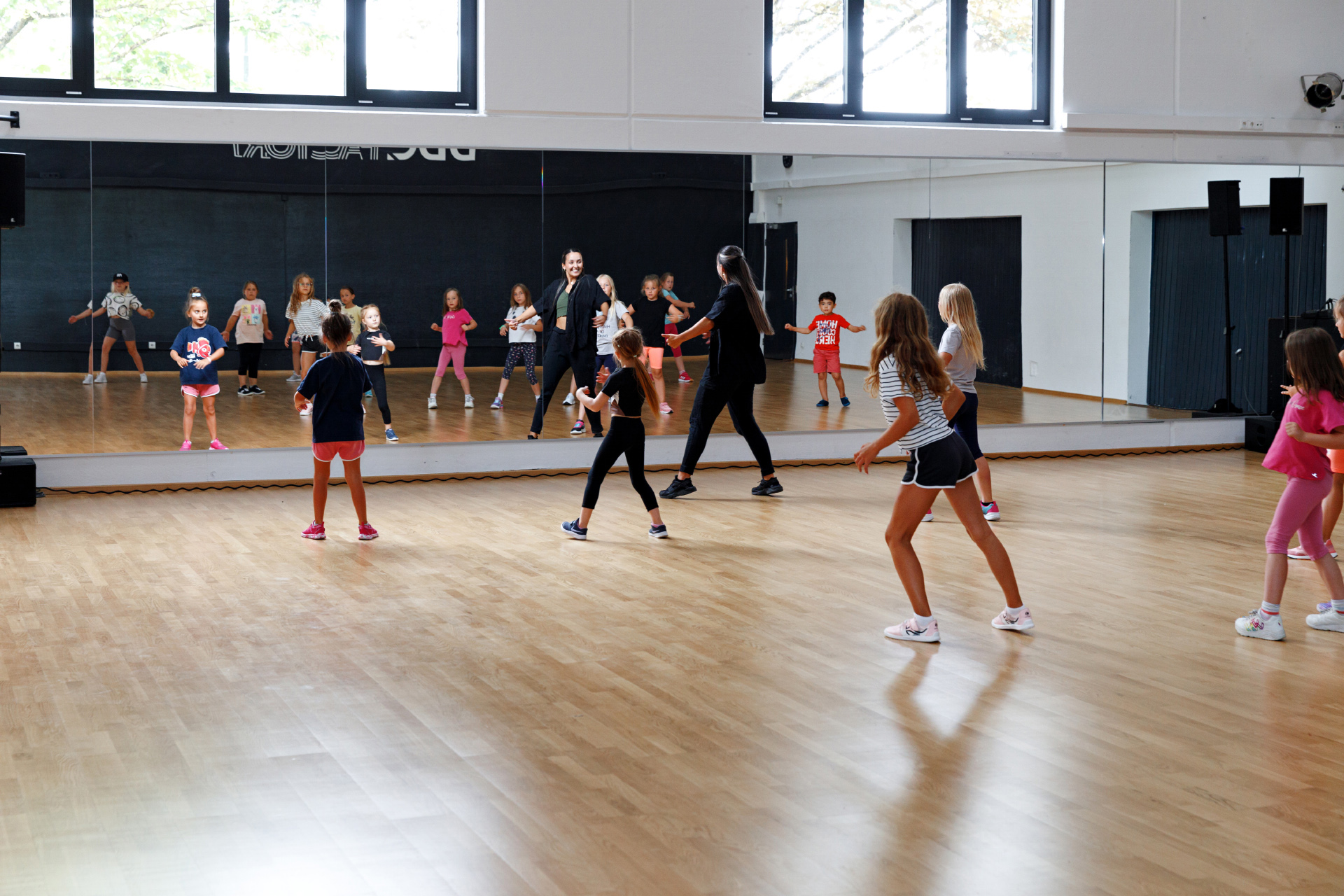
Today, the DDC Factory consists of an arena, a photo studio, a coworking space, a recording studio, and other rooms. The dance studio alone—and the area where the black, damp fitness mats used to lie—covers 260 square meters. Now, dance and yoga classes take place here in a pleasant atmosphere, as well as events for cultural professionals, such as the City of Schweinfurt’s Culture Conference. There’s also space here for small video productions and band rehearsals.
Knowledge and Economic Viability
“At first, we had no intention of renovating all the rooms,” says Geißler. Initially, it was supposed to be just a single room for the DDC’s rehearsals. Soon, the members asked themselves: Couldn’t we use all the rooms—for photography, music, or offices, for example? “We had so many ideas that, at the grand opening, we were able to convince the entire city council and the mayor that the building had to stay.” That was in 2019. Prior to that, there had been discussions about a possible demolition. Once that was off the table, the pandemic put the brakes on progress: the dance school was temporarily closed. But the DDC simply carried on. And overcame the challenges.
From a small project for our own training to a creative hub in Schweinfurt. How did that happen? “Sometimes we’re a little overconfident and just dive right in. We invested here blindly and told ourselves: We’re going to make this awesome.”
Today, the DDC Factory consists of an arena, a photo studio, a coworking space, a recording studio, and other rooms. The dance studio alone—the very place where black, damp fitness mats used to lie—covers 260 square meters. Now, dance and yoga classes take place here in a pleasant atmosphere, as well as events for cultural professionals, such as the City of Schweinfurt’s Culture Conference. There’s also space here for small video productions and band rehearsals.
A Home Base of Their Own
The DDC Breakdancers aren’t just two-time world champions in their field—they also perform in spectacular shows, go on tour with Florian Silbereisen, and took part in a charity event with Barack Obama in Kenya. Corporate events, festivals, TV productions—the list goes on. The same goes for everything that happens behind the scenes.
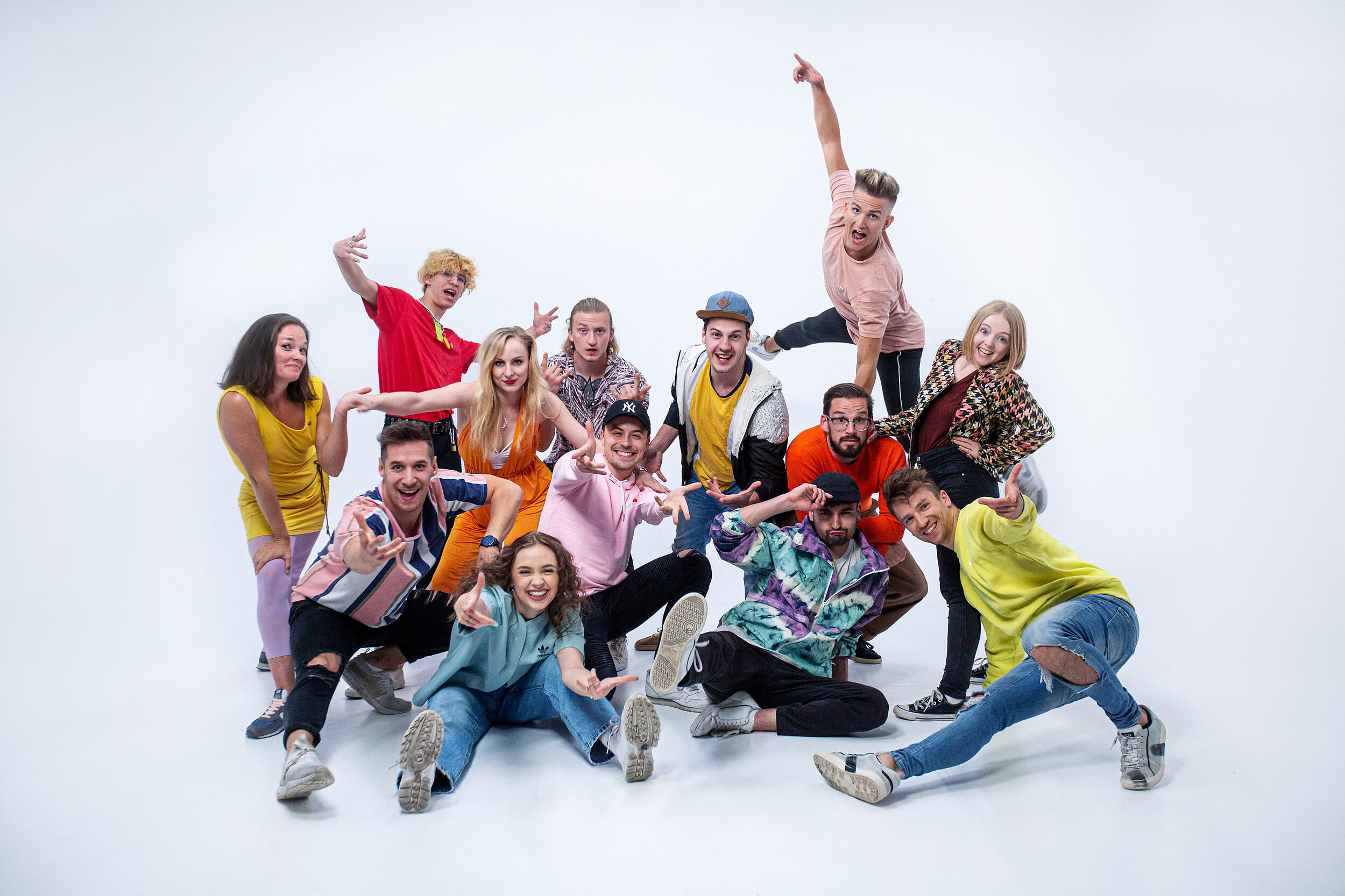
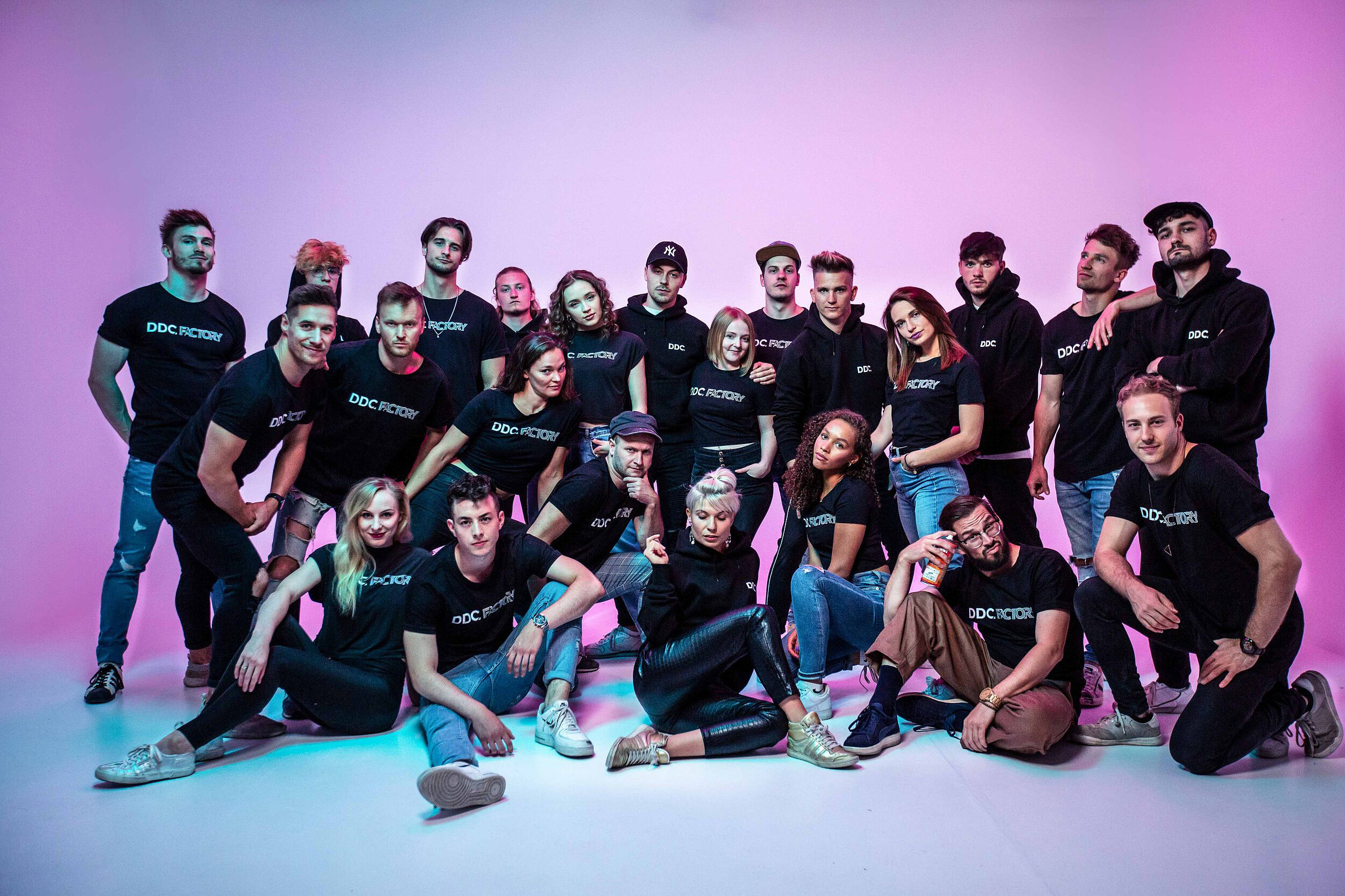
More than twenty years after the crew was founded, your company now has its own home base at the DDC Factory. The team consists of nine members (partners and employees) and additional freelance artists and dancers from Schweinfurt who are an integral part of the crew. For every creative project, DDC thus has the right contact person in its network—which makes it attractive to companies in Schweinfurt that need creative services.
Marcel Geißler joined DDC himself in 2006—while he was still a high school student. By 2010, he had already taken over management—while still in high school. Teaching himself along the way, he built up a professional management structure in consultation with the team. The group then set out to explore what they could accomplish. Quite a lot, as it turned out years later.
“Schweinfurt Is the Creative Economy”
But what does Schweinfurt offer creative professionals and dancers? Compared to some major cities, Schweinfurt may seem like a village, but it’s easier to work there in peace and quiet. The overwhelming abundance of options in big cities like Berlin, on the other hand, tends to cause stress: you might be missing out on something. And it’s hard to work well with that thought in the back of your mind.
But what is the general state of the cultural and creative industries in Schweinfurt? In December 2019, the IHK magazine *Wirtschaft in Mainfranken* featured an article on the creative industries in the region. The Würzburg-Schweinfurt Chamber of Industry and Commerce (IHK) counts around 6,500 companies in this sector. Of this number, just under half are located in the city and district of Würzburg. The city and district of Schweinfurt follow closely behind, though at a distance, accounting for around 17 percent. The advertising market and the design industry, in particular, are the most significant submarkets of the Main-Franconian cultural and creative industries. And right in the middle of it all is the DDC Factory in Schweinfurt, which represents far more than just an economic factor.
“Schweinfurt is the creative economy,” says Andrea Brandl. The 59-year-old is the city’s director of cultural affairs. “Schweinfurt is a vibrant city.” According to Brandl, there is close collaboration between the independent cultural scene and the city’s cultural institutions. “My motto here is also: Only together are we strong.” Established structures at festivals like “Die Nacht der Kultur” are deliberately opened up to facilitate productive collaboration. There’s also a street art project underway with the DDC Factory. “Both institutions are working on joint initiatives that will lead to positive results in reaching a young audience.”
Brandl is impressed by what the DDC has already accomplished, particularly as the city’s partner for last year’s Kultursommer event on the grounds. She is won over by the wide range of programming for all ages. “There’s enormous potential here—especially with regard to the city’s development in the coming years.” Brandl herself refers to the classic question underlying this: “How can cities expand beyond the boundaries of their historically grown city walls?” The DDC Factory is one answer to that question.
Silicon Valley as a Natural Fit for Creative Professionals
But does this lead to creative economic output? “Absolutely,” Brandl says immediately. “Last year’s Kultursommer at Kessler Field alone—right next to the DDC Factory—benefited because the DDC does an outstanding job in public relations, particularly on social media.” Even in the midst of the pandemic, last year’s Cultural Summer attracted 10,000 guests to 30 events. “The DDC even conducted market research on the ‘Kultursommer’—and we discovered that we attract guests of all ages from within a 150-kilometer radius,” says Brandl.
“We are very proud that the city of Schweinfurt is home to a highly professional, successful cultural and creative enterprise with such international appeal,” said Brandl in her laudatory speech at the award ceremony for the first State Prize for Bavarian Creative Hubs. Along with three other creative hubs, the DDC Factory is receiving the award this year.
In the future, the DDC aims to further raise the profile and highlight the potential of its Factory. They are currently seeking additional staff to expand their capacity for projects. Accommodations are planned for the Factory. A Silicon Valley for creatives—that’s how they see themselves. It’s an ambitious goal. The fact that DDC feels more than at home at its base is also evident outside the official program—Marcel Geißler and his wife got married there.