
Knowledge Transfer – How Ideas Change Hands
Bayern Innovativ in Conversation with WeSort.AI
July 23, 2026
How does scientific expertise translate into practical applications? WeSort.AI GmbH in Würzburg provides a very concrete example: Combining AI expertise, prototype development, and support from the startup ecosystem, the company was founded to develop sorting technology for the recycling industry. The technology combines artificial intelligence with sensor technology and X-ray technology to detect batteries, electronic waste, and other recyclable materials in waste streams and automatically sort them out.
Support from the Bavarian funding program FLÜGGE helped the founders turn a technological idea into a market-ready solution and, ultimately, a company. We spoke with Dr. Regina Bühl, project manager at Bayern Innovativ GmbH, and Nathanael Laier, CEO and founder of WeSort.AI GmbH, about the topic of knowledge transfer.
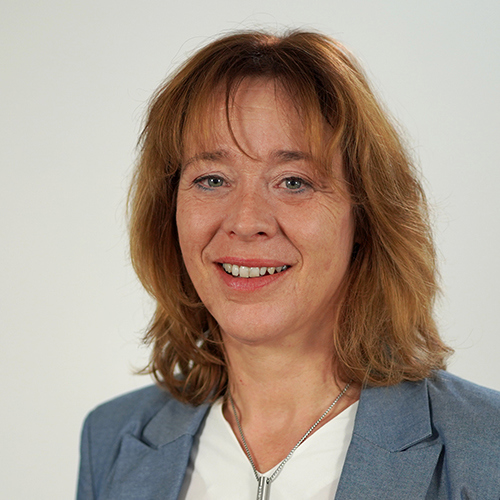
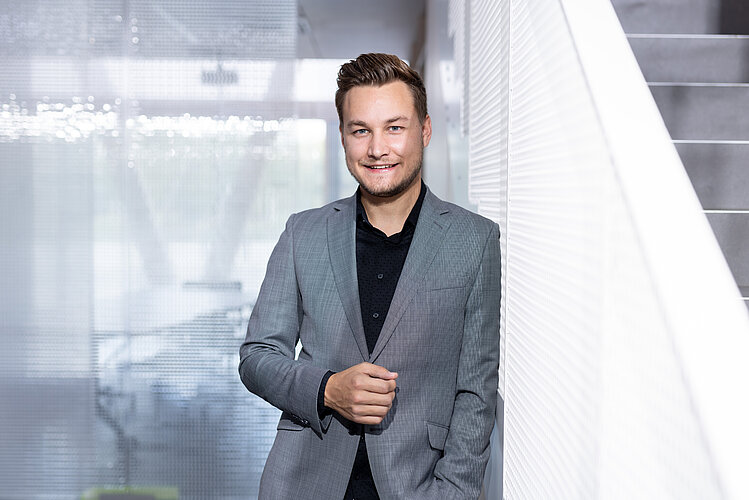
The FLÜGGE funding program supports startup initiatives in the scientific community. How, specifically, does the program help translate research findings into entrepreneurial practice?
Dr. Regina Bühl: The purpose of this initiative is to accelerate the introduction and dissemination of modern technologies and services in business and society. Through this funding, aspiring entrepreneurs receive grants, allowing them to focus on their startup projects. In addition, the program covers material costs and coaching services.
Where did the necessary knowledge for developing We.Sort AI come from, and how was the transfer of knowledge achieved in both directions?
Nathanael Laier: Knowledge transfer never flows in just one direction. At first, the knowledge came to us from our studies and research: AI, mechatronics, and the methods for turning innovations into real-world applications. We only realized by chance that there was enormous potential for AI in waste management—and then explored it in more depth in a term paper.
Then we turned the tables and brought that knowledge back into practice: We went out to the recyclers, asked about their real challenges, assessed the potential on-site, and ran initial tests directly in the operating sorting facilities.
Knowledge transfer thrives on the exchange between academia and industry. How can companies gain targeted access to research, new technologies, and scientific expertise?
Dr. Regina Bühl: By participating in networks, clusters, conferences, and workshops, and by engaging with technology transfer offices at universities and research institutions, companies can find the expertise they need. Regional innovation ecosystems that connect academia and industry and accelerate the path from idea to application are particularly valuable in this regard.
How can we ensure that ideas do not remain confined to research but find their way into economic or societal applications?
Dr. Regina Bühl: For ideas to make the leap from research to application, there needs to be close collaboration between academia, industry, and society—ideally starting in the early stages of development. Appropriate transfer structures are also crucial; these support researchers in identifying potential, finding partners, and bringing innovations to market readiness. This leads to solutions that are not only technologically compelling but also create tangible added value for companies and people.
What has emerged from this knowledge transfer in your company, and where do you stand today?
Nathanael Laier: In my opinion, you have to immediately put your gut feeling about a new technology to the test in practice. So: Make a call, stop by, strike up a conversation. People are very helpful—and this often leads to insights you would never have anticipated.
That’s how we first learned that battery-related fires are the most pressing problem for waste management companies. Today, that’s a solved issue for us: Several of our systems sort batteries and electronic devices on a large scale right on site.
Funding Program to Facilitate the Transition to Entrepreneurship
The Bavarian FLÜGGE funding program (Funding Program to Support a Smoother Transition to Entrepreneurship) aims to support startup companies emerging from universities in Bavaria in the fields of innovation, research, and technology.
The purpose of this initiative is to accelerate the introduction and dissemination of modern technologies and services in the economy and society. In light of rapid technological change, this enhances the competitiveness of the Bavarian economy and enables and ensures appropriate economic growth as well as high levels of employment.
The funding program is implemented through specific calls for proposals, which may include thematic priorities. Within each call for proposals, project proposals may be submitted by the specified deadlines. These proposals are reviewed and evaluated according to defined criteria as part of a competitive selection process.