
From machine noise to data flow
Digital maturity in the industry is when it learns to listen to itself
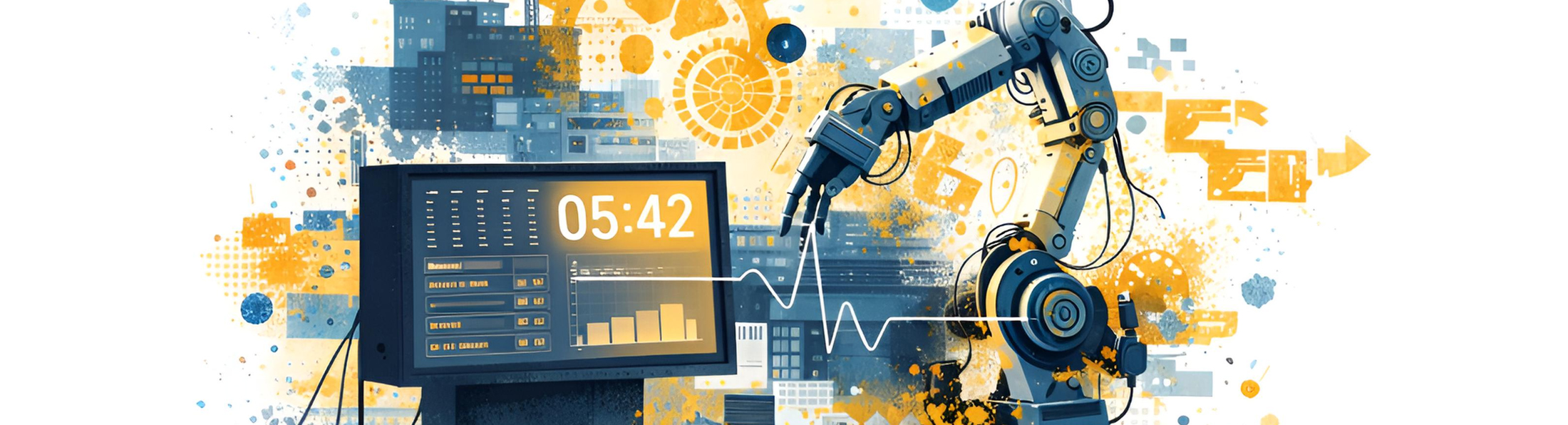
It is 5:42 a.m. in a small factory in Bavaria. The hall is still cool, the neon lamp above the production line flickers briefly before spreading its even light. Steel girders draw hard lines in the air, conveyor belts wait for the first order of the day.
Everything used to start here with a tour. Clipboard under the arm, checking analog displays, one ear close to the machine. You could hear if something was rattling. You could smell if it was getting too hot. You could feel vibrations in the floor. Industry was a physical conversation between man and metal.

Today you hear less and know more
There is a display on the production line. A tap of the finger and columns of figures appear, temperature curves, capacity utilization diagrams. A message pops up: minimal deviation in the vibration curve of a system. No alarm. No standstill. Just a hint. Maintenance is automatically scheduled before anyone with the naked eye or trained ear would notice a change. Production continues, precisely, quietly, almost unspectacularly.
This is what everyday industrial life will look like in 2026. Sensors record conditions in real time, data platforms condense them into patterns, algorithms calculate probabilities. Machines communicate, processes readjust, decisions are no longer based on gut feeling but on data spaces, i.e. linked information from sensors, systems and historical production data that is evaluated in real time. Digitalization is not a project plan with milestones. It is infrastructure. It is a habit. It is part of the DNA.
The quotient that shows how one thing fits into another
But whether this scene becomes reality does not depend on a software license. It depends on the interplay of various factors: Technology, data quality, process integration, organizational structure. You could soberly call it a digitization quotient. An unwieldy word for a simple question: does one thing interact with another, or does each part work on its own? If this quotient is low, everyday life looks different: Data is collected but not used. Systems exist but do not talk to each other. Decisions take time because information is missing or contradictory. If it is high, processes interlock almost silently: deviations are detected before they escalate and decisions are made where the best data is available.
Digital maturity is not a buzzword, but a status quo. It shows whether data really flows in everyday life or only shines in presentations. Whether key figures drive operational decisions or only appear in reports weeks later. It's not about buying as many tools as possible. It's about whether systems talk to each other. Whether data can be used consistently. Whether people understand what the figures mean and what they can do with them.
A company with a high level of digital maturity recognizes deviations before they become expensive. It plans maintenance before machines stop. It simulates production changes in the digital twin before a screw is moved. This not only increases efficiency. Competitiveness, energy consumption and attractiveness for skilled workers also change noticeably. This is because highly qualified specialists are no longer looking for companies in which they can only manage problems, but those in which they can further develop and design systems.
Projects do not mature by themselves
But maturity does not come automatically. Anyone who knows that digitalization is important still has a long way to go before they know where their own company stands. There is a long way between "We also use SAP" and a truly data-driven organization. This is precisely where it is decided whether digitalization is strategically managed or only reacted to when the pressure is great enough. In the end, a simple question arises: is it still enough to listen to the machine - or is it time to listen to the data?
Regular status analyses are therefore not an end in themselves. Speed tests, structured assessments and external analyses help to take a sober look at processes, technologies and data flows. They show where isolated solutions are slowing things down, where media disruptions are costing efficiency, where skills are lacking. A vague idea becomes a clear picture of the situation. And only with this picture can priorities be set.
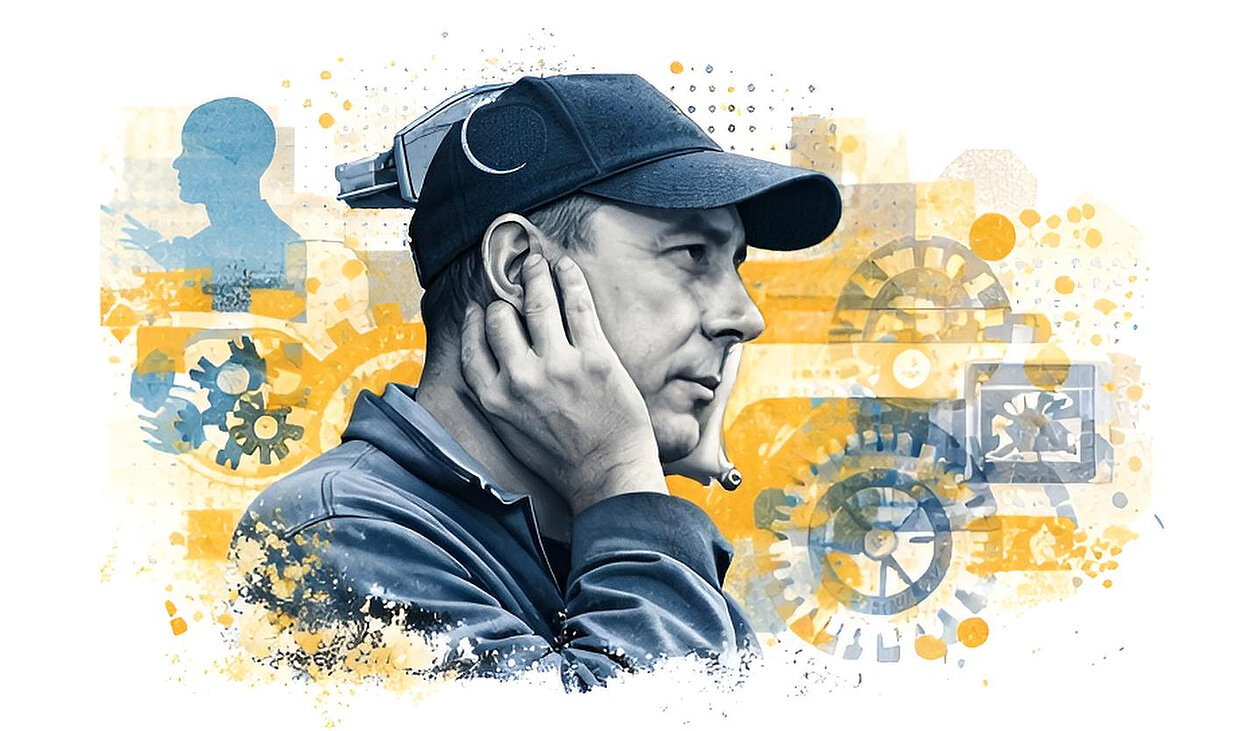
The development rarely happens in leaps and bounds. In many halls, you still hear the noise before you see the curve. Knowledge is in people's heads. The plant operator, twenty years in the business, puts his ear to the machine and says: "There's something wrong. But it's not urgent yet." Experience is valuable. It is precise. But it is not scalable.
Digital maturity begins when this empirical knowledge is not replaced but supplemented. When Excel spreadsheets no longer grow in isolation, but are integrated into systems.
When dashboards not only display figures, but also make connections visible. When algorithms provide maintenance suggestions and humans classify them.
Machine intelligence and human intelligence grow together
The most exciting phase is the interaction phase. The system reports: "I will be running out of tolerance in 72 hours." The system suggests a maintenance window. The experienced plant operator listens, checks and weighs up the options. Perhaps he postpones the measure by one batch. Perhaps he confirms it immediately. This is where quality is created: through the combination of machine intelligence and human intelligence.
Only at the highest level does the role fundamentally shift. Machines make their own decisions within defined limits. Predictive maintenance prevents failures before they occur. Industrial AI optimizes cycle times and energy consumption in real time. Material flows automatically adapt to supply chain disruptions. Digital twins simulate new layouts before production is physically converted.
But the key difference is not just in the technology. It lies in the mindset. In companies with a high level of digital maturity, innovation is not a special project. It is a continuous process. New applications are tested, scaled, discarded or developed further: quickly, based on data, without ideological trench warfare between "everything was better in the past" and "everything must be new".
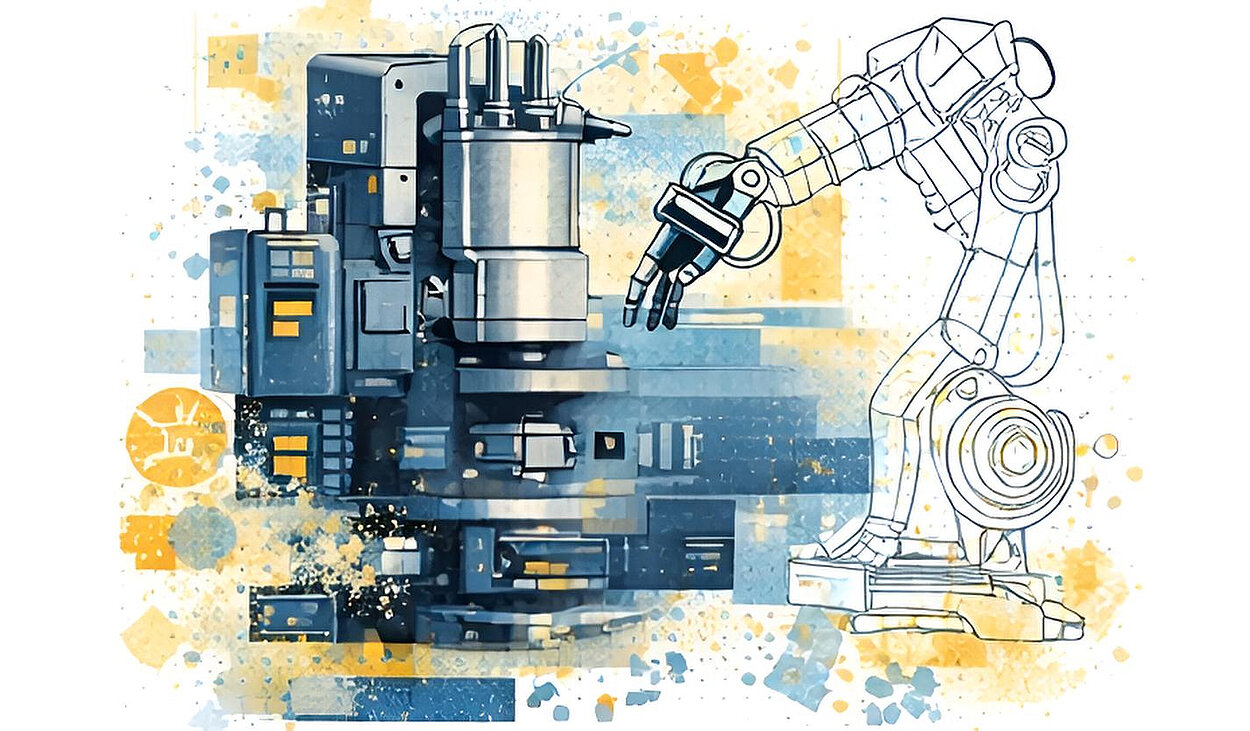
Those who are ready for the new make the existing future-proof
And something else is becoming possible: digital maturity is not just the ability to use existing technologies efficiently. It is the prerequisite for integrating technologies that may not even exist today. Those who organize their data structures properly, think modularly about processes and network systems openly create a foundation for deep tech, for new AI applications and for disruptive business models that are only just emerging on the horizon. A company that is digitally prepared does not have to start from scratch with every innovation. It can react more quickly, assess regulatory changes, anticipate market requirements and, ideally, set new standards itself. Those who are ready for the new make the existing future-proof.
At the end of the day, the hall has not become any more spectacular. The production line continues to run smoothly. From the outside, the building looks like any other concrete structure in the industrial area. Behind the steel doors, however, value creation has shifted from the machine room to the data room.
Digital maturity is not an end point or a tick on a transformation list. It is a stable foundation. Those who achieve it not only create efficiency, but also the prerequisites for new business models, new services and new forms of collaboration. Perhaps the future of industry will not begin with a big bang, but with a quiet data impulse at 5:42 a.m. And perhaps it is precisely there, behind inconspicuous steel gates, that it will be decided how innovative a location will be tomorrow.