
A Sea of Ideas
How New Spaces for Creativity Are Emerging at the Maiersreuth Bathhouse
July 8, 2022
The old bathhouse in the Maiersreuth district—nestled in the heart of the Upper Palatinate countryside—is set to become a hub for culture and creativity. In an exhibition, some 700 hiking poles told the life stories of their former owners. But it wasn’t just the installation by renowned artist Daniel Spoerri that shared stories with visitors. Rather, the bathhouse tells its own story. The current chapter explores how culture and creativity breathe life into a special space and, in doing so, influence an entire community. It also details how the association and the project won this year’s State Prize for Bavarian Creative Hubs.
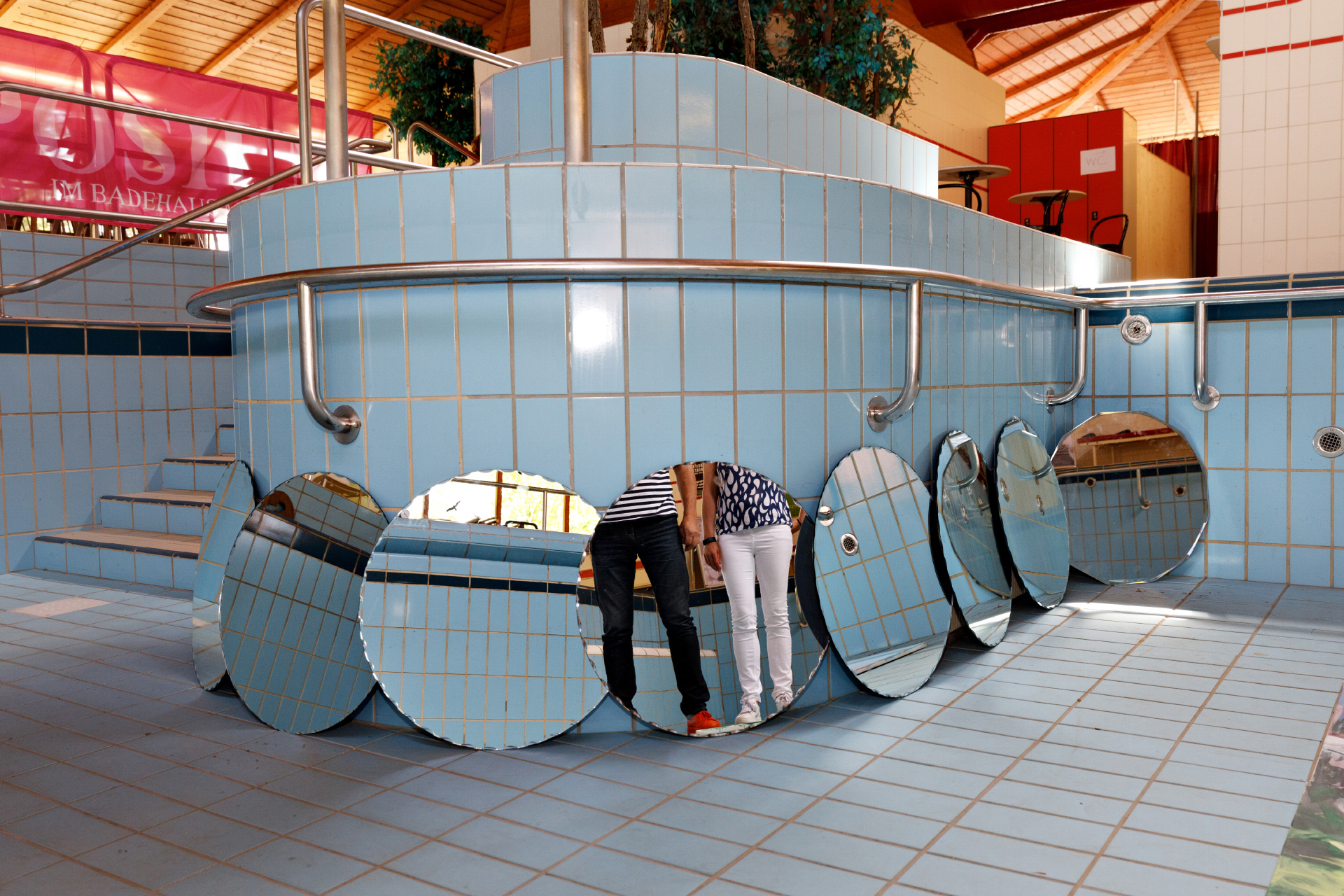
Their clacking can be heard as soon as you enter: 700 hiking poles, 700 life stories. Suspended in a sort of cloud above the small pool. The visitors have spread out along the edge. A pump is running in the water. There’s no splashing; the water moves almost silently. The sheer number of poles, the way they’re arranged, the water—it’s all impressive. This was a four-week exhibition by the renowned Swiss artist Daniel Spoerri at the Maiersreuth Bathhouse in Bad Neualbenreuth a year ago. And it’s part of a fresh start at this location, initiated by the Badehaus Maiersreuth e.V. association—culture and art in the heart of rural Upper Palatinate, combined with the idea that something special and new can emerge in these unique spaces. All while preserving the charm of the bathhouse.
Ruins for Decades
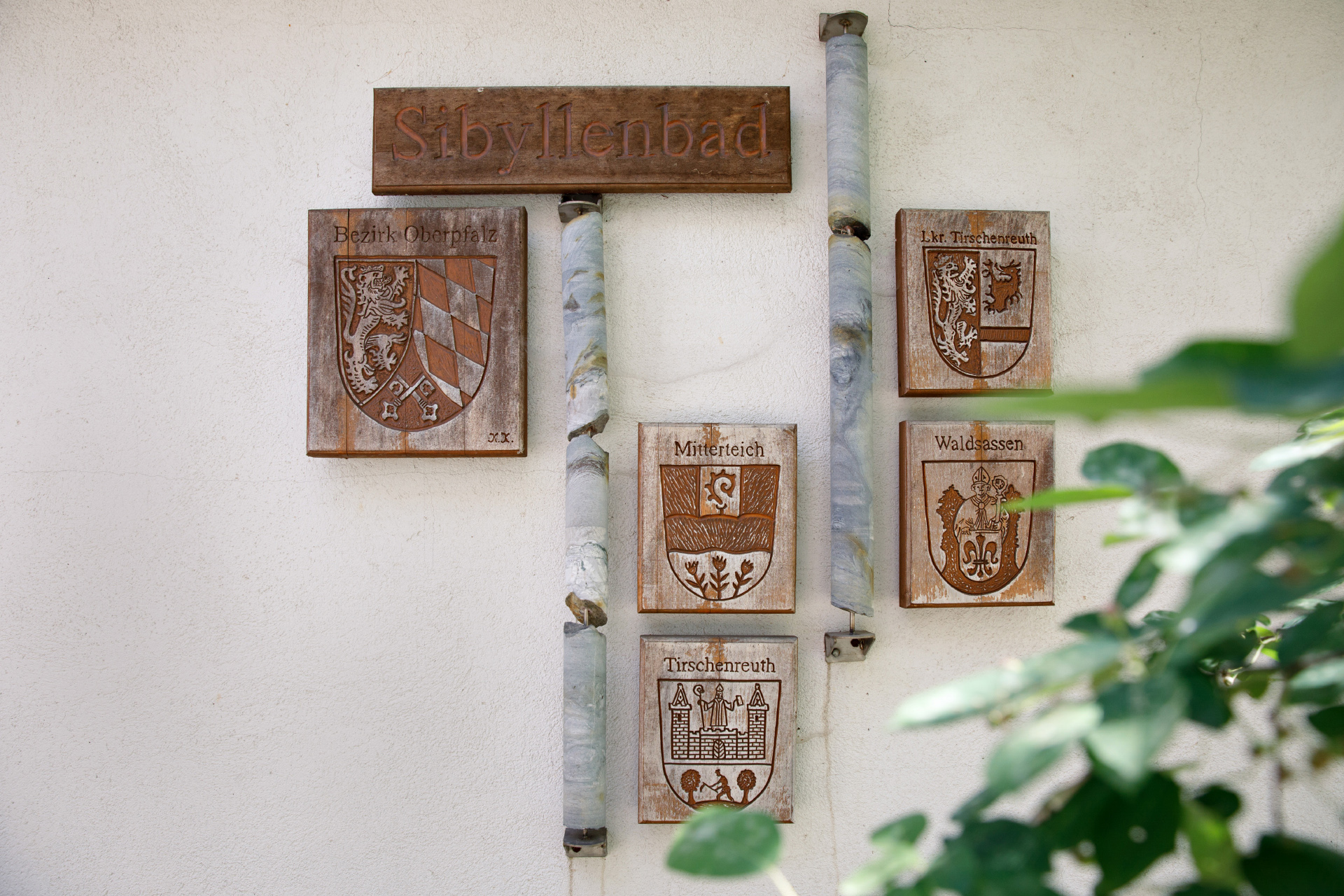
From Bavaria’s largest construction site to one of the Federal Republic’s largest architectural ruins: The town of Neualbenreuth borders the Czech Republic. After World War II, the neighboring country’s spa towns, Marienbad and Karlsbad, disappeared behind the Iron Curtain. But shortly thereafter, a vision took shape in Neualbenreuth: one of the largest spa complexes in the Federal Republic was to be built here, in a town with a population of just 800. They searched for and found the same healing waters as in the Czech Republic—for example, radon-rich thermal water used in pain-relieving therapies.
The planned Sibyllenbad was supposed to set new standards, it was said at the time. But soon, everything came to a halt. By early 1972, the construction site had ground to a standstill. Soon even the news magazine *Der Spiegel* ran a story under the headline: “Money for Ruins.” In the end, all that remained was a massive construction site, the remnants of which still stood in the landscape decades later. Many people lost their money. Yet the residents of Neualbenreuth held fast to the town as a destination for spa treatments and health—with a new perspective.
Creativity That Transformed the Region and Its People
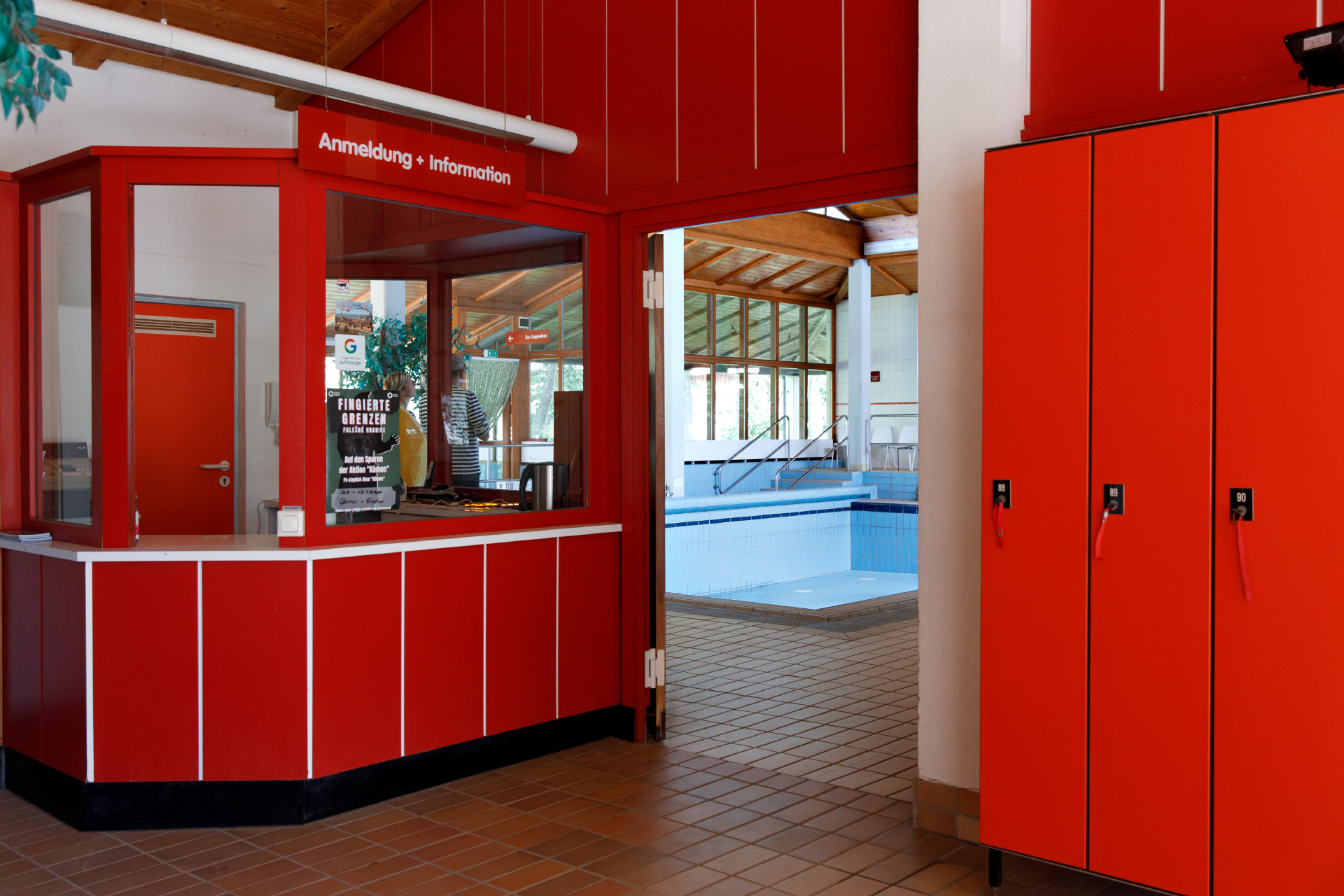
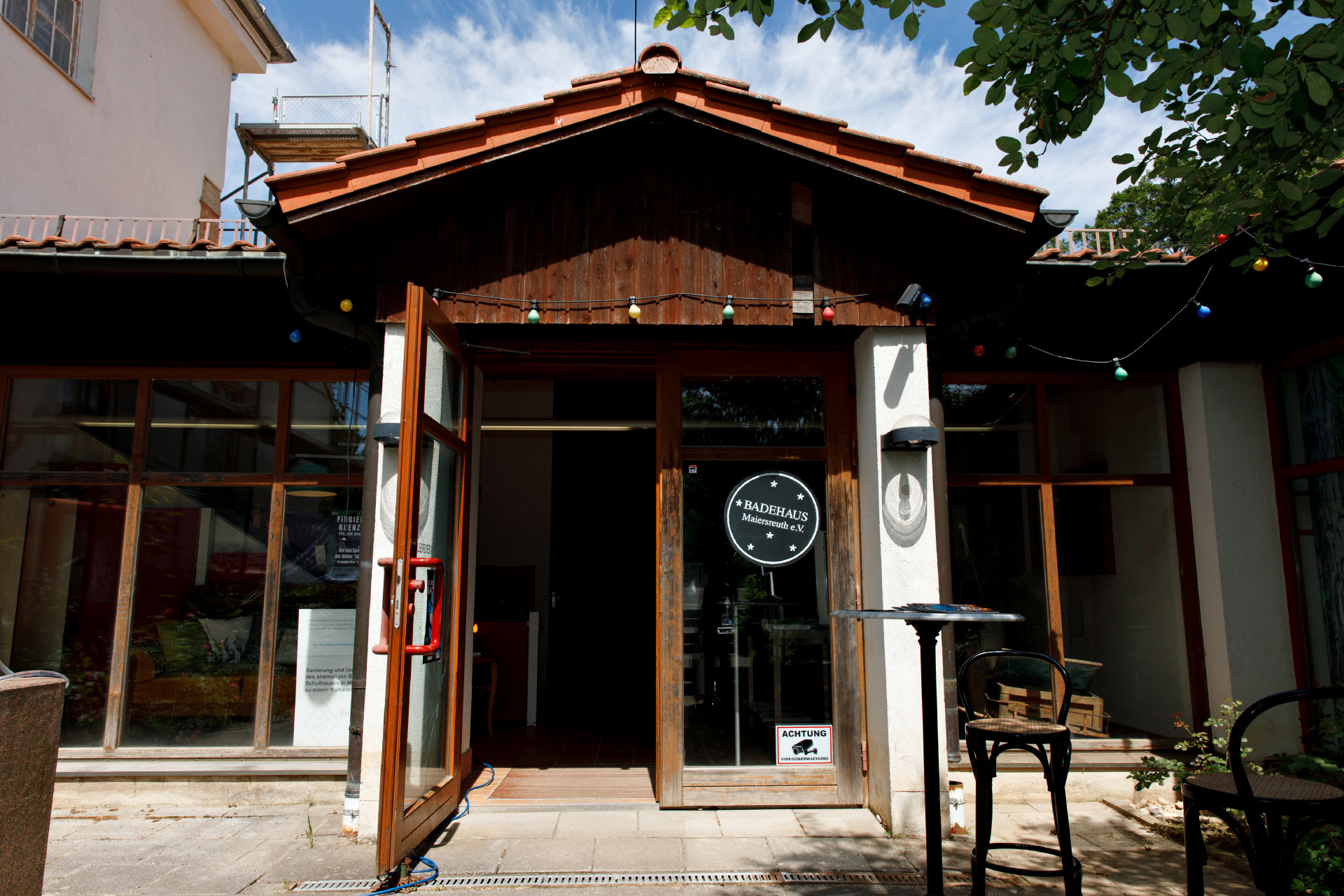
In the late 1980s, they built a bathhouse adjacent to the old schoolhouse in the Maiersreuth district. Its success quickly proved them right: in the very first year after opening, over 25,000 guests visited the bathhouse. It was often packed to the brim. After a few years, this success forced the municipality to make another change: Neualbenreuth needed a larger spa facility.
In the 1990s, today’s Sibyllenbad was built. At first, the smaller bathhouse served as a temporary alternative when the large facility was being cleaned. But what to do with it the rest of the time? Or should the building simply be torn down? This is a problem faced by other towns in Germany as well, with structures that are barely used or not at all.
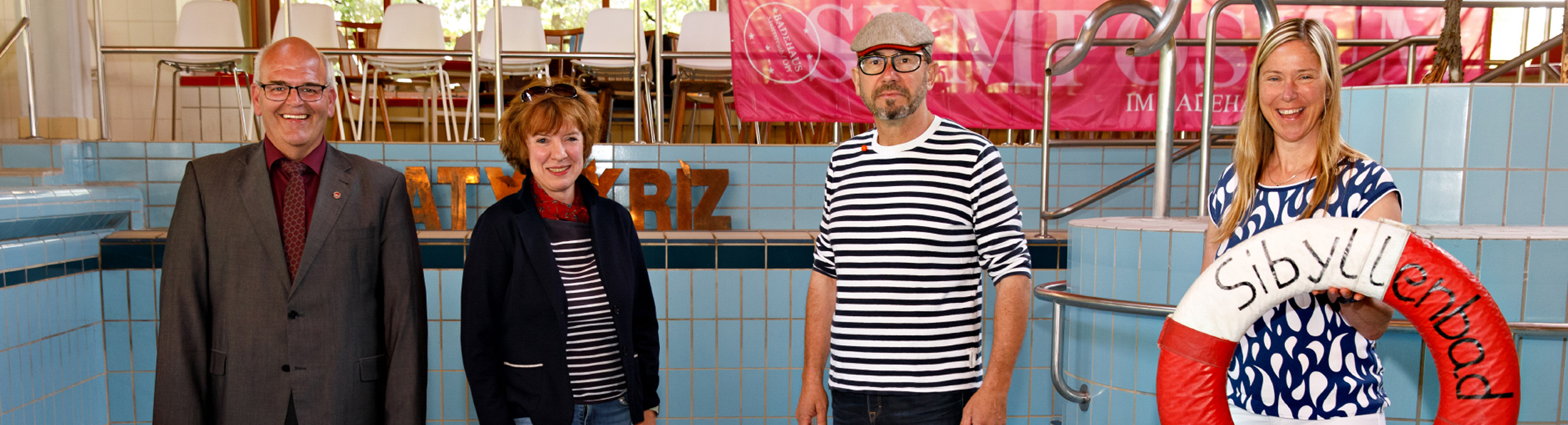
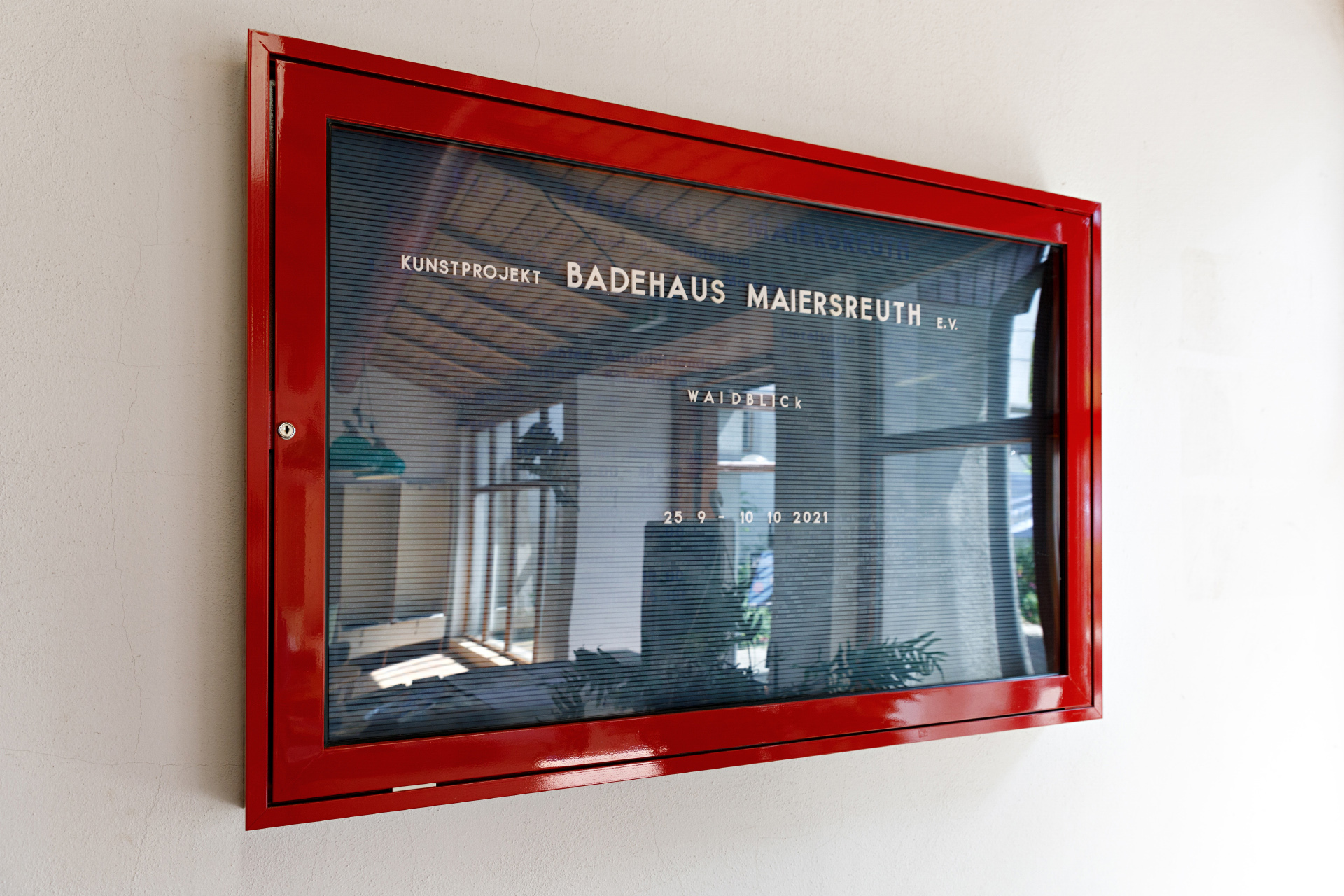
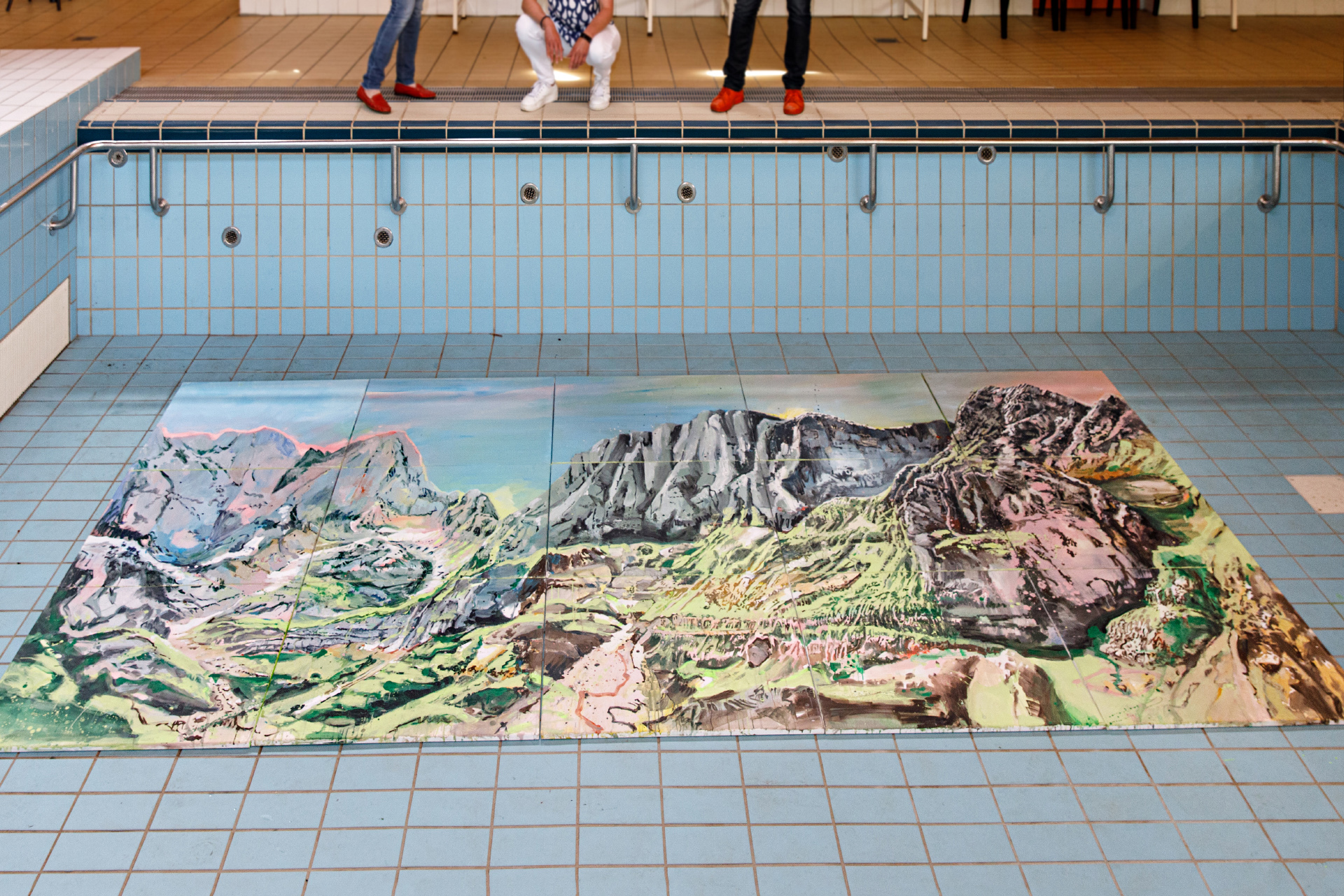
Four years ago, the Badehaus Maiersreuth e.V. association was founded with a vision of its own: to breathe new life into the former medical bathhouse. Art, theater, and music are on the program. The bath hall quickly became a stage, a dance floor, and a space for concerts and art alike. The unique character of this place was also a decisive factor in the Badehaus Maiersreuth e.V. association being awarded the State Prize for Bavarian Creative Venues.
When the association began its work at the bathhouse, it seemed as if someone had just pulled the plug out of the pool, says Susanne Neumann. She used to visit the bathhouse with her grandmother for spa treatments; her family has deep roots in the region. In her view, there is generally a strong sense of community in the town. A gathering of artists in the summer of 2020 brought together participants from across the region. A year later, Daniel Spoerri’s exhibition followed. And in the fall of 2021, creativity radiated directly into the landscape: artists from Austria, Germany, and Switzerland transformed hunting blinds into art installations. Those who stroll along this special hiking trail can discover a pink hunting blind in the middle of a field at dusk, come across a pair of yellow left ears on two other blinds, or find a hunting blind by the side of the path tightly woven into a web of thread. Creativity that stands out. Creativity that moves. Creativity that changes—not just the viewers, but the place itself.
“Walking aimlessly isn’t helpful”
“We want to showcase contemporary art while also engaging the local community,” says Neumann. Everyday objects like the hiking stick can make art more accessible, and the story behind the object becomes all the more fascinating. “Each of these sticks held a life story,” says Neumann. “Each walking stick is uniquely designed. When viewed as a group, they also appeared like a surreal object.”
For the project, the association called on the residents of Neualbenreuth to participate; a ‘stick box’ was set up to collect items loaned by the residents. Mayor Klaus Meyer also contributed a walking stick for the installation. “Walking Ineffectively Is Not Cheap” is the title of the exhibition by artist Spoerri, which was on view at the Badehaus from July 17 to August 15, 2021.
The exhibition by this renowned artist is one of many projects and events at the Badehaus Maiersreuth. Today, creatives, theater professionals, and authors come together here to network and exchange ideas—with one another and with the spa and vacation guests in town. Developing ideas and recharging one’s batteries—these elements come together in the small Badehaus. The creative industries find particularly fruitful opportunities here—precisely because hardly anyone expects to find them here.
A Key Factor for the Town
Bad Neualbenreuth offers a fascinating history and stunning landscapes. It’s not just the artists who know this. The new Sibyllenbad is an economic driver that benefits from the Badehaus art project—and vice versa. Urban flair and culture find a home in the town, and synergies emerge through guided hikes and spa treatments linked to art and culture.
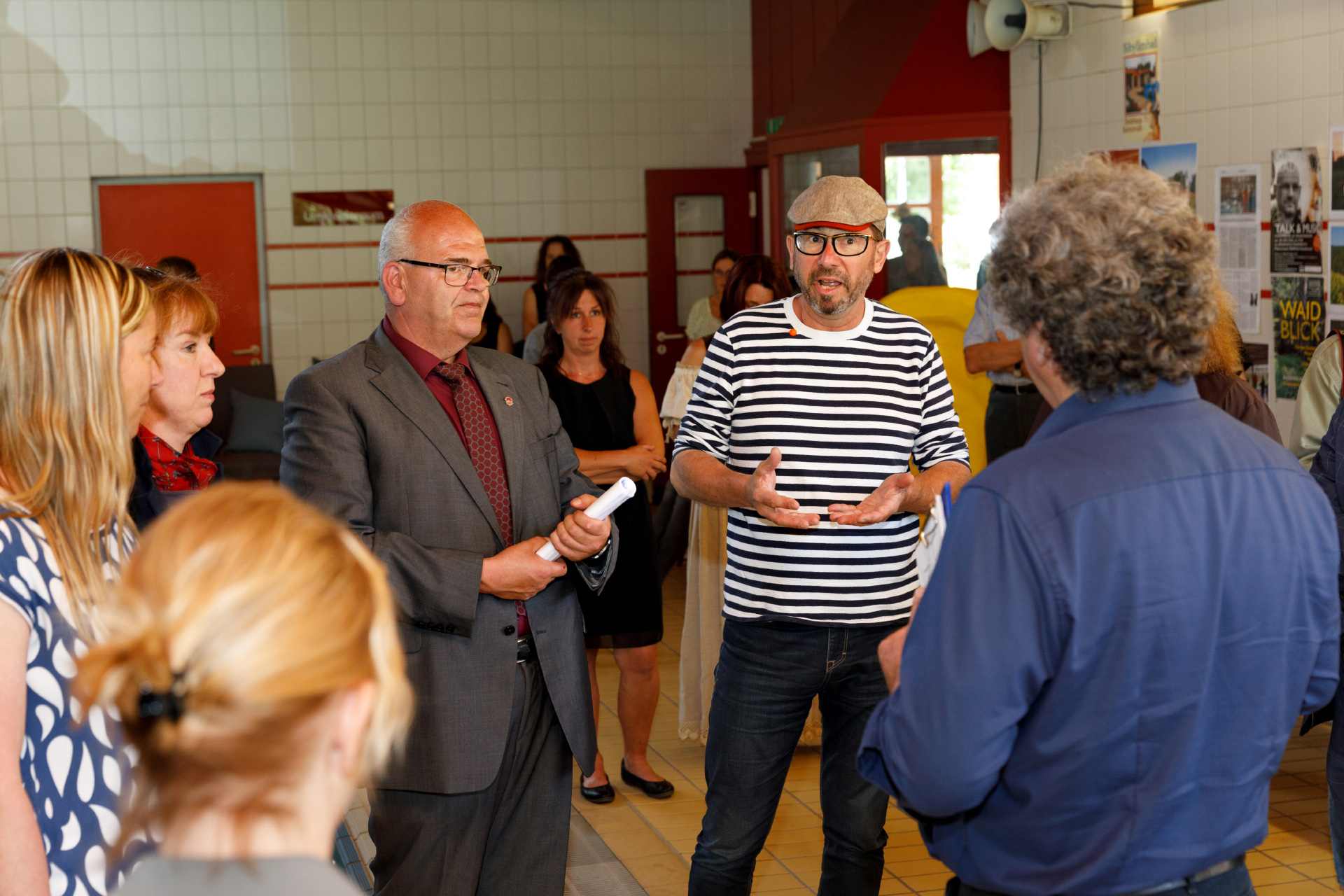
Klaus Meyer has been mayor of Bad Neualbenreuth since 2014. “Culture is very much a part of our identity,” says the 57-year-old. “People in rural areas often say that the countryside has more culture. But that’s not true.” While there may be more cultural activities in metropolitan areas in terms of numbers, the quality of culture in Bad Neualbenreuth is at least as strong. According to Meyer, the driving forces behind culture are the local clubs, which also pass it on to younger generations. The Ernestgrün Music Association, for example, carries on the Bavarian-Bohemian song tradition with its brass band.
“For every destination—like Sibyllenbad and Bad Neualbenreuth—the overall package has to be just right.” Guests and residents alike expect something from the place. “The cultural scene that’s emerging here is something truly special,” Klaus Meyer emphasizes time and again. Because he believes in the Badehaus art project. Because this cultural scene can attract further attention. Because such projects revitalize the entire local community. “People want to do things in their free time that take their minds off the stress of everyday life—things that help them relax. And that’s where a local project like this is simply worth its weight in gold,” says Meyer.
According to Neumann, the Badehaus art project has become an important part of the town for tourism. “Many people hike and bike past here and strike up a conversation with us. Spa guests and hikers are curious and always amazed by what they see here,” says Neumann. A Kneipp trail is part of the Badehaus and has also been well received. In addition to the exhibition program, the association plans to offer workshops with overnight stays soon. Clubs and companies can also rent the bath hall. This hybrid model is intended to secure the project’s future.
A Place to Relax
Bad Neualbenreuth is currently renovating the building complex for its new purpose. Once that’s done, the complex will be available to the association. Very little work was needed in the swimming hall itself—which is why it had virtually no impact on exhibitions and activities. Soon, artists will temporarily move into the school building to pursue their work. As part of the renovation, four rooms are currently being created in the school building, two of which will serve as studios. There will also be a live-in studio in the attic. A kitchen will be installed on the ground floor.
An exciting art program is set to take root. This benefits not only the local economy but also the artists themselves: country life allows them to retreat and work on their projects away from the noise of the cities. Find peace. Because in Bad Neualbenreuth, it’s not just the body that should relax, but the mind as well, says Susanne Neumann.
Sharpen your perspective. Perceive your surroundings from a different angle. That’s what the Badehaus art project achieves—both in its own community and beyond.