The Regensburg Theater is a pioneer in sustainability in the cultural sector
January 23, 2025
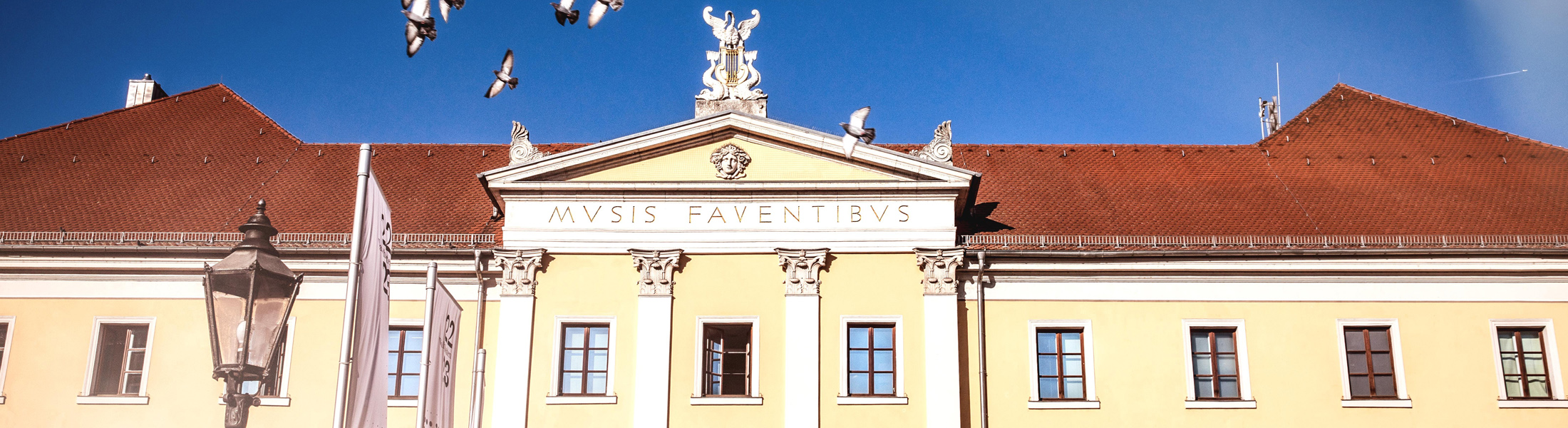
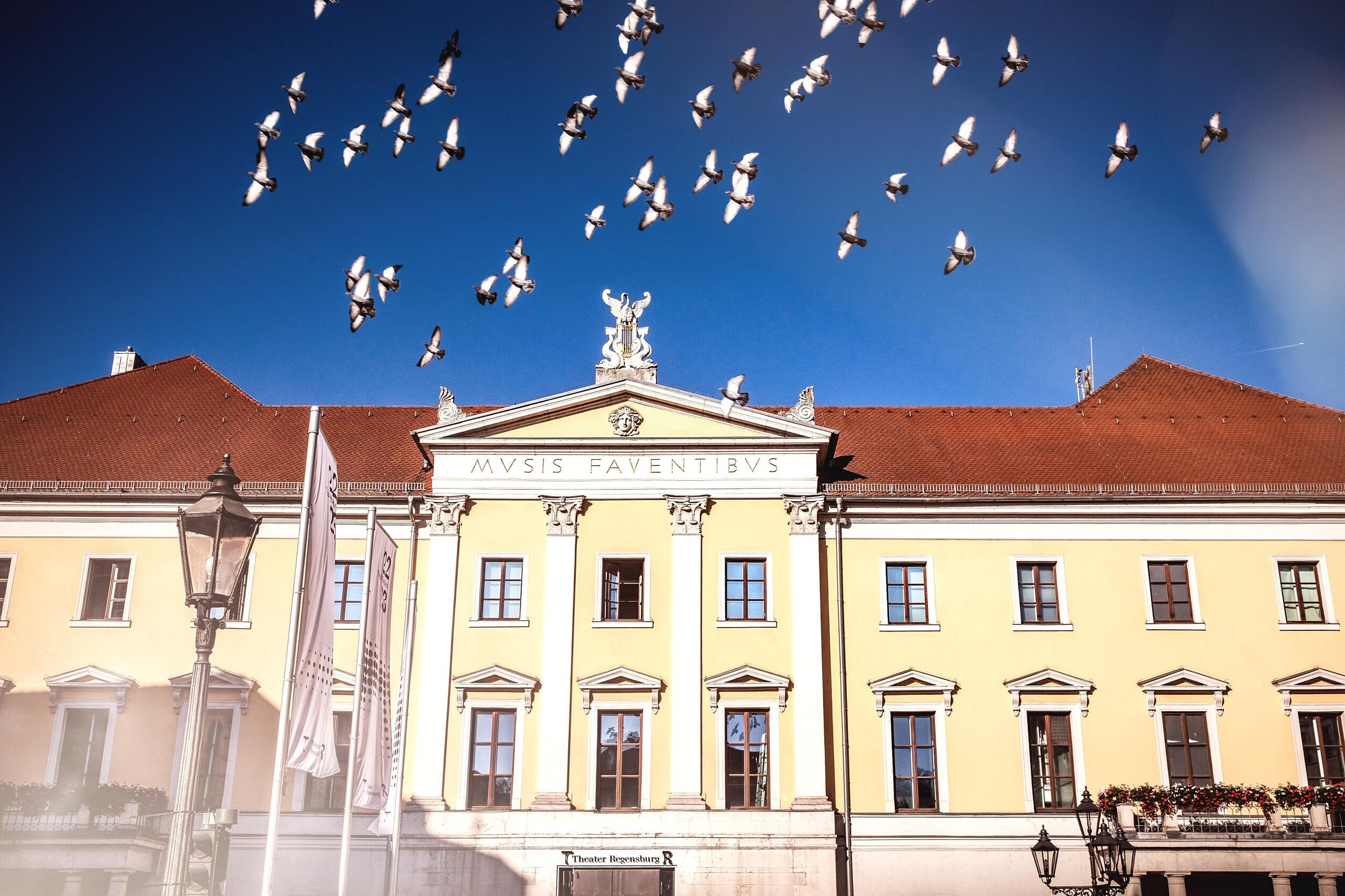
The Regensburg Theater has become a model of best practices for sustainability in the cultural sector. By conducting its first carbon footprint assessment during the 2021–2022 season, this multidisciplinary theater laid the foundation for a sustainable transformation. This assessment, which identified key areas for action such as energy and mobility, made it possible to move from “knowledge to action.” Today, sustainability is not only a guiding principle but also a core organizational goal of the theater.
Through projects such as the climate-neutral urban space project WAHRHEITEN, the KLIMAKAUTION, and the environmental concert SUSTAINABLE LISTENING, the theater demonstrates how art and climate protection can be combined in creative and effective ways. The theater’s commitment to sustainability is now recognized throughout Germany: In addition to receiving multiple awards from the City of Regensburg’s Environmental Prize, the theater was honored with the OPER!AWARD for the best sustainability initiative and made it onto the shortlist for the “WIRKMÄCHTIG Culture4Climate Prize.”
In this interview, Johanna Loher, climate agent and project manager for “WAHRHEITEN,” discusses how Theater Regensburg has consistently integrated sustainability into its structures and what challenges were overcome in the process. She also talks about the role of funding and provides insight into Theater Regensburg’s sustainable visions.
"During the 2021–2022 season, we conducted the first carbon footprint assessment for the Regensburg Theater. The results prompted us to move from 'knowledge to action.' Sustainability is now a key organizational goal."
Johanna Loher
Climate Agent and Project Manager for WAHRHEITEN, Regensburg Theater
Hello Johanna, as a climate advocate and project manager for WAHRHEITEN, you’ve helped establish sustainability as an organizational goal at the Regensburg Theater. What key challenges have you encountered in implementing sustainable measures and strategies?
Johanna Loher: One of the biggest challenges is certainly the availability of resources—that is, time and money. We’re fortunate that here at the Regensburg Theater, my position as executive assistant was created, and sustainability is included as part of my job description. That’s not the case at many other theaters and cultural institutions. Nevertheless, theater operations run on a very tight schedule, and additional tasks—such as integrating sustainability measures—require extra capacity throughout the entire organization.
Added to this is the challenge of reconciling artistic freedom with sustainability. In administrative operations, sustainable concepts can be implemented more quickly. Artistic visions, however, sometimes require elements that are not sustainable—such as the continuous development and replacement of stage sets or certain material purchases and uses that cannot be avoided. Here, it is important to find compromises that do justice to both.
How is the theater’s carbon footprint measured, and which metrics are particularly relevant for assessing progress?
Johanna Loher: We have now compiled two carbon footprint assessments for the Regensburg Theater. The first is based on data from the 2018–19 season and was published during the 2021–22 season. The second was developed as part of the WAHRHEITEN project and with funding from the Zer0 Fund, using data from 2021.
A carbon footprint is broken down into different categories: Scopes 1 and 2 mandatorily cover energy consumption such as electricity, heating, and refrigerants. Scope 3 is more flexible and encompasses areas that we can define ourselves based on materiality, such as transportation, waste, or procurement. For us, energy consumption and transportation—especially that of our visitors—are the biggest factors. This clearly shows where we need to focus our efforts. In the area of energy—primarily electricity and heat consumption—we can make a significant impact. Audience mobility, on the other hand, is something we cannot directly influence. But even there, there are opportunities to create incentives. For our employees, for example, we offer an interest-free loan for the purchase of a bicycle or subsidies toward the Deutschlandticket.
What specific measures to reduce energy consumption have proven most effective in theater operations?
Johanna Loher: There are many measures, both small and large. One of our first steps was to take stock: We inventoried all the equipment in the building—from the washing machines in the costume department to the refrigerators that seem to be in every department—and assessed which ones could be replaced, turned off, or optimized. We identified up to 40 devices. Some of them were over 20 years old, and replacing them with more energy-efficient models yielded quick results. Other devices were turned off completely.
With regard to energy consumption, we implemented a comprehensive tracking system. This allows us to track our electricity consumption for the various properties with relative precision. For the larger properties, this is done monthly; for the main building, it’s even done daily. This helps us take targeted measures.
Another important point is the switch to LED lighting: The Theater am Bismarckplatz is a historic building, which made the transition more difficult in the historic Neuhaussaal, for example. Furthermore, we do not own the theater; rather, we are tenants of the City of Regensburg. For example, we covered the costs of retrofitting the auditorium and orchestra lighting in the Neuhaussaal ourselves—with the help of a grant from the Bavarian Cultural Fund—since the investment pays for itself quickly due to high electricity costs. The ongoing transition to LED significantly reduces energy consumption, cuts emissions, and—despite high initial costs—proves to be economically viable and environmentally friendly in the long term.
For about two years now, we have also been collaborating with the Regensburg Energy Agency. Together, we conducted an inspection of our buildings to identify energy-related weaknesses. A particularly major weak point was the old delivery gate in the main building. The Energy Agency pointed out the energy-related problems caused by poor sealing. Thanks to their expertise, we were able to justify the need for a replacement to the city as well. The gate is now being replaced.
When it comes to heating, it would be ideal to do away with gas heating systems, but the structural design of the historic, protected building makes this difficult to implement. Nevertheless, we have made some minor improvements. The offices are equipped with programmable heaters that operate only during core working hours. In other properties, such as the rehearsal stages, we’ve installed smart-home devices on the heaters. This allows us to control them remotely, depending on whether the rooms are in use or not.
In the wake of the energy crisis two years ago, the government mandated that temperatures in public buildings be lowered. In the offices, we were only allowed to heat to a maximum of 19 degrees Celsius, and in the workshops, just 16 degrees Celsius—which was really cold. Of course, this isn’t a permanent solution, but the savings were clearly noticeable and demonstrated just how much potential such measures hold, even if they aren’t feasible in the long term. We have therefore agreed on a moderate temperature level and adjust it as needed.
In summary, through these measures—from switching to LED lighting to energy-efficient renovations and heating control—we have achieved significant savings and are well on our way to further optimizing our energy consumption.
Are there any other energy-related measures that the Regensburg Theater has implemented?
Johanna Loher: One key measure we implemented about three years ago was the complete switch to green electricity in all of our properties. This decision not only made ecological sense but was also relatively easy to implement. Nowadays, many local energy providers offer only green electricity anyway, so taking this step has almost become a matter of course. Nevertheless, it’s an aspect that can make a significant difference and should definitely be considered.
What are the next steps to further advance the theater’s sustainability efforts and establish them for the long term?
Johanna Loher: One major project is a photovoltaic (PV) system. We initially planned this in collaboration with the energy agency as well. The actual implementation is being carried out with the help of an external specialist planner. However, our self-sufficiency rate will be limited to a maximum of about 20 percent, as we are not permitted to cover all roof areas due to historic preservation regulations. Thanks to relaxed regulations and constructive dialogue with the historic preservation authority, we’ve found feasible solutions. Installing the system will be a major step toward a sustainable energy supply.
What is your long-term vision for a sustainable Theater Regensburg?
Johanna Loher: We don’t want to stop; we want to keep working on improvements. There are still so many things we haven’t addressed or implemented yet.
In the area of energy, you eventually reach limits because you can’t keep retrofitting indefinitely. But there are numerous other areas where we can take action in the future. For example, in the area of procurement. Our next step here is to develop our own procurement guidelines for our theater.
In the long term, we’d like to establish a system that allows us to regularly monitor our progress, for example through the German Sustainability Code (DNK) or EMAS. In doing so, we don’t just want to focus on environmental and economic sustainability, but also place greater emphasis on social sustainability.
What are your goals in the area of social sustainability?
Johanna Loher: This aspect is often particularly challenging in cultural institutions because work schedules are inflexible. Weekends, holidays, and evening events are an integral part of our operations. Nevertheless, there is room for improvement here as well—such as planning rehearsals with a longer-term perspective, offering days off as compensation, or implementing a health management program embedded within the organization. Our goal is to develop measures, remain creative, and give equal consideration to all three pillars of sustainability—environmental, economic, and social.
What role does government support play in implementing sustainability?
Johanna Loher: Currently, we are still a municipal theater and are funded by the City of Regensburg, with support from the state. During the 2025–26 season, we will be elevated to the status of a state theater, which means that funding will be split equally between the city and the state.
These funds will also finance investments such as the solar power system. However, this will pay for itself in the long term, even if a larger initial investment is required. Depending on the option chosen, the system will pay for itself in about five to ten years, which is a sensible investment given the high electricity prices. One of our preferred options involves the use of red solar tiles, which, however, must first be approved by the historic preservation authorities. From an economic standpoint, this solution would be particularly efficient and would pay for itself within six years.
How are the results of the carbon footprint assessment and the associated measures communicated, both internally within the theater and externally to the public?
Johanna Loher: For external communication, we primarily use our website. There is an information page there dedicated to sustainability. Our online magazine, a blog, also features articles on sustainability and the measures we’ve already implemented. In addition, we provide updates on artistic projects through newsletters and targeted campaigns.
To involve our employees more closely in sustainability initiatives, we initially offered workshops that were open to anyone who wished to attend. We also tried to introduce regular town hall meetings on the topic of sustainability, where employees could ask questions and make suggestions every two to three months. Unfortunately, this wasn’t very well received, which is why we now hold these “consultation sessions” less frequently. Instead, we’ve set up a dedicated email address to give employees the opportunity to send us suggestions, feedback, and ideas. For a few years now, we’ve had an internal Telegram channel that keeps employees informed about all relevant topics, including sustainability. In addition to biannual staff meetings, which provide a forum for a wide variety of topics, there is also a weekly management meeting where department heads are briefed on current projects.
The urban space project WAHRHEITEN has made it onto the shortlist for the WIRKMÄCHTIG Culture4Climate Award. Congratulations on the nomination! What does this nomination mean for the team at Theater Regensburg?
Johanna Loher: Thank you very much! The nomination means a great deal to us! Making it onto the shortlist out of nearly 100 applications from other institutions shows us that our work is being recognized and that we’re on the right track. At the Culture4Climate conference in Hamburg, where the award ceremony took place, there was a lot of interest in our initiatives. I was able to present our activities there during the panel discussion, and afterward I was contacted several times and asked how we implemented certain initiatives. That motivates us to keep going and stay creative.
The WAHRHEITEN project was funded by the Zer0 Fund of the German Federal Cultural Foundation. How important was this support to the success of WAHRHEITEN, and what insights did you gain from it?
The funding was essential—not only financially, but also because it spurred us into action. Without this support, we probably wouldn’t have dared to undertake such an experiment. Of course, not everything went smoothly, but that wasn’t the goal anyway. The point was to test new approaches and gain experience.
The most important lesson was: You just have to get started and try things out, even when there are uncertainties. Many initiatives could be implemented faster and more easily than we initially thought. Of course, you also need the necessary financial resources. But there are also things you can do without incurring significant costs: For example, we used our “Fundi” for most of our equipment—which was not only sustainable but also led to creative results.
What inspired you to make WAHRHEITEN climate-neutral?
The motivation to make WAHRHEITEN climate-neutral stemmed primarily from the Federal Cultural Foundation’s requirement to find innovative solutions and realize the project in a climate-neutral manner according to the principle of “avoid, reduce, offset.”
Originally, WAHRHEITEN was planned as a standard production without a focus on sustainability, to be staged at the end of Sebastian Ritschel’s first term as artistic director, regardless of funding. However, when the opportunity for funding arose, we saw it as a good chance to make an innovative project like this climate-neutral. We decided to simply give it a try, even though we had no experience with climate-neutral productions at that time.
Of course, we had to specify concrete measures as part of the funding application. The ideas were theoretical and, in some cases, fictional, but we decided to go ahead with the experiment nonetheless. It was a moment of pure joy when we received approval for the grant. At the same time, however, we also got “cold feet,” since we now had the responsibility to manage a very large grant and use it wisely and sustainably within the project.
Were there any particular challenges in implementing WAHRHEITEN?
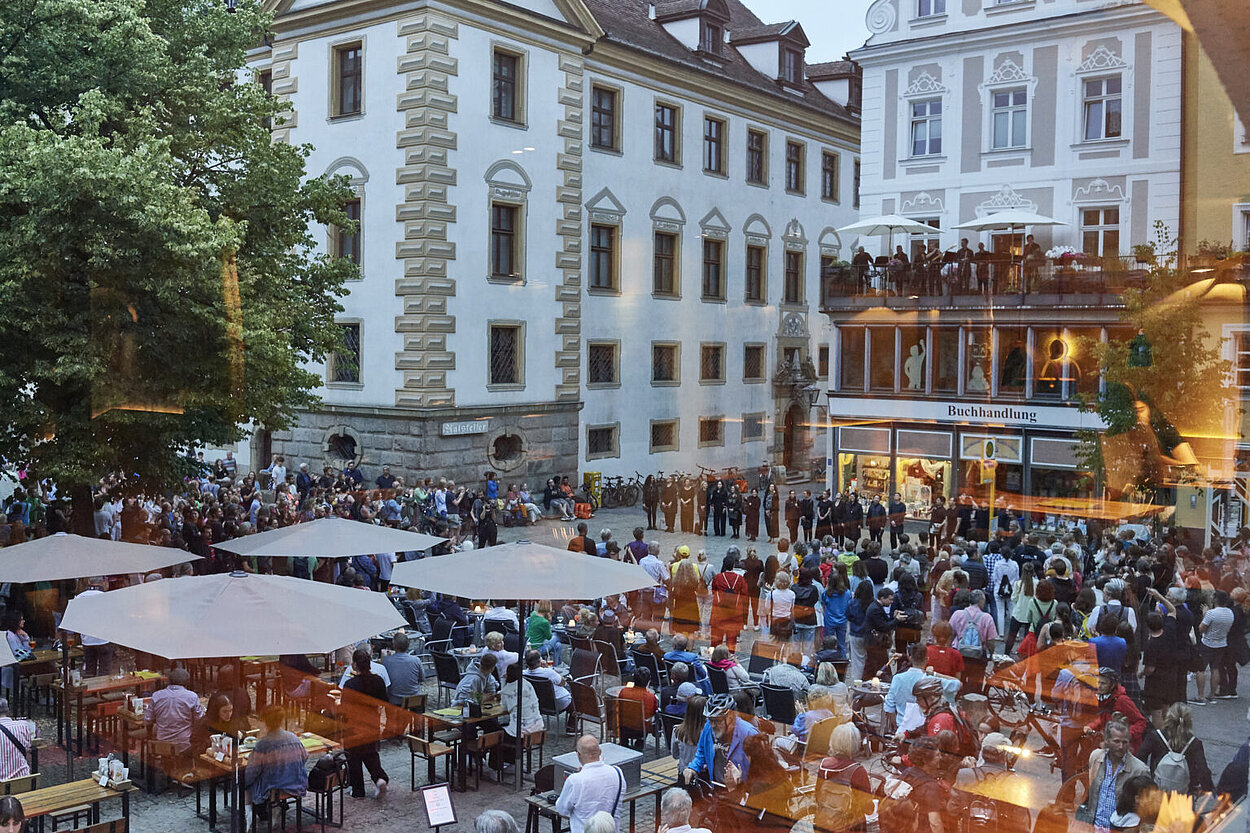
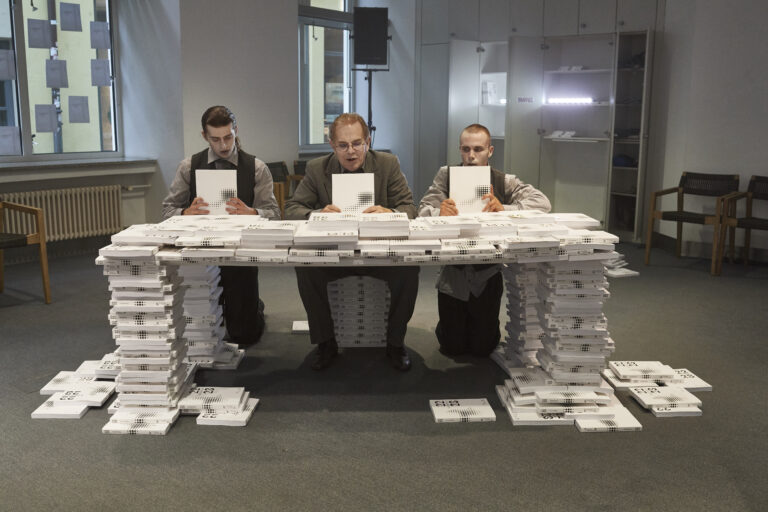
The WAHRHEITEN project was already very complex: it was a three-hour, interdisciplinary urban space project. Although the first part of the performance began in the main theater, the remaining performances all took place outside the theater, in various vacant spaces throughout the city of Regensburg. The audience was divided into groups and moved from venue to venue together with the performers. In total, there were eight such locations, each hosting a ten-minute performance. Over the course of the evening, the audience was able to visit all the venues and experience a variety of performances.
The artistic concept, combined with the simultaneous implementation of sustainability measures—which we were carrying out for the first time—as well as the need to develop new action plans, presented a major challenge.
As part of WAHRHEITEN, Theater Regensburg launched the KLIMAKAUTION—a kind of voluntary CO₂ offset based on the audience’s mode of transportation. In addition to the ticket price, a “climate deposit” of ten euros (five euros for reduced-rate tickets) was charged. This amount was due at the time of ticket purchase and was refunded in cash before the performance upon proof of at least a climate-friendly mode of transportation to the theater.
How did the audience react to the “KLIMAKAUTION” as a creative approach to promoting climate-friendly behavior?
The audience reacted positively to the project for the most part (98 percent). Very few critical comments reached me directly; there were a few complaints at the box office or occasionally on-site. But overall, the project was accepted as an experiment, and many found it exciting to try something new and be part of the project.
The main point of criticism was the use of paper questionnaires to collect mobility data. However, paper consumption is quite insignificant compared to mobility in terms of CO2 emissions. The real impact was that the audience used alternative modes of transportation such as bicycles, buses, and trains. We specifically informed people about the option to use public transportation for free with their theater ticket. An additional bicycle parking area was also set up, which was very well received. To further encourage the use of public transportation, we also wanted to offer on-demand shuttle buses; however, this met with only sporadic interest, and we were ultimately unable to implement the measure.
As a result, we were able to reduce car travel from the usual 50 percent to less than 10 percent—specifically to about 8.8 percent—with the majority of visitors traveling by public transit. The remaining visitors came on foot, by bicycle, or used e-mobility options. That was a great success.
What strategies helped reduce the percentage of audience members traveling by car?
Communication was key—especially through our website, email campaigns, and targeted information about using the theater ticket for public transit. Many audience members were completely unaware of this option. In addition, we created incentives, such as an additional bike parking area right next to the theater, which was very well received. But the main factors were certainly the climate deposit and the audience’s desire to be part of this project and to know that they themselves could make the biggest contribution to reducing emissions and thus help achieve the project’s shared goal (to generate as few emissions as possible).
To what extent can cultural projects like WAHRHEITEN spark a broader social discourse on sustainability?
Cultural institutions such as theaters and museums offer a unique opportunity to reach a broad audience and address important issues. Through regular interaction with visitors, we can convey socially relevant content in creative ways and encourage reflection. As publicly funded institutions, we also have a responsibility to actively engage with these issues and do our part—and that’s exactly what we want to do. Addressing societal challenges and integrating them into our projects is an essential part of our work.
As part of WAHRHEITEN, we communicated much more about sustainability than usual because we had to ensure that people were willing to be part of the project—for example, by choosing to leave their cars at home. Many people who approached us only became aware of issues like the impact of mobility on CO₂ emissions through the project. Projects like this raise awareness and encourage reflection—on one’s own behavior and on broader societal issues.
What have you taken away from the project?
Above all, that it’s worth exploring new paths and trying things out, even if they seem complicated at first. It wasn’t always easy, but the positive feedback and visible successes motivate us to keep going. Sustainability will become an even more integral part of our identity in the future.
What does this significant success mean for future projects?
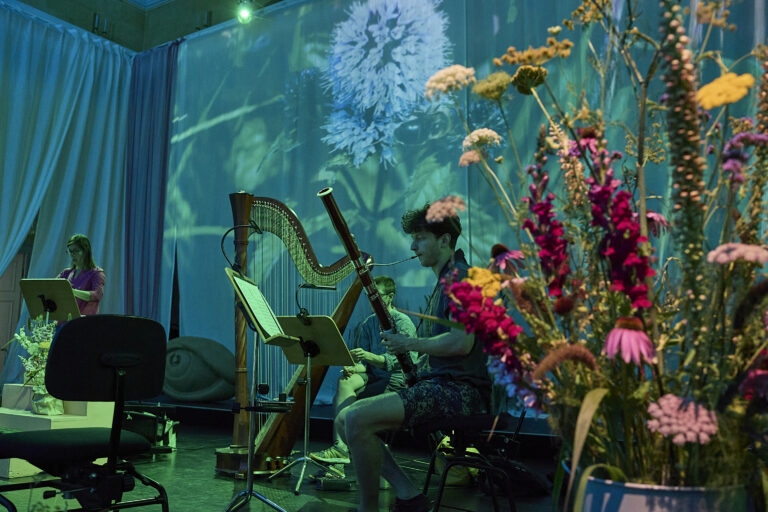
This success was significant for us: One year after the success of WAHRHEITEN, we launched the SUSTAINABLE LISTENING project, a chamber concert with a clear focus on sustainability. The concert took place in the newly renovated Neuhaussaal, where the new LED lighting was also inaugurated. This project, too, relied on the KLIMAKAUTION and collaborated with regional sustainability initiatives. In cooperation with an exhibition called “Land.schafft.Klang,” sounds from meadows, soil, and insects were integrated into the concert, which allowed for a substantive exploration of environmental and climate issues. The project was another artistic approach to addressing and communicating sustainable themes.
Has there been, or is there currently, an exchange with other cultural practitioners pursuing similar goals?
There is a vast network of projects supported by the Zer0 Fund or other funding programs. Within this framework, networking meetings and online get-togethers are held regularly, where cultural practitioners can exchange ideas. These opportunities have helped us a great deal to learn from one another and see what measures are already being implemented in other institutions.
What advice do you have for other cultural institutions that want to operate more sustainably?
My advice is to just get started—even if you don’t yet have a clear idea of how it should work. It’s important that the leadership of the cultural institution stands behind the project and supports staff in taking the first steps.
You can achieve a lot step by step, and applying for a grant can often provide the decisive impetus to move the project forward. You just have to take the plunge and get started.
At the beginning, with the help of the external project office WHAT IF, we conducted a carbon footprint analysis, which was an important first milestone. Today, there are many tools available to help you conduct such an analysis on your own. Then you should start with small steps—perhaps by switching to recycled paper, introducing a waste sorting system, or making initial adjustments to your technology. It’s important not to get discouraged if something doesn’t work right away or takes much longer than originally planned.