Exchange on the challenges and future of glass art and craft in the Bavarian Forest
29.04.2026
In the Glass 2.0 network, glass art and glass crafts in the Bavarian Forest discussed key issues for the future. The focus was on the shortage of skilled workers, technical infrastructure and joint visibility of the glass region.
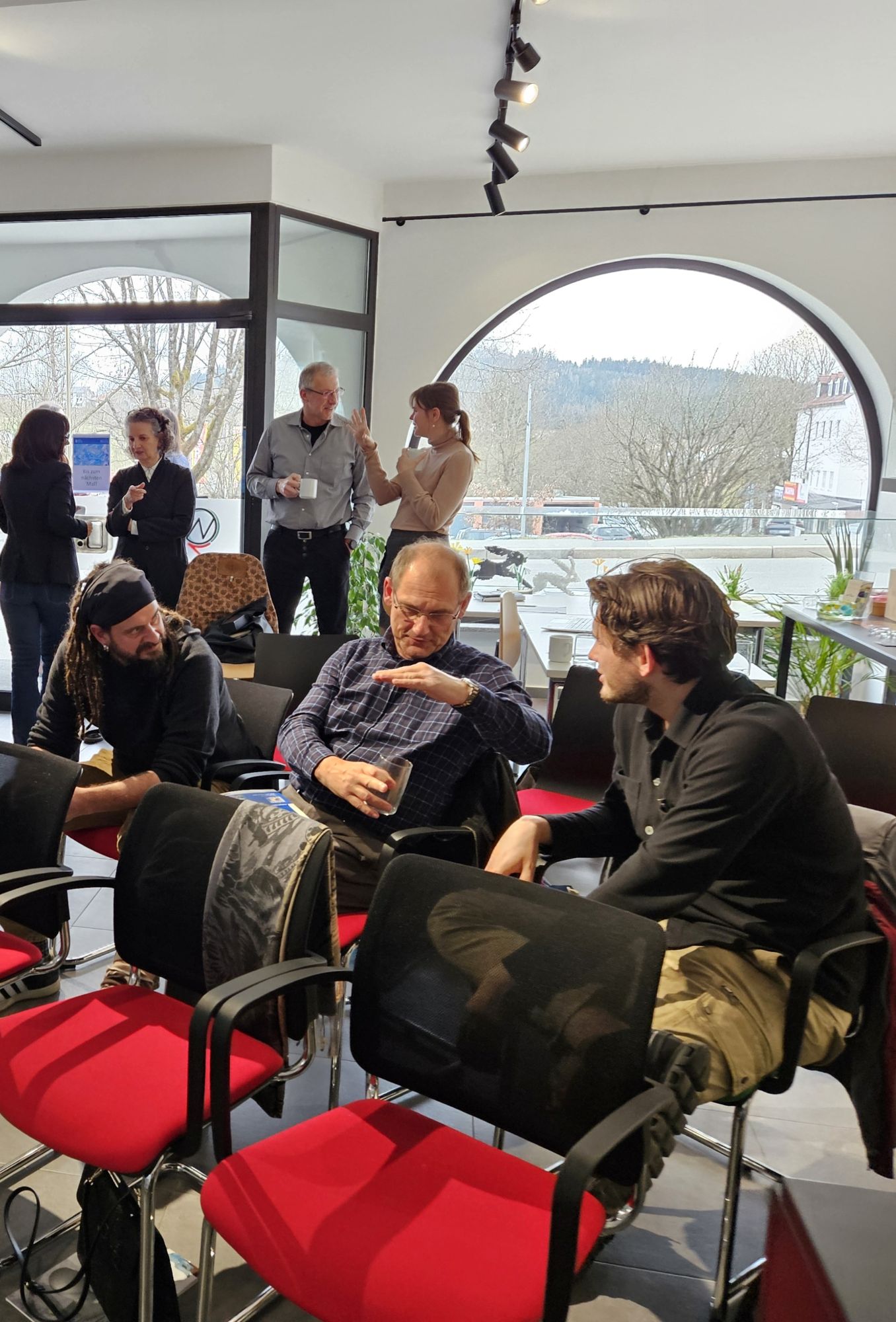
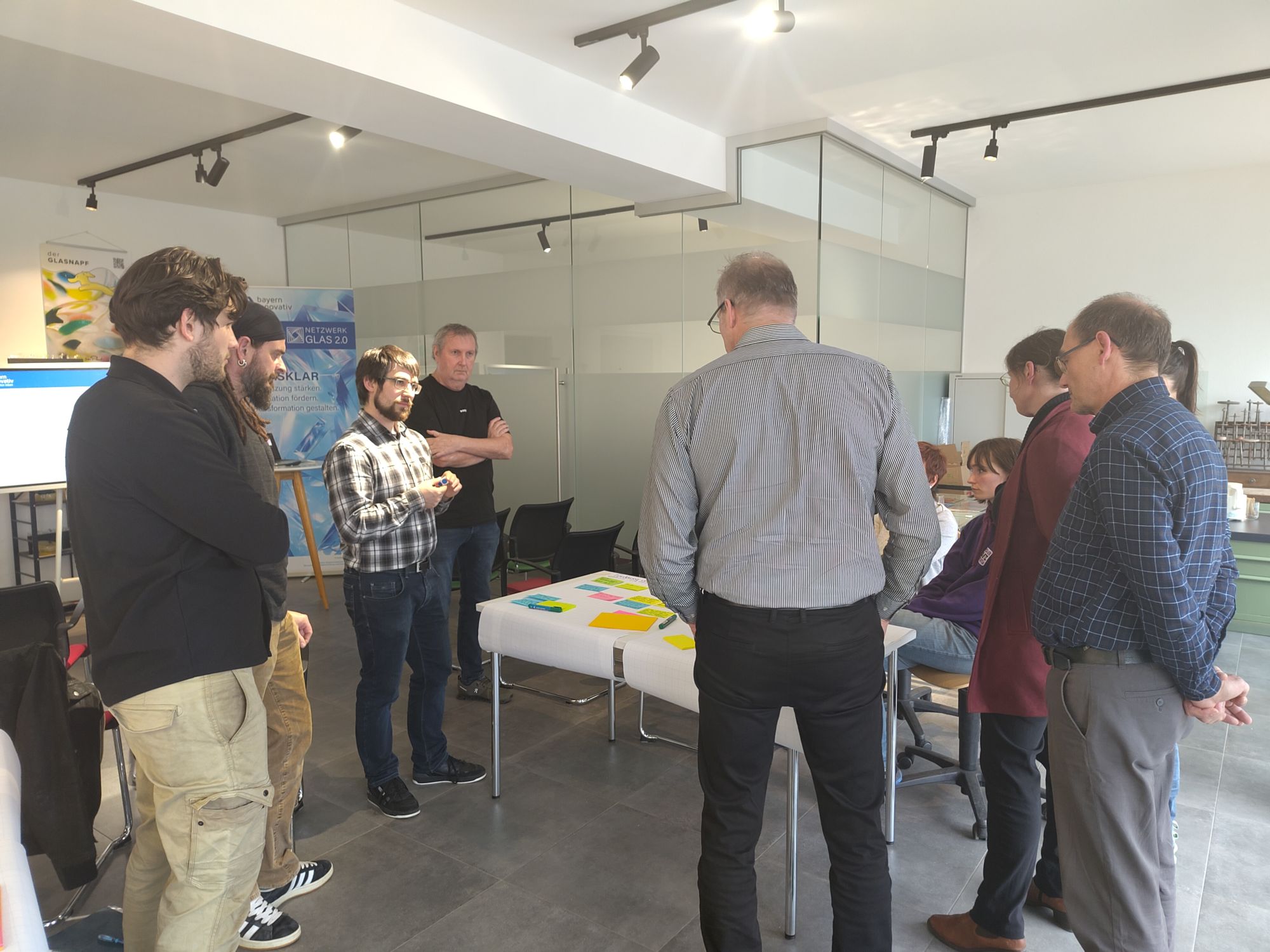
On April 13, the first workshop focusing on glass art and glass crafts took place at the Gründerwerkstatt Glas in Zwiesel as part of Bayern Innovativ's Glass 2.0 network. The aim of the event was to identify and discuss key needs, current challenges and specific support approaches for the industry together with local participants.
With a total of 19 participants, the workshop was deliberately designed to be open and diverse: In addition to established self-employed people from the glass art sector with a wide range of orientations and company sizes, up-and-coming artists and representatives from local politics as well as regional networks such as Gläserner Winkel and Bildwerk Frauenau also took part. This broad composition enabled an intensive exchange across generations, levels of experience and business models.
Focus on networking and existing support services
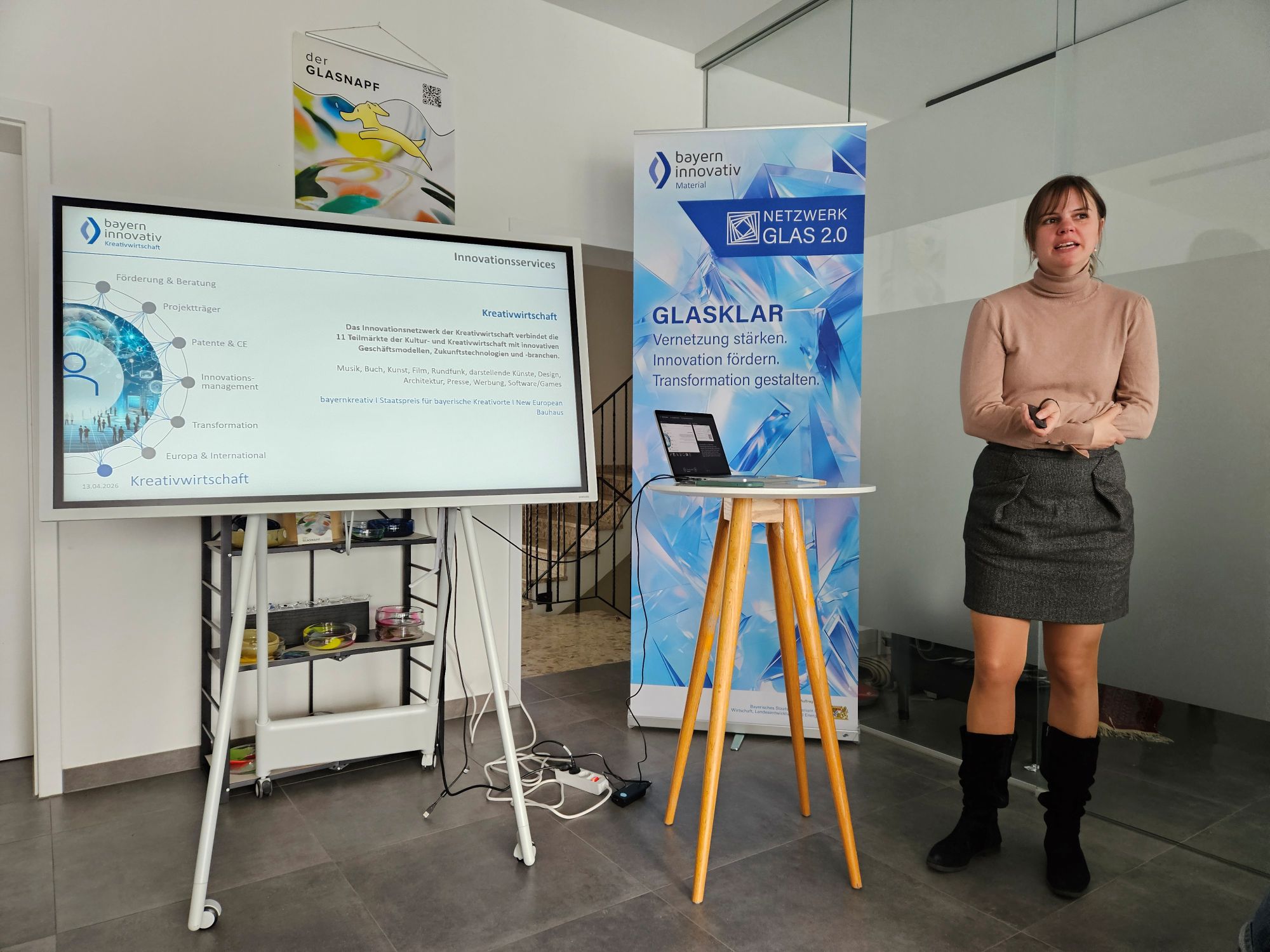
A central component of the workshop was the presentation of existing support and networking opportunities. Tobias Helling began with a general overview of the services offered by Bayern Innovativ and the Glass 2.0 network.
Charlotte Stegmayer gave an insight into the creative sector of Bayern Innovativ and highlighted the links between traditional crafts, the creative industries and innovation funding.
Carola Kupfer also presented the work of the Bavarian State Association for Cultural and Creative Industries (BLVKK) and outlined the current framework conditions and support approaches for self-employed creative professionals.
The regional level was also represented: Teresa Sitzberger, Economic Development Officer at the Regen District Office, presented existing public and regional initiatives to support both established businesses and start-ups.
Central challenges from practice
The subsequent practical session focused on open and intensive discussions. It became clear that in addition to general challenges - such as a confusing and often perceived as inadequate funding landscape - there are two central problem areas in particular that acutely affect the future of the glass trade.
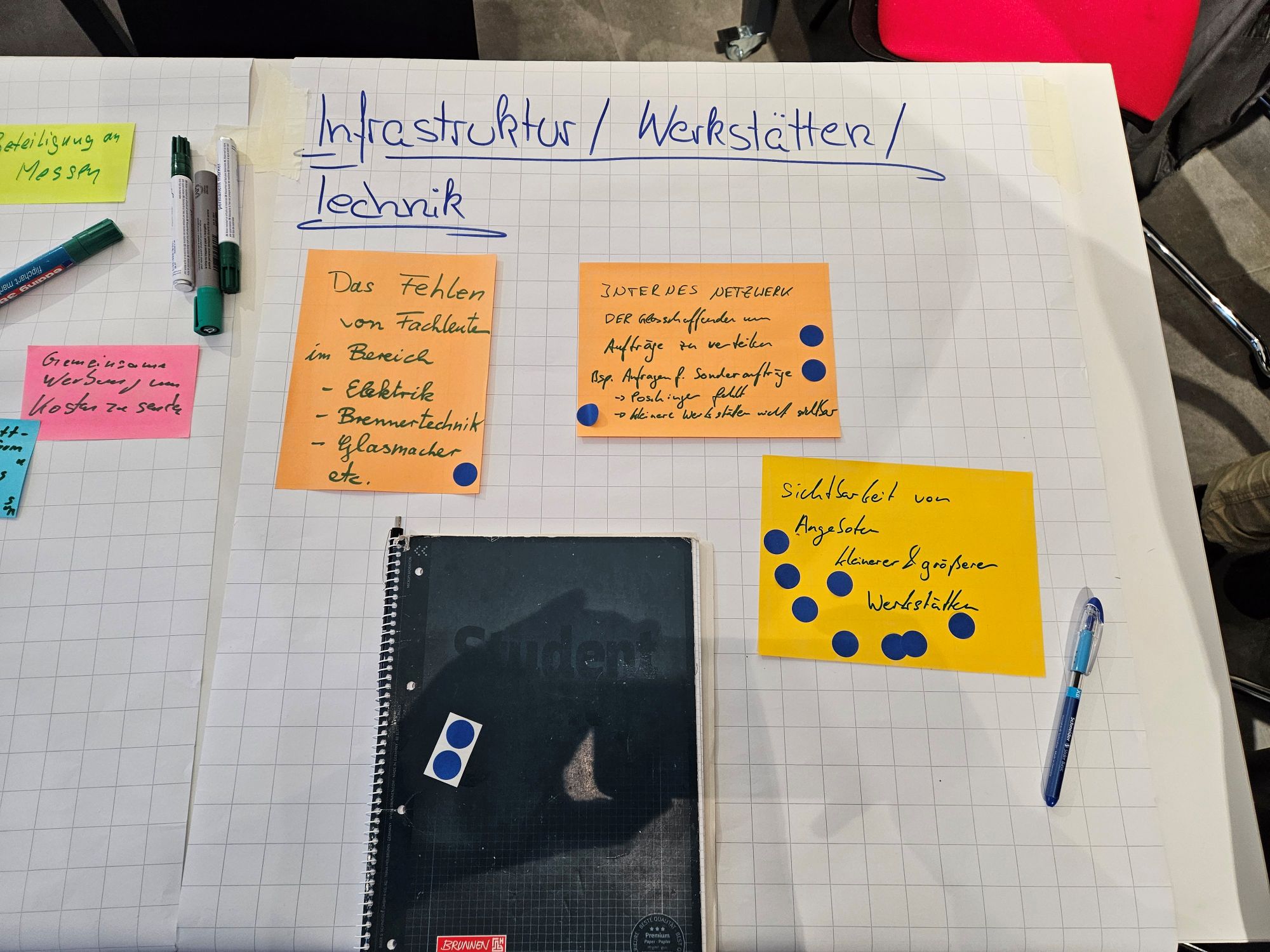
1. increasing lack of expertise and infrastructure in the technical field
A significant risk for many glass artists is the increasing lack of expertise in kiln, burner and system technology for the kilns used. Suitable equipment is hardly available locally and repairs are often only possible at great expense. The reasons for this include low market volumes, a lack of profitability for larger suppliers and the age-related loss of long-standing specialists without successors.
A technical defect can therefore - depending on its extent - mean an immediate production stop and, in the worst case, threaten the existence of a company. The first possible approach identified was to strengthen networking and make existing service providers, offers and skills more visible in order to make remaining resources more accessible.
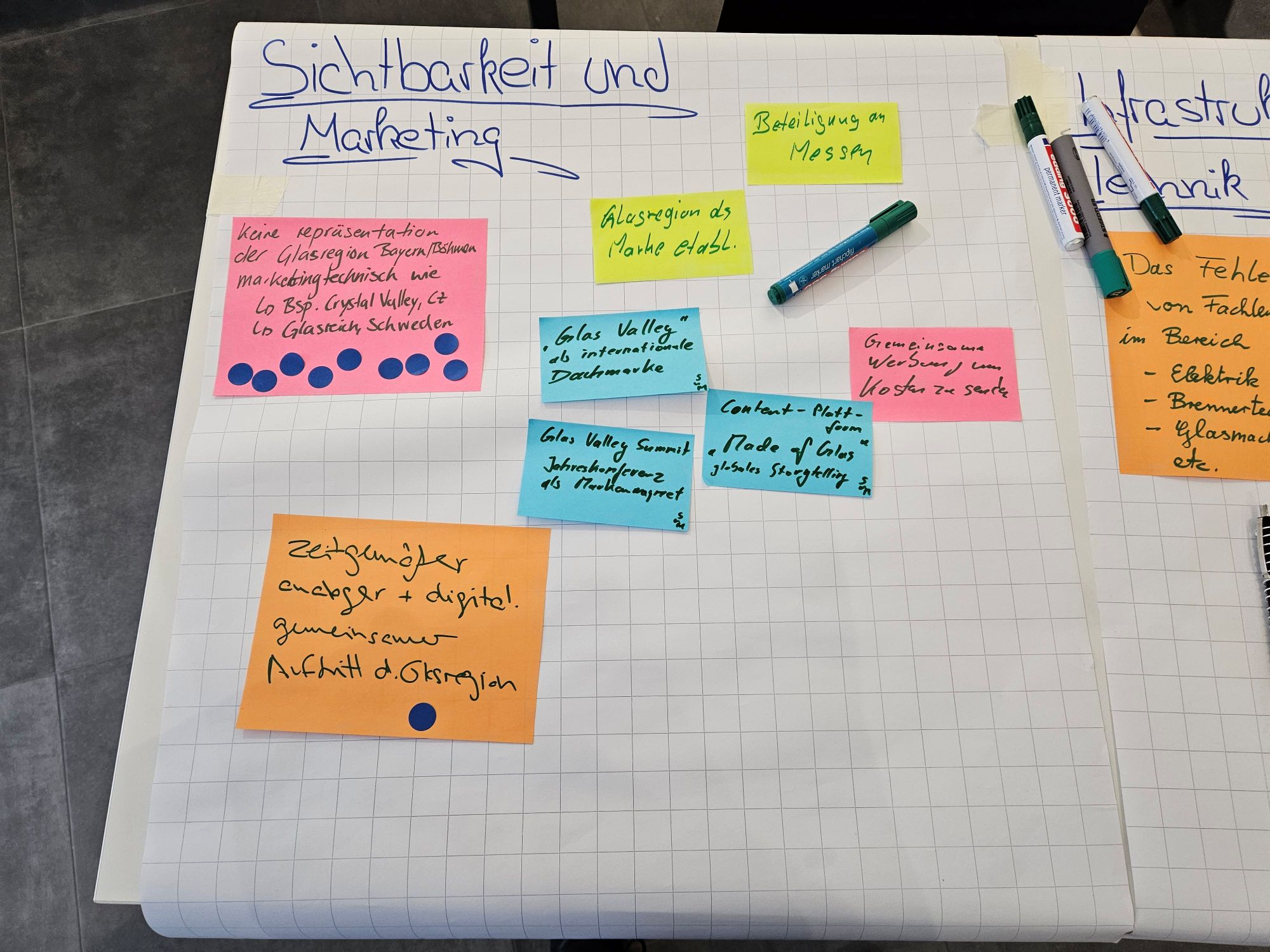
2. joint external representation of the Bavarian glass region
A second central point of discussion was the external perception and presentation of glass art from Bavaria, in particular from the Bavarian Forest. Despite the wide range of styles, techniques and aesthetic approaches, all participants share a high professional standard and a long tradition of craftsmanship. In the future, this quality must be presented more strongly to the outside world and strategically positioned. The existing glass route in Eastern Bavaria, for example, was mentioned as an existing structure that could be more strongly focused and used again.
Further burdens for small businesses
High operating and wage costs and bureaucratic hurdles were also cited as additional burdens. These disproportionately affect small businesses and solo self-employed people in particular and make investment, growth and long-term planning more difficult.
Conclusion and outlook
The workshop has made it clear that, despite all the challenges, there is a high level of motivation, commitment and creative drive among glass artists in the region.
Pooling this potential in a targeted manner, making it visible and flanking it with suitable support and networking offers is a challenging - but central - task in order to secure and further develop the culturally and economically important glass craft in the Bavarian Forest in the long term.
The Glass 2.0 network will continue this dialog and explore the identified topics in further formats together with those involved.