Accessibility

 Language
TI symposium in Neustadt an der Aisch: Shaping care digitally together
05.12.2025
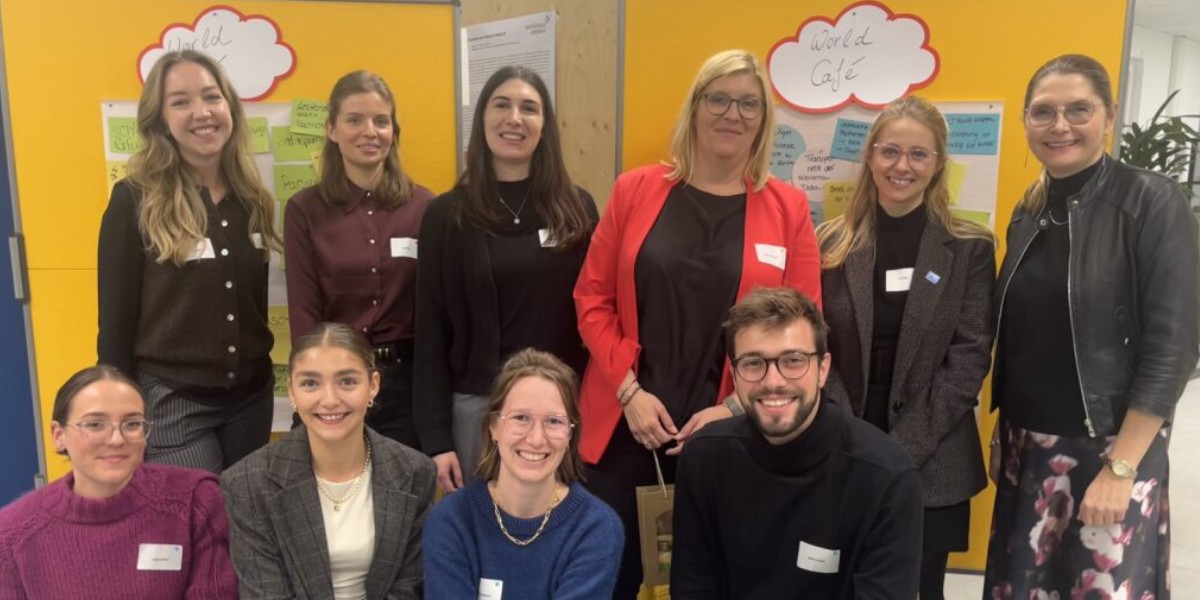
The digital transformation is fundamentally changing the healthcare sector. It affects medical practices and care facilities as well as municipalities and local care structures. How this change can be shaped in concrete terms was the focus of the TI symposium "Shaping digital care together", to which the Health Region Plus Neustadt a.d. Aisch - Bad Windsheim together with FINSOZ e.V. and Bayern Innovativ GmbH had invited to Neustadt a.d. Aisch on November 26. The aim of the event was to bring together representatives from all areas of regional healthcare, from medical and nursing staff to local politicians and social initiatives.
Practical exchange instead of theoretical lectures
Practical use cases of the telematics infrastructure (TI) were discussed in various workshop and exchange formats. Among other things, the focus was on the possible uses of communication in medicine (KIM) for digital communication between medical practices and care facilities as well as the current status and prospects of electronic patient records. Questions about financing and funding opportunities for local authorities were also discussed in depth. This gave the participants a realistic impression of how analog processes can be jointly redesigned digitally and where digital solutions are already taking effect in everyday life.
Understanding together, shaping together
The symposium made it clear why events of this kind are so important for regional healthcare. The introduction of digital applications can only succeed if all local stakeholders involved develop a common understanding, learn from each other and contribute their specific needs. Particularly in the municipal context, it is clear how important personal encounters and close exchange are in making digitalization tangible and practicable.
The discussions underlined that digital collaboration can only work if everyone involved knows which work processes, tools and communication channels are used in the other institutions. This transparency creates the basis for jointly developing previously analog processes digitally in a meaningful way and creating interfaces that make everyday work easier.
Paths to efficient digital care
The electronic patient file was discussed particularly intensively as an example of how digital solutions need to be considered holistically. Data should not only be collected, but also used. It must be clear who needs what information and when, and how it can be meaningfully incorporated into care. In addition, it became clear that digital transformation can only succeed if everyone involved is open to using the new applications.
The results illustrate that successful digitalization in the care and healthcare sector can only be achieved through coordinated interaction between all stakeholders. An in-depth understanding of the working methods of the respective areas, the establishment of uniform standards and the consistent use of digital tools form the basis for this. In addition, it is clear that needs-based training is essential as a basis for building skills and reducing uncertainty, effectively integrating technology into everyday practice and noticeably relieving the burden on nursing staff.
HighCare Agenda: strategically promoting digital care
The discussions and findings of the TI symposium go hand in hand with the ideas underlying the HighCare Agenda of the Bavarian State Ministry of Health, Care and Prevention. With this program, Bavaria has launched one of the most ambitious programs in Germany. By 2028, the Free State will provide around 31 million euros to specifically promote the digitalization of care - because care should be digitally supported so that it can remain human in the future. Technology-supported assistance will enable those in need of care to live more independently, relieve the burden on relatives and allow care staff to invest more time in direct care.
The HighCare Agenda responds to key challenges such as demographic change and the increasing shortage of skilled workers. At the same time, it takes up the opportunities offered by new technologies such as artificial intelligence and robotics to relieve the burden on care processes and improve their quality. The focus is on the idea that digital support is a prerequisite for ensuring that care can remain human and needs-based in the future.
A central guiding principle of the HighCare Agenda is that care must be networked. This includes sharing knowledge and developing digital skills where they are needed - directly on site.
Health Care BY Your Side: Support in the region
The Health Care BY Your Side project is one of the cornerstones of digital development in Bavaria, from which the TI specialist day event emerged. The initiative aims to integrate digital applications such as electronic patient files, e-prescriptions, video consultations and digital care and health applications into everyday care in a user-friendly way. Both care and healthcare facilities as well as members of the public receive targeted support, for example through training, information campaigns and measures to strengthen digital health literacy. Health Care BY Your Side is thus creating a comprehensive digital ecosystem that makes digital innovations more accessible for all stakeholders and supports their use in everyday life.
Together into the digital future
The TI symposium in Neustadt a.d. Aisch demonstrated the potential that lies in the joint design of digital processes. It provided space for networking, practical insights and concrete solutions that can be directly incorporated into everyday regional healthcare. With its broad network in research, business and healthcare, Bayern Innovativ actively supports such formats and ensures that new ideas and practical innovations do not remain in the background, but flow directly into care. In this way, nursing staff and patients benefit equally from the developments, while at the same time Bavaria is strengthened as a dynamic, future-oriented location for healthcare innovations. In this way, the symposium illustrated how care in Bavaria can be shaped in a joint, networked and sustainable way, based on cooperation, exchange of experience and a practical perspective.