 Accessibility

 Language
Planting the future - with artificial intelligence in the forest
How funding and AI together enable sustainable forestry
1.12.2025
Our forests are struggling with climate change, pests and monocultures. That's why the three founders of Ocell GmbH have developed a clever technology to better protect trees, make reforestation smarter and manage forests more sustainably. Thanks to targeted funding programs, this idea has become a successful company with a real impact on the environment and climate.
In the following interview with David Dohmen, Managing Director of Ocell GmbH, and Dr. Regina Bühl, expert for funding programs at Bayern Innovativ, you can find out what is behind this innovation and how you too can make good use of funding.
What makes your solution so special or even groundbreaking?
David Dohmen: Our idea is to fully exploit the "end" value. This starts with the data collection for the forest, in which each individual tree is recognized in its species and height and from this, wood volumes and growth functions can be derived. Based on this data with software in the forest, sensible, data-driven decisions can be made and employees, both in the office and in the forest, can work better together.
But it is also about opening up new opportunities for the forest to create economic value in addition to logging. Monetizing and thus incentivizing the value that the forest brings to society. We are unique in this end-to-end view of value creation in the forest.
Who uses your software, what is its unique selling point and why is artificial intelligence (AI) used?
David Dohmen: Our customers manage forests. These are primarily private forest owners as well as municipal and state forests. Small forest owners can also use our app by joining together in larger groups, known as forestry communities. In a forestry operation, for example, there are users from management who plan in the office and take care of sales and structure, and foresters in the forest who work with our app and on our data.
The use of AI is fundamental here and makes a lot of sense. Because we are dealing with such large and unmanageable data sets from billions of trees. Each individual tree has countless important parameters that influence management decisions. With such volumes of data and the measurement of this data, we need the support of computers, especially AI. In our case, we record extremely high-resolution three-dimensional aerial images by photographing each tree from twelve different perspectives and applying AI to them. These are so-called computer vision models that recognize and classify the trees according to their species. No forest owner had this map of all trees in this form before.
How did Ocell become aware of the Bayern Innovativ funding opportunities?
David Dohmen: I was responsible for fundraising right from the start and got smart about funding. As we are rethinking an entire, time-honored and conservative industry with our idea, a lot of technology and research technology is required, so our project could not generate any money within a few months. We first had to develop something that would bring added value for forest owners, and that was initially only possible thanks to funding programs.
The first thing we had was a start-up grant, the Exist funding program. We looked around for other funding programs. The state is a great support here, also with regard to topics that have added social value, in order to bring companies to the point where customers see the value and are willing to spend money on them. We achieved this quickly thanks to these funding programs. As a result, we also became interesting for the private capital market and were able to convince venture capitalists, among others.
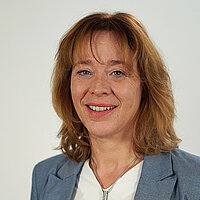
Regina, what is crucial for the success of a funding application?
Regina Bühl: A research or development project must not yet have begun in order to receive funding. It is therefore important to apply for funding at an early stage. The following W questions are helpful for reflecting and knowing more specifically where you want to go and what you specifically need.
Questions like:
- Who am I? - A craft business, start-up, small or medium-sized company?
- What do I want to do? - Do I want to develop myself or will I outsource?
- How innovative is this development? - Is it something new that is not yet available on the market?
- When do I want to start my project? - Depending on the funding program, there are different application periods.
- Who can and wants to take part in the project? - Am I alone or do I need a research institute or a partner?
- How do I finance my project? - You always have to make a personal contribution, as you never receive 100% funding.
Are all funding programs the same or are there differences?
Regina Bühl: By answering the W questions, the Bayern Innovativ funding guide, for example, can filter out the right funding program. The funding programs vary in their procedures. This is why the funding guide or the project management organization Bayern guides you through the process step by step and explains the further procedure. At the beginning, a written record is made and an initial review is carried out by the technologist at the project management organization.
Funding is approximately 40 to 60 percent of the project costs. This includes costs for personnel and material resources. Normally there is no upper limit to the project volume, but for pure software projects, as in the case of Ocell, the volume is limited to 150,000 euros. Another funding program with a cap is the innovation voucher, which only funds external services.
What other specific tips do you have for start-ups and SMEs in Bavaria?
Regina Bühl: A helpful tip is to answer the other W questions:
- Who is my clientele? Who can I sell my product or service to?
- How do I get onto the market at all?
- Which sales channels could I use?
- And finally: What market opportunities do I have or am I missing the market?
David, were there any deviations from the original plan during the course of the project that necessitated a complete rethink?
David Dohmen: It is in the nature of innovation and bold projects that create progress that they can also fail. In our case, we did not achieve the project goal in the way described in the application. There were moments during the project phase when we realized that it wasn't working. But we still achieved our goal through experiments and other ways, a "waste product" from the project. Like Edison, who found a thousand ways to make a light bulb not work - in the end he made it light up anyway.
Could the project have been realized without funding, or at least in this time?
David Dohmen: It's difficult to say whether we would have realized our project without funding. However, there is no way we would have successfully implemented it in the time required without the funding. Time is the most important factor that makes the difference, because so much happens so quickly in a start-up. Thanks to the funding, we were able to create value for our customers more quickly and become interesting for the market or for investors more quickly.
What was the biggest lever in terms of the support from Bayern Innovativ?
David Dohmen: Bayern Innovativ supported us as a start-up and, among other things, showed us how to write successful funding applications. More specifically, it clarified with us what they should look like, what the content is, which aspects are important and what you shouldn't say. This support was incredibly valuable and also helped us with other, larger applications, for example at European level. Having a contact person during the application process, during implementation and after the project phase is incredibly valuable.
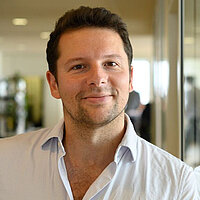
"Time is the most important factor that makes the difference, because so much happens so quickly in a start-up. Thanks to the funding, we were able to create value for our customers more quickly and become interesting for the market or for investors more quickly."
David Dohmen
Managing Director, Ocell GmbH
Is the existing solution being developed further or are there already new ideas?
David Dohmen: The forest is a major topic, and there are still many other values that need to be raised. This is also on the roadmap for our long-term visions. But what will keep us busy for a few more years and represents a huge transformation is generating new sources of income for forest owners. The forest is facing a task of the century. They are the biggest victim of climate change, but also the best weapon against it. We are making our contribution by providing data and smooth processes, thereby opening up opportunities to generate additional money from the sale of CO2 certificates. This makes the forest fit for the future. By purchasing our certificates, which are created in cooperation with forest owners, companies can make a concrete contribution to climate protection. We are the first to have ever issued high-quality, ex-post certified climate protection certificates in European forests. In contrast to ex-ante certificates, these are watertight, as the services first have to be provided. The forest can thus continue to develop in a targeted manner and be set up for the future.
Regina, what advice would you like to give founders and companies at the end?
Regina Bühl: Ocell has done everything right in this respect. They made use of the advisory services offered by Bayern Innovativ, had a good exchange, sought help and accepted tips, which definitely increases the chances of an application being successful and saves time and resources.
Bayern Innovativ also has very good contacts with BaystartUp, Gründerland Bayern and Bayern Kapital. Networking can provide additional support and possibly access to outside capital.
Funding allows you to try things out and think bigger. If you want to drive innovation in Bavaria, you need courage and should actively seize the opportunities offered by the Bavarian Ministry of Economic Affairs' technology funding and Bayern Innovativ's services.
The interview was conducted by Tanja Jovanovic, Head of Marketing & Innovation, Bayern Innovativ GmbH, Nuremberg.

