 Barrierefreiheit

 Sprache
Die Innovation Leben Podcasts zur Fusionsenergie
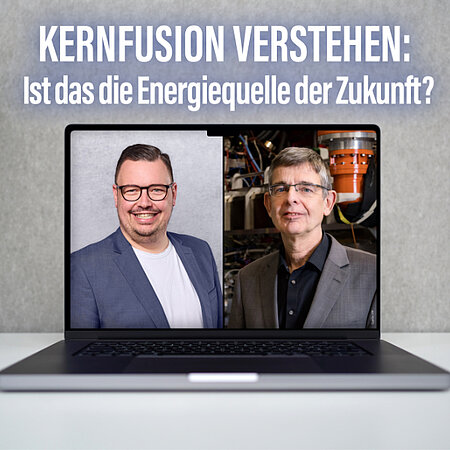
Kernfusion verstehen: Ist das die Energiequelle der Zukunft? (21.05.2025)
In dieser Folge sprechen Moderator Christoph Raithel und Prof. Dr. Hartmut Zohm, wissenschaftliches Mitglied des Max-Planck-Instituts für Plasmaphysik und Honorarprofessor an der Ludwig-Maximilians-Universität München, über eine Energiequelle, die so alt ist wie das Universum selbst: die Kernfusion. Schalten Sie ein, wenn Sie erfahren möchten, was Fusion ist und warum sie zunehmend mehr an Bedeutung gewinnt.
Länge der Audiodatei: 00:19:20 (hh:mm:ss)
Kernfusion – die Lösung des Energieproblems?
Die Sonne als Motor unseres Energiebedarfs
Wie funktioniert die Kernfusion?
Prof. Dr. Zohm: Kernfusion ist die Verschmelzung von Atomkernen. Unsere Materie ist aus Atomen aufgebaut und ein Atom wiederum ist aus Kernen aufgebaut mit einer Elektronenhülle außen herum. Und diese winzig kleinen Atomkerne, die müssen so nah aneinander kommen, dass sie miteinander verschmelzen. Wenn sie das tun, und das ist vor allem bei leichten Atomkernen der Fall, dann verschmelzen diese zu einem neuen runden Objekt, zum Beispiel Wasserstoff zu Helium. Und dabei wird Energie frei.
Was genau hat die Sonne denn damit zu tun?
Prof. Dr. Zohm: Also Kernfusion ist die Energiequelle der Sterne, damit auch die unserer Sonne. All die Energie, die wir von der Sonne im ganzen Strahlungsspektrum erhalten, hat letztlich ihre Quelle im Inneren, in der Kernfusion. Da wird die Energie erzeugt. Die Sonne verbrennt Wasserstoff zu Helium über eine Reaktion, also nicht direkt. In Summe werden mehrere Wasserstoffkerne so zusammengesetzt, dass am Schluss Helium dabei rauskommt und Energie freigesetzt wird.
Und das ist ein kontinuierlicher und verhältnismäßig stabiler Prozess, oder?
Prof. Dr. Zohm: Er ist sehr stabil, wie man sieht. Die Sonne lebt schon seit viereinhalb Milliarden Jahren und die Berechnungen sagen, dass sie das noch weitere viereinhalb Milliarden Jahre lang tun wird. Die Sonne verbrennt den normalen Wasserstoff, also das H, das wir aus der Formel H2O vom Wasser kennen, zu Helium. Die Effizienz, mit der das funktioniert, ist relativ gering. Das heißt, die Sonne verschmilzt ihren Wasserstoffvorrat sehr langsam. Und deshalb ist es auch so stabil und wir sehen eigentlich gar keine Änderung über menschliche Zeiträume hinweg.
Ist diese Kernfusion in gleicher Weise auf der Erde nachstellbar, oder was bräuchte man dafür, dass dieser Prozess hier auf der Erde stattfinden kann?
Also erstmal ist Wasserstoff kein knappes Gut. Wenn sie den Wasserhahn aufdrehen, kommen mit jedem Molekül zwei Wasserstoffatome mit heraus. Es ist aber so, dass man wissenschaftlich oder technisch nutzbaren Wasserstoff sozusagen erst aufbereiten muss. Das ist aber eigentlich kein großes Problem, denn Kernreaktionen sind sehr effizient. Bei einer solcher Reaktion wird ungefähr zehn Millionen Mal mehr Energie frei als bei einer chemischen Verbrennung. Das heißt, der Massenumsatz an Wasserstoff ist sehr gering. Man kann Folgendes ausrechnen: ein Fusionskraftwerk würde pro Gigawatt, das es ein Jahr lang erzeugt, 54 Kilogramm Wasserstoff verbrennen. Das ist eine verschwindend geringe Menge.
Wie sieht es mit der Verfügbarkeit von Deuterium und Tritium aus?
Prof. Dr. Zohm: Also Deuterium haben wir auch in Hülle und Fülle. Das ist zwar deutlich seltener als der normale Wasserstoff, aber es gibt beliebig viel davon. Im Meerwasser zum Beispiel, ist es zu einem bestimmten Anteil enthalten. Der Brennstoffvorrat an Deuterium würde für viele Millionen Jahre reichen, um den Energiehunger der Welt zu stehlen. Das ist kein Problem. Bei Tritium sieht es grundlegend anders aus. Tritium ist radioaktiv, aber mit einer sehr kurzen Halbwertszeit von zwölf Jahren. Das heißt, nach diesen zwölf Jahren ist davon auch nichts mehr übrig. Wir haben fast kein natürliches Tritium hier auf der Erde. Das würde man mit den Neutronen, die in der Fusionsreaktion frei werden, direkt vor Ort in dem Kraftwerk erbrüten und dann auch gleich wieder verbrennen. Dazu braucht man Lithium und davon ist genug da. Wie bereits gesagt, die Stoffmengen, die man umsetzt, sind sehr gering. Dieses Lithium könnte man auch recycelt aus Batterien nehmen. Das kann dann dazu verwendet werden, um Tritium daraus zu generieren. Also im Prinzip sind die Rohstoffe Deuterium und Lithium. Und diese sind im großen Maßstab vorhanden.
Was ist nötig, um die Kernfusion auf der Erde kontrollierbar durchzuführen? Welche Temperaturen und welche Materialien oder Ausgangsstoffe braucht es?
Prof. Dr. Zohm: Ich hatte eingangs gesagt, es verschmelzen Atomkerne miteinander, die sehr klein sind. Die müssen sich so nahekommen, dass sie sich praktisch berühren. Dagegen spricht allerdings, dass beide Kerne positiv elektrisch geladen sind. Das heißt, sie stoßen sich eigentlich ab. Deshalb muss man zunächst Energie aufbringen, dass sich Atomkerne überhaupt so nahekommen können, dass sie verschmelzen. Das ist auch gut für uns, sonst würden wir alle sozusagen verschmelzen und uns in Energie auflösen. Man kennt das auch am Beispiel von zwei Magneten, die man vergeblich versucht mit den zwei positiven Seiten zusammenzubringen.
Die Energie ist sehr hoch, sozusagen pro einzelne Teilchen. Wir schließen so ein Wasserstoffgas ein und erhitzen es auf diese hohen Temperaturen. Daraus wird ein sogenanntes Plasma. Und die Temperaturen sind mehr als hundert Millionen Grad Celsius hoch in unseren Experimenten, in der Sonne sind es ungefähr fünfzehn Millionen Grad im Zentrum. Das liegt daran, dass wir eine effizientere Kernreaktion von anderen Wasserstoff Isotopen verwenden. Es gibt verschiedene Ausführungen von Wasserstoffkernen. Wir müssen die benutzen, die nicht das einfache H sind, sondern sogenanntes Deuterium und sogenanntes Tritium. Das sind Verwandte des Wasserstoffs, chemisch gleich, aber sie haben unterschiedliche Masse davon. Diese benötigt man als Ausgangsstoffe, um sie zusammenzusperren und auf diese hohen Temperaturen zu bringen. Da sieht man schon das eigentliche Problem: das Ganze so zu erhitzen und auch in Behältnissen zu behandeln, die diese Hitze von bis zu einhundert Millionen Grad im Zentrum aushalten.
"Beim Thema Kernfusion können viele Industriezweige profitieren: z. B. Magnetindustrie, Maschinenbau und Hightech-Unternehmen. Meine Botschaft: Vernetzt Euch zu einem Industrie-Ökosystem!"
-Prof. Dr. Hartmut Zohm, wissenschaftliches Mitglied, Max-Planck-Institut für Plasmaphysik und Honorarprofessor, LMU München
Gibt es Alternativen zu Deuterium und Tritium als Brennstoffe?
Prof. Dr. Zohm: Es gibt Alternativen dazu. Es gibt weitere Kernreaktionen leichter Kerne, mit denen Energie freigesetzt werden kann. Allerdings ist bei all diesen die Schwelle, dass diese Reaktionen einsetzen, noch viel höher als bei der Deuterium-Tritium-Reaktion. Wir haben es schwer genug, Deuterium und Tritium zur Fusion zu bringen. Ich sehe in den nächsten Jahrzehnten keinen direkten Weg dorthin, wie man noch andere Reaktionen einsetzen kann.
Um die hohen Temperaturen zu bekommen, muss erst einmal Energie aufgewandt werden. Am Ende soll der Prozess aber Energie erzeugen. Wie sieht die Energiebilanz aus und welche Rolle spielt hierbei der sogenannte Q-Wert?
Prof. Dr. Zohm: Da muss man ein bisschen vorsichtig sein. Der Q-Wert, wie ihn die Physikerinnen und Physiker definieren, sagt nur, wieviel Energie in den Behälter oder das Plasma eingebracht wird, um das Gas aufzuheizen. Das setzt sich ins Verhältnis zu der Wärme, die bei der Fusion frei wird. Q ist das Verhältnis von Wärme, die durch Fusion frei wird, gegenüber Wärme, die ich im Plasma deponieren muss, um es auf diesen großen Temperaturen zu halten. Wenn Q gleich eins ist, ist das ein sogenannter Break Even. Dann kommt genau so viel Wärme heraus, wie ich zum Heizen hineingesteckt habe. Das ist dann aber noch kein funktionierendes Kraftwerk. Für ein funktionierendes Kraftwerk muss der Q-Faktor viel höher sein, in der Größenordnung 30-40. Denn ich bekomme Wärme heraus und ich setze im Normalfall Elektrizität ein, um das Plasma aufzuheizen. Letztlich muss ich diese Faktoren, die Effizienzen bei der Umwandlung von Prozesswärme in Elektrizität, mitberechnen und dann ist eben Q gleich eins oder größer noch nicht wirklich genug. Weil ich dann wieder eine Turbine und Generatoren habe mit einem Wirkungsgrad und auch entsprechenden Verlusten. Also muss ich das Gesamtsystem betrachten, um entsprechend Energie erwirtschaften zu können.
Ist es bereits möglich, dieses Gesamtsystem positiv zu halten? Wie weit ist die Wissenschaft mit dem Q-Wert?
Prof. Dr. Zohm: Wir befinden uns in der Nähe von diesem Q gleich oder größer eins. Für die Grundlagenforschung ist es ein großer Erfolg, weil wir sehen, dass dann mehr Wärme rauskommt, als wir im Plasma im Gas deponieren. Wir müssen diese Anlagen effizienter beziehungsweise größer bauen, damit die Wärmeisolation so gut ist, dass wir nicht so viel heizen müssen und trotzdem Energie gewinnen.
Bei der Kernreaktion der Kernfusion entstehen Neutronen. Diese verlassen dieses Reaktionsgefäß sehr schnell. Es entstehen aber eben auch sogenannte Alphateilchen, schnelle Heliumkerne, und diese werden dazu verwendet, um das Plasma am Leben zu halten. Also um die Energie, die man eigentlich mit Heizen investiert dann letztlich von innen aufzubringen. Man zündet das Ganze praktisch von außen an. Dann geht es durch die Energie, die bei der Fusion freigesetzt wird, in einen Zustand über, den man gezündetes Plasma nennt. Wenn das Plasma gezündet ist, dann kann man die externe Heizleistung zurückdrehen und dann fängt es an wirklich effizient zu werden. Bei der sogenannten Inertial Fusion sind wir bei diesem Wert schon über eins, also bei zwei bis drei. Bei der sogenannten Magnetfusion, wo wir ein Plasma in einem Magnetfeldkäfig einschließen, sind wir in der Größenordnung von eins und ein bisschen darunter.
Es ist sehr spannend. Diese wissenschaftlichen Erfolge haben dazu geführt, dass es große Aufmerksamkeit gibt und auch dieses Bewusstsein, dass Fusionsenergien in endlicher Zeit einen Baustein unserer Energieversorgung stellen könnten.
Welche Branchen können von der Kernfusion am meisten profitieren?
Prof. Dr. Zohm: Bei Fusion mit magnetischem Einschluss braucht man sehr starke Elektromagnete und die müssen auch supraleitend sein. Das heißt, sie müssen in den Zustand übergehen, in dem der elektrische Strom, der darin fließt, keinen Widerstand mehr spürt. Ansonsten muss man sehr viel Energie aufbringen, um die Magnetfelder zu erzeugen. Das sind die größten supraleitenden Magnete, die es auf der Erde gibt. Die Magnetindustrie ist sicher eine von den Industriezweigen, der ganz stark davon profitieren kann. Eben auch für andere Anwendungen, gerade in der Energietechnik.
Außerdem profitiert der Maschinenbau, wo große Maschinen beschwert werden oder Vakuumgefäße und Ähnliches gebaut werden. Da ist dann natürlich ganz viel Hightech mit dabei. Es gibt mittelständische Unternehmen, die sich darauf spezialisieren, bestimmte Komponenten zu bauen, die an der höchsten Spezifikation liegen. Zum Beispiel für die Heizanlagen für das Plasma. Diese profitieren davon auch sehr stark.
Was würden Sie den Unternehmen aus diesen Branchen raten, um für die Kernfusion bereit zu sein?
Prof. Dr. Zohm: Ganz wichtig ist die Vernetzung und die Spezialisierung. Es gibt vor allem Start-ups, die im Augenblick Fusionsreaktoren planen. Das ist eine so komplexe Sache und es braucht so viele Technologien, dass das eine Industrie allein nicht schaffen wird. Und deshalb muss man eigentlich, und das hat die Bundesregierung erkannt und ein passendes Programm gestartet, ein Ökosystem aufbauen von Industrien, die spezielle Dinge machen können. So kann man eine sogenannte Supply Chain, also eine Lieferkette, herstellen, damit man die einzelnen Komponenten für den Fusionsreaktor hat. Und ich würde all diesen Firmen dazu raten, sich zu vernetzen und zu schauen, wo sie am besten ihren Beitrag leisten können. So können wir gemeinsam einen Fusionsreaktor bauen, denn das geht nicht als Firma oder Branche allein.
Stellen Sie sich vor, die Sonne wäre eine Person, mit der Sie den Nachmittag verbringen könnten. Was würden Sie die Sonne fragen wollen?
Prof. Dr. Zohm: Ich würde sie fragen, warum ihre Corona so heiß ist. In der Peripherie der Sonne gibt es die sogenannte Corona. Bei einer Sonnenfinsternis sieht man die Sonne in so einer Art Nebel, umwoben von heißem Material. Das ist superspannende Plasmaphysik und das würde mich als Wissenschaftler interessieren. Die Frage ist nämlich immer noch nicht ganz geklärt: Wie kommt es dazu, dass die Sonne an der Oberfläche 5600 Kelvin heiß ist und weiter draußen steigt die Temperatur noch mal um mehrere Faktoren? Wir wissen eigentlich nicht genau, wie diese Hitze zustande kommt.
Entdecken Sie auch Teil 2 und Teil 3 unseres Interviews mit Prof. Dr. Hartmut Zohm, wissenschaftliches Mitglied des Max-Planck-Instituts für Plasmaphysik und Honorarprofessor an der Ludwig-Maximilians-Universität München. Das Interview führte Christoph Raithel, Referent der Geschäftsleitung, Bayern Innovativ GmbH, Nürnberg.
Nuclear fusion - the solution to the energy problem?
The sun as the engine of our energy needs
How does nuclear fusion work?
Prof. Dr. Zohm: Nuclear fusion is the fusion of atomic nuclei. Our matter is made up of atoms and an atom in turn is made up of nuclei with an electron shell around them. And these tiny atomic nuclei have to come so close together that they fuse. When they do, and this is particularly the case with light atomic nuclei, they fuse to form a new round object, for example hydrogen to helium. And this releases energy.
What exactly does the sun have to do with this?
Prof. Dr. Zohm: Nuclear fusion is the energy source of stars, including our sun. All the energy that we receive from the sun in the entire radiation spectrum ultimately has its source in the interior, in nuclear fusion. This is where the energy is generated. The sun burns hydrogen to helium via a reaction, i.e. not directly. In total, several hydrogen nuclei are put together in such a way that helium comes out at the end and energy is released.
And that is a continuous and relatively stable process, isn't it?
Prof. Dr. Zohm: It is very stable, as you can see. The sun has been alive for four and a half billion years and the calculations say that it will continue to do so for another four and a half billion years. The sun burns the normal hydrogen, i.e. the H that we know from the formula H2O from water, into helium. The efficiency with which this works is relatively low. This means that the sun melts its hydrogen supply very slowly. And that's why it's so stable and we don't actually see any change over human periods of time.
Can this nuclear fusion be replicated in the same way on Earth, or what would it take for this process to take place here on Earth?
First of all, hydrogen is not a scarce commodity. When you turn on the tap, two hydrogen atoms come out with every molecule. But the fact is that hydrogen that can be used scientifically or technically has to be processed first, so to speak. But that's not really a big problem, because nuclear reactions are very efficient. Such a reaction releases around ten million times more energy than chemical combustion. This means that the mass conversion of hydrogen is very low. You can calculate the following: a fusion power plant would burn 54 kilograms of hydrogen for every gigawatt it generates for a year. That is a vanishingly small amount.
What about the availability of deuterium and tritium?
Prof. Dr. Zohm: Well, we also have plenty of deuterium. It is much rarer than normal hydrogen, but there is any amount of it. Seawater, for example, contains a certain amount of it. The fuel supply of deuterium would last for many millions of years to satisfy the world's hunger for energy. That is not a problem. The situation is fundamentally different with tritium. Tritium is radioactive, but with a very short half-life of twelve years. This means that after these twelve years there is nothing left of it. We have almost no natural tritium here on Earth. We would use the neutrons that are released in the fusion reaction to breed it directly on site in the power plant and then burn it again immediately. You need lithium for this and there is enough of it. As already mentioned, the quantities of material that are converted are very small. This lithium could also be recycled from batteries. This can then be used to generate tritium from it. So in principle, the raw materials are deuterium and lithium. And these are available on a large scale.
What is needed to carry out nuclear fusion on Earth in a controllable way? What temperatures and what materials or starting materials are needed?
Prof. Dr. Zohm: I said at the beginning that very small atomic nuclei fuse together. They have to come so close that they practically touch each other. However, the fact that both nuclei are positively charged speaks against this. This means that they actually repel each other. That's why you first have to apply energy so that atomic nuclei can come close enough to each other to fuse. This is also good for us, otherwise we would all merge, so to speak, and dissolve into energy. This is also known from the example of two magnets that you try in vain to bring together with the two positive sides.
The energy is very high, so to speak, per individual particle. We enclose a hydrogen gas and heat it to these high temperatures. This becomes a so-called plasma. And the temperatures are more than a hundred million degrees Celsius in our experiments, in the sun it's about fifteen million degrees in the center. This is because we use a more efficient nuclear reaction of other hydrogen isotopes. There are different types of hydrogen nuclei. We have to use the ones that are not simple H, but so-called deuterium and so-called tritium. These are relatives of hydrogen, chemically the same, but they have different masses. You need these as starting materials in order to lock them together and bring them to these high temperatures. That's where you can see the real problem: heating the whole thing and treating it in containers that can withstand this heat of up to one hundred million degrees in the center.
"When it comes to nuclear fusion, many branches of industry can benefit: e.g. the magnet industry, mechanical engineering and high-tech companies. My message: Network to form an industrial ecosystem!"
-Prof. Dr. Hartmut Zohm, Scientific Member, Max Planck Institute for Plasma Physics and Honorary Professor, LMU Munich
Are there alternatives to deuterium and tritium as fuels?
Prof. Dr. Zohm: There are alternatives. There are other nuclear reactions involving light nuclei that can be used to release energy. However, the threshold for these reactions to start is much higher than for the deuterium-tritium reaction. We have a hard enough time getting deuterium and tritium to fuse. I don't see any direct way to get there in the next few decades using other reactions.
To get the high temperatures, energy has to be expended first. In the end, however, the process should generate energy. What does the energy balance look like and what role does the so-called Q-value play here?
Prof. Dr. Zohm: You have to be a bit careful here. The Q value, as defined by physicists, only tells us how much energy is introduced into the container or the plasma in order to heat the gas. This is in relation to the heat that is released during fusion. Q is the ratio of heat released by fusion to the heat I have to deposit in the plasma to keep it at these high temperatures. If Q is equal to one, this is known as a break-even point. Then exactly as much heat comes out as I put in to heat it. But that is not yet a functioning power plant. For a functioning power plant, the Q-factor must be much higher, in the order of 30-40, because I get heat out and I normally use electricity to heat the plasma. Ultimately, I have to calculate these factors, the efficiencies in the conversion of process heat into electricity, and then Q equal to one or greater is not really enough. Because then I have a turbine and generators with an efficiency and corresponding losses. So I have to look at the overall system in order to be able to generate energy accordingly.
Is it already possible to keep this overall system positive? How far has science progressed with the Q value?
Prof. Dr. Zohm: We are close to this Q equal to or greater than one. It is a great success for basic research because we can see that more heat comes out than we deposit in the plasma in the gas. We have to build these facilities more efficiently or larger so that the thermal insulation is so good that we don't have to heat as much and still generate energy.
The nuclear reaction of nuclear fusion produces neutrons. These leave this reaction vessel very quickly. However, so-called alpha particles, fast helium nuclei, are also produced and these are used to keep the plasma alive. In other words, to apply the energy that is actually invested in heating from the inside. You practically ignite the whole thing from the outside. Then the energy released during fusion causes it to enter a state known as ignited plasma. When the plasma is ignited, you can turn down the external heating power and then it starts to become really efficient. With inertial fusion, this value is already above one, i.e. two to three. With magnetic fusion, where we enclose a plasma in a magnetic field cage, we are in the order of one and a little below.
It's very exciting. These scientific successes have led to a great deal of attention and also this awareness that fusion energies could provide a building block of our energy supply in a finite time.
Which industries can benefit most from nuclear fusion?
Prof. Dr. Zohm: Fusion with magnetic confinement requires very strong electromagnets and they also have to be superconducting. In other words, they have to be in a state in which the electric current flowing through them no longer feels any resistance. Otherwise you have to apply a lot of energy to generate the magnetic fields. These are the largest superconducting magnets on earth. The magnet industry is certainly one of the branches of industry that can benefit greatly from this. This also applies to other applications, especially in energy technology.
Mechanical engineering also benefits, where large machines are weighted down or vacuum vessels and the like are built. Of course, there is a lot of high-tech involved. There are medium-sized companies that specialize in building certain components that meet the highest specifications. For example, for the heating systems for the plasma. They also benefit greatly from this.
What advice would you give to companies in these sectors in order to be ready for nuclear fusion?
Prof. Dr. Zohm: Networking and specialization are very important. There are start-ups in particular that are currently planning fusion reactors. This is such a complex matter and it requires so many technologies that one industry alone will not be able to do it. And that's why you actually have to build an ecosystem of industries that can do special things, and the German government has recognized this and launched a suitable programme. In this way, you can create a supply chain so that you have the individual components for the fusion reactor. And I would advise all these companies to network and see where they can best make their contribution. That way, we can build a fusion reactor together, because it can't be done by one company or industry alone.
Imagine the sun was a person you could spend the afternoon with. What would you want to ask the sun?
Prof. Dr. Zohm: I would ask it why its corona is so hot. In the periphery of the sun there is the so-called corona. During a solar eclipse, you see the sun in a kind of nebula, surrounded by hot material. This is super exciting plasma physics and I would be interested in it as a scientist. The question is still not entirely clear: how is it that the sun is 5600 Kelvin hot on the surface and further out the temperature rises by several factors? We don't actually know exactly how this heat comes about.
Discover also part 2 and part 3 of our interview with Prof. Dr. Hartmut Zohm, scientific member of the Max Planck Institute for Plasma Physics and honorary professor at the Ludwig-Maximilians-Universität Munich. The interview was conducted by Christoph Raithel, Management Consultant, Bayern Innovativ GmbH, Nuremberg.
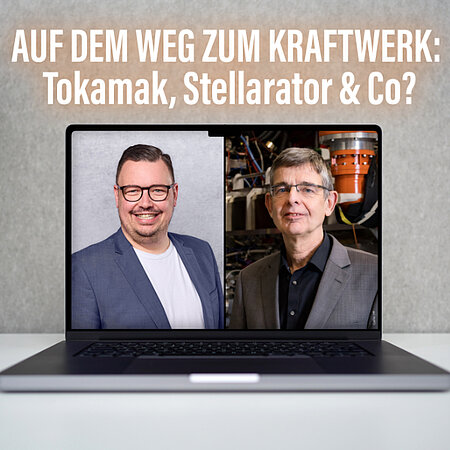
Auf dem Weg zum Kraftwerk: Tokamak, Stellarator & Co? (28.05.2025)
Welche Reaktortypen gibt es? Wie sieht der Weg zum ersten Fusionskraftwerk aus? Die Antworten verrät Ihnen Prof. Dr. Hartmut Zohm, wissenschaftliches Mitglied des Max-Planck-Instituts für Plasmaphysik und Honorarprofessor an der Ludwig-Maximilians-Universität München.
Länge der Audiodatei: 00:17:07 (hh:mm:ss)
Reaktortypen – Die unterschiedlichen Wege zur Kernfusion
Warum Fusion längst mehr ist als nur eine Vision
Welche Reaktorkonzepte gibt es in der Fusionsforschung?
Prof. Dr. Zohm: Wir hatten in der letzten Folge schon drüber geredet, dass man ein Wasserstoffgas sehr stark erhitzen muss, bis zu 100 Millionen Grad, dann wird daraus ein sogenanntes Plasma. Dieses Plasma muss man einschließen. Letztlich unterscheiden sich die Konzepte grundlegend in der Idee, wie es eingeschlossen wird. Einerseits kann man starke Magnetfelder benutzen, um Plasmen, also Gase aus geladenen Teilchen, einzuschließen. Denn geladene Teilchen reagieren auf ein Magnetfeld und fahren auf ihren Bahnkurven längs des Magnetfelds. Das ist der sogenannte magnetische Einschluss. Man kann ein kleines Kügelchen mit Wasserstoff mit einem Brennstoff sehr stark erhitzen, sodass die äußere Schicht abdampft, den inneren Teil des Kügelchens komprimiert und so ähnliche Bedingungen wie in der Sonne entstehen lässt. Hierbei brennt das Kügelchen im günstigsten Fall ab und erzeugt mehr Energie als man hineingesteckt hat, um es zu komprimieren. Das ist eine miniaturisierte Explosion und in diesem Fall ist der Einschluss nur innerhalb von wenigen Sekunden-Bruchteilen und nur durch die Massenträgheit des auseinanderfliegenden Wasserstoffs oder Helium gegeben. Deshalb spricht man von Trägheits- oder Inertialfusion.
Bei der Magnetfusion gibt es zwei unterschiedliche Typen, die Tokamak und den Stellarator, wo liegen da die Unterschiede?
Prof. Dr. Zohm: Die beste Konfiguration, um ein Plasma einzuschließen ist eine, in der das Magnetfeld eine sogenannte Torusform hat. Dabei sieht der Behälter, in dem es eingesperrt wird, aus wie ein Donut oder ein Fahrradschlauch, je nach Abmessungen. Das macht man, um Endverluste zu vermeiden. Denn Teilchen laufen entlang des Magnetfeldes sehr schnell und immer im Kreis, dabei berühren sie nirgendwo die Wand. Tokamak und Stellarator sind solche toridalen magnetischen Einschlusskonzepte. Sie unterscheiden sich in der Art, wie man diesen Magnetfeldkäfig zum Einschließen der Teilchen macht. Beim Stellarator geschieht das nur mit externen Spulen. Also alle Elektromagnete, die das Feld erzeugen, sind extern und werden sozusagen um das Entladungsgefäß herumgebaut. Bei Tokamak ist das nicht so. Hier gibt es Teile des Magnetfelds, die extern mit Spulen erzeugt werden und andere Teile durch einen Strom, den man im Plasma fließen lässt. Dieser ist mit einer Million Ampere übrigens sehr stark. Das ist die typische Stromstärke in unseren Experimenten hier in Garching am Max-Planck-Institut für Plasmaphysik. Somit kann der Generator stationär laufen, ohne weiteren Eingriff. Beim Tokamak muss man diesen Strom treiben und dafür sorgen, dass der Magnetfeldkäfig bestehen bleibt.
Welche der beiden Herangehensweisen würde sich besser für eine Anwendung in der Industrie eignen?
Prof. Dr. Zohm: Auf lange Sicht halte ich den Stellarator für deutlich besser geeignet, eben wegen dieser Stationarität. Da muss man von innen keine Ströme treiben und dem Plasma sozusagen nichts an freier Energie überlassen. Allerdings ist das Spulensystem des Stellarators deutlich komplexer. Deshalb sind die Stellaratoren in der technischen Evolution eine Generation hinter dem Tokamak. Aus diesem Grund sehen wir aktuell auch viele Tokamaks, beispielsweise beim ITER-Experiment aus Südfrankreich. Dieses wird wohl das erste Experiment sein, das diesen positiven Energiebilanznachweis führt. Aber ich glaube, auf lange Sicht wird der Stellarator die Nase vorne haben.
Was genau passiert bei der Trägheitseinschlussfusion?
Prof. Dr. Zohm: Man braucht eine starke Energiequelle, welche die Energie möglichst sphärisch, also kugelsymmetrisch, auf das Kügelchen aufbringt. Dazu nimmt man typischerweise einen sehr starken Laser. Wenn man das Material außen verdampft, dann dampft es nach außen ab und erzeugt einen Rückstoß. Durch diesen Rückstoß wird das Material verdichtet und erhitzt, sodass es im Inneren ähnliche Verhältnisse wie im Inneren der Sonne gibt. Diese führen dazu, dass die Brennstoffe der Kernfusion miteinander verschmelzen.
Also ist die Herausforderung auf dem Weg zum Kraftwerk, einen hohen Druck und hohe Temperaturen herzustellen?
Prof. Dr. Zohm: Man muss ein bisschen vorsichtig mit dem hohen Druck sein. Das ist wahr für die Inertialfusion, bei der der Druck wirklich so hoch wie im Sonneninneren ist, weil die Materie stark verdichtet wird. Bei der Fusion mit magnetischem Einschluss, die stationär vor sich hinläuft, ist die Dichte, also die Anzahl der Teilchen im Volumen, eine Millionen Mal geringer als in unserer Umgebungsluft. Somit beträgt Druck etwas in der Größenordnung von ein paar Bar, also eine durchaus beherrschbare Anzahl, weil es eben im Magnetfeld eingeschlossen wird. Die andere Herangehensweise ist eher eine Explosion. Dabei läuft die Reaktion eher unkontrolliert ab und setzt die Energie frei.
"Wir erwarten, dass ITER in den 2030er-Jahren erstmals zeigt, dass durch Fusionsreaktionen mehr Wärme freigesetzt wird, als zum Heizen und Aufrechterhalten der Plasmatemperatur aufgewendet werden muss."
-Prof. Dr. Hartmut Zohm, wissenschaftliches Mitglied, Max-Planck-Institut für Plasmaphysik und Honorarprofessor, LMU München
Was steckt hinter dem Projekt ITER?
Prof. Dr. Zohm: ITER ist ein großes Projekt, welches von sieben internationalen Partnern in Südfrankreich, Cadarache, aufgebaut wird. Es handelt sich dabei um ein Tokamak. Es beruht also auf dem magnetischen Einschluss, weil dieser weiter fortgeschritten ist, auf dem Weg zur kontrollierten Kernfusion als Energiequelle. Wir erwarten, dass ITER in den kommenden 2030er Jahren zum ersten Mal zeigt, dass mehr Wärme durch Fusionsreaktionen freigesetzt werden kann, als man im Plasma deponieren muss, um es aufzuheizen. Das ist ein sogenanntes brennendes Plasma, da ist die Energiebilanz dann im Plasma positiv und im Wesentlichen selbst geheizt. Dafür ist ein Q-Wert von etwa zehn zu erreichen. Das ist das erklärte Ziel des ITER.
Wie sieht die Europäische Roadmap zu einem so funktionierenden Fusionskraftwerk aus?
Prof. Dr. Zohm: Also ITER ist das zentrale Element dieser Roadmap für die Magnetfusion. ITER wird den wissenschaftlichen Nachweis für einen gezündeten, sich selbst erhaltenen Plasmazustand bringen. Es gibt viele Technologiefragen, die man parallel dazu klären muss. Dafür muss man ein Demonstrationskraftwerk bauen, das all diese Kreisläufe zusammenschließt und so dann so viel Energie erzeugt, dass diese letztlich beispielsweise ins Netz eingespeist werden kann. Man sollte dazu sagen, dass diese Roadmap zunächst den Plan hatte, ITER und das Demonstrationskraftwerk sequenziell durchzuführen. Also ITER sollte den wissenschaftlichen Teil zeigen und dann bauen wir hinterher die Technologieexperiment-Demo. Mittlerweile wollen wir das so weit wie möglich parallelisieren, um schneller voranzuschreiten, weil wir auch aus ITER schon sehr viel über die Technologie gelernt haben. Es wird ja gerade zusammengesetzt, das heißt, die Teile sind zum größten Teil gefertigt. Man weiß also jetzt, wie man solche großen Magneten baut und wie man in einer nuklearen Umgebung die Technologie bauen muss, damit alles funktioniert. Und darauf kann man jetzt schon setzen.
Was passiert mit den anderen Technologien und Ansätzen, beispielsweise mit dem Stellarator?
Prof. Dr. Zohm: Also der Stellarator wird gerade in Deutschland als Alternative sehr stark verfolgt. Wir haben das weltweit größte Stellarator-Experiment, „Wendelstein 7-X“ in Greifswald. Dieses wird vom Max-Planck-Institut für Plasmaphysik betrieben. Der Stellarator wird weiter parallel betrieben. Aber es gibt aber Pläne und Forschung, um auch neue Experimente zu bauen, so dass man, wenn die Machbarkeit bewiesen ist, umsteigen könnte. Ich halte den Stellarator für das langfristig bessere Konzept. Damit man diesen Wechsel möglichst ohne Probleme beim Übergang hinbekommt, muss man eben jetzt schon daran forschen.
Ist die Inertialfusion an einem ähnlichen Punkt wie Tokamak und Stellarator angelangt, oder wo steht man hier?
Prof. Dr. Zohm: Die Inertialfusion hat in den letzten Jahren tolle Erfolge erzielt. So ein Kügelchen wurde bereits in den Bereich des Brennens überführt. Es gibt aber das Problem, dass in den letzten Jahrzehnten die Forschung an der Inertialfusion im Wesentlichen auf militärische Aspekte ausgerichtet war. Deshalb sind all diese Technologiekomponenten, die aber unheimlich wichtig sind und die wir bei der Magnetfusion eben schon entwickelt haben, lange nicht bei dem Reifegrad, der bei der Magnetfusion vorliegt. Und insofern denke ich, die Inertialfusion ist da, wo wir vor zehn bis 20 Jahren mit der Magnetfusion standen. Das muss noch aufgeholt werden. Ich denke schon, dass das in Zukunft möglich sein wird, aber es ist noch viel an Technologie zu untersuchen.
Bei der Magnetfusion wird davon ausgegangen, dass ein funktionierendes Kraftwerk im Jahr 2050 steht. Halten Sie das für realistisch?
Prof. Dr. Zohm: Das ist sehr ambitioniert. Es ist meiner Meinung nach möglich, wenn wir die Forschung weiterführen und ausbauen. Wir hatten bis jetzt ein Forschungsprogramm und man muss nun parallel dazu in ein industrielles Programm einsteigen, in dem man ein Ökosystem von Zuliefer-Industrien aufbaut, die die einzelnen Teile fertigen können und dann wahrscheinlich unter der Leitung eines großen Energieversorgers das Fusionskraftwerk bauen. Ich bin mit Zeitskalen immer ein bisschen vorsichtig, wir haben ursprünglich 20 Jahre für die deutsche Fusionsforschung geschätzt. Aber das sind 20 Jahre ab dem Tag, an dem Ernst gemacht und das nötige Geld auf den Tisch gelegt wird, um dieses Ökosystem zu schaffen. Nur durch die Verkündung, dass es noch 20 Jahre dauert, ist noch lange nicht gesagt, dass es in 20 Jahren auch fertig ist.
Wenn Sie den fertigen Reaktor taufen dürften, welchen Namen würden Sie ihm geben?
Prof. Dr. Zohm: Ich muss ganz ehrlich sagen, ich hoffe, dass der einen ganz unprosaischen Namen hat, beispielsweise XYZ1B oder etwas in dieser Art. Das wäre dann der Übergang von dem, was das Forschertum tut, nämlich ein wenig Namens- und Personenkult zu betreiben, hin zu dem, was industrielle Produkte in Großserie und Serienreife bedeuten. Insofern würde ich keinen Namen wählen, der besonders fantasievoll ist.
Entdecken Sie auch Teil 1 und Teil 3 unseres Interviews mit Prof. Dr. Hartmut Zohm, wissenschaftliches Mitglied des Max-Planck-Instituts für Plasmaphysik und Honorarprofessor an der Ludwig-Maximilians-Universität München. Das Interview führte Christoph Raithel, Referent der Geschäftsleitung, Bayern Innovativ GmbH, Nürnberg.
Reactor types - The different paths to nuclear fusion
Why fusion has long been more than just a vision
What reactor concepts are there in fusion research?
Prof. Dr. Zohm: In the last episode, we talked about the fact that hydrogen gas has to be heated to very high temperatures, up to 100 million degrees, to create a so-called plasma. You have to contain this plasma. Ultimately, the concepts differ fundamentally in the idea of how it is enclosed. On the one hand, strong magnetic fields can be used to confine plasmas, i.e. gases made up of charged particles. This is because charged particles react to a magnetic field and travel along the magnetic field on their trajectories. This is known as magnetic confinement. A small bead of hydrogen can be heated very strongly with a fuel so that the outer layer evaporates, compressing the inner part of the bead and creating conditions similar to those in the sun. In the best case scenario, the bead burns up and generates more energy than was put into it to compress it. This is a miniaturized explosion and in this case the confinement is only possible within a few fractions of a second and only due to the inertia of the hydrogen or helium flying apart. This is why it is called inertial fusion.
There are two different types of magnetic fusion, the tokamak and the stellarator, what are the differences?
Prof. Dr. Zohm: The best configuration for confining a plasma is one in which the magnetic field has a so-called torus shape. The container in which it is confined looks like a donut or a bicycle inner tube, depending on the dimensions. This is done to avoid end losses. This is because particles travel along the magnetic field very quickly and always in a circle, never touching the wall. Tokamak and stellarator are such toridal magnetic confinement concepts. They differ in the way in which this magnetic field cage is used to confine the particles. With the stellarator, this is only done with external coils. In other words, all the electromagnets that generate the field are external and are built around the discharge vessel, so to speak. This is not the case with the tokamak. Here there are parts of the magnetic field that are generated externally with coils and other parts by a current that is allowed to flow in the plasma. Incidentally, this is very strong at one million amperes. This is the typical current strength in our experiments here in Garching at the Max Planck Institute for Plasma Physics. This allows the generator to run at a steady state without any further intervention. With the tokamak, you have to drive this current and ensure that the magnetic field cage remains in place.
Which of the two approaches would be better suited to industrial applications?
Prof. Dr. Zohm: In the long term, I think the stellarator is much more suitable, precisely because of this stationarity. You don't have to drive any currents from the inside and leave the plasma with no free energy, so to speak. However, the coil system of the stellarator is much more complex. This is why stellarators are one generation behind the tokamak in terms of technical evolution. For this reason, we are currently seeing many tokamaks, for example in the ITER experiment in southern France. This will probably be the first experiment to demonstrate this positive energy balance. But I believe that the stellarator will be ahead in the long term.
What exactly happens during inertial confinement fusion?
Prof. Dr. Zohm: You need a strong energy source that applies the energy to the sphere as spherically as possible, i.e. with spherical symmetry. Typically, a very strong laser is used for this. If the material is vaporized on the outside, it evaporates outwards and generates a recoil. This recoil compresses and heats the material so that the conditions inside are similar to those inside the sun. These cause the fuels of nuclear fusion to fuse together.
So the challenge on the way to the power plant is to create high pressure and high temperatures?
Prof. Dr. Zohm: You have to be a bit careful with the high pressure. This is true for inertial confinement fusion, where the pressure is really as high as in the interior of the sun because the matter is highly compressed. In magnetic confinement fusion, which is stationary, the density, i.e. the number of particles in the volume, is a million times lower than in our ambient air. This means that the pressure is something in the order of a few bars, i.e. a perfectly manageable number because it is confined in the magnetic field. The other approach is more like an explosion. In this case, the reaction is rather uncontrolled and releases the energy.
"In the 2030s, we expect ITER to show for the first time that fusion reactions release more heat than is needed to heat and maintain the plasma temperature."
-Prof. Dr. Hartmut Zohm, Scientific Member, Max Planck Institute for Plasma Physics and Honorary Professor, LMU Munich
What is behind the ITER project?
Prof. Dr. Zohm: ITER is a major project that is being set up by seven international partners in Cadarache in the south of France. It is a tokamak. So it is based on magnetic confinement because it is more advanced on the way to controlled nuclear fusion as an energy source. In the coming 2030s, we expect ITER to demonstrate for the first time that more heat can be released by fusion reactions than needs to be deposited in the plasma to heat it up. This is a so-called burning plasma, where the energy balance in the plasma is positive and essentially self-heated. A Q value of around ten must be achieved for this. That is the declared goal of ITER.
What does the European roadmap to such a functioning fusion power plant look like?
Prof. Dr. Zohm: ITER is the central element of this roadmap for magnetic fusion. ITER will provide scientific proof of an ignited, self-sustaining plasma state. There are many technological issues that need to be clarified in parallel. A demonstration power plant needs to be built to connect all these circuits and generate enough energy to ultimately feed into the grid, for example. It should be said that this roadmap initially had the plan to carry out ITER and the demonstration power plant sequentially. So ITER was supposed to show the scientific part and then we would build the technology experiment demo afterwards. In the meantime, we want to parallelize this as much as possible in order to make faster progress, because we have already learned a lot about the technology from ITER. It is currently being assembled, which means that most of the parts have been manufactured. So we now know how to build such large magnets and how to build the technology in a nuclear environment so that everything works. And we can already build on that.
What is happening with the other technologies and approaches, for example with the stellarator?
Prof. Dr. Zohm: Well, the stellarator is being very strongly pursued as an alternative, especially in Germany. We have the world's largest stellarator experiment, "Wendelstein 7-X" in Greifswald. This is operated by the Max Planck Institute for Plasma Physics. The stellarator will continue to be operated in parallel. However, there are plans and research to build new experiments, so that once the feasibility has been proven, a switch could be made. I think the stellarator is the better long-term concept. In order to make this switch without any problems during the transition, we need to start researching it now.
Has inertial fusion reached a similar point to the tokamak and stellarator, or where do we stand here?
Prof. Dr. Zohm: Inertial fusion has achieved great success in recent years. A bead like this has already been transferred to the field of burning. However, there is the problem that in the last few decades, research into inertial fusion has essentially been focused on military aspects. That's why all these technology components, which are incredibly important and which we have already developed in magnetic fusion, are nowhere near the level of maturity that exists in magnetic fusion. And in this respect, I think inertial fusion is where we were ten to 20 years ago with magnetic fusion. We still have to catch up. I think it will be possible in the future, but there is still a lot of technology to be investigated.
With magnetic fusion, it is assumed that a functioning power plant will be ready by 2050. Do you think this is realistic?
Prof. Dr. Zohm: That is very ambitious. In my opinion, it is possible if we continue and expand our research. We have had a research program up to now and we now need to embark on an industrial program in parallel, in which we build up an ecosystem of supplier industries that can manufacture the individual parts and then probably build the fusion power plant under the management of a large energy supplier. I'm always a bit cautious with timescales, we originally estimated 20 years for German fusion research. But that's 20 years from the day we get serious and put the necessary money on the table to create this ecosystem. Just because it is announced that it will take another 20 years does not mean that it will be ready in 20 years.
If you could christen the finished reactor, what name would you give it?
Prof. Dr. Zohm: I have to be honest and say that I hope it has a very unprosaic name, for example XYZ1B or something like that. That would then be the transition from what research does, which is to cultivate a bit of a name and personality cult, to what industrial products in large-scale production and series maturity mean. In this respect, I wouldn't choose a name that is particularly imaginative.
Also discover Part 1 and Part 3 of our interview with Prof. Dr. Hartmut Zohm, Scientific Member of the Max Planck Institute for Plasma Physics and Honorary Professor at the Ludwig Maximilian University of Munich. The interview was conducted by Christoph Raithel, Management Consultant, Bayern Innovativ GmbH, Nuremberg.
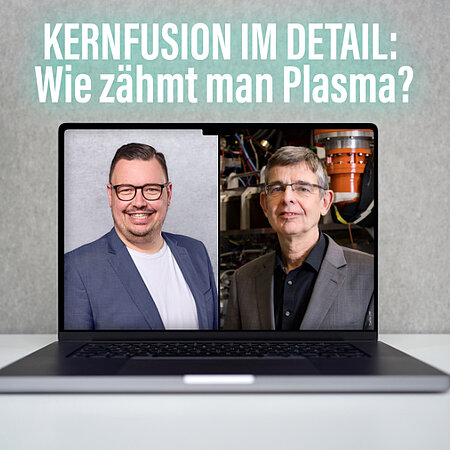
Kernfusion im Detail: Wie zähmt man Plasma? (11.06.2025)
Begeben Sie sich mit Prof. Dr. Hartmut Zohm, wissenschaftliches Mitglied des Max-Planck-Instituts für Plasmaphysik und Honorarprofessor an der Ludwig-Maximilians-Universität München, in das Innenleben eines Reaktors.
Länge der Audiodatei: 00:16:07 (hh:mm:ss)
Kernfusion entschlüsselt – Der technische Blick ins Herz des Reaktors
Wie Plasma gebändigt wird – und was im Reaktor wirklich passiert
Warum ist der Plasmazustand für die Magnetfusion notwendig?
Prof. Dr. Zohm: Der Plasmazustand ist für jegliche Art von Fusion notwendig. Wir hatten darüber geredet, dass wir diese hohen Temperaturen in dem Wasserstoffgas erreichen müssen, in der Größenordnung von 100 Millionen Grad, damit die Atomkerne sich so nahekommen, dass sie miteinander verschmelzen. Wenn man dies tut, dann ist die Energie der Elektronen und der Atomkerne so hoch, dass sie nicht mehr aneinandergebunden sind. Das heißt, wir haben es nicht mehr mit neutralen Atomen zu tun, sondern mit dem Plasmazustand. Das ist eine Folge der hohen Temperaturen. Also sind alle Fusionsgase, die wir kennen, Fusionsplasmen.
Wie kann man dieses Plasma kontrollieren und stabilisieren?
Prof. Dr. Zohm: Es ist ein thermodynamisch instabiler Zustand. Wenn sie nur einen hohen Temperaturgradienten haben und sie versuchen, es in der Mitte zu erhitzen, dann läuft es erstmal auseinander und versucht die Energie im Raum möglichst gleichmäßig zu verteilen. Wir machen das bei der Magnetfusion mit Magnetfeldern. Dabei haben wir starke Magnetfelder, die mit Elektromagneten erzeugt werden. Und diese führen die Teilchen in toroidaler Geometrie, also wie ein Donut. Die magnetischen Feldlinien laufen darin herum und die Teilchen folgen den Feldlinien. Damit sind sie im Wesentlichen von der Wand ferngehalten. Das Ganze ist so aufgebaut, dass man Magnetfeldlinien hat, die wie Jahresringe bei einem Baum, sogenannte magnetische Flächen aufspannen. Diese werden nach innenhin immer heißer. So bekommt man den Temperaturgradienten hin. Im Zentrum der Anlage muss es ja sehr heiß sein. Und spätestens wenn das Plasma mit der Wand in Kontakt kommt, hat es nicht mehr 100 Millionen Grad, sondern nur noch 500 Grad, je nach Material.
Wie unterscheidet sich denn da der der Einschluss dieses Fusionsplasmas bei Tokamak und Stellerator?
Prof.Dr. Zohm: Tokamak und Stellerator verwenden eine toroidale Anordnung, wo die Magnetfeldlinien sich toroidal schließen, damit die Teilchen längs der Magnetfeldlinien nicht auf die Wand treffen können, sondern immer im Kreis laufen. Unterschiedlich ist, dass beim Stellerator das gesamte Magnetfeld mit externen Elektromagneten, also Spulen, erzeugt wird, während im Tokamak auch ein starker Strom im Plasma fließt, der zu der Magnetfeldkonfiguration beiträgt, die man zum Einschluss benötigt.
Wie funktionieren die supraleitenden Magneten, die man für die beiden Prinzipien braucht und was unterscheidet sie von herkömmlichen Magneten?
Prof. Dr. Zohm: Aus dem Haushalt kennt man vor allem Permanentmagneten. Das sind zum Beispiel Hufeisen-Magnete oder die, mit denen man Notizen an der Tafel festpinnt. Hier reden wir über Elektromagneten, also Spulen. Wenn man Strom durch eine Spule schickt, erzeugt diese ein Magnetfeld. Das kennt man vielleicht aus technischen Anwendungen, bei denen Dinge angehoben werden. Bei einer starken elektromagnetischen Schrottpresse ist das zum Beispiel so, wenn ein Auto angehoben wird. Solche Elektromagneten verwenden wir vom Funktionsprinzip her auch. Da wir sehr starke Magnetfelder erzeugen müssen, heißt es auch, dass wir hohe Ströme in den Spulen fließen lassen müssen. Dafür sind relativ hohe Leistungen nötig. Hier hilft uns die Supraleitung. Supraleitung ist ein interessantes physikalisches Phänomen. Hierbei verschwindet beim Abkühlen eines Materials plötzlich der elektrische Widerstand und wenn man einmal das Material in diesen Zustand gebracht hat und den Strom da reingebracht hat, dann fließt er für immer, ohne dass man Energie aufbringen muss, um ihn weiter zu treiben. Das machen wir uns zunutze, um den externen Energieverbrauch eines Kraftwerks möglichst gering zu halten. In Experimenten, die 20 bis 30 Jahre alt sind, wurde noch Kupfer für die Spulen verwendet. In neueren Experimenten, wie beim ITER, der aufgebaut wird, werden bereits supraleitende Spulen verwendet.
Funktioniert diese Supraleitung nur bei sehr niedrigen Temperaturen im Material?
Prof. Dr. Zohm: Ja, wobei es hier auch Durchbrüche in den letzten Jahren gegeben hat. Vor circa 20 Jahren wurden Materialien entdeckt, die sogenannte Hochtemperatur-Supraleiter sind. Das sind immer niedrige Temperaturen nach menschlichem Ermessen, aber schon deutlich höher als es bei den klassischen Supraleitern der Fall ist. Das hat viele Vorteile. Man muss sie nicht so stark runterkühlen. Man hat auch mehr Temperaturen, mit denen man die Anlage betreiben kann. Man kann auch noch höhere Felder erzeugen. Diese sogenannten Hochtemperatur-Supraleiter sind eigentlich auch ein ganz wichtiges Nebenprodukt und damit ein großer Benefit, der aus der Fusionsforschung dann auch in andere technische Gebiete getragen werden kann.
Wie lange kann Plasma in einem Fusionskraftwerk stabil gehalten werden und wovon hängt das ab?
Prof. Dr. Zohm: Die Zeitskalen in so einem Plasmaexperiment in heutiger Zeit, sind eher von der Größenordnung Hunderte von Millisekunden oder eine Sekunde. Es klingt ein bisschen paradox. Das heißt, wenn man es 10 Sekunden lang aufrechterhalten hat, selbst mit Kupferspulen, dann ist das eigentlich schon unendlich lang auf der Plasmazeitskala. Denn in der Zeit wurde sozusagen bereits mehrfach der gesamte Energiegehalt des Plasmas ausgetauscht. Es wird dann ein technisches Problem: wie gut funktionieren die technischen Systeme, wie zuverlässig sind sie, damit man das Ganze dann fortsetzen kann? In der Tat, der Wendelstein 7-x, der ist auch mit 500 Millisekunden- und dann Sekundenimpulsen gestartet und nachdem man ihn technisch so ausgerüstet hat, dass er das umsetzen kann, konnte er nun 8 Minuten lange Entladung durchführen. Diese waren dadurch beschränkt, dass die technischen Systeme zuverlässig laufen müssen. Das ist eine Aufgabe, die kann die Industrie sehr gut lösen, das ist eigentlich kein Problem mehr, was Max-Planck-Institut in der Grundlagenforschung lösen muss. Die französischen Kollegen mit dem sogenannten West-Tokamak, der in der Nähe des ITER steht, haben eine Entladungszeit von bis zu 20 Minuten geschafft. Hat man einmal diese superleitende Spulensystem, ist es durchaus realistisch, dass man es so lange laufen lässt.
Das Problem ist, dass bei der Fusionsreaktion neben Helium auch Neutronen entstehen. Diese werden absorbiert und schädigen das Material. Wie kann man also die Materialien so fit machen, dass sie diese Umgebung im Fusionsreaktor überleben?
-Prof. Dr. Hartmut Zohm, wissenschaftliches Mitglied, Max-Planck-Institut für Plasmaphysik und Honorarprofessor, LMU München
Ist da schon fast ein exponentielles Wachstum zu erwarten, wenn man die technischen Probleme gelöst hat?
Prof. Dr. Zohm: Exponentiell würde ich es nicht direkt nennen. Aber es sind Steigerungen zu erwarten. Es geht über von einem Grundlagenforschungsexperiment, dass man auf der Plasma-Zeitskala betrachtet, zu einem technischen Ingenieurs-Problem, dass man möglichst lange betreiben will, weil eben diese einzelnen Systeme sehr gut funktionieren. Denken Sie an die ersten Flugversuche - da haben die Leute gejubelt, wenn jemand 5 Sekunden lang in der Luft war und einen Hang heruntergeflogen ist. Damit war das Prinzip bewiesen und danach kamen die Ingenieure dran und heute bauen wir Maschinen, die mit 300 Leuten an Bord stationär über den Atlantik fliegen.
Wir haben ja aber auch über große Hitze gesprochen. Welche Materialien braucht es für diese Umstände, welchen Anforderungen müssen sie entsprechen?
Prof. Dr. Zohm: Wir haben in der Tat in den letzten Jahren gelernt, dass es am besten mit Wolfram funktioniert. Wolfram ist das Metall, mit dem höchsten Schmelzpunkt, nämlich 3.400 Grad Celsius. Man belegt diese Divertor Platten mit einer Wolframschicht, sodass sie sehr hohen Wärmebelastungen standhalten können. Wir müssen trotzdem noch dafür sorgen, dass das Plasma auf dem Weg dahin abgekühlt wird, mit allen möglichen Tricks, die wir in den letzten Jahren gelernt haben. Es ist aber so, dass bei diesen langen Entladungen von beispielsweise acht Minuten, von denen ich geredet habe, alle Komponenten in dem Gefäß im thermischen Gleichgewicht sind.
Ist es also richtig, dass das Material dem Dauerbetrieb eines solchen Systems keine Grenzen setzt?
Prof. Dr. Zohm: Das kann man so nicht sagen. Wir hatten über Wärmelasten und Temperaturen geredet und diese sind nicht das Problem. Das Problem ist, dass bei der Fusionsreaktion neben Helium auch Neutronen entstehen und in dem Material, das sich außen um das Plasma herum befindet, absorbiert werden. Diese schädigen das Material und sorgen dafür, dass das Material nach längerer Zeit, beispielsweise versprödet oder anfängt zu schwellen, weil sich innen drinnen Helium bildet. Und das ist eigentlich die große Frage, wie man diese Materialien fit macht dafür, dass sie diese Umgebung im Fusionsreaktor überleben.
Damit haben wir eigentlich den Rahmen abgesteckt, wie es mit der Kernfusion weitergehen kann. Es gibt einige Themenfelder, auf denen noch etwas zu tun ist, aber nichts Unlösbares. Wie sehen Sie das?
Prof. Dr. Zohm: Genau, so ist es. Den berühmten „Showstopper“, den sehen wir nicht. Da haben wir wirklich in großem Detail nachgeschaut. Andererseits ist ein sehr komplexes System, und das zu entwickeln und zur Serienreife zu bringen, ist immer noch eine Riesenaufgabe.
Stellen Sie sich vor, Sie hätten einen unzerstörbaren Raumanzug und könnten so in eine laufende Fusionsreaktion hineinschauen.. Würden sie das tun, wäre das für Sie spannend?
Prof. Dr. Zohm: Es kommt darauf an, was ich mitnehmen darf. Das Plasma, gerade der Kern des Plasmas, ist so heiß, dass er im sichtbaren Bereich praktisch kein Licht mehr ausstrahlt. Also man guckt einfach durch. Das heißt, wahrscheinlich wäre man dann in der Reaktion und sieht nichts. Deshalb würde ich, wenn ich mir das zusätzlich wünschen darf, eine Brille mitnehmen, die Röntgenstrahlung in sichtbares Licht übersetzt. So etwas gibt es nicht. Aber wir sind ja ganz frei in diesem Szenario. Und dann könnte ich sehr gut sehen, was da drin vor sich geht, um diese ganzen Dynamiken zu verstehen. Das würde ich sofort machen!
Entdecken Sie auch Teil 1 und Teil 2 unseres Interviews mit Prof. Dr. Hartmut Zohm, wissenschaftliches Mitglied des Max-Planck-Instituts für Plasmaphysik und Honorarprofessor an der Ludwig-Maximilians-Universität München. Das Interview führte Christoph Raithel, Referent der Geschäftsleitung, Bayern Innovativ GmbH, Nürnberg.
Nuclear fusion decoded - A technical look into the heart of the reactor
How plasma is tamed - and what really happens in the reactor
Why is the plasma state necessary for magnetic fusion?
Prof. Dr. Zohm: The plasma state is necessary for any kind of fusion. We had talked about the fact that we have to reach these high temperatures in the hydrogen gas, in the order of 100 million degrees, so that the atomic nuclei come so close that they fuse together. If you do this, then the energy of the electrons and the atomic nuclei is so high that they are no longer bound together. This means that we are no longer dealing with neutral atoms, but with the plasma state. This is a consequence of the high temperatures. So all fusion gases that we know of are fusion plasmas.
How can this plasma be controlled and stabilized?
Prof. Dr. Zohm: It is a thermodynamically unstable state. If you only have a high temperature gradient and you try to heat it up in the middle, it will initially disperse and try to distribute the energy in space as evenly as possible. We do this in magnetic fusion with magnetic fields. We have strong magnetic fields that are generated with electromagnets. And these guide the particles in a toroidal geometry, i.e. like a donut. The magnetic field lines run around in it and the particles follow the field lines. This essentially keeps them away from the wall. The whole thing is structured in such a way that you have magnetic field lines that span so-called magnetic surfaces, like annual rings on a tree. These become hotter and hotter towards the inside. This is how you get the temperature gradient. It must be very hot in the center of the system. And at the latest when the plasma comes into contact with the wall, it is no longer 100 million degrees, but only 500 degrees, depending on the material.
How does the confinement of this fusion plasma differ between the tokamak and the stellerator?
Prof. Dr. Zohm: Tokamak and stellerator use a toroidal arrangement where the magnetic field lines close toroidally so that the particles cannot hit the wall along the magnetic field lines, but always run in a circle. The difference is that in the stellerator the entire magnetic field is generated with external electromagnets, i.e. coils, while in the tokamak a strong current also flows in the plasma, which contributes to the magnetic field configuration required for confinement.
How do the superconducting magnets required for the two principles work and what distinguishes them from conventional magnets?
Prof. Dr. Zohm: We are mainly familiar with permanent magnets from the household. These are horseshoe magnets, for example, or the kind you use to pin notes to the blackboard. Here we are talking about electromagnets, i.e. coils. If you send current through a coil, it generates a magnetic field. You may be familiar with this from technical applications where things are lifted. This is the case with a powerful electromagnetic scrap press, for example, when a car is lifted. We also use electromagnets like this in terms of their functional principle. As we have to generate very strong magnetic fields, this also means that we have to allow high currents to flow in the coils. This requires relatively high power. This is where superconductivity helps us. Superconductivity is an interesting physical phenomenon. When a material cools down, the electrical resistance suddenly disappears and once you have brought the material into this state and put the current into it, it flows forever without you having to apply energy to drive it further. We make use of this to keep the external energy consumption of a power plant as low as possible. In experiments that are 20 to 30 years old, copper was still used for the coils. In more recent experiments, such as the ITER that is being built, superconducting coils are already being used.
Does this superconductivity only work at very low temperatures in the material?
Prof. Dr. Zohm: Yes, although there have also been breakthroughs here in recent years. Around 20 years ago, materials were discovered that are so-called high-temperature superconductors. These are always low temperatures by human standards, but already significantly higher than is the case with classic superconductors. This has many advantages. You don't have to cool them down as much. You also have more temperatures at which you can operate the system. You can also generate even higher fields. These so-called high-temperature superconductors are actually also a very important by-product and therefore a major benefit that can be transferred from fusion research to other technical areas.
How long can plasma be kept stable in a fusion power plant and what does that depend on?
Prof. Dr. Zohm: The time scales in such a plasma experiment today are more on the order of hundreds of milliseconds or one second. It sounds a bit paradoxical. In other words, if you have maintained it for 10 seconds, even with copper coils, then that is actually already infinitely long on the plasma time scale. This is because the entire energy content of the plasma has already been exchanged several times during this time, so to speak. It then becomes a technical problem: how well do the technical systems work, how reliable are they, so that the whole thing can then be continued? In fact, the Wendelstein 7-x also started with 500 millisecond and then second pulses, and after it was technically equipped to be able to do this, it was able to carry out an 8-minute discharge. These were limited by the fact that the technical systems had to run reliably. This is a task that industry can solve very well, it is no longer a problem that the Max Planck Institute has to solve in basic research. Our French colleagues with the so-called West Tokamak, which is located near ITER, have achieved a discharge time of up to 20 minutes. Once you have this superconducting coil system, it is quite realistic to let it run for that long.
"The problem is that the fusion reaction produces neutrons as well as helium. These are absorbed and damage the material. So how can the materials be made fit enough to survive this environment in the fusion reactor?"
-Prof. Dr. Hartmut Zohm, Scientific Member, Max Planck Institute for Plasma Physics and Honorary Professor, LMU Munich
Can we expect almost exponential growth once the technical problems have been solved?
Prof. Dr. Zohm: I wouldn't call it exponential directly. But increases are to be expected. It goes from a basic research experiment that you look at on the plasma time scale to a technical engineering problem that you want to operate for as long as possible because these individual systems work very well. Think of the first flight experiments - people cheered when someone was in the air for 5 seconds and flew down a slope. That proved the principle and then the engineers got to work and today we build planes that fly stationary over the Atlantic with 300 people on board.
But we also talked about extreme heat. What materials are needed for these conditions and what requirements do they have to meet?
Prof. Dr. Zohm: We have indeed learned in recent years that tungsten works best. Tungsten is the metal with the highest melting point, namely 3,400 degrees Celsius. These divertor plates are coated with a layer of tungsten so that they can withstand very high heat loads. We still have to ensure that the plasma is cooled down on the way there, using all sorts of tricks that we have learned in recent years. But the fact is that during these long discharges of, say, eight minutes that I was talking about, all the components in the vessel are in thermal equilibrium.
So is it correct that the material does not set any limits to the continuous operation of such a system?
Prof. Dr. Zohm: You can't say that. We talked about heat loads and temperatures and these are not the problem. The problem is that the fusion reaction produces not only helium but also neutrons, which are absorbed in the material around the plasma. These damage the material and ensure that the material becomes brittle or starts to swell after a long period of time, for example, because helium forms inside. And that is actually the big question, how to make these materials fit to survive this environment in the fusion reactor.
With this, we have actually defined the framework for how nuclear fusion can proceed. There are some areas where there is still work to be done, but nothing that is unsolvable. How do you see that?
Prof. Dr. Zohm: Exactly, that's how it is. We don't see the famous "showstopper". We have really looked into this in great detail. On the other hand, it is a very complex system, and developing it and getting it ready for series production is still a huge task.
Imagine if you had an indestructible space suit and could see into an ongoing fusion reaction. Would that be exciting for you?
Prof. Dr. Zohm: It depends on what I'm allowed to take with me. The plasma, especially the core of the plasma, is so hot that it emits practically no light in the visible range. So you just look through it. That means you would probably be in the reaction and see nothing. That's why I would take a pair of glasses with me that translate X-rays into visible light. There is no such thing. But we are completely free in this scenario. And then I could see very well what's going on in there to understand all these dynamics. I would do that immediately!
Also discover Part 1 and Part 2 of our interview with Prof. Dr. Hartmut Zohm, Scientific Member of the Max Planck Institute for Plasma Physics and Honorary Professor at the Ludwig Maximilian University of Munich. The interview was conducted by Christoph Raithel, Management Consultant, Bayern Innovativ GmbH, Nuremberg.
Das könnte Sie auch interessieren


Bayern Innovativ Newsservice
Sie möchten regelmäßige Updates zu den Branchen, Technologie- und Themenfeldern von Bayern Innovativ erhalten? Bei unserem Newsservice sind Sie genau richtig!