Mobility of the future
Dear Ms. Blessing, mobility is in upheaval and there are many concepts and models circulating for the mobility of the future. What about your idea of the future - how do you imagine mobility in 2050?
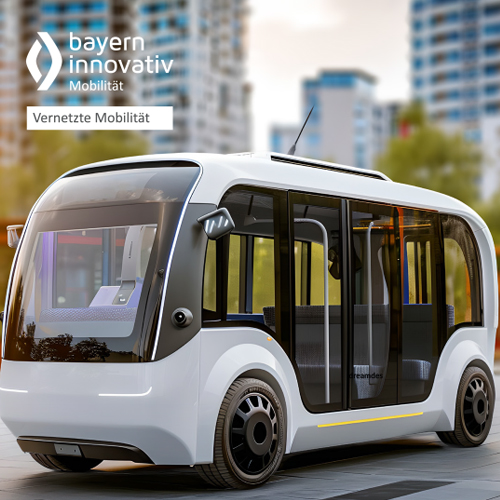
Pia Blessing: For me, mobility in the future means having at least one mode of transport available for every purpose of travel, which I use without owning it and which is seamlessly linked to other modes. The idea of driving a car is replaced by looking at a device that recommends the best, fastest, and cheapest mode of transportation to get from point A to point B. The result of this kind of mobility is cities that are not owned. The result of such mobility is cities whose public space holds much more potential for everyone!
Mobility needs space
Your talk at Querdenken 2019 is "Platz da! Mobility needs space!" - An ambitious demand. Tell us how this can succeed and what you see as the biggest challenges for cities?
Pia Blessing: The car has dominated our cities over the last 100 years. The devaluation of livable urban space in favor of the "Freedom Machine" has become so ingrained in our minds and embedded in our lives that we can't imagine it any other way. But once we consciously question the dominance of the car with all its spatial inefficiency, we will find that there is plenty of space that can be redistributed. Then bikes, e-scooters, shuttle buses, delivery robots and many other modes will find a safe place in our cities. The biggest challenge, in my opinion, is to have a non-ideological discussion about our urban space.
Sidewalk Labs Street Design Principles
Keyword "Sidewalk Labs Street Design Principles" - What is behind these principles and could they, in your opinion, also work in German cities?
Pia Blessing: In recent years, the planning of traffic and urban space has often been subordinated to the optimization of motorized traffic. Today, these principles have largely been recognized as planning errors and deliberate countermeasures are being taken in existing space for existing mobilities, for example, by optimizing bicycle and pedestrian paths. With its Street Design Principles, Sidewalk Labs (a subsidiary of Google) is also pursuing the approach of completely rethinking the street space and integrating the possibilities of the technologies of the future. The aim is to put people back at the center as a benchmark and to make urban space safer, more flexible and more livable. The principles Sidewalk Labs has developed are essentially based on hierarchizing streets by speed and prioritizing modes of transportation on these different streets. All of this is to be applied for the first time in a new Toronto neighborhood. For a European, grown city, these "principles" will not be easily implementable - but there are some ideas in it, which should be urgently thought about in our context as well!
Thank you very much, Ms. Blessing and see you soon in Nuremberg!
 Accessibility

 Language
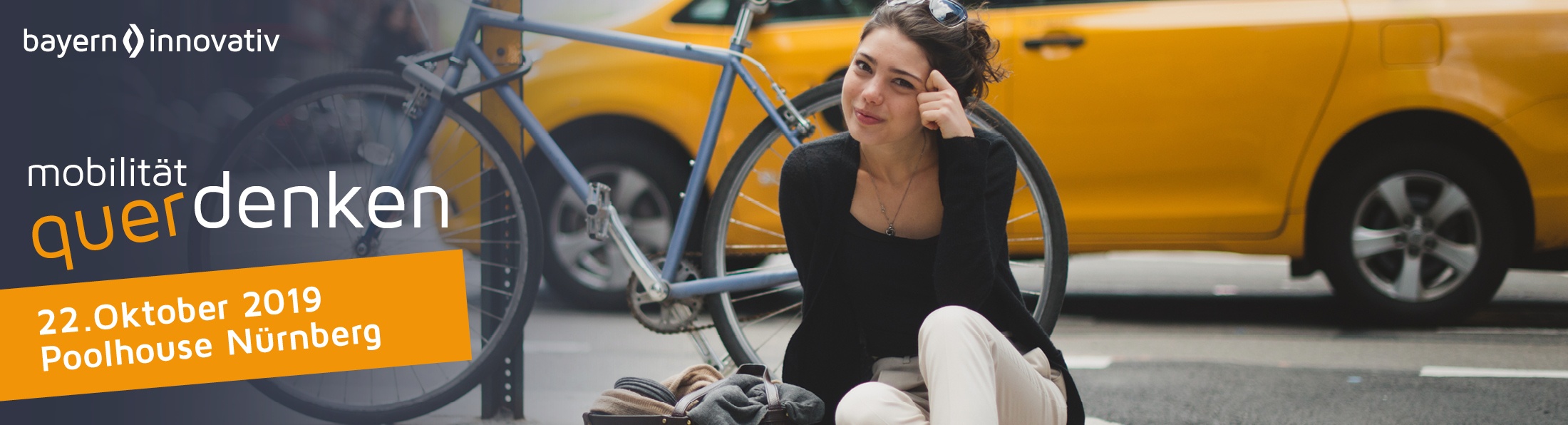 The "mobilität querdenken" congress regularly provides impetus and food for thought on the design of a new mobility ecosystem. (Photo credit: Stocksy©Lauren Naefe)