30 years of innovation management - shaping the future together
Innovative together - successes, people, milestones
17.10.2025
Thirty years ago, innovation primarily meant new products, new technologies and research in the laboratory. Today, it is much more than that. It is part of the corporate culture, the strategy and thrives on collaboration, communication and networks. Methods such as design thinking, lean startup and agile processes have shaped the innovation mindset, and topics such as open innovation, co-creation and business model development have become indispensable. In this jungle of methodologies and theories, you need someone to show you the right way: innovation management.
In the following interview, Dr. Tanja Jovanovic, Head of Marketing & Innovation and Member of the Management Board at Bayern Innovativ, talks about how innovation management has changed over the last 30 years and which topics will particularly shape innovation in the future.
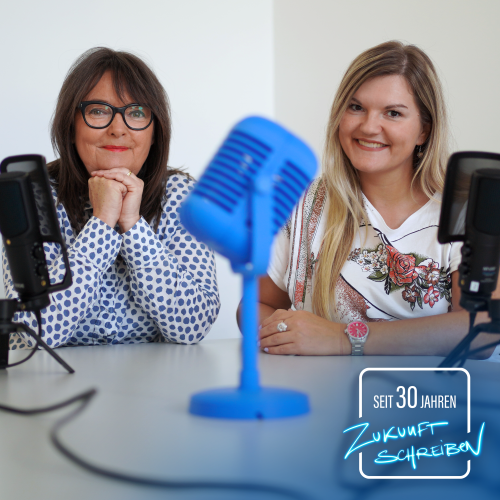
What has changed the most in the last 30 years in terms of innovation management and the innovation mindset?
Dr. Tanja Jovanovic: I set up the Innovation Management department here and was previously also involved in innovation research and can tell you something about the development of innovation management. Innovation management is always associated with change per se. It thrives on constantly renewing itself, looking for new approaches and thinking creatively and strategically. You can see this very clearly in the transformation of innovation management itself. The field used to be very product and technology-driven, with a focus on products, development and research. Innovation was associated with pure research and was always seen as a matter for the boss. Then, over the last 15 to 20 years, we have seen a shift from this strong product and technology-driven approach to a strongly people-centered and holistic understanding of innovation within the company. And that is precisely the path that we are consistently pursuing here: this holistic understanding. Innovation is no longer an isolated topic, but part of the corporate strategy and culture, and it also very much involves external parties outside the company.
What triggered this change?
Dr. Tanja Jovanovic: One trigger is the variety and quantity of information we have, of course also thanks to the Internet. One person alone can no longer keep track of all the knowledge as they used to. This paradigm shift from "closed" to "open innovation" has also triggered a lot of research with scientists, collaboration with start-ups and direct interaction with customers. This is where co-creation and the desire of customers to be more involved come into play. That was very important right from the start.
What role have methods such as design thinking, lean start-ups or agile innovation processes played in this development?
Dr. Tanja Jovanovic: These methods play a central role: on the one hand, they are enablers that support change and innovation managers in driving it forward. On the other hand, they serve as practical tools for implementing innovation in everyday life. They make the whole thing easier, more tangible and more comprehensible. At the same time, however, you also need to know how and for what purpose these tools can be used. You can see this very clearly in design thinking. In the end, it's not about having the finished product straight away, but really going through this entire process and understanding what the basic problem actually is, what the customer really needs and how you can help them in the best possible way and involve them in the right place.

And how is this being implemented at Bayern Innovativ?
Dr. Tanja Jovanovic: The great thing is that Bayern Innovativ has helped shape this change over the last 30 years. By being founded as an institution for open innovation, we are in fact living it today. Open innovation is part of our DNA, which means that we involve external parties very strongly, we innovate together with start-ups, with networks, with science, with companies, and we think ahead for the industries. We don't implement the topic of the future and foresight alone in a quiet little room, but together with others. And that's exactly what innovation management at Bayern Innovativ is all about for me.
How has the relationship between traditional product development and business model innovations changed in recent years?
Dr. Tanja Jovanovic: The innovation of business models has actually become more and more of a focus because, in addition to product development, the topic of service is also becoming increasingly important, i.e. this service orientation. You have to think about this during product development, for example with topics such as after-sales, after-service, customer integration and that is exactly the point, this holistic thinking. It's important and that's why business model innovation and research into it is essential for the future, because if we now also look at AI and digital services, it will become increasingly important.
What are the most common mistakes that companies make when introducing or restructuring innovation processes?
Dr. Tanja Jovanovic: If a company determines that it needs to innovate, then something is already going wrong at that point. Innovation is always part of the company's strategy and must be part of its DNA, especially if the company is carrying out development work. If innovation is newly introduced, it should be firmly anchored in the corporate strategy, supported by the management and visible as a cultural element so that every employee in the company is on board. Innovation is essential. As an individual, I have to be curious, I have to be able to experiment, I have to be allowed to make mistakes and learn from them and I also have to keep questioning my own product. That's what often gets lost over time when you're successful. You forget to question yourself. That's also part of innovation management.
What skills do you need as an innovation manager?
Dr. Tanja Jovanovic: In addition to the skills mentioned, I would definitely say that communication skills are very important. Innovation managers are bridge builders between strategy and the operational unit, between the company and the customer. They try to translate what happens in innovation management. Making processes such as idea development or future scenarios tangible in the process alone is key. An innovation manager must be able to communicate and also bring together the perception and perspective of the other side. Methodological skills are also very important in order to be able to deliver good technical results. From design thinking and foresight to co-creation, all these methods and tools are essential and enhance the reputation of innovation management.
And how does Bayern Innovativ support this?
Dr. Tanja Jovanovic: We support innovation processes both internally and externally - for our own teams as well as for networks and companies. This ranges from the development of thematic roadmaps and the design of innovation strategies to support with product ideas and business models. We provide support with the appropriate methods, professionalism and, above all, curiosity.
How will innovation management develop in the future?
Dr. Tanja Jovanovic: From my experience, I can definitely say that technology will become increasingly important. Artificial intelligence will become an integral part of innovation and innovation processes, as we use AI-supported processes to make even more data-based decisions instead of based on gut feeling. What is also becoming increasingly important is ambidexterity, i.e. the ability to create freedom and at the same time build on what already exists - in other words, to maintain this balance. The third thing that is becoming increasingly relevant is impact, i.e. the effect of an idea, a product or a business model on society, on sustainability. I see these three aspects becoming increasingly important for innovation management in the future.
What advice would you give to a young company if you could only give one piece of advice for innovation?
Dr. Tanja Jovanovic: Wow, just one piece of advice? I'll try to put it in one sentence: Stay curious, think networked, learn a lot and build networks, because nobody innovates alone these days.
The interview was conducted by Barbara Groll, Media Relations, Bayern Innovativ GmbH, Nuremberg.
30 years of innovation management in transition: of methods, people and courage (15.10.2025)
What has changed the most in the last 30 years when it comes to innovation management and mindset? And how will innovation management develop in the coming years? Dr. Tanja Jovanovic, Head of Marketing & Innovation and Member of the Management Board of Bayern Innovativ GmbH, will provide you with answers to these and other exciting questions.
Your contact