 Accessibility

 Language
Sawmill 2.0: From inventory to vision
25.02.2026
How can an existing building become a model for circular and sustainable architecture? Pilot 4 Materials started with this key question as part of the EU Interreg project Decorator. The aim was not to reinvent the sawmill, but to uncover its existing potential and transform it into a viable vision for the future. Our co-ideation workshop was accompanied by Astrid Köppel, facilitator and expert for the DECORATOR model.
Five guiding principles as a compass
Five central perspectives formed the content framework:
- Holistic sustainability - buildings as regenerative systems and active living spaces
- Circular economy as a core principle - thinking of resources in closed cycles
- Human-centered design - considering the well-being of people and ecosystems equally
- Innovation orientation - architecture as a lever for social transformation
- Function and beauty in harmony - designing circularity and aesthetics together
These principles did not serve as abstract theory, but as practical guidelines for the work on site.
Seeing the existing building anew: Material and space
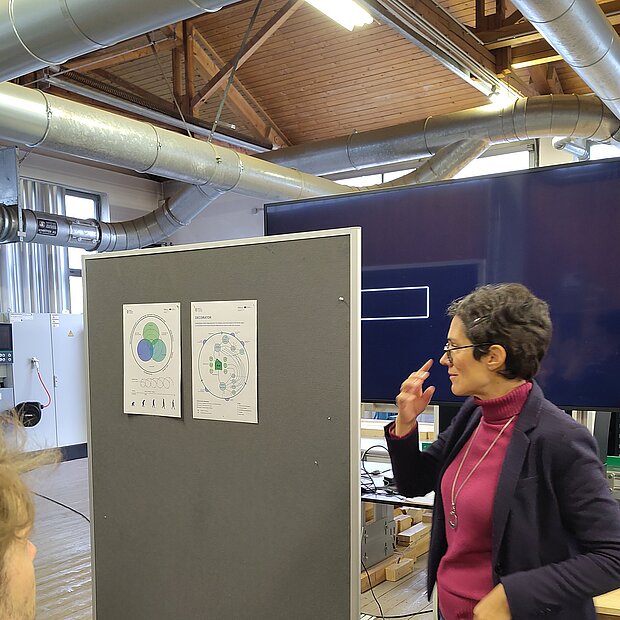
The participants split into two groups: One was dedicated to the topic of material, the other to the topic of space. During a tour of the sawmill, existing beams, windows, structures and spatial qualities were analyzed.
The focus was on
- Understanding existing materials as a resource
- Making spatial potential visible
- Identifying challenges and thinking ahead constructively
A key finding of the workshop was that the transformation to a circular economy in the construction sector is less a technical issue and more a question of mindset. Early collaboration, interdisciplinary exchange and a new way of looking at existing buildings are crucial.
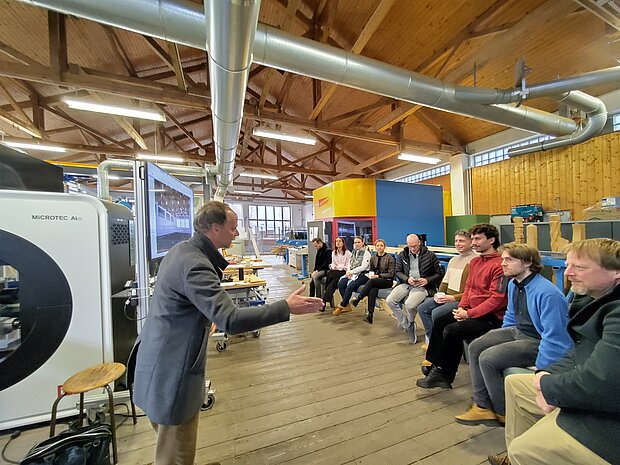
Rapid Co-Ideation: From vision to concretization
A future scenario for the sawmill was developed in a one-hour, condensed co-design session. The format combined elements of a design sprint with collaborative, interdisciplinary cooperation.
Different disciplines contributed their perspectives:
- Architects emphasized spatial flexibility and historical continuity.
- Technologists focused on innovative reuse and digital integration.
- Social scientists and educators argued for community-oriented uses such as a kindergarten and a student lounge.
A holistic, student-centered concept emerged from this diversity. The results were visualized in a digital prototype, an important step from a thought experiment to a feasible vision.
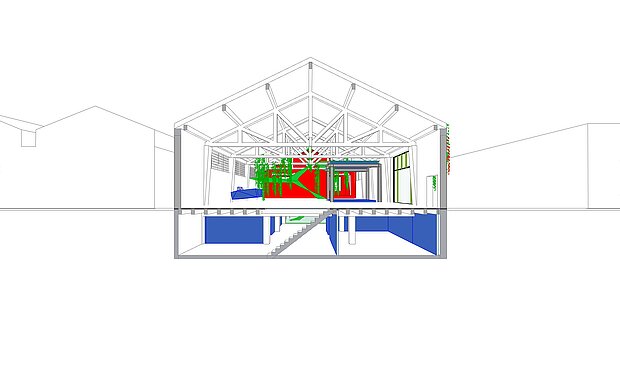
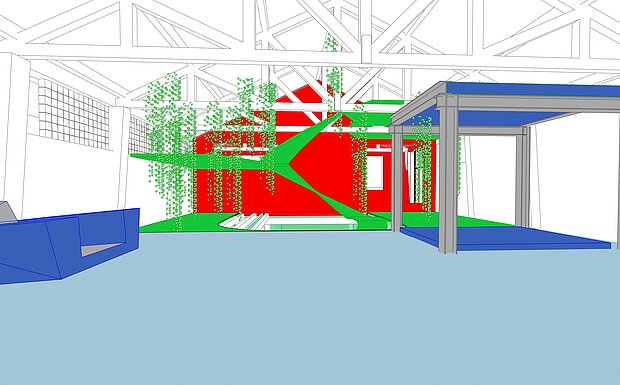
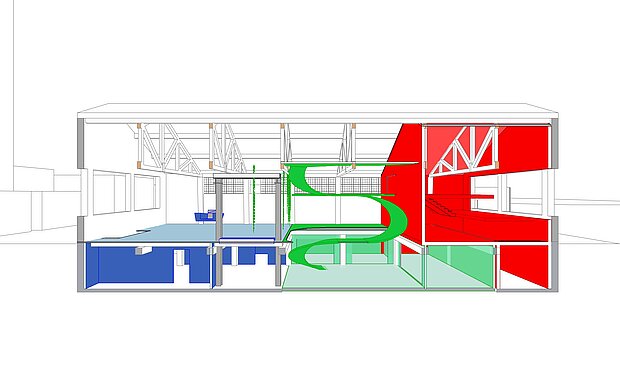
The sawmill of the future
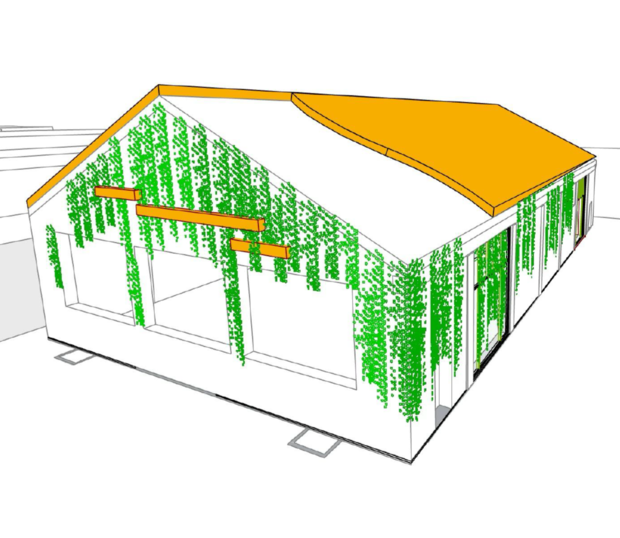
The vision follows a clear principle: the structure of the building will be retained. The existing shell will be upgraded in terms of energy efficiency, but the identity and historical continuity will remain tangible.
In concrete terms, this means
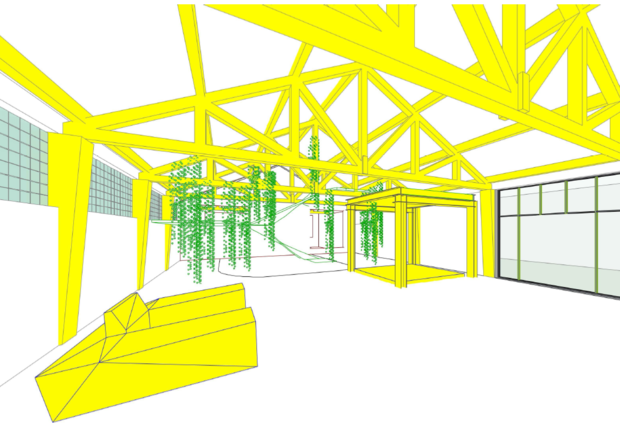
- Reuse of existing wooden beams and refurbishment of the windows
- Green façades with ivy and nesting boxes as a contribution to biodiversity
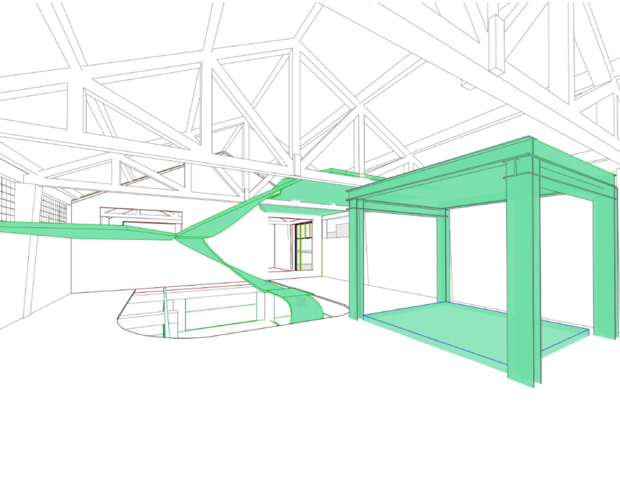
- Hanging gardens as room dividers and natural climate buffers
- Flexible "room-in-room" solutions, movable walls and modular elements for long-term adaptability
The result is a place for working, learning and meeting that is functional, aesthetic and circular in design. And since we are in Bavaria, there is also a beer garden as a social meeting point.