Accessibility

 Language
Funding program explained simply: BayTP+
Switching from conventional applications to new technologies is often a complex and costly challenge. In this context, the Bavarian Technology Promotion Program Plus (BayTP+) has set itself the goal of providing targeted support for research, development and innovation, especially for medium-sized companies. For companies interested in developing new innovative technologies and looking for funding opportunities, we offer a compact overview of the most important information here. Dr. Stephanie Rith from the Bavarian Project Management Agency answers the key questions about the BayTP+ funding program below.

Who is the Bavarian Technology Promotion Program plus (BayTP+) intended for?
Dr. Stephanie Rith: The core target group of the BayTP+ funding program is primarily established small and medium-sized companies based in Bavaria. To classify this a little: By small companies, we are talking about companies with fewer than 50 employees and an annual turnover of less than 10 million euros. And in the case of medium-sized companies, we are talking about companies with up to 250 employees and an annual turnover of up to 50 million euros. In individual cases, we can also consider larger companies, e.g. in the range up to 400 employees or large companies. Today we are concentrating on small and medium-sized companies, which are really the focus of this funding program.
Is there a restriction in terms of the type of technology?
Dr. Stephanie Rith: That is one of the advantages of BayTP+. First of all, the funding program itself is open to all technologies. And in practice, we also support companies from a wide variety of sectors. This means that from the more traditional sectors such as plant construction, mechanical engineering or metal processing, but also other sectors such as aerospace, biotechnology, medical technology, electrical engineering, automotive, recycling, the materials industry and also energy and environmental technology, the most diverse sectors that we have in Bavaria are also represented among the companies to be supported.
When should technology companies explicitly contact you?
Dr. Stephanie Rith: We are explicitly concerned with development projects. These are technologically new or significantly improved products and production processes. What is important here is that there must be a high level of innovation and the project must go well beyond the current state of the art. There must already be a significant improvement or, in most cases, simply new technological developments. The main implementation should take place within the company, with the company's own research and development staff.
What costs are considered eligible for funding?
Dr. Stephanie Rith: We can fund some costs. It is always important that the costs relate to technical development. This means that we can fund personnel costs, for example. However, the prerequisite is that the company's own technical and permanent staff are involved. With such development projects, however, there are quickly other costs involved. What we can therefore also fund are costs for instruments and equipment, provided they are necessary for this development project and are newly purchased.
It is also important to note that we can also support service contracts with other companies to a certain extent when it comes to technical development, consulting or design. Then there are the material costs and the resources required for prototype construction. We simply have various components, all of which we can support under the cost category of other operating expenses. What we can also support, which many people don't think about, is the topic of property rights. The costs of obtaining, validating and defending patents relating to the development project can also be funded.
What requirements must be met for a company to receive funding?
Dr. Stephanie Rith: There are certain requirements that are simply specified in the guidelines. In our consultations, we like to go into detail with the companies to see where there is still a need for coordination. Let me list the five most relevant points.
It is important that the project is essentially carried out in the company, based in Bavaria, and that the subsequent commercial exploitation also takes place in the company. Then, very importantly, the project must not have started yet. So, please contact us as early as possible. In addition, the project itself must present technical and economic risks, which is usually a given for an innovation project.
The next requirement is that the project and the project objective must lead to a product or production process somewhere and that this must also be economically promising in the medium term. In other words, we really look at this in detail: What are the exploitation prospects in the simplest case? How should the new product be marketed? Who is the target group for it? What is the economic potential in the sector? Does the company already have access to this market?
The economic contribution is also relevant. In other words: What impact will a successful development project have on your company? Can it create new jobs? How will the industry and the target customer group benefit? If you sell a new product, what challenges will it solve? Particularly in the field of medical technology, economic benefits can be realized very quickly.
And last but not least, your company must have the necessary technical and economic potential to carry out the development project. In other words, what we always have to talk about is that the financing of the company's own contribution is secured. So, there has to be a certain business plan behind how you will finance the entire development phase so that the company can also benefit from the funding.
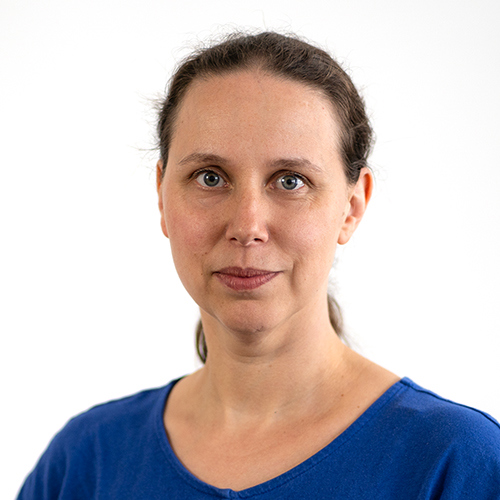
"Funding guidelines are complex, but represent a great benefit for companies. That's why it's very important to me to minimize fears of excessive bureaucracy. Contact our team at Projektträger Bayern, we will support you wholeheartedly."
Dr. Stephanie Rith
Project Management Agency, Project Manager, Bayern Innovativ GmbH
What funding rates can a company expect?
Dr. Stephanie Rith: We have a basic funding rate of 25 percent and then there is a component that depends on the size of the company. For medium-sized companies this is plus 10 percent, i.e. 35 percent funding rate, and for small companies up to 45 percent is possible. But this is also necessary, because if we look at typical total costs eligible for funding, we are quickly in the range of 400,000 to 1 to 2 million euros. We are talking about development projects here, which often have an implementation period of one and a half to two years.
Can you please illustrate this with a concrete calculation example?
Dr. Stephanie Rith: Sure, of course. Let's just stick with small companies and I'll assume total eligible costs of 1.5 million euros. That is reached relatively quickly and is quite realistic. That means we have a funding rate of 45 percent. The funding amount is then 675,000 euros. And that really is a considerable proportion. I would also like to emphasize once again that the funding in the BayTP+ program is a grant. This means that, compared to a loan, this grant does not have to be repaid. And because we talked about the own contribution, which has to be financed by the company. This is then reduced from 1.5 million euros to 825,000 euros.
Where, how and when can a company apply for funding?
Dr. Stephanie Rith: The point of contact here is the Bavarian Project Management Agency as the project management agency responsible for this funding guideline. The easiest way to contact us is via the funding guides and the funding hotline. The official BayTP+ application procedure has two stages. The first stage is a short application. We also refer to this as the outline phase. This is where the company and the development project are presented. The focus we had earlier is also important here. What is the innovation? How does it differ from the state of the art? What technical risks could arise in this project? What is the planned utilization? If the outline submitted is then assessed positively, the company is approved to submit an application and then we are practically in the second phase.
In the second phase, the actual application phase, it's all about the details. To see what the business model is like, what the business plan is that leads to the product to be developed. We then really have to look into the details of the business planning figures and liquidity planning to ensure that the financing of the company's own contribution is secured.
Is there a specific deadline for applying for BayTP+?
Dr. Stephanie Rith: That is also one of the advantages of the BayTP+ program. Applications can be submitted throughout the year. So there are no explicit deadlines. The important thing is that we can only fund projects that have not yet started. So, as soon as it is clear that you are planning a development project, simply contact us at an early stage.
The BayTOU funding program, which was presented last, also supports companies with strong technological capabilities. What is the difference to BayTP+?
Dr. Stephanie Rith: The differences between the two funding programs lie primarily in the target group. With BayTOU, the funding is explicitly aimed at young companies, start-ups that are no more than six years old. And the aim of the funding is to strengthen the technological basis of these still very young companies. It is also important that the companies have fewer than ten full-time employees. The funding rate for BayTOU is up to 45 percent.
BayTP+, on the other hand, is aimed at established small and medium-sized enterprises, where the age of the company is no longer a criterion. And as we have just mentioned, the funding rate is also dependent on the size of the company. This means a basic funding rate of 25%, 35% for medium-sized companies and then 45% for small companies.
What do BayTOU and BayTP+ have in common?
Dr. Stephanie Rith: There are a number of similarities. Both funding programs focus on promoting technological innovation and novelty. And it is important that there is a product and commercial exploitation at the end. Then we have the two-stage application procedure for both and we can fund costs in the same categories. These are costs for personnel, materials, instrumentation and these outsourced service contracts are also possible.
How do companies find the right funding program that is specifically tailored to their needs?
Dr. Stephanie Rith: What I would like to recommend to companies is to talk to the respective project sponsors. So, specifically with BayTP+ and BayTOU with us at Projektträger Bayern, because we are the relevant project management agency for these funding programs. Just find out who the relevant project management organization is and ask them. Because it is simply the case that we are the ones who talk to the companies on a daily basis, who supervise the funding projects and who know the intricacies of the respective funding guidelines. Contact with us during the project is also important. We are talking about innovative development projects here. A lot can be planned and it is simply the case that planning is sometimes overtaken by reality. So don't be afraid to simply approach us and seek contact with the project sponsors.
That probably also often simply provides security and a bit of support in the course of a project, doesn't it?
Dr. Stephanie Rith: Exactly, I would also like to mention the topic of advice again here, because it is simply important. These are complex development projects, we also have complex funding guidelines and it is simply the case that the advice we provide from the Bavarian Project Management Agency is free of charge for the companies. So please take advantage of the opportunities we offer and simply get in touch with us via our colleagues at Förderlotsen.
The interview was conducted by Christoph Raithel, Event Team Leader at Bayern Innovativ GmbH.
BayTP+: The funding program for innovations in SMEs
Do you have a new innovative technology in your company that is worth funding? Then find out more about the Bavarian Technology Promotion Program Plus (BayTP+) in this episode. Dr. Stephanie Rith explains the advantages and requirements in a short, compact and above all understandable way.
Please note: Unfortunately, a slip of the tongue has crept into the episode at minute 02:15. Medium-sized companies are companies with an annual turnover of up to €50 million.