 Accessibility

 Language
Functional textiles on the road to sustainability
Outdoor athletes need elaborate clothing to satisfy their hunger for adventure. In addition to functionality, the sustainability of the products plays an important role. Many manufacturers of functional textiles have already committed to the topic. 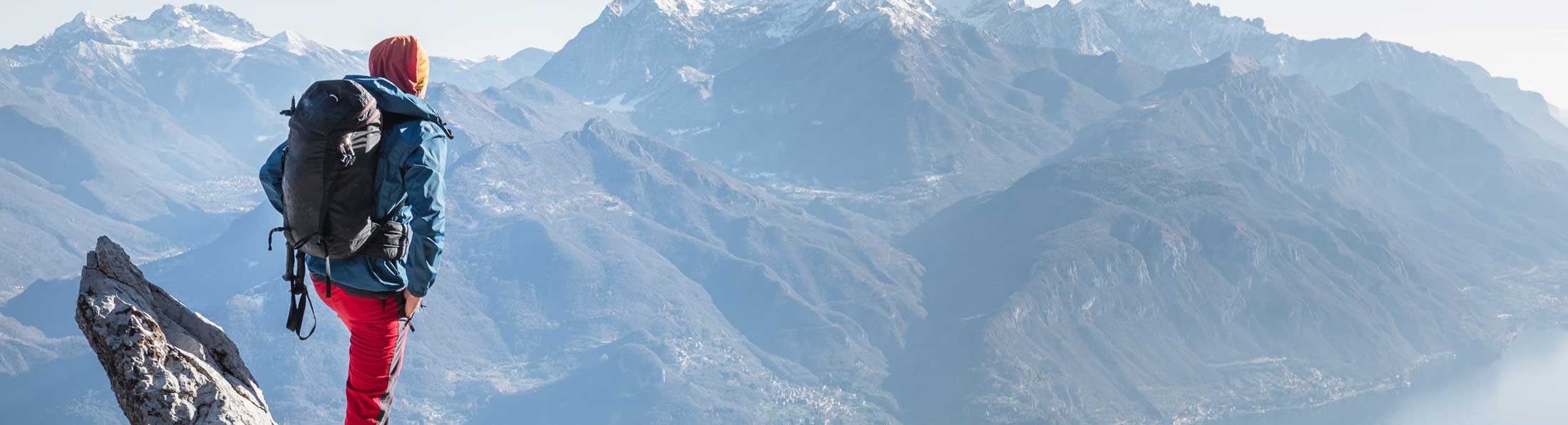 Sustainable textiles for outdoor athletes: reality or utopia? (Photo credit: iStock©deimagine)
Rüdiger Fox's vision is a circular textile economy for functional textiles: "The only conceivable future for the global apparel industry lies in a circular economy in which textiles are separated back into raw materials at the end of their life cycle in a value-preserving manner and used again for new products," says the manager, who worked for a long time in the automotive and aviation industries before joining Munich-based high-tech textile manufacturer Sympatex in 2016.
With its "We CARE" campaign, the Swiss premium brand Mammut is also focusing on the issue of sustainability. "CARE" stands for "Clean Production," "Animal Welfare," "Reduced Footprint" and "Ethical Production." By 2023, the outdoor company wants to significantly reduce the ecological footprint of its collections and ban environmentally harmful materials from its supply chains. Thus, at least 95 percent certified fabrics are to be used by 2023. By the same year, Mammut also wants to do away with PFC-based finishes.
Perfluorocarbons are widely used as impregnation for anoraks and touring pants because of their hydrophobic properties, but are the subject of much controversy because of their toxicological and environmentally harmful effects. "The textile and chemical industry already offers PFC-free alternatives for hydrophobic finishing, but their potential use depends on the specific application. Areas such as protective clothing are currently still dependent on the PFC finish to perform the required functions," explains Christina Harwarth, who coordinates the Textile Innovation network at Bayern Innovativ.
Sympatex on the way to a circular textile economy
Meanwhile, Sympatex continues to pursue its goal of a circular textile economy, including as a partner in the wear2wear initiative. The goal of the industry partnership, which bundles companies along the textile chain, is to produce 100 percent recycled, recyclable as well as PFC-free functional textiles. The closed-loop recycling system is to be implemented in the corporate and workwear sector. If they achieve their goal, this could also provide impetus for the outdoor industry - and athletes could climb summits with a clear conscience.
linked
 The study "Textile & Sustainability" was published in 2018. (Photo credit: iStock┬®shapecharge)
Sustainability in the textile chain is a core topic of the Bayern Innovativ network Textile Innovation. The Study "Textile & Sustainability" provides companies with information in the fields of fibers, functionalization and circular economy.