Circular, local, sustainable - our new tools for construction practice
08.01.2026
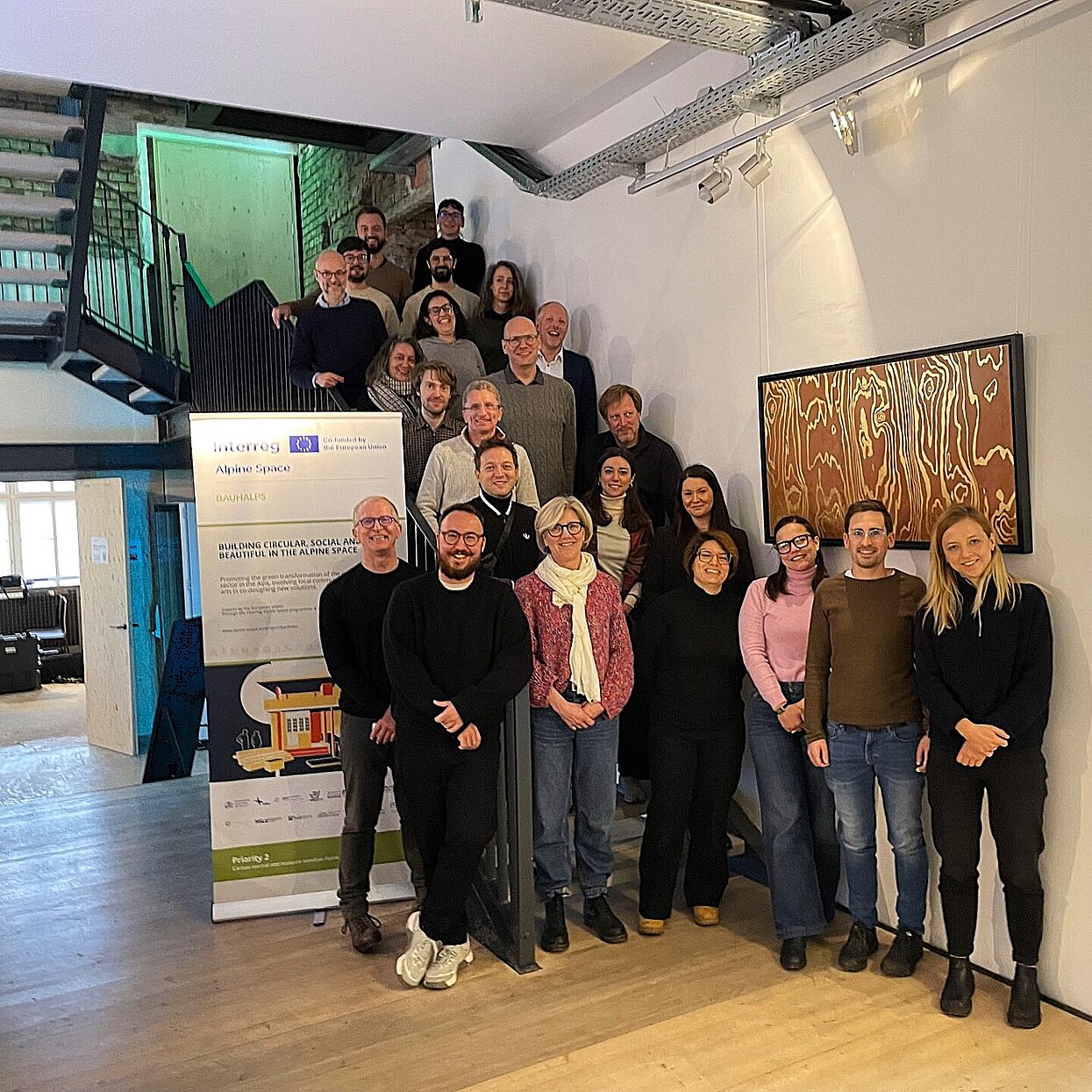
At the end of the year, we met with our project partners from France, Italy, Austria, Slovenia, Switzerland and Germany as part of the EU Interreg project Bauhalps in Vienna to look back on the milestones achieved so far and to plan the next steps of the project.
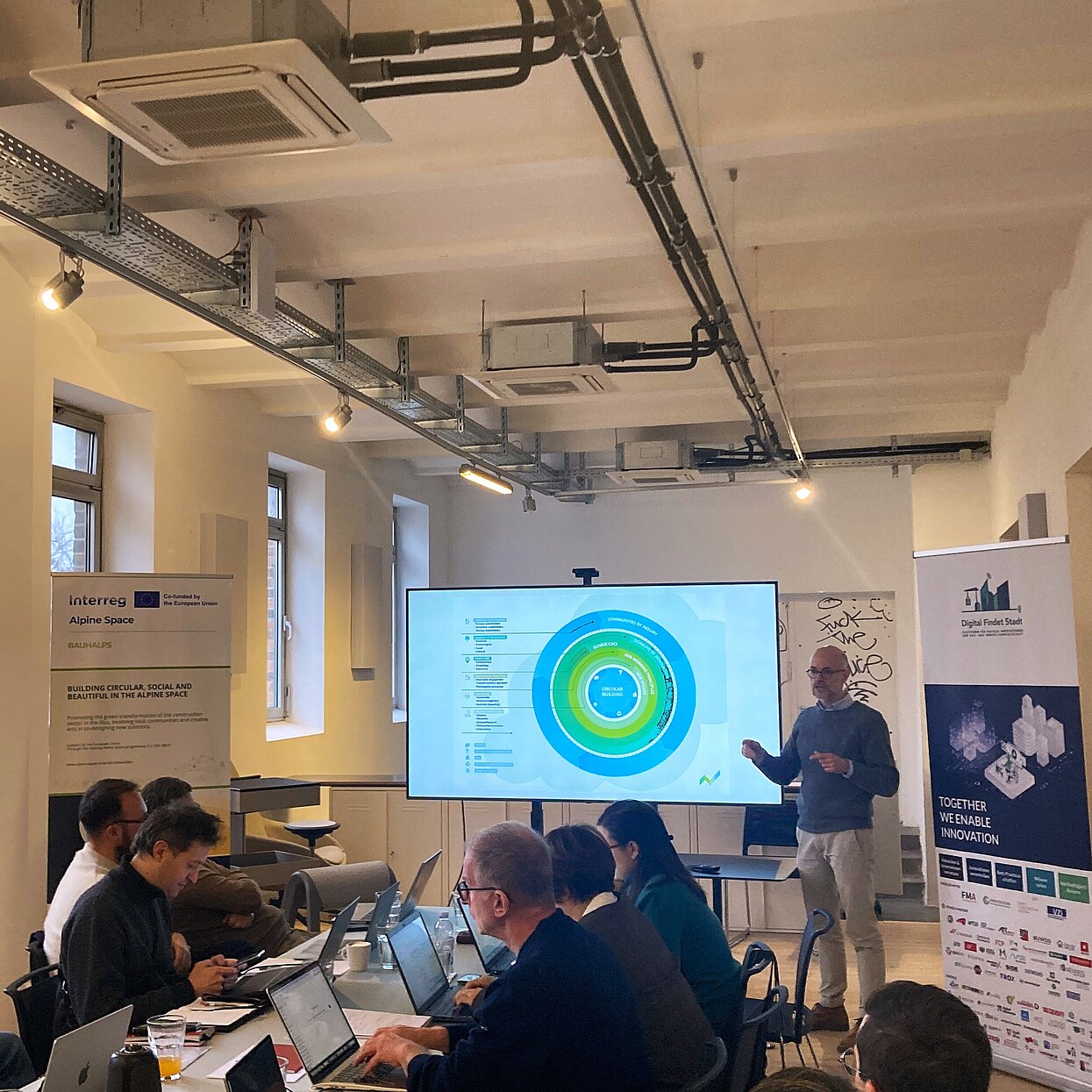
Particular highlights of this meeting were the presentation of the BAUHALPS model, the accompanying methodology and the toolkit. With these instruments, we want to promote innovative, sustainable and circular approaches in the transformation of buildings while actively involving the local community. We are delighted to now be able to present the work to a broad public and to shape the next phase of the project together.
BAUHALPS model
The BAUHALPS model refers to the New European Bauhaus (NEB) initiative and describes a holistic approach to promoting regenerative systems in the context of alpine construction. By activating local knowledge, resources and communities, the model encourages collaboration across disciplines and sectors and ensures that the NEB values of sustainability, beauty and inclusion become tangible drivers of change. Ultimately, BAUHALPS redefines circular architecture as a cultural project rooted in place, identity and collective responsibility that harnesses new technologies.
Methodology
The methodology serves as a structured roadmap to activate local communities and specifically involve them in decision-making processes relating to the transformation of buildings. It provides tools that promote participatory processes and systematically take local knowledge, needs and skills into account.
Download the methodology
BAUHALPS toolkit
The BAUHALPS toolkit bundles this methodology with the so-called Genius Loci online repository (a region-specific collection of resources) and the tool for assessing the circular maturity of buildings. As an integrated, online instrument, it supports stakeholders in the practical application of participatory, context-related and circular approaches in the planning and implementation of building transformations.
Outlook: Feasibility studies for circular construction
The next phase of the project will involve feasibility studies to improve the circularity of buildings. Our partners from Austria, Slovenia, Italy and Switzerland are working together on four studies on public buildings, using the BAUHALPS toolkit developed in a practical way. In addition, we are developing a circular assessment plan for residential buildings with our French partners. The aim of all these studies is to test the practical suitability of the toolkit and to provide concrete, practicable approaches for circular construction and sustainable refurbishment. The results will provide valuable guidance for decisions in the public and private building sector and show how innovative, sustainable building practices can be successfully implemented.