Accessibility

 Language
Portrait: Johann Reißer
20.01.2026
#bayernkreativPORTRAIT: How can materials, space and history be combined in an artistic performance? For Johann Reißer, art is the key to thinking about sustainable construction, the circular use of resources and new perspectives on architecture. From the Berlin theater stage to old weapons factories in Bavaria, from lyrical-graphic projects to performative explorations of sawmills: In the DECORATOR residency, Johann explores how text, sound and space merge to create a multi-layered story that can be experienced by the senses, and how art can reveal new paths for the future of construction in the process.
Can you tell us something about your artistic career and how you found your current practice?
I have always been interested in very different forms of thought and expression and how they can be combined. During my studies in literature and philosophy, I explored avant-garde approaches as well as older aesthetics and at the same time made my first forays into the fields of literature and theater. In the artistic projects that followed, text, image, sound and space came together in different patterns - on stage, in books or in exhibitions.
Which stages or experiences were particularly formative for your artistic development?
For me, new approaches have often resulted from collaborations with other artists. You learn a lot from each other, but also from trying to achieve a coherent result together. Sometimes unplanned encounters also provide new impulses. When I was town writer in Rottweil, I wanted to write a novel about rural Bavaria and agriculture, but I came across an old arms factory there whose history fascinated me so much that I gave up my other plans and started working on a novel about the development of the arms industry, which will now be published in March.
Are there any influences that have had a decisive impact on your work?
For my work on stage, the Berlin theater and performance scene was formative for me, especially René Pollesch with his incredibly clever, politically reflective and at the same time light-footed and witty theater. In terms of dealing with heterogeneous materials, their history and their (multi)medial processing, I learned a lot from the authors on whom I wrote my doctoral thesis: Rolf Dieter Brinkmann, Thomas Kling and Barbara Köhler.
What made you decide to apply for the residency program and what goals have you set yourself for your stay?
From 2019 to 2024, I worked with Ursula Seeger on the lyrical-graphic project "geHÄUSe - Zwölf Schleifen zwischen Zellen und Clouds", which deals with the structural development of Berlin and the relationships between human and non-human architecture. Questions of sustainability and future viability played an important role here. I think it's great that the DECORATOR project gives me the opportunity to pursue many of the questions that occupied me there in a different location and to engage with a space in a performative way.
How do you integrate creative approaches in your residency to make circular construction and the reuse of materials tangible? Can you give a specific example from your work?
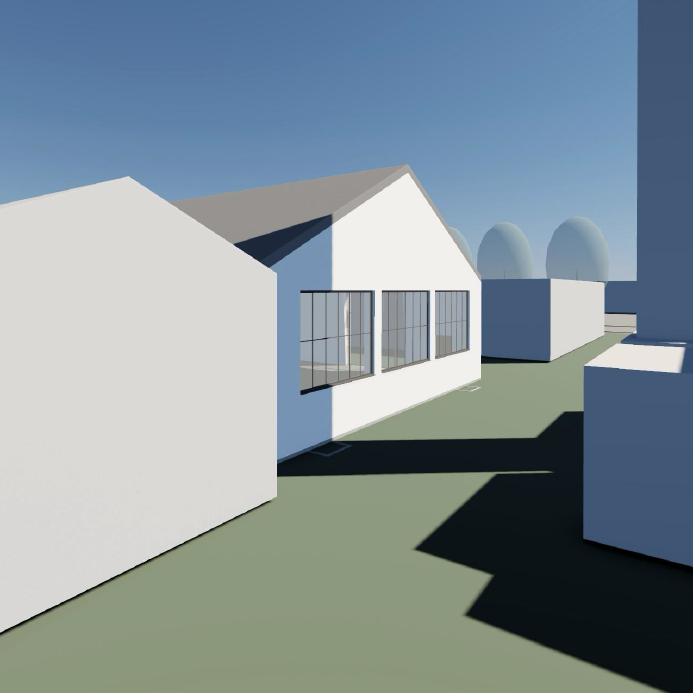
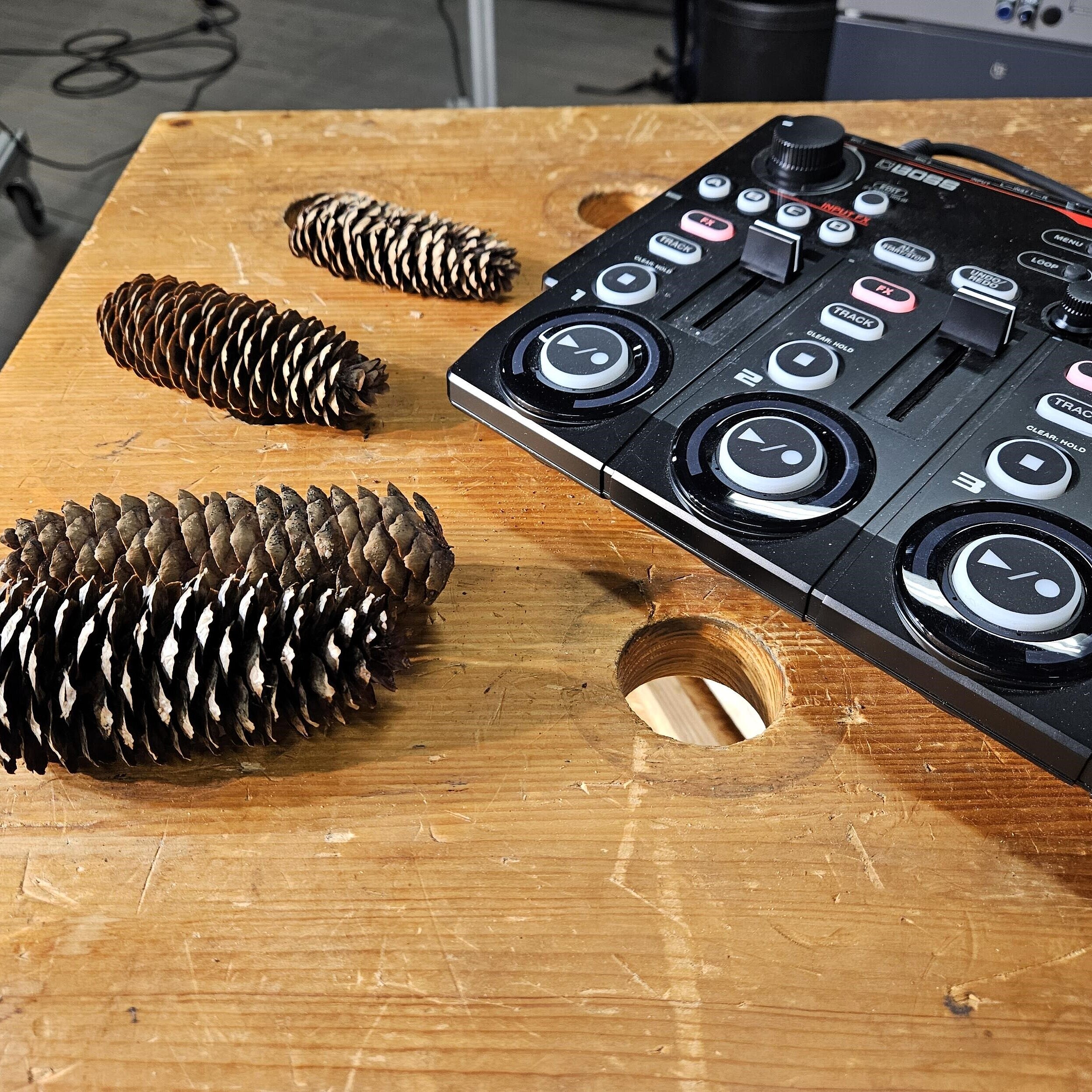
In my performance, I will examine the sawmill with its building structure, its materials and the people and machines that were and are active in it. Among other things, I will work with a loop station and interweave the sounds of wood and tools with texts. The aim is to create a material and temporal polyphony that explores potentials. In "geHÄUSe", I use a similar approach to shed light on Berghain, a disused power station building that has been transformed into a club and cultural venue with international appeal.
What challenges and opportunities do you see in collaborating with industrial partners (e.g. sawmills) and scientists as part of DECORATOR?
I always think it's good when people from different fields meet openly and exchange ideas intensively. It gets you out of your own bubble and stimulates new ideas. The exchange with architects and wood technicians is very interesting for me. I think it's great to meet experts at Rosenheim University of Applied Sciences in fields that I don't normally interact with and whose knowledge can now be incorporated into this project.
How do you rate the role of art and design in raising awareness of sustainable building, both for a specialist audience and for the general public?
Art and design can do a lot here. Because good stories and impressive images influence many people more than rational arguments. That is why it is important that artists seriously address these issues and develop counter-designs to profit-driven positions. In order to overcome the challenges of the future, we need to move away from simple narratives of progress and narrow ideas of normality. Art can create new perspectives, explore scenarios and open up fields of possibility in order to rethink and reperceive ourselves and our forms of living and building.
The Bavarian cultural and creative industries are vital, cooperative, polyphonic and relevant to the future. We introduce you to Bavarian players. What is their business model? What drives them?
Would you also like to answer a few questions and be part of our "bayernkreativPORTRAIT" campaign? Then send us an email to kontakt@bayern-kreativ.de with the keyword "bayernkreativPORTRAIT".