Accessibility

 Language
As part of the Interreg project DECORATOR, a transnational symposium was held in the cross-border cities of Nova Gorica (Slovenia) and Gorizia (Italy). These two cities, which were jointly named European Capital of Culture 2025, provided the ideal setting for an event that brings together the circular economy, cultural heritage and the arts and cultural industries.
Although the border between Nova Gorica and Gorizia is still present in everyday life, both cities are working hard to overcome these barriers. A joint cultural strategy is intended to help improve the quality of life for residents in the border region. Fittingly, the symposium took place in two places, in two cities and in two countries - a symbol of overcoming borders through cultural cooperation.
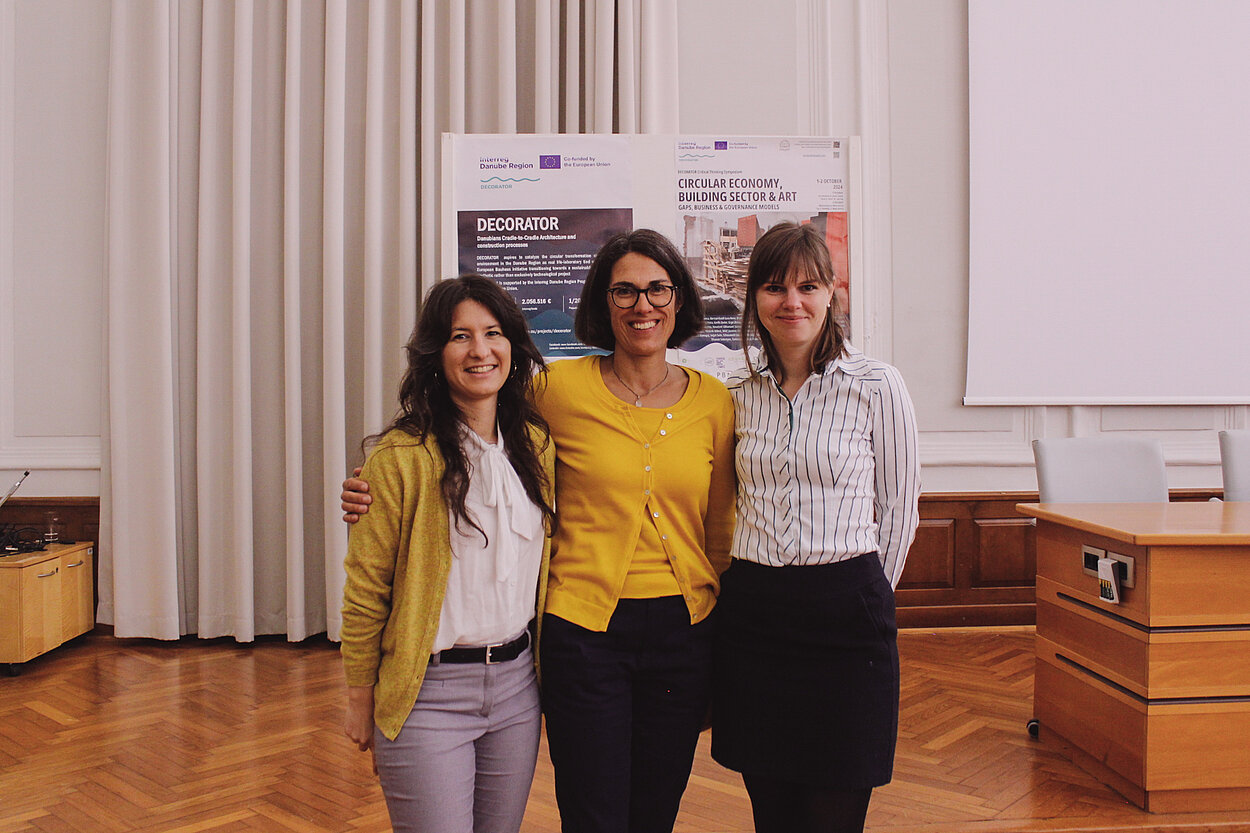
Top-class presentations and insights into EU projects
In a packed series of lectures, experts presented their experiences from the construction sector in the context of the circular economy. Inspiring case studies were presented and insights into other EU projects such as BAUHALPS were given. The exchange on how the circular economy is shaped not only technologically, but also aesthetically and culturally, was particularly exciting.
A central theme of the symposium was the role of the cultural and creative industries in the implementation of circular economy strategies. Following on from the New European Bauhaus initiative, it became clear that the circular economy has not only technical but also aesthetic dimensions. These range from the artistic exploration of new materials, such as the works of Alice Mestriner and Ahad Mosleni on dust, to sustainable and socially responsible architecture, as impressively presented by Marta Rota from the University of Linz using the example of basehabitat.
The symposium impressively illustrated how the cultural and creative industries make a decisive contribution to the implementation of the circular economy. At the same time, it was shown what positive feedback effects this way of thinking and acting can have on creative work in art and culture.
As part of the DECORATOR project, we are committed to putting the circular economy at the heart of construction and promoting innovative approaches in the Danube region. Over the next 30 months, we will work with 13 committed partners to develop sustainable building practices that respect both the environment and cultural values.