 Accessibility

 Language
30.11.2022
#bayernkreativPORTRAIT: We spoke to Ingo Pawelke, who was awarded the title of "Cultural and Creative Pilot" for his Traumfabrik in 2016. Among other things, he tells us about the challenges facing the art and culture venue, which has been in existence since 1980; how he manages to attract people to the Traumfabrik who would otherwise go the whole year without live culture and how the Traumfabrik links the past with the future.
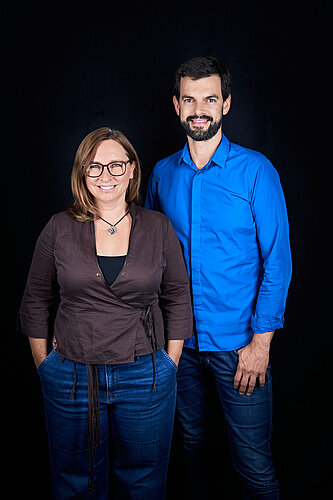
Dear Ingo, you are now a qualified business economist. In your opinion, how do business administration and the arts and culture sector fit together? And what was your motivation as a business economist to gain a foothold in the cultural and creative industries?
In order for creativity to flow freely and for art and culture to be sustainable, the business management basis has to work. If you want to run art and culture on a relevant scale, you also have to pay attention to the figures. Business administration and culture therefore go hand in hand.
However, I have to admit that this is a coincidence for me. I was born into the cultural sector because my father Rainer Pawelke founded the Traumfabrik show theater in 1980 and I was already speaking into the microphone in front of an audience of over 1,000 at the age of 6. Perhaps a little in spite of this, I then studied the supposed opposite: BUSINESS STUDIES. I then worked in marketing for ten years before joining the family business.
The slogan of the dream factory is "show theater of the imagination". What exactly does that mean?
The Dream Factory combines the different styles of show, variety, magic and theater. We want to whisk our guests away for an evening into another world full of fantasy, illusions and artistry.
In your opinion, what added value does the Dream Factory bring to the cultural and creative industries in Bavaria and beyond?
I think that we manage to bring people to a cultural event who would otherwise live without live culture all year round. We entice them with images of somersaults and artistry. And in the Dream Factory, they also see the performances of our ensemble, which are novel genre mixes that don't work in a 4-second YouTube clip, but are all the more captivating live because we create the unseen by getting artists from otherwise separate genres to merge dance, mime theater, comedy and magic in an 8-minute scene.
In 2016, you won the "Kultur- und Kreativpiloten" award. What did the award change for you?
For our ego, we can now say that we've been received in the Chancellery before. Okay, seriously: in terms of content, the coaching we received there has given us a lot of encouragement that what we are doing is right and good.
The Traumfabrik is now an art and culture venue that has been established for decades. What challenges are you (still) facing today?
If I can ignore the special challenges of 2020-2022, I have to say that we are in the fortunate position of being able to overcome any challenges that arise quite well. This may be due to the fact that we are a team from different disciplines and backgrounds. Young and very experienced, business people and dancers, traditionalists and avant-gardists.
A company that has been around for so long certainly always has to move with the times. Especially in the cultural and creative industries, a very fluid sector, this is certainly a constantly challenging job. How do you implement this for yourselves and what are your plans for the future?
That's exactly what's exciting: We want to continue to live the spirit and philosophy of the dream factory from 1980 and translate this into the present day and also reinterpret it in the future. For example, we are now using computer and LED technology on stage, which of course didn't exist in 1980. However, it is important that this does not become an exuberant technical show as an end in itself, but continues to be the fascination and charm of enchantment through illusions with seemingly simple means. I have to quote the actor Götz Otto, who described this desired effect: "I think the great sensation of the dream factory does not take place on stage, but in the mind and, above all, in the heart of the viewer."
The Bavarian cultural and creative industries are vital, cooperative, polyphonic and relevant to the future. We introduce you to Bavarian players. What is their business model? What drives them?
Would you also like to answer a few questions and be part of our "bayernkreativPORTRAIT" campaign? Then send us an email to kontakt(at)bayern-kreativ.de with the keyword "bayernkreativPORTRAIT".