 Accessibility

 Language
01.06.2023
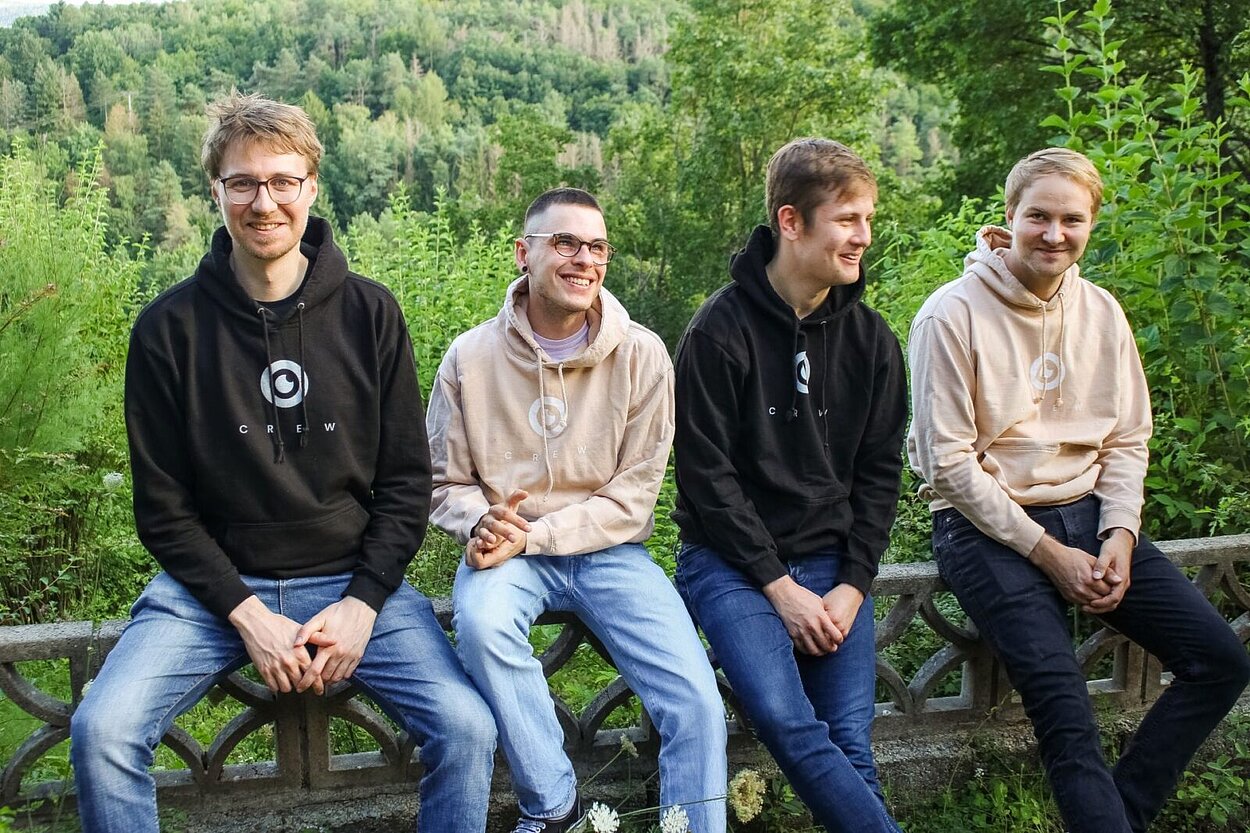
#bayernkreativPORTRAIT: Eye-Able® supports companies and organizations with specially developed solutions to make their digital offerings accessible. In our bayernkreativPORTRAIT, Chris tells us why the Eye-Able® team likes to go the extra mile from time to time, what accessibility means in the age of digitalization and the personal drive behind the business idea. And on top of that, Chris gives us some valuable tips for founders who are just starting out.
Dear Eye-Able team, with Eye-Able® you want to promote digital accessibility. How exactly is digital accessibility defined and how does your model work?
Digital accessibility describes the ability of people with different disabilities or impairments to use digital content and services without being disadvantaged because of their disability. This means that digital services are designed in such a way that they are accessible to all users, regardless of their individual needs and abilities.
Among other things, adjustments can be made to the choice of color, font size, contrast ratio or navigation and alternative texts can be used for images and videos. With Eye-Able Audit, the second part of our accessibility solution, automated tests can then be carried out in accordance with WCAG/BITV (editor's note: Web Content Accessibility Guidelines/Barrierefreie-Informationstechnik-Verordnung). This is the legally binding standard for digital accessibility in Germany. Our service is rounded off by visualization software as well as training courses and workshops on the subject.
Over 15,000,000 people are already benefiting from Eye-Able services. So the demand for accessibility in the digital space is huge. What kind of support can you provide?
Our model at Eye-Able is based on supporting companies and organizations in making their digital offerings accessible. We offer various services for this, including our aforementioned automatic testing software. This supports website operators in independently testing their systems for accessibility. In this way, we help to meet the current legal requirements and thus always stay up to date.
Accessibility checks are also part of our service. We check the accessibility of websites, apps and other digital products and provide specific recommendations for action to improve accessibility.
We also offer training courses and certifications to provide companies and organizations with the expertise they need to make their digital offerings accessible to all users.
How long has Eye-Able been around? How did you get to know each other?
We were officially founded in 2020. Oliver had the idea during his studies in Würzburg. He also met Chris Schmidt during his studies. They both studied e-commerce. Oliver's brother, Tobias, is a programmer and is still employed at the University of Würzburg, where he is doing his doctorate. The team is completed by Eric, who is responsible for the finances.
After we founded the company, we continued to refine the idea and test it. Together with the BFW in Veitshöchheim and the Institute for the Blind in Würzburg. Things really took off in 2022, when we started to grow and the journey really began.
Tell us, what drives you? How did you come up with your business idea?
The story behind Eye-Able® is shaped by Managing Director Oliver Greiner's personal experiences with people with disabilities. His best friend Lennart, who is now part of the team as a usability tester, has around 10% vision due to a genetic visual impairment. This gives Oliver a direct link to the problems that people with disabilities experience on websites every day. After his friend had to drop out of university because of his disability, he set himself the goal of finding a solution to the individual problems that people experience on websites every day.
Digital media is for everyone, but not everyone can use it. Many people initially think of elevators, accessible rooms or traffic lights with acoustic signals when they think of accessibility. But what does accessibility mean in the age of digitalization? According to a study by Aktion Mensch on the usage behavior of people with disabilities, it means that people with disabilities can use the Internet, i.e. perceive, understand, navigate and interact. In its 2006 Convention on Human Rights, the United Nations even defines unhindered access to information and communication, which includes the Internet, as a fundamental human right.
At the same time, the internet and digital media offer the opportunity to overcome existing barriers that many people experience when communicating and interacting with each other. According to the Aktion Mensch study, people with disabilities use the Internet more frequently than people without disabilities. According to the study, electronic interaction is particularly important because it enables access to certain services in the first place. However, there are also legal facts that should be considered when it comes to digital accessibility. However, the issue of digital accessibility now has a legal basis. Public institutions are already obliged to make their content digitally accessible. By 2024, other large areas of public and digital life will also be obliged to make websites and similar accessible; the buzzword here is the European Accessibility Act.
You hold the title of "Cultural and Creative Pilots 2022". Why did you apply for the program and what does this title mean to you?
We applied to make our vision for digital accessibility known to a wider audience and to network with other companies and organizations in this field. The title "Kultur- und Kreativpilot*innen Deutschland" is a great honor for us and confirms us in our work. We want to continue to expand our work and extend our vision for digital accessibility to other countries and regions in order to give even more people equal access to digital offerings.
What does inclusion mean to you personally?
For us, inclusion not only means integrating all people into our society, but also creating an environment in which everyone has the same opportunities and rights. Nowadays, the internet is far more than just a tool - it has become a central part of our everyday lives, our communication and our education. It opens doors to knowledge, social connections and professional opportunities that were unimaginable a few decades ago.
The problem? The internet has not been made equally accessible to everyone. Many websites and platforms are simply not easy or impossible to use for many people. This excludes a significant number of people from the incredible possibilities.
Our goal is to make the internet a place where everyone can navigate, learn and connect, regardless of any external circumstances. We are working to make the digital world accessible and enjoyable for everyone.
For us, inclusion is not just a buzzword, it's a commitment. A commitment to ensure that all people, "no matter what", have access to the same resources and opportunities. Because in a truly inclusive digital world, we all benefit.
What advice would you give to social entrepreneurs who are just starting out?
Even if it sounds trite - just do it. In the beginning, we were often asked "Why don't you do more with AI? That's the trend right now!". Now, after more than 1,000 customers, nobody asks that anymore. Unfortunately, social issues in particular are often not as advanced as they could be. So if you discover a grievance, have the desire to change something and perhaps even start with a vision in mind, you are doing everything right. Then the rest will come naturally, even if that sounds trite again.
We now have the chance to change something - if we can earn money with it and, as in our case, enable people with disabilities to have a job where the disability doesn't matter, then everyone really wins. The feedback you get will ultimately be the reason why you love your work. You're happy to go the extra mile from time to time.
What plans do you have for your company in the medium and long term?
Our goal is to increase public awareness of our work and vision for digital accessibility. We believe that digital accessibility is an important topic and that there is still a lot of potential to improve accessibility in the digital space. Greater visibility, especially in Bavaria, can help us to advance our vision and motivate even more companies and organizations to make their digital offerings accessible.
We would also like our work and vision to be included more in the political discussion. We are convinced that political decisions play an important role when it comes to improving accessibility in the digital space. That is why we would like to use this approach to advocate for greater consideration of accessibility at a political level and thus contribute to a more inclusive society.
The Bavarian cultural and creative industries are vital, cooperative, polyphonic and relevant to the future. We introduce you to Bavarian players. What is their business model? What drives them?
Would you also like to answer a few questions and be part of our "bayernkreativPORTRAIT" campaign? Then send us an email to kontakt(at)bayern-kreativ.de with the keyword "bayernkreativPORTRAIT".